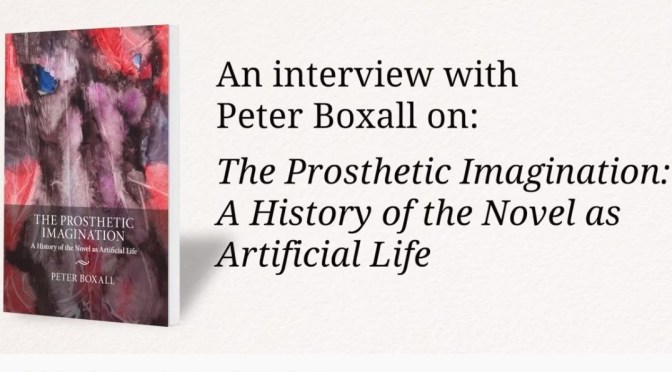
In this interview, Peter Boxall answers questions about his new title, The Prosthetic Imagination: A History of the Novel as Artificial Life. If the novel has helped to give our world a human shape, it also contains forms of life that elude our existing human architectures: new amalgams of the living and the non-living that are the hidden province of the novel imagination.
.
These latent conjunctions, Boxall argues, are preserved in the novel form, and offer us images of embodied being that can help us orient ourselves to our new prosthetic condition.
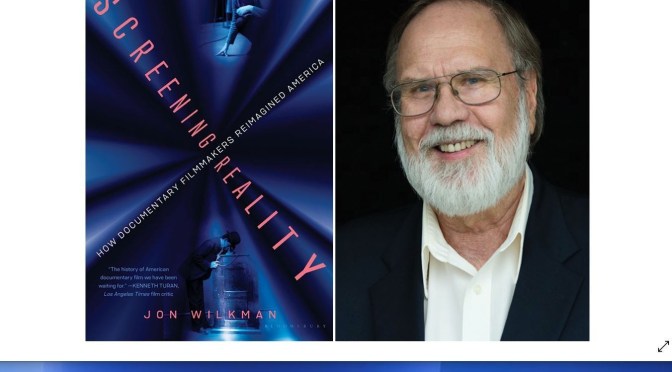
New Books in History talks to Professional filmmaker Jon Wilkman, who draws on his own experience, as well as the stories of inventors, adventurers, journalists, entrepreneurs, artists, and activists who framed and filtered the world to inform, persuade, awe, and entertain.
Screening Reality: How Documentary Filmmakers Reimagined America (Bloomsbury, 2020) is a widescreen view of how American “truth” has been discovered, defined, projected, televised, and streamed during more than one hundred years of dramatic change, through World Wars I and II, the dawn of mass media, the social and political turmoil of the sixties and seventies, and the communications revolution that led to a twenty-first century of empowered yet divided Americans.
Julia Hobsbawm is a writer, speaker, social entrepreneur and strategist whose work focuses on finding solutions for humans in an ever-changing world. She speaks to Georgina Godwin about her latest book, ‘The Simplicity Principle: Six Steps Towards Clarity in a Complex World’.
In this audio interview conducted on June 3, 2020, the editors discuss two new studies: one comparing test swabs collected by health care workers with swabs collected by the patients themselves and one assessing hydroxychloroquine treatment in people who had been exposed to Covid-19 but weren’t yet ill.
The continuing spread of SARS-CoV-2 remains a Public Health Emergency of International Concern. What physicians need to know about transmission, diagnosis, and treatment of Covid-19 is the subject of ongoing updates from infectious disease experts at the Journal.
Eric Rubin is the Editor-in-Chief of the Journal. Lindsey Baden is a Deputy Editor of the Journal. Stephen Morrissey, the interviewer, is the Executive Managing Editor of the Journal.
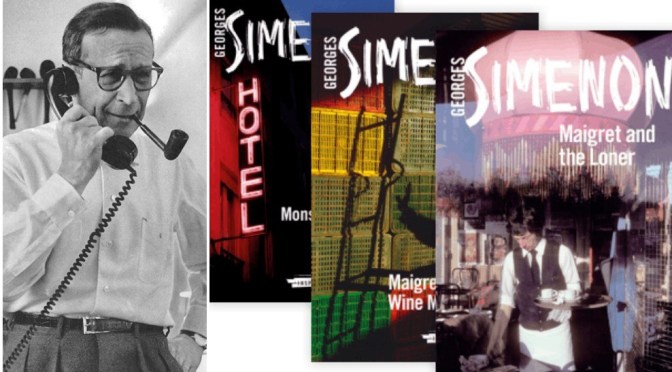
London Review of Books’ John Lanchester talks to Thomas Jones about Georges Simenon, whose output was so prodigious that even he didn’t know how many books he wrote.
TRANSCRIPT
Thomas Jones: Hello, and welcome to the London Review of Books podcast. My name is Thomas Jones, and today I’m talking to John Lanchester, who’s written a piece in the current issue of the LRB about Georges Simenon and his 75 Maigret novels, which Penguin have just finished reissuing in new translations. Hello, John.
John Lanchester: Hi Tom. Thanks for having me.
TJ: Thank you for joining me. And I thought we could begin where you begin your piece with Simenon’s ‘colossal output’, as you put it, and that nobody knows how many books he actually wrote, though it was probably more than four hundred, which is fewer than Barbara Cartland, but still puts the rest of us to shame.
JL: He didn’t half crack on, that’s true. Yes, he started as a young man in Liège, his home town in Belgium. And he got a job as a reporter on the local paper. I think he was not quite 16, which is properly strange. It’s like something out of a high concept kid’s TV show, you know, Georges Simenon – Boy Reporter, and very early on latched onto the idea of making money through writing.He began writing when he was 18, his first book came out when he was 19. He started writing every sort of potboiler, thrillers, romances, sort of semi-porn westerns, things like that, at an absolutely astounding rate of productivity. And his target was eighty pages a day, typewritten, and even on the assumption that the pages … I mean, a short page would be 150 words and it could well have been more, but it was 10,000 words a day, and he did that every single day. And then he’d write eighty pages, and then he’d go and be sick. Just from the physical and mental exertion and the strain. That was in the morning. And then he’d recover and do a bit of light reading and pottering about. And then the next day he did the same again, over and over and over for about seven years. And in that period, as you’ve mentioned, we don’t know exactly how many, because he forgot, and he had multiple pseudonyms. The main one being Georges Sim, which was how he was known when he began writing the Simenon novels. People thought that Simenon was a pseudonym because George Sim was so well known, but he seems to have written about 150 or more books in this seven-year burst. It makes you feel peculiar even to think about what that must have been like.
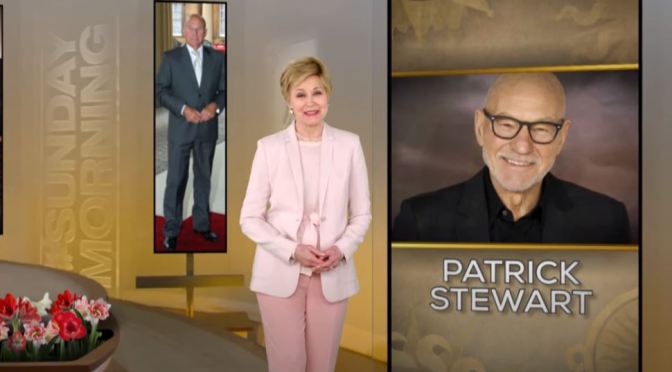
The Shakespearean actor, most recognized for his performances in the sci-fi franchises “X-Men” and “Star Trek,” recently returned to the role of Captain Jean Luc Picard in the CBS All Access series “Star Trek: Picard.” But as “CBS This Morning” co-host Tony Dokoupil found out, Sir Patrick Stewart is much more down-to-earth than his title might imply.
Sir Patrick StewartOBE (born 13 July 1940) is an English actor, director and producer whose work has included roles on stage, television and film, in a career spanning six decades. He has been nominated for Olivier, Golden Globe, Emmy, Screen Actors Guild, and Saturn Awards.
Beginning his career with a long run with the Royal Shakespeare Company, Stewart received the 1979 Laurence Olivier Award for Best Actor in a Supporting Role for his performance in Antony and Cleopatra in the West End. Stewart’s first major screen roles were in BBC-broadcast television productions during the mid-late 1970s, including Hedda, and the I, Claudius miniseries.
Monocle 24’s “The Stack” speaks to Marianne Julia Strauss on her new book “Do You Read Me?” on the best bookshops around the globe. Then, author Patrick McGinnis on his new release “Fear Of Missing Out”.
Interview with Dr. Nicole Lurie on rapid vaccine development, including new tools to facilitate vaccine testing and manufacturing and persistent challenges.
The need to rapidly develop a vaccine against SARS-CoV-2 comes at a time of explosion in basic scientific understanding, including in areas such as genomics and structural biology, that is supporting a new era in vaccine development. Over the past decade, the scientific community and the vaccine industry have been asked to respond urgently to epidemics of H1N1 influenza, Ebola, Zika, and now SARS-CoV-2. An H1N1 influenza vaccine was developed relatively rapidly, largely because influenza-vaccine technology was well developed and key regulators had previously decided that vaccines made using egg- and cell-based platforms could be licensed under the rules used for a strain change. Although a monovalent H1N1 vaccine was not available before the pandemic peaked in the Northern Hemisphere, it was available soon afterward as a stand-alone vaccine and was ultimately incorporated into commercially available seasonal influenza vaccines.
Nicole Lurie is a strategic advisor to the CEO of the Coalition for Epidemic Preparedness Innovations. Stephen Morrissey, the interviewer, is the Executive Managing Editor of the Journal.
When New York City’s Poster House museum had to close its doors in early March, director Julia Knight wondered how the institution could support the city.
Today her inspiring solution can be seen across all five boroughs.
Poster House is the first museum in the United States dedicated exclusively to posters.
Through exhibitions, events, and publications, Poster House presents a global view of posters from their earliest appearance in the late 1800s to their present-day use. Poster House takes its mission from the medium, aiming to engage and educate all audiences as we investigate this large-format graphic design and its public impact.
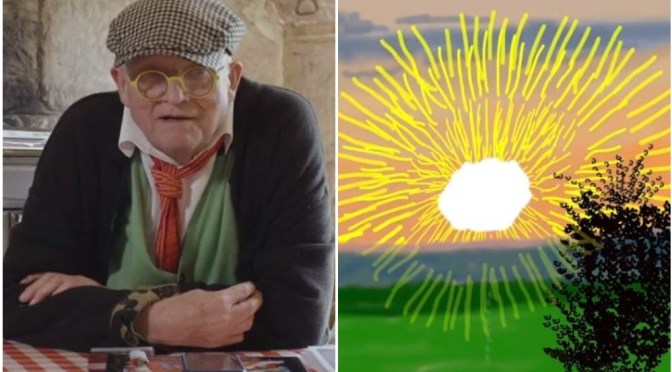
In this short and uplifting video, the influential British painter David Hockney talks about looking and painting for more than 60 years – and shares a story that made him reflect on our time.
“The world is very, very beautiful if you look at it. But most people don’t look very much. They scan the ground in front of them so they can walk, but they don’t really look at things incredibly well, with intensity. I do, and I’ve always known that.” In March 2020, Hockney sent out his iPad drawing ‘Do Remember They Can’t Cancel the Spring’ (2020) in response to the coronavirus outbreak. In this video, he shares the story of how a philosopher on a news program was asked how he could be optimistic with the current news: “And he said: Well, that’s television. Bad news sells.” The reporter then inquired what the good news was, to which the philosopher responded: “Well, the arrival of spring,” Hockney continues laughing.
In the video, you also get to experience the world premiere of an animation technique, which Hockney himself calls “time-based brush painting.”
David Hockney (b.1937) is a British painter, printmaker, photographer and stage designer, who is considered among the most influential and versatile British artists of the 20th century. Hockney is a notable contributor to the pop art movement in Britain, both in its foundation and growth, beginning with his participation in an annual exhibition called ‘Young Contemporaries’ in 1960, which also marked the start of his recognition in the art world. Hockney is the recipient of several prestigious awards including the Praemium Imperiale for Painting (1989), and the Lifetime of Artistic Excellence Award (Pratt Institute) in 2018.
His work can be found in numerous collections worldwide, including National Gallery of Australia in Canberra, National Portrait Gallery and Tate Gallery in London, Museum of Modern Art and Metropolitan Museum of Art in New York, Centre Pompidou in Paris, De Young Museum in San Francisco, Louisiana Museum of Modern Art in Humlebæk, and Museum of Contemporary Art in Tokyo.
David Hockney was interviewed by Marc-Christoph Wagner at his home in France in March 2019.
Many thanks to David Hockney for providing the works and the animation shown in the video. Camera: Jakob Solbakken Edited by Roxanne Bagheshirin Lærkesen Produced by Marc-Christoph Wagner Copyright: Louisiana Channel, Louisiana Museum of Modern Art, 2020 Supported by Nordea-fonden
News, Views and Reviews For The Intellectually Curious

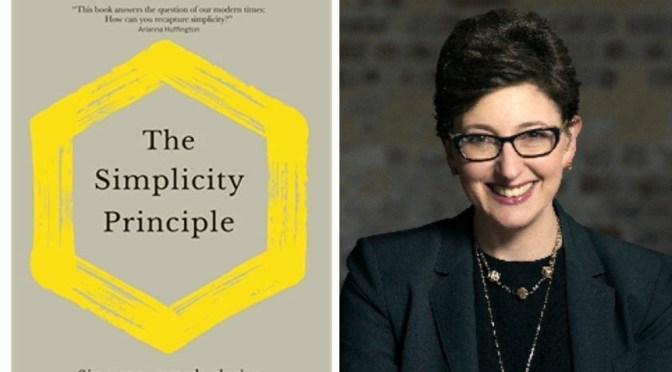
 ulia Hobsbawm is a writer, speaker, social entrepreneur and strategist whose work focuses on finding solutions for humans in an ever-changing world. She speaks to Georgina Godwin about her latest book, ‘The Simplicity Principle: Six Steps Towards Clarity in a Complex World’.
 TRANSCRIPT
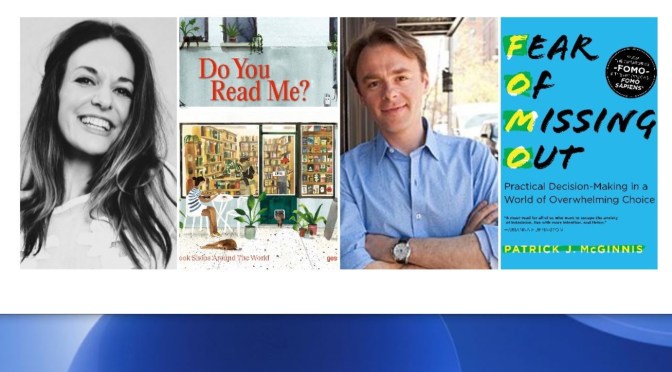
 Monocle 24’s “The Stack” speaks to Marianne Julia Strauss on her new book “Do You Read Me?” on the best bookshops around the globe. Then, author Patrick McGinnis on his new release “Fear Of Missing Out”.
 Interview with Dr. Nicole Lurie on rapid vaccine development, including new tools to facilitate vaccine testing and manufacturing and persistent challenges.
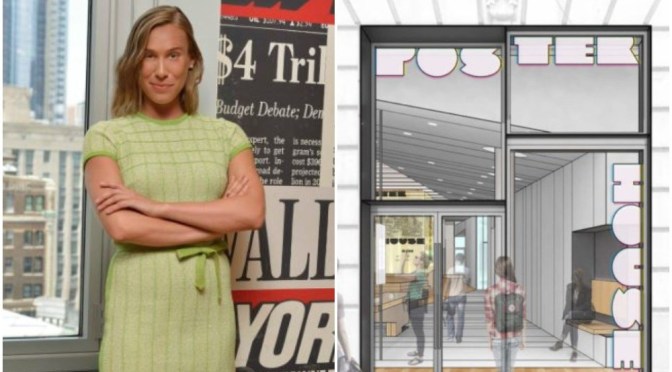
 When New York City’s Poster House museum had to close its doors in early March, director Julia Knight wondered how the institution could support the city.