
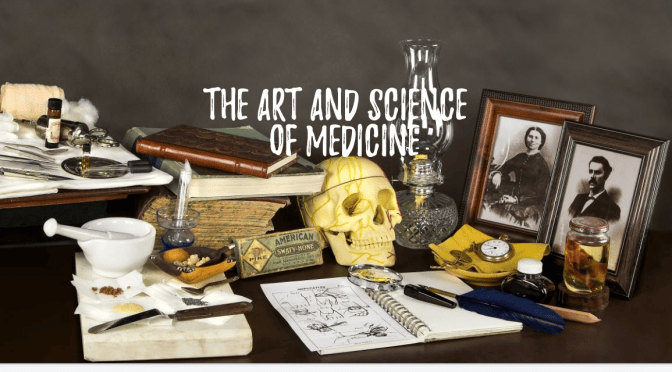
From a The Lancet online article:
Effective physicians interrogate their patients’ choice of words as well as their body language; they attend to what they leave out of their stories as well as what they put in. More than 2000 years after Hippocrates, there remains as much poetry in medicine as there is science.
 WHO’s definition of health is famously “a state of complete physical, mental, and social well-being and not merely the absence of disease or infirmity”. One of the oldest medical texts we know of, The Science of Medicine attributed to Hippocrates, sets out the goal of medicine in comparable terms: “the complete removal of the distress of the sick”.
In my working life as a physician, I’ve never found the distinction between arts and sciences a particularly useful one. In the earliest ancient Greek texts, medicine is described as a techne—a word better translated as “know-how”. It conveys elements of science, art, and skill, but also of artisanal craft. The precise functions of medicine may have subtly shifted over the ages, but our need as human beings for doctors remains the same; we go to them because we wish to invoke some change in our lives, either to cure or prevent an illness or influence some unwelcome mental or bodily process. The goal of medicine is, and always has been, the relief of human suffering—the word patient, from the Latin patientem, means sufferer. And the word physician is from the Greek phusis, or nature: to be engaged in clinical work is to engage oneself with the nature of illness, the nature of recovery, the nature of humanity.

 We start our first episode of the new year looking at


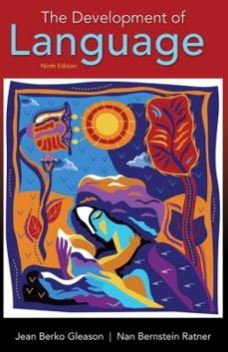 Psycholinguist Jean Berko Gleason is a professor emerita at Boston University and a pioneer in the field of children’s language. Even as a child, Berko Gleason loved and connected with language. It also made a big impression on her how much her older brother, who suffered from cerebral palsy, struggled to be understood. Berko Gleason shares her Brief But Spectacular take on language.
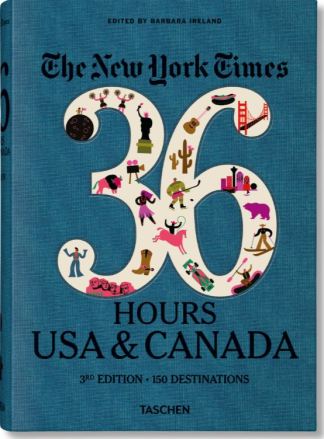 In this fully revised and updated third edition of the best-selling USA & Canada volume, TASCHEN presents the best itineraries from across the continent. You’ll find marquee metropolises like New York, Montreal, and Los Angeles; world-famous natural wonders at Niagara Falls and the Grand Canyon; the hidden charm of Rust Belt cities like Duluth and Detroit, as well as 33 new stories including Anchorage, the Berkshires, Boulder, and many more.
 To travel in North America is to face a delicious quandary: over these vast spaces with so many riches, from glittering cities to eccentric small towns and heart-stoppingly beautiful mountains and plains, how to experience as much as possible in limited time? The New York Times has the answer, offering up dream weekends with practical itineraries in its popular weekly 36 Hours column for nearly two decades.
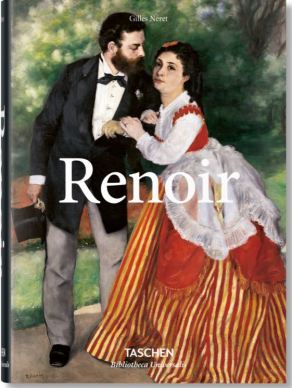 In an incisive text tracing the artist’s career and stylistic evolution, Gilles Néret shows how Renoir reinvented the painted female form, with his everyday goddesses and their plump forms, rounded hips and breasts. Renoir’s later phase, marked by his return to the simple pleasure of the female nude in his baigneuses series, was his most innovative and stylistically influential, and would inspire such masters as Matisse and Picasso.
 happiness, love, and beauty. Derived from our large-format volume, the most comprehensive retrospective of his work published to date, this compact edition examines the personal history and motivation behind the legend. Though he began by painting landscapes in the Impressionist style, Renoir found his true affinity in portraits, after which he abandoned the Impressionists altogether. Though often misunderstood, Renoir remains one of history’s most well-loved painters—undoubtedly because his works exude such warmth, tenderness, and good spirit.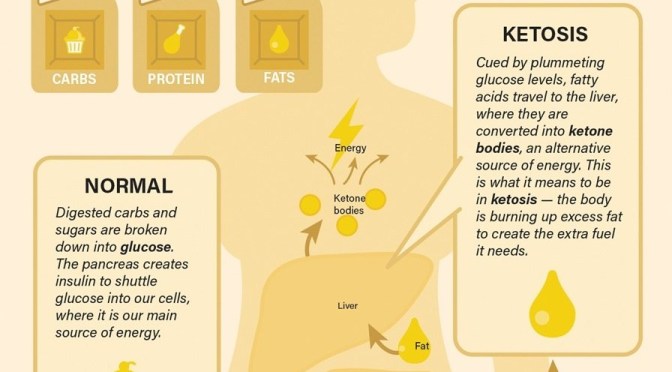
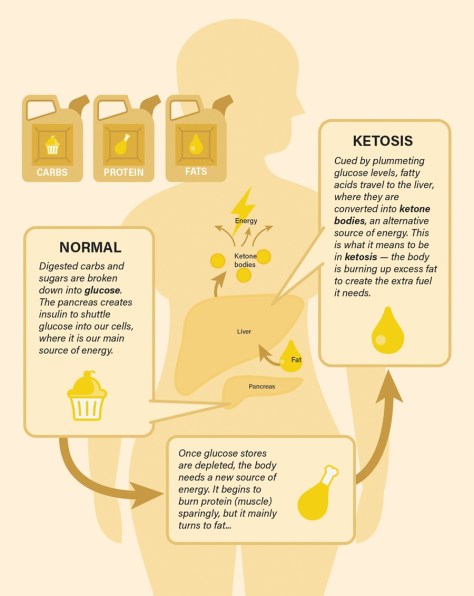
 to a paper Mattson and colleagues published in February in the experimental biology journal FASEB. In humans, fasting for 12 hours or more drops the levels of glycogen, a form of cellular glucose. Like changing to a backup gas tank, the body switches from glucose to fatty acids, a more efficient fuel. The switch generates the production of ketones, which are energy molecules that are made in the liver. “When the fats are mobilized and used to produce ketones, we think that is a key factor in accruing the health benefits,” says Mattson.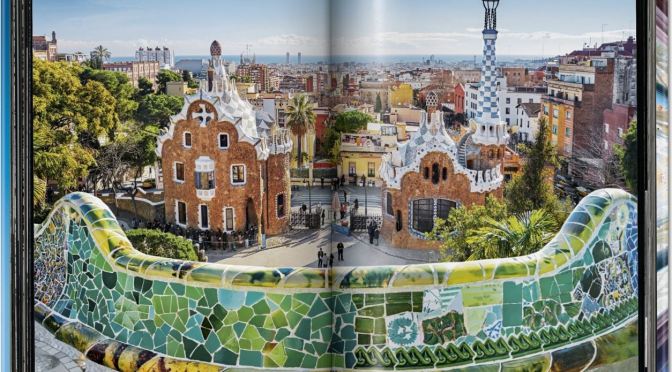
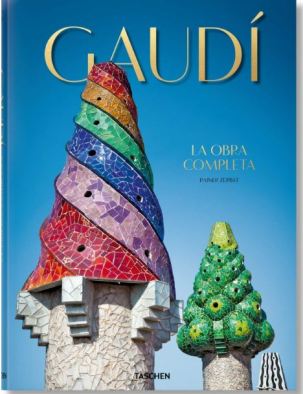 Through brand-new photography, plans and drawings by Gaudí himself, historical photos, as well as an appendix detailing all his works—from buildings to furniture, decor to unfinished projects—this book presents Gaudí’s universe like never before. Like a personal tour through Barcelona, we discover how the “Dante of architecture” was a builder in the truest sense of the word, crafting extraordinary constructions out of minute and mesmerizing details, and transforming fantastical visions into realities on the city streets.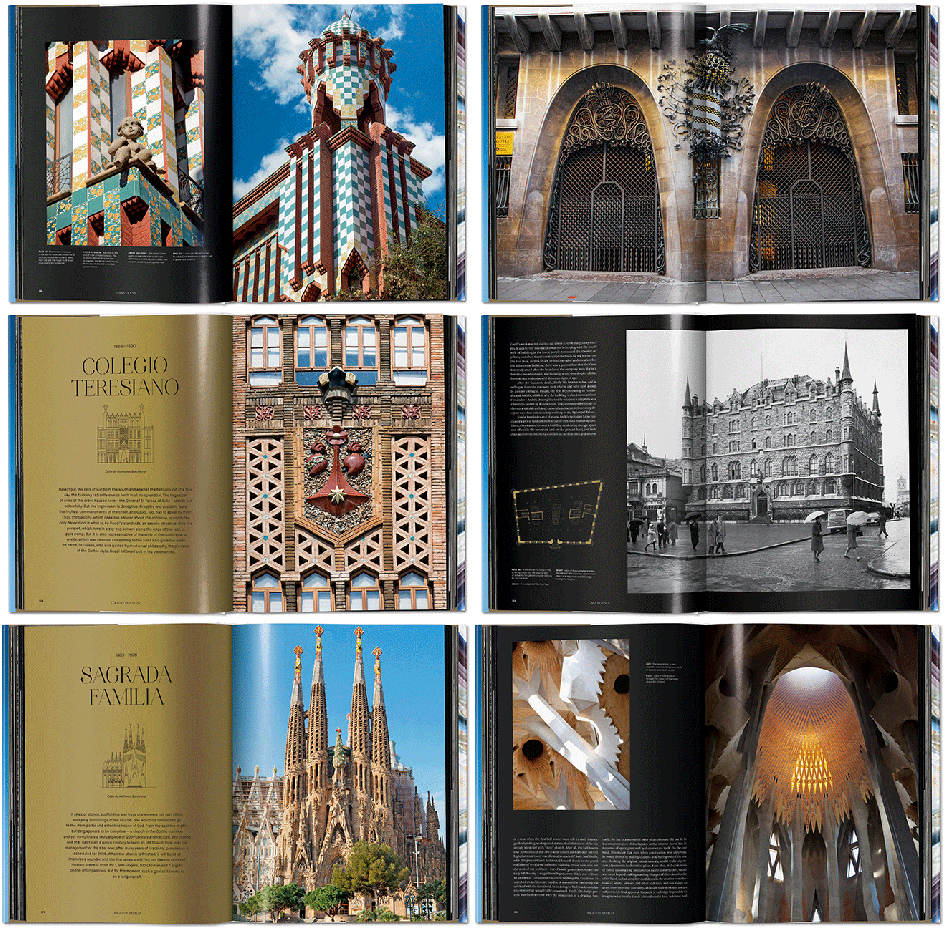
 Gaudí’s incomparable architecture channels much of this multifaceted intricacy. From the shimmering textures and skeletal forms of Casa Batlló to the Hispano-Arabic matrix of Casa Vicens, his work merged the influences of Orientalism, natural forms, new materials, and religious faith into a unique Modernista aesthetic. Today, his unique aesthetic enjoys global popularity and acclaim. His magnum opus, the Sagrada Familia, is the most-visited monument in Spain, and seven of his works are UNESCO World Heritage Sites.
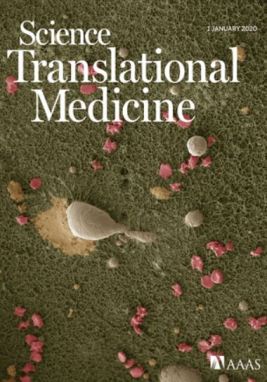 “This is an entirely new approach with no current treatments able to change scar in this way,” says Associate Professor James Chong who led the research. “By improving cardiac function and scar formation following heart attack, treatment with rhPDGF-AB led to an overall increase in survival rate in our study.”
 The podcast team share some of their highlights from the past 12 months:
