

The Caucasus Mountains are a mountain system at the intersection of Europe and Asia. Stretching between the Black Sea and the Caspian Sea, it is surrounded by the Caucasus region and is home to Mount Elbrus, the highest peak in Europe at 5,642 metres above sea level.

Protein Vaccine: Novavax Primes Immune System To Make Antibodies (Video)

Marine Wildlife: ‘Crabs, Eels & Octopuses’ Off The Coast Of Brazil (Video)
On the wild and windy coast of Brazil, survival is a tricky business. As well as evading giant waves and changing tides, Sally Lightfoot crabs are ambushed by eels and octopuses.
The journey to their feeding grounds is fraught with danger – even for a creature that can walk on water. In unique footage of these incredible crustaceans, we show you how Sally Lightfoot crabs eat, escape and survive in these harsh conditions – and where they may have got their name. Check out our World’s Weirdest Animals playlist for more amazing creatures and don’t forget to subscribe and hit the alert button to keep up with our latest content!

Morning News Podcast: Yemen Military Conflict, Covid Model, Smartmatic
President Biden announced the U.S. will no longer support offensive military operations led by Saudi Arabia in Yemen, reversing a policy started by the Obama administration.
And, a new model by researchers at Columbia University paints what they say is a more accurate picture of the spread of the pandemic. Also, voting technology company Smartmatic is suing Fox News and some of its biggest stars alleging they spread disinformation that devastated the company.

Architectural Tours: ‘JARtB House’, Melbourne, Australia (4K Video)
Nestled in a tree-lined street in the affluent suburb of Toorak in Melbourne, JARtB House is an architect’s home that explores art and architecture. Director of international award-winning architecture firm Kavellaris Urban Design (KUD), Billy Kavellaris designed his house with a view to creating both an art gallery and a family home.
The design explores the idea that art and architecture are separate disciplines but also that art can be fused with everyday life. A white circulation strip through the house doubles as a gallery, displaying the architect’s extensive art collection. Some pieces, such as the lofty giraffe sculptures, were designed especially for the space within the architect’s own home. The upper floor is ensconced in a custom mural created by Spanish artist duo PichiAvo.
Made up of 13 panels stitched together across the facade of the house, this artwork can be experienced from both inside and outside the house. The architecture and interior design can also be seen as art itself, with unusual and opulent staircases connecting floors, and uniquely shaped openings and furniture pieces. Bespoke timber flooring and panelling created by Made by Storey is used throughout the home on walls and floors, creating a sense of cohesion and warmth.
Other materials, such as concrete and steel, are carefully chosen for atmosphere and visual interest, while colour is largely provided by the artworks.
Architecture and Interior Design by Kavellaris Urban Design (KUD). Custom Timber Flooring, Stairs and Ceiling by Made by Storey. Video by Cheer Squad Film Co. Production by The Local Project.
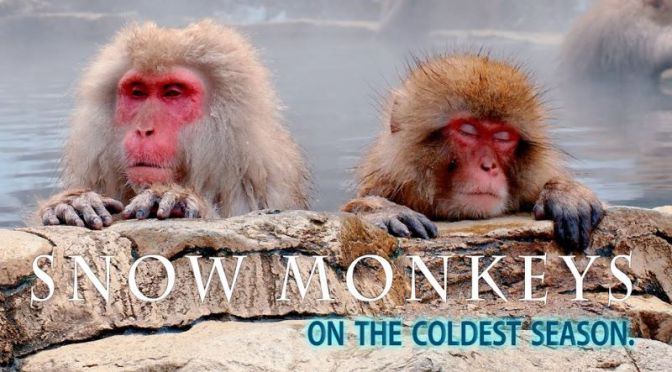
Winter Views: ‘Snow Monkeys’ In Jigokudani Park, Japan (Video)
Jigokudani Monkey Park is located in Yamanouchi, Nagano Prefecture, Japan. It is part of the Joshinetsu Kogen National Park, and is located in the valley of the Yokoyu-River, in the northern part of the prefecture.

TOP JOURNALS: RESEARCH HIGHLIGHTS FROM SCIENCE MAGAZINE (FEB 5, 2021)

This week, Science celebrates the impending 20th anniversary of the publication of the draft human genome sequence—a landmark achievement by any measure…The Human Genome Project (HGP) was an internationally supported public project (Celera Genomics was the private effort that simultaneously sequenced the human genome). When the endeavor was launched in 1990, collaboration among a diverse group of scientists was essential because the sequencing was distributed across a number of international research sites.

The American Association for the Advancement of Science (AAAS, the publisher of Science) also looks forward to next week’s annual meeting, whose theme is “Understanding Dynamic Ecosystems.” At first glance, these two events may seem unrelated. But the successful completion of the human genome sequence ushered in biology’s era of “big science” and created a research ecosystem for tackling complex, technology-driven, and data-intensive multidisciplinary projects that continue to improve our understanding of cancer, the microbiome, the brain, and other areas of biology.
The Human Genome Project (HGP) was an internationally supported public project (Celera Genomics was the private effort that simultaneously sequenced the human genome). When the endeavor was launched in 1990, collaboration among a diverse group of scientists was essential because the sequencing was distributed across a number of international research sites. High-throughput technologies for DNA sequencing were critical to the project’s success, and the participation of biotech companies in the effort was instrumental in driving down the cost, speed, and throughput of generating DNA sequence. The ever-increasing amount of sequence data drove the development of mathematical and computational tools for assembling and annotating the data. Neither the laboratory scientists nor the computational scientists could have done this alone, and the convergence of these disciplines has been one of the most important legacies of the early genome efforts. There was also a commitment to train the next generation of genome scientists, and over the past 20 years, many colleges and universities have established new undergraduate and graduate programs in quantitative and systems biology. Life sciences students today graduate with a very different set of skills than they did in 2000.

Science Podcast: Human Genome Sequencing – 20 Years Of Research & Data

This week we’re dedicating the whole show to the 20th anniversary of the publication of the human genome. Today, about 30 million people have had their genomes sequenced. This remarkable progress has brought with it issues of data sharing, privacy, and inequality.
Host Sarah Crespi spoke with a number of researchers about the state of genome science, starting with Yaniv Erlich, from the Efi Arazi School of Computer Science and CEO of Eleven Biotherapeutics, who talks about privacy in the age of easily obtainable genomes. Next up Charles Rotimi, director of the Center for Research on Genomics and Global Health at the National Human Genome Research Institute, discusses diversity—or lack thereof—in the field and what it means for the kinds of research that happens. Finally, Dorothy Roberts, professor in the departments of Africana studies and sociology and the law school at the University of Pennsylvania, talks about the seemingly never-ending project of disentangling race and genomes.

Top Bird Photography: ‘Herons, Dippers And Wrens In Norway’ (Video)
Filmed and Edited by: T. Haaland Photography
In this episode, I’m shooting bird photography in Hardanger again. It’s winter and close to Christmas time, the weather variates between mild and cold temperatures. But there are still birds to photograph!

Analysis: ‘Can Prefab Homes Fix U.s. Affordable Housing Crisis?’ (Video)
The affordable housing crisis in the United States continues to be a problem and it’s only getting worse. And in places like San Francisco, where construction costs are some of the highest in the world, overcoming the housing shortage seems impossible. However, one solution is gaining traction that could dramatically reduce the cost and time to build new housing – factory-built apartments.

