One of the absolute stars of this year’s Concorso d’Eleganza Villa d’Este will be the Bugatti 59 once owned by King Leopold III of Belgium. We met the remarkable car and its owner for a last shakedown in the Swiss Alps.
There is no doubt that this will be the star of the next Concorso d’Eleganza Villa d’Este, taking place on the shores of Lake Como from 20 to 22 May 2022. But what is it? The car before you is nothing less than the very first of the six Type 59 Bugatti Grand Prix cars, and the one that’s considered the most desirable of all, due to its remarkable race records, its captivating history, and its extraordinary condition.
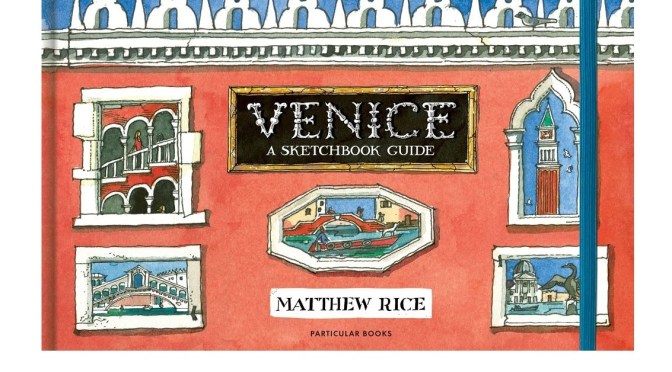
Matthew Rice is a long-time observer and illustrator of cities, buildings and all those who inhabit them, with an uncanny ability to express the energy of a place through a few lines of ink and splashes of paint.
For years, Venice has been a source of deep creative inspiration for him; and now, in Venice: A Sketchbook Guide, he captures the highlights of this most beguiling of Italian cities. Unsurprisingly, given his abiding passion for architecture, Matthew provides a wealth of information about the ‘stones’ of Venice, including an illustrated guide to the main building styles of the city – Byzantine, Gothic, Renaissance, Baroque and Modern – and exemplars of its balconies, bridges and campaniles.
Further sections explore the city’s sestieri – its six residential quarters – as well as its history, paintings, festivals, wildlife and, not least, its cicchetti and aperitivi. Following the same landscape format as Matthew’s real-life sketchbooks, Venice: A Sketchbook Guide will combine enchanting watercolour illustrations with an informed, personal and witty text, and promises to delight all visitors to Venice, armchair or actual.
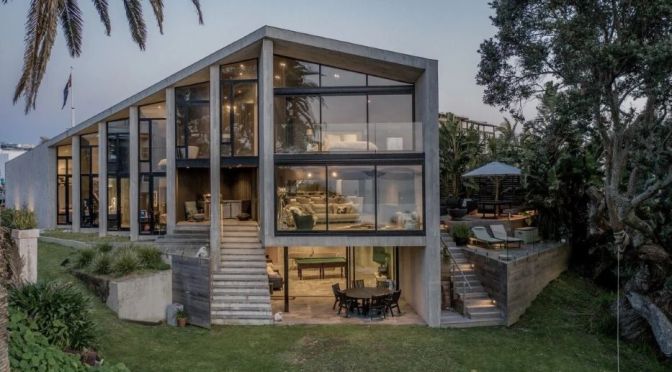
As an architectural house, The Sandcastle by Ponting Fitzgerald Architects champions the creative and structural benefits of concrete. Inspired by a sandcastle and built by Bannan Construction, the sculptural building is firmly established within its coastal context.
00:00 – An Introduction to the Architectural House 00:53 – Creating a Sandcastle 01:19 – Entering the House 02:06 – Building for the Coastal Climate 02:32 – A Unique Use of Concrete 03:37 – Materiality 04:07 – Lighting in the House 04:25 – Unique Qualities of the House 05:00 – What the Builder is Most Proud Of
Built within the inner harbour zone of Point Chevalier, The Sandcastle is situated directly above the shore. Sitting on a bluff of land that resembles a sand dune in constitution, the three-storey concrete home is conceived as an architectural house that naturally extends from the surrounding landscape. A house tour of The Sandcastle evidences its status as an architectural house, with the form of the building representing a playful yet sophisticated interpretation of a sandcastle. Concrete plays an important role in realising the shape of the home, offering endless formal possibilities in its pre-set, liquid state. Ponting Fitzgerald Architects crafts a dynamic materiality that withstands the erosive coastal climate. Although the concrete exterior interacts with the salt, wind and water of the environment – gracefully expressing the passage of time through a weather-beaten appearance – The Sandcastle maintains its structural integrity, establishing itself as an architectural house embedded in the landscape. With the help of Bannan Construction, Ponting Fitzgerald Architects creates an architectural house that is both rugged in nature and refined in form and concept. The Sandcastle stands as an enduring aspect of the coast; a solid piece of architecture, made in recognition of place.
This week: is heritage in Ukraine being attacked and looted, and what can be done to protect it?
Ben Luke talks to The Art Newspaper’s museums and heritage editor, Tom Seymour, who has been to the Ukrainian-Polish border with the International Council of Museums (ICOM), to witness museum materials being sent into Ukraine to help institutions there. Then, Tom talks to Sophie Delepierre, the head of heritage protection at ICOM, about the organisation’s efforts in Ukraine and elsewhere.
As a major exhibition of the work of Paul Cezanne opens at The Art Institute of Chicago, ahead of its journey to Tate Modern later in the year, Ben talks to Gloria Groom and Caitlin Haskell, the curators of the Chicago exhibition. And for this episode’s Work of the Week, our acting digital editor, Aimee Dawson, asks Oliver Lanzenberg, the grandson of the artist Nicola L., about his grandmother’s work Gold Femme Commode (1969/1993). The piece is part of a show at Alison Jacques, one of a number of exhibitions opening to coincide with the second edition of London Gallery Weekend.
Tom’s full report into ICOM’s work for Ukraine is in the next print edition of The Art Newspaper and online soon.
The organisation Sophie mentions is NEMO, the Network of European Museum Organisations, ne-mo.org.
Cezanne, The Art Institute of Chicago, 15 May-5 September; Tate Modern, London, 5 October-12 March 2023.
The latest on the war in Ukraine and Finland’s move to become part of Nato. Plus: a spying scandal rocks the Spanish government, a senior Catholic cleric is arrested in Hong Kong, and a report from Turin on Eurovision.
Fate, inheritance and pragmatic decisions have created a new opportunity in the next decade for India. It is Narendra Modi’s to squander. Our cover this week https://t.co/614niqPJIHpic.twitter.com/7Rcz04U7kh
The White House faces pressure to protect abortion rights nationwide after legislation failed in the US Senate. And Las Vegas faces a series of violent school incidents involving both students and parents.
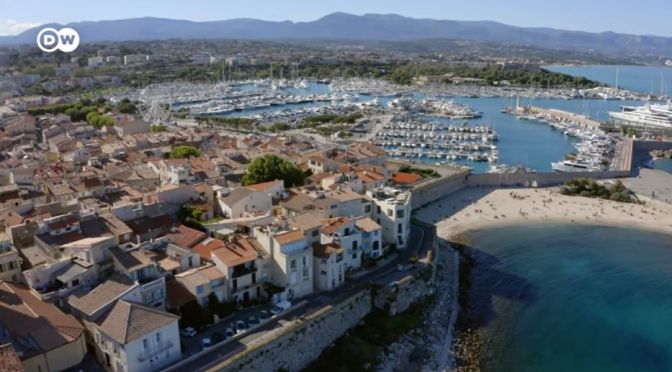
The Côte d’Azur stands for glamour and luxury, for film festivals and stars, for yachts and villas. The most famous personalities of the last century met here. The Côte owes its unique mythos to their loves and passions.
The Côte d’Azur boasts a breathtakingly gorgeous landscape. But its mythos is more than the sum of it beautiful parts. The whole world associates the narrow coastal strip on the French Mediterranean coast with sun, stars and scandals. In Saint Tropez, a former fishing town, a new and newly sensual art of living was popularized thanks to the young Brigitte Bardot.
On the eastern part of the coast, Oscar winner Grace Kelly conquered the principality of Monaco with her marriage to Prince Rainier. The matchmaker? The Greek shipowner Aristotle Onassis, who wanted to burnish the dwarf state’s image. One of the most glamorous film festivals in the world was established in Cannes. After that, it seemed everyone came to the Côte. At the Hôtel du Cap-Eden-Roc in Antibes, the paths of the famous crossed again and again.
For 150 years the hotel has been home to artists, queens and kings, divas and stars. Since 1969, the hotel has been owned by the German industrialist family Oetker. Maja Oetker describes her personal memories of the past 50 years. To this day, the Côte d’Azur has lost none of its appeal. It is more than just a place: it is an entire mythos.
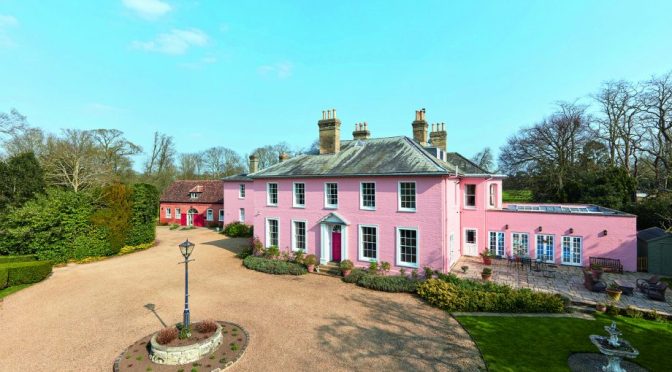
Nestled in a private corner of the award-winning village of Great Abington is Abington Lodge: Where over 19 acres of gardens and grounds meet with elegant interiors and wonderful ancillary accommodation.
It’s hard to tell what’s best about Grade II-listed Abington Lodge, in Great Abington —whether the idyllic setting in a little more than 19 acres of parkland and paddocks coursed by the River Granta, the 8,600sq ft interior with magnificent spiral staircase and floor-to-ceiling sash windows or the intriguing history: the house was once a hunting lodge for Richard, Earl of Grosvenor, whose wife scandalised Georgian Britain for her relationship with the Duke of Cumberland.