
The new MoMA opens. Cherished works return to the walls of the galleries in brand new frames, while curators and artists watch the completion of the reinstallation. After being closed for four months, MoMA reopens its doors to the public.
TABLE OF CONTENTS
0:13 – Associate sculpture conservator Roger Griffith and sculpture conservation fellow Joy Bloser clean Arthur Young’s Bell-47D1 Helicopter.
0:52 – Senior curator of Painting and Sculpture Anne Umland and chief curator of Painting and Sculpture Ann Temkin oversee the hanging of Pablo Picasso’s “Les Demoiselles d’Avignon.”
1:20 – Peter Perez, frame shop foreman, discusses “The Starry Night’s” new, black frame.
2:53 – Artist Amy Sillman explains how she curated and arranged “The Shape of Shape,” part of the long-running Artist’s Choice exhibition series in which artists selects works to show from the Museum’s collection
4:17 – Photography curator Sarah Meister and conservator Lee Ann Daffner adjust the lighting on Joseph-Philibert Girault de Prangey’s “Rome. Arch of Septimus Severus and Capitoline Lion.”
5:02 – Senior deputy director of exhibitions and collections Ramona Bronkar Bannayan and director of exhibition design and production Lana Hum make a final checklist of things to accomplish before the opening.
5:32 – Artist Betye Saar sees her exhibition for the first time.
7:11 – Manager of enterprise applications Rik Vanmechelen and developer Ryan Sprott check the new ticket machines.
8:04 – Chief facilities and safety officer Tunji Adeniji welcomes the public to the new MoMA on opening day.
8:30 – Silent film accompanist Ben Model improvises a live piano soundtrack for Frank Powell’s 1915 film “A Fool There Was.”
9:12 – Security supervisor Chet Gold greets volunteer Fred Liberman. Gold returns to his favorite room in the new MoMA.
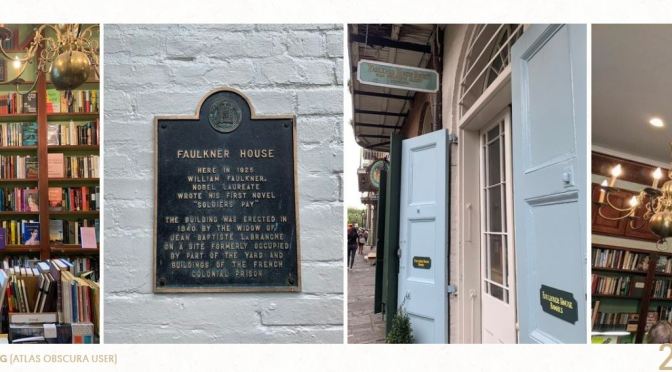
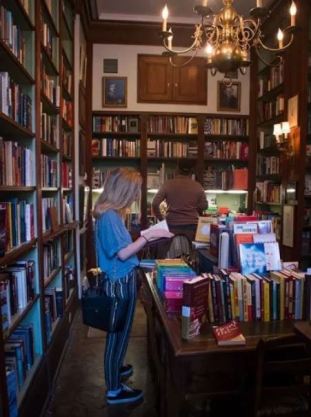 Inside, the small store has a good selection of literary fiction ranging from classics to current publications. There is also a great selection of books about New Orleans and local culture. There is, of course, a dedicated area, almost shrine-like, for Faulkner’s works, and the shop owner will let you take a look at those more expensive books, “if you want to get in trouble with your wallet.”
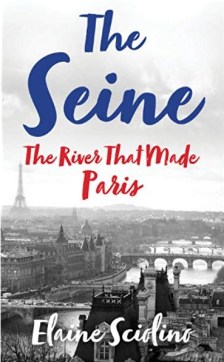 Sciolino’s keen eye and vivid prose bring the river to life as she discovers its origins on a remote plateau of Burgundy, where a pagan goddess healed pilgrims at an ancient temple. She follows the Seine to Le Havre, where it meets the sea. Braiding memoir, travelogue, and history through the Seine’s winding route, Sciolino offers a love letter to Paris and the river at its heart and invites readers to explore its magic.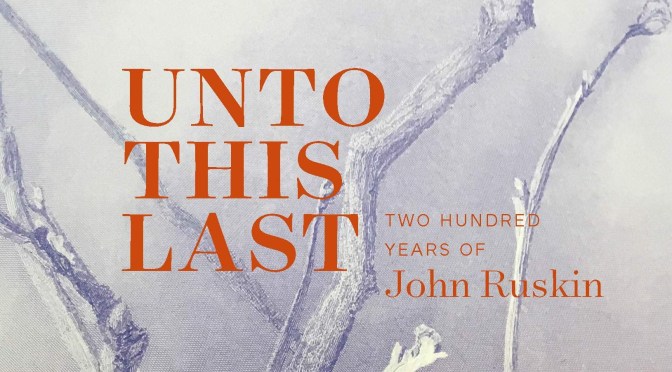
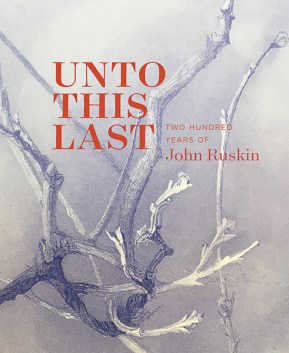 In “Unto This Last and Other Essays on Art and Political Economy” (1860), which gives the exhibition its title, Ruskin “sees” interconnected social injustices. He attacks economic inequality. Later, he sets out to establish a utopian community in working-class Sheffield, England. In one gallery we see his influence on “progressive thinkers worldwide.” Gandhi said that reading “Unto This Last” in 1904 transformed his life and ideas.
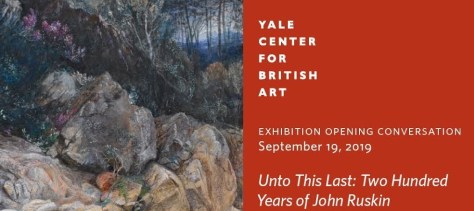 ‘If you can paint one leaf,” John Ruskin once declared, “you can paint the world.” And in “Unto This Last: Two Hundred Years of John Ruskin”—the hypnotically potent (though flawed) exhibition at the Yale Center for British Art marking the bicentennial of his birth—we see how wonderfully he kept trying.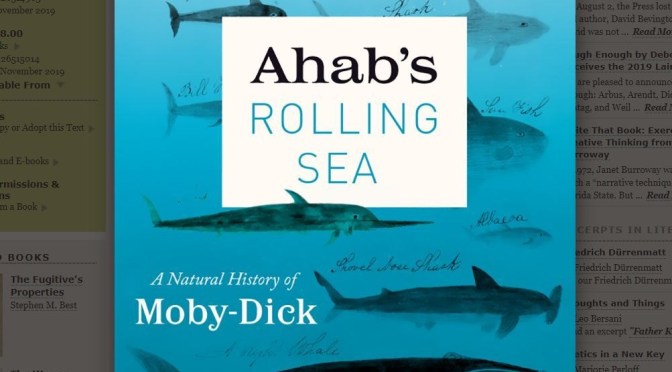
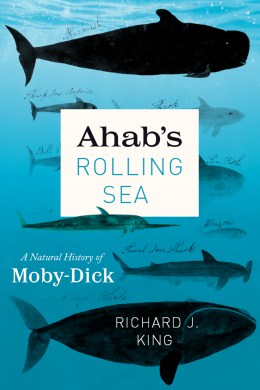 A revelation for Moby-Dick devotees and neophytes alike, Ahab’s Rolling Sea is a chronological journey through the natural history of Melville’s novel. From white whales to whale intelligence, giant squids, barnacles, albatross, and sharks, Richard J. King examines what Melville knew from his own experiences and the sources available to a reader in the mid-1800s, exploring how and why Melville might have twisted what was known to serve his fiction. King then climbs to the crow’s nest, setting Melville in the context of the American perception of the ocean in 1851—at the very start of the Industrial Revolution and just before the publication of On the Origin of Species.
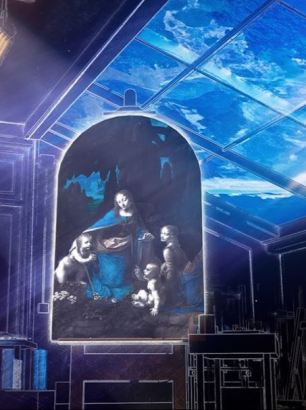 The mind of Leonardo
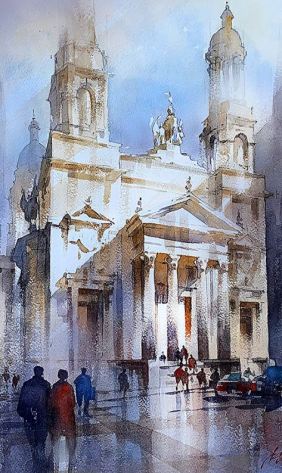 Since I work as a fine artist now, there are fewer commercial entities to please, so I’ve discovered something that should have been very obvious. If you want to engage the viewer, don’t tell them everything, encourage them to ask their own questions. An artist should not describe—he or she should interpret. If you design into your work a bit of mystery—areas where the viewer must “fill in the blanks”—you set up an unspoken dialog with your viewers and an emotional weight will begin to develop organically. This is just one example of course, but an important one.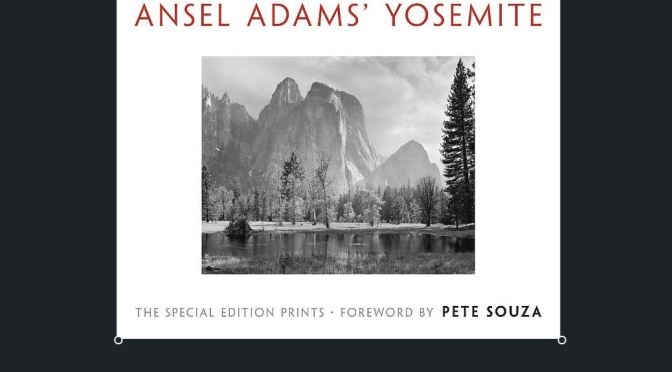
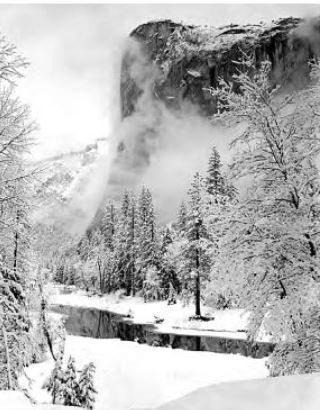 Making the Special Edition Photographs is an assignment I continue to this day, with Ansel’s vision and standards always in mind as I work. The prints are still made directly from Ansel’s negatives and in the “traditional” way: in a wet darkroom with amber safelights, chemicals and running water. The prints are still silver-gelatin prints, meaning that the image-forming element is literally metallic silver. Precious.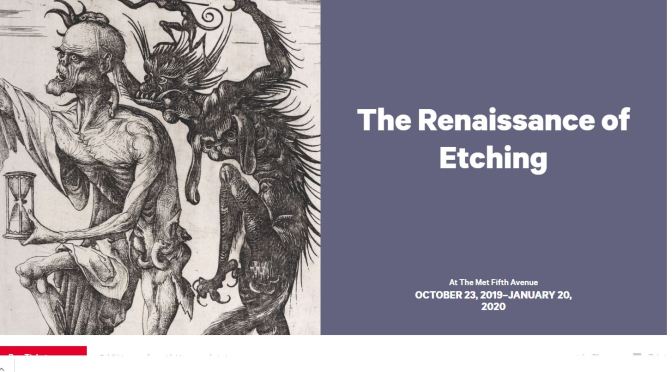
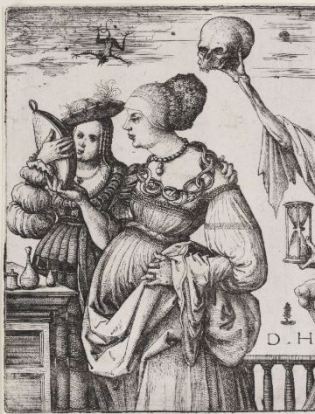 This exhibition traces the first sixty years of the etched print (circa 1490 to circa 1560), from its emergence in the workshop of the German printmaker and armor decorator Daniel Hopfer to the years when a range of artists from Germany, Flanders, Italy, and France began experimenting with etching. Approximately 125 etchings, produced by both renowned and lesser-known artists, are displayed alongside a number of drawings, printing plates, illustrated books, and armor.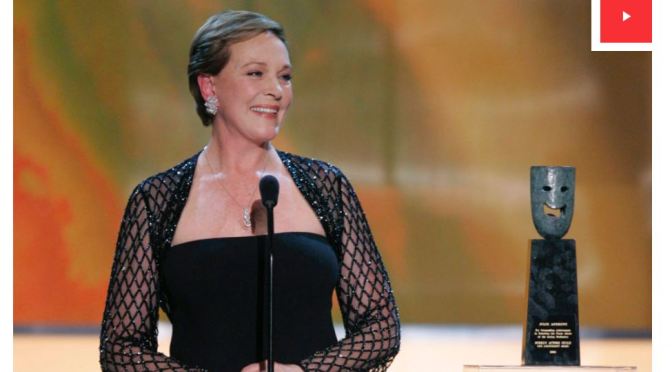
 Legendary entertainer Julie Andrews will receive the American Film Institute’s lifetime achievement award in 2020. In addition to her theatrical career, Andrews has published more than 30 children’s books with one of her daughters, writer and arts educator Emma Walton Hamilton. John Yang sits down with Andrews and Hamilton to discuss how the star focused on family even during her Hollywood heyday.
 Intellicurious