

Downtown Frankfurt as most of Germany is turned into a ghost town. Eerie athmosphere in this normally busy city. Scary times.
All posts by Intellicurious

Auto Racing Nostalgia: “Targa Florio” Endurance Race In Sicily (1906 – 1977)
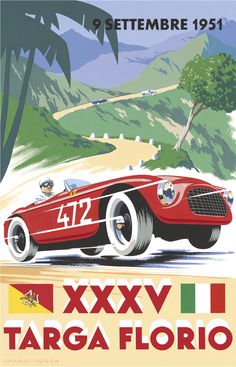 The Targa Florio was an open road endurance automobile race held in the mountains of Sicily near the island’s capital of Palermo. Founded in 1906, it was the oldest sports car racing event, part of the World Sportscar Championship between 1955 and 1973. While the first races consisted of a whole tour of the island, the track length in the race’s last decades was limited to the 72 kilometres (45 mi) of the Circuito Piccolo delle Madonie, which was lapped 11 times.
After 1973, it was a national sports car event until it was discontinued in 1977 due to safety concerns. It has since been run as a rallying event, and is part of the Italian Rally Championship.
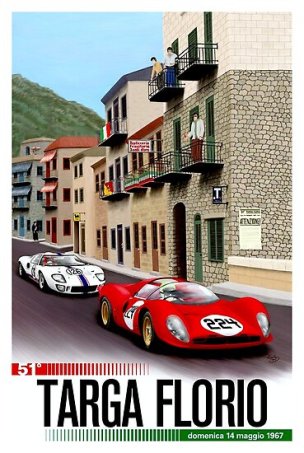 The race was created in 1906 by the wealthy pioneer race driver and automobile enthusiast, Vincenzo Florio, who had started the Coppa Florio race in Brescia, Lombardy in 1900. The Targa also claimed to be a worldly event not to be missed. Renowned artists, such as Alexandre Charpentier and Leonardo Bistolfi, were commissioned to design medals. A magazine was initiated, Rapiditas, which aimed to enhance, with graphic and photographic reproductions of the race, the myth of the car and the typical character of modern life, speed.[1]
 One of the toughest competitions in Europe, the first Targa Florio covered 3 laps equalling 277 miles (446 km) through multiple hairpin curves on treacherous mountain roads, at heights where severe changes in climate frequently occurred. Alessandro Cagno won the inaugural 1906 race in nine hours, averaging 30 miles per hour (50 km/h).
By the mid-1920s, the Targa Florio had become one of Europe’s most important races, as neither the 24 Hours of Le Mans nor the Mille Miglia had been established yet. Grand Prix races were still isolated events, not a series like today’s F1.
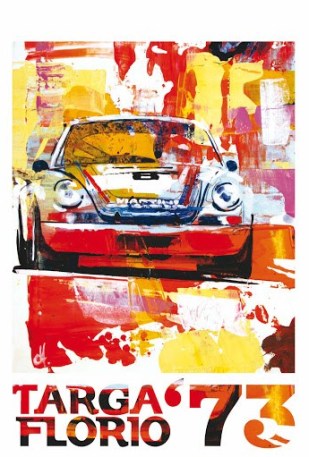
After winning the race several times, Porsche named the hardtop convertible version of the 911 after the Targa. The name targa means plaque or plate, see targa top.
From Wikipedia
Painters Of The 1920’s & 1930’s: “Moonlight Ballad – The Art Of Martin Lewis”
Born in Victoria, Australia, Martin Lewis was a printmaker who is known for his scenes of urban life in New York during the 1920s and 1930s. As a youth Lewis held a variety of jobs that ranged from working on cattle ranches in the Australian Outback, in logging and mining camps, to being a sailor. In 1898, he moved to Sydney for two years where he received his only formal art training. During this period he may have been introduced to printmaking; a local radical paper, The Bulletin, published two of his drawings.
Lewis left Australia in 1900 and first settled in San Francisco. He eventually worked his way eastward to New York. Little is known about his life during the following decade except that he made a living as a commercial artist and produced his first etching in 1915. Lewis’ skill as an etcher was noticed by Edward Hopper, who became a lifelong friend. In 1920, dissatisfied with his job, Lewis used his entire savings to study art and to sketch in Japan. He returned to New York after a two-year stay and resumed his commercial art career, but also pursued his own work as a painter and printmaker.
During the Depression, Lewis moved to Newtown, Connecticut, but later returned to Manhattan, where he helped establish a school for printmakers. From 1944-1952 Lewis taught a graphics course at the Art Students League in New York.
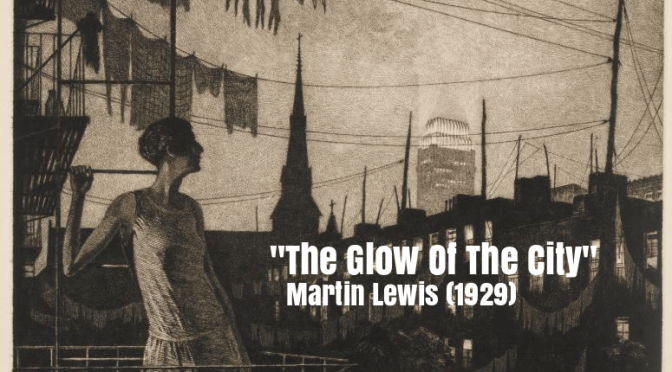
During his thirty-year career, Lewis made about 145 drypoints and etchings. His prints, like Shadow Dance and Stoops in Snow, were much admired during the 1930s for their realistic portrayal of daily life and sensitive rendering of texture. The artist’s skill in composition and his talent in the drypoint and etching media have received renewed attention in recent years. Lewis is one of the few printmakers of this era who specialized in nocturnal scenes. Some scholars consider his print Glow of the City his most significant work because of the subtlety of handling. A minute network of dots, lines, and flecks scratched onto the plate creates the illusion of transparent garments hanging in the foreground, while the Chanin Building, an art deco skyscraper, towers over the nearby tenements.

Coronavirus: “Do Face Masks Work? Do They Protect People?” (BBC)
As coronavirus continues to spread around the world, face masks are in high demand as people look for ways to protect themselves. But do they really protect most people from contracting the virus? Dr Shunmay Yeung from London School of Hygiene and Tropical Medicine explains.

Video Interviews: Nobel Prize Economist Paul Krugman (Oxford Union)
Dr. Paul Krugman is a Nobel Prize-Winning economist, and a regular commentator for the New York Times. Though academically recognised for his contributions to international trade theory, he writes about a wide range of economic issues, and is well known for making economic theory accessible to non-academics through his columns and numerous popular books. A liberal, Dr. Krugman is a fierce opponent of the modern Republican party, though he previously served as an economic advisor in Reagan’s White House.
ABOUT THE OXFORD UNION SOCIETY: The Oxford Union is the world’s most prestigious debating society, with an unparalleled reputation for bringing international guests and speakers to Oxford. Since 1823, the Union has been promoting debate and discussion not just in Oxford University, but across the globe.
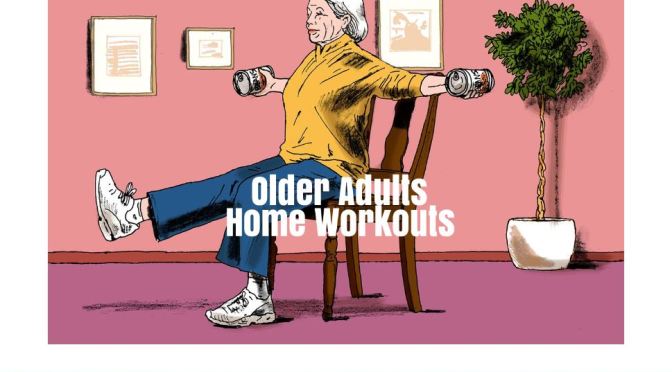
Exercise: “Shelter In Place” Home Circuit Workouts For Older Adults (WSJ)
From a Wall Street Journal article (March 21, 2020):
As we age, our balance declines, says Dani Johnson, a physical therapist with the Mayo Clinic’s Healthy Living Program in Rochester, Minn. Implementing balance exercises as simple as standing on one leg as you brush your teeth can help prevent falls. Getting a daily dose of cardio can boost the immune system.
This at-home circuit routine will get your heart rate up while also challenging strength and balance. Perform the circuit three times. Walk up and down steps or march in place for two to three minutes between sets. To up the effort, she suggests adding dumbbells or improvising with cans or tube socks filled with coins or rice.
Chair squats
Stand in front of a chair with your feet shoulder-width apart. Bend your knees, lowering your hips back, keeping weight in your heels and your chest upright. Start by sitting into the chair and standing back up 10 to 12 times. If this is easy, hover above the chair then return to standing.
Counter push-ups
 Place your hands on the edge of a counter, just beyond shoulder-width apart. Lower into a push-up then press back up. Repeat 10 to 12 times. For more of a challenge, walk your feet farther away from the counter.
Chair triceps dips
Sit upright in a chair with your hands on the armrests, elbows bent at 90 degrees. Straighten your arms, lifting your body off the chair. Hold briefly. Then lower yourself down. Use your legs to balance. Repeat 10 to 12 times.
Calf raises
Begin in a standing position. Rise up onto your toes, hold briefly, then lower back down. Repeat 10 to 12 times. Place one or both hands on a table or chair for more support. For an added challenge, perform on one leg at a time.

Tributes: 81-Year Old Country Singer Kenny Rogers Dies (1938 – 2020)
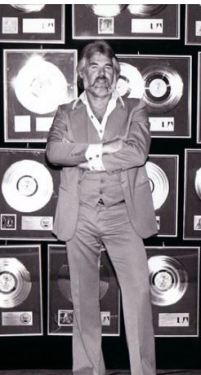 March 21, 2020 – The Rogers family is sad to announce that Kenny Rogers passed away last night at 10:25PM at the age of 81. Rogers passed away peacefully at home from natural causes under the care of hospice and surrounded by his family.
.
In a career that spanned more than six decades, Kenny Rogers left an indelible mark on the history of American music. His songs have endeared music lovers and touched the lives of millions around the world. Chart-topping hits like “The Gambler,” “Lady,” “Islands In The Stream,” “Lucille,” “She Believes In Me,” and “Through the Years” are just a handful of Kenny Rogers’ songs that have inspired generations of artists and fans alike.
.
Rogers, with twenty-four number-one hits, was a Country Music Hall of Fame member, six-time CMA Awards winner, three-time GRAMMY® Award winner, recipient of the CMA Willie Nelson Lifetime Achievement Award in 2013, CMT Artist of a Lifetime Award honoree in 2015 and has been voted the “Favorite Singer of All Time” in a joint poll by readers of both USA Today and People.
.
The family is planning a small private service at this time out of concern for the national COVID-19 emergency. They look forward to celebrating Kenny’s life publicly with his friends and fans at a later date.
.
From the Kenny Rogers Facebook page

New Travel Books: “Do You Read Me?” – Bookstores Of The World (Gestalten)
 From Daikanyama Tsutaya Books in Tokyo to Kosmos Buchsalon in Zurich, Do You Read Me? travels the globe to discover these gems and some of the people behind them, who turn an ordinary trip to the bookstore into an extraordinary experience.
Bookstores are more than just places that sell books. They are focal points of communities, a warm welcome to a city, a place for first-time visitors and longtime residents alike to gather in a shared love of the written word. They are places where time moves a little slower, where customers can get lost in the pages of a book, or enjoy readings, concerts, and events that bring together like-minded individuals with a thirst for knowledge.
Each bookstore is as unique as the diverse customers who frequent them. There are the secret ones tucked away with stacks reaching floor to ceiling; there are minimalist concept stores; there are dazzling book temples. There are ones in apartments, on boats, and in Gothic cathedrals.
Travel writer Marianne Julia Strauss has scoured the globe for the past decade in search of the top bookstores. In Do You Read Me? she has collected a selection of the ones you need to include in your next itinerary.

Political News: “Shields And Brooks” On American Life Amid A Pandemic (PBS)
Syndicated columnist Mark Shields and New York Times columnist David Brooks join Judy Woodruff to discuss the latest political news, including a surreal week in which much of American daily life shut down, bright spots of people helping each other in a time of need, President Trump’s handling of the crisis, the ongoing issue of political polarization and how government should respond.

Health: Put Disposable N95 Masks In Microwave – “Kill Coronavirus” & Reuse
From a physician in Orange County, CA:
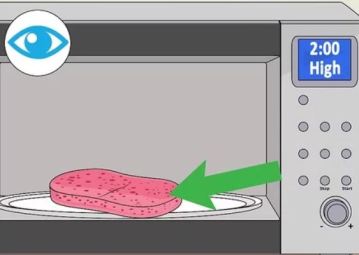
“I personally have been microwaving my N95 mask at home everyday so I can reuse it since I travel to several clinics per day and see some high risk patients. The microwave denatures the proteins (and by extrapolation, the virus) and makes it safe to reuse! (the same procedure is used to clean our kitchen sponges)..”
From the CDC:
.
 Microwaves are used in medicine for disinfection of soft contact lenses, dental instruments, dentures, milk, and urinary catheters for intermittent self-catheterization925-931. However, microwaves must only be used with products that are compatible (e.g., do not melt) 931. Microwaves are radio-frequency waves, which are usually used at a frequency of 2450 MHz. The microwaves produce friction of water molecules in an alternating electrical field. The intermolecular friction derived from the vibrations generates heat and some authors believe that the effect of microwaves depends on the heat produced while others postulate a nonthermal lethal effect932-934. The initial reports showed microwaves to be an effective microbicide. The microwaves produced by a “home-type” microwave oven (2.45 GHz) completely inactivate bacterial cultures, mycobacteria, viruses, and G. stearothermophilus spores within 60 seconds to 5 minutes depending on the challenge organism933, 935-937. Another study confirmed these resuIts but also found that higher power microwaves in the presence of water may be needed for sterilization932. Complete destruction of Mycobacterium bovis was obtained with 4 minutes of microwave exposure (600W, 2450 MHz)937. The effectiveness of microwave ovens for different sterilization and disinfection purposes should be tested and demonstrated as test conditions affect the results (e.g., presence of water, microwave power). Sterilization of metal instruments can be accomplished but requires certain precautions.926. Of concern is that home-type microwave ovens may not have even distribution of microwave energy over the entire dry device (there may be hot and cold spots on solid medical devices); hence there may be areas that are not sterilized or disinfected. The use of microwave ovens to disinfect intermittent-use catheters also has been suggested. Researchers found that test bacteria (e.g., E. coli, Klebsiella pneumoniae, Candida albicans) were eliminated from red rubber catheters within 5 minutes 931. Microwaves used for sterilization of medical devices have not been FDA cleared.

