
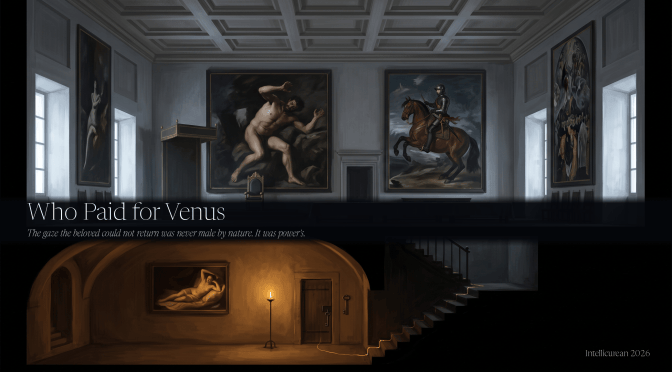

Two rooms, one painter, two very different buyers. In 1549 a queen hung Titian’s tormented giants to greet the future king of Spain. A few years later that king hung Titian’s nudes for himself. The essay asks who was doing the looking, and finds it was never simply the men.
Why we’re pointing you there
Everyone who took an art-history survey met John Berger’s line about men looking and women being looked at. Michael Cummins takes that line to the Prado, where the museum’s new volumes on women and the Spanish collections show something the slogan can’t hold: Mary of Hungary commissioning, Christina of Sweden collecting, Isabella Farnese marking her paintings with a lily like a brand on cattle. Power looked, and power was often a woman. The essay does not overturn Berger. It finds the room he left out.
What we liked most is the discipline. Every claim about who owned what rests on an inventory, and where the record gives only a later opinion rather than a fact, the essay says so and moves on. It is also the first piece in the series with no artificial intelligence in it at all, which is the point: Intellicurean was always a project about judgment, and here the judgment is a queen’s. Read it for Binche in 1549, and for a Sisyphus who turns out to have been a political statement.
Read the full essay at Intellicurean →
Essays & Reviews for the Intellectually Curious
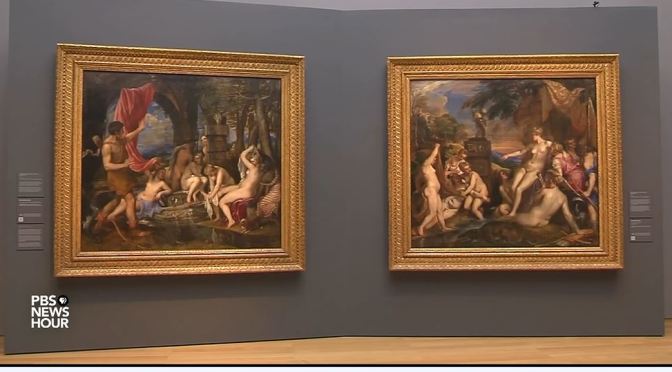
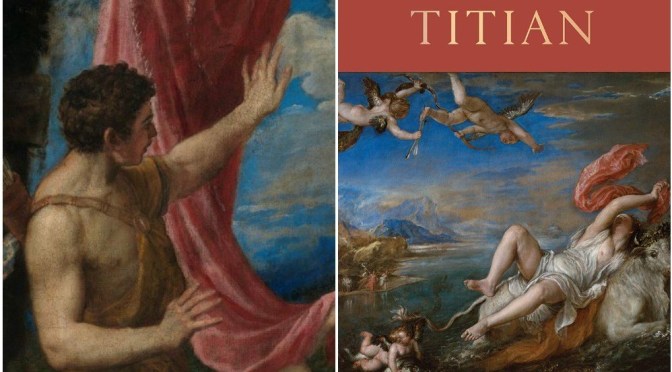
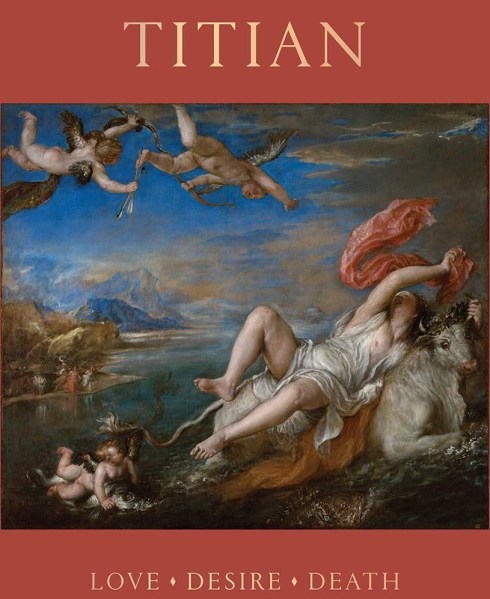 Titian (active 1506–1576) produced a masterful group of paintings for Philip II of Spain, celebrating the loves of gods, goddesses, and mortals. Depicting scenes from Ovid’s narrative poem Metamorphoses, Titian named them “poesie” and considered the works as visual equivalents of poetry.
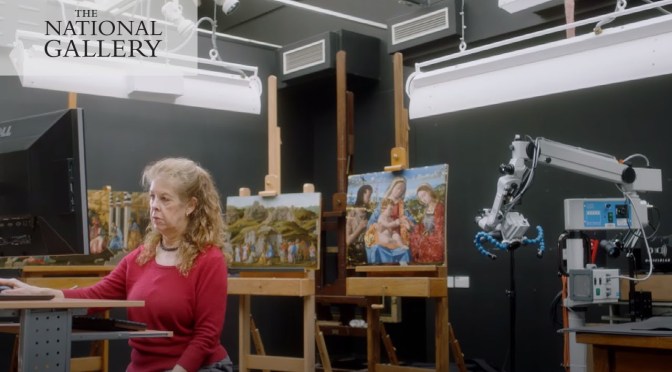
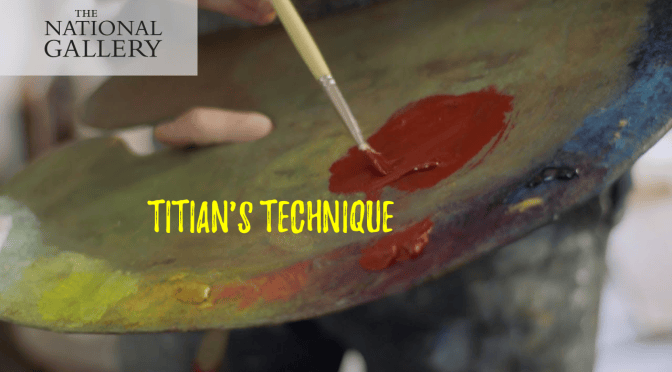

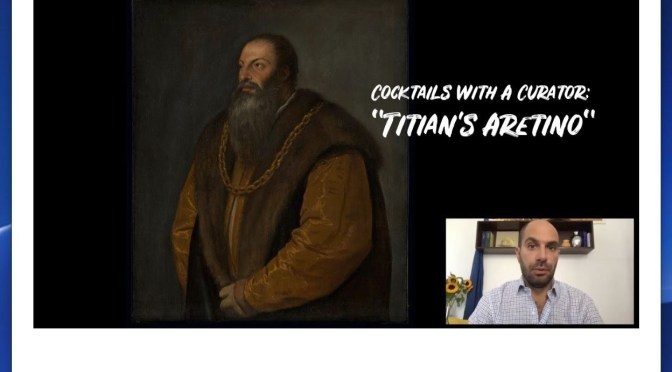
 One of the most successful artists of the Italian Renaissance, Titian was the master of the sixteenth-century Venetian school and admired by his royal patrons and fellow artists alike. Several of his contemporaries, including the authors and art theorists Giorgio Vasari, Francesco Priscianese, Pietro Aretino, and Ludovico Dolce, wrote accounts of Titian’s life and work.
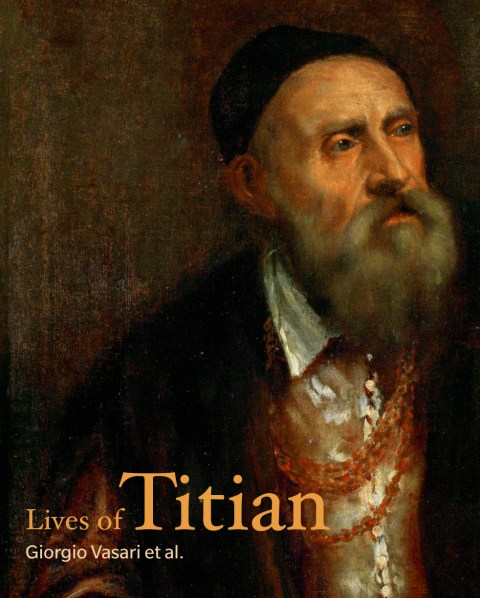 In this episode, Getty assistant curator of paintings Laura Llewellyn discusses what these “lives” teach us about Titian and the artistic debates and rivalries of his time. All of these biographies are gathered together in Lives of Titian, recently published by the Getty as part of our Lives of the Artists series.

