Host Sarah Crespi talks with Contributing Correspondent Joshua Sokol about magnetars—highly magnetized neutron stars. A recent intense outburst of gamma rays from a nearby galaxy has given astronomers a whole new view on these mysterious magnetic monsters.
Also on this week’s show, Christoph Zollikofer, a professor of anthropology at the University of Zurich, talks about the evolution of humanlike brains. His team’s work with brain-case fossils suggests the complex brains we carry around today were not present in the early hominins to leave Africa, but later developed in the cousins they left behind.
Podcast Producer Meagan Cantwell talks with Pamela Soltis, a professor and curator with the Florida Museum of Natural History at the University of Florida and the director of the University of Florida Biodiversity Institute, about how natural collections at museums can be a valuable resource for understanding future disease outbreaks.
Read the National Academies of Sciences, Engineering, and Medicine report Biological Collections: Ensuring Critical Research and Education for the 21st Century. This segment is part of our coverage of the 2021 AAAS Annual Meeting.
Also on this week’s show, Katharina Schmack, a research associate at Cold Spring Harbor Laboratory, joins producer Joel Goldberg to talk about giving mice a quiz that makes them hallucinate. Observing the mice in this state helps researchers make connections between dopamine, hallucinations, and mental illness.
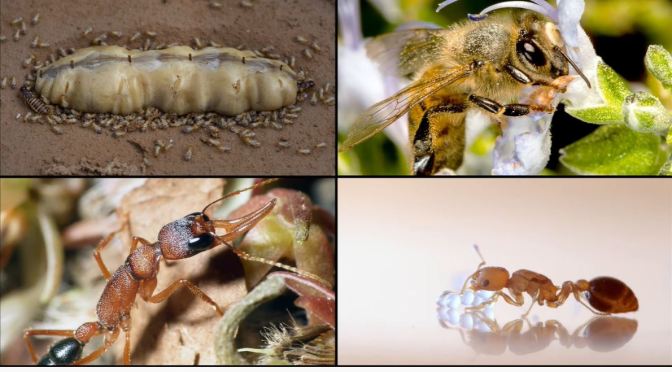
Bees, termites, and ants can teach us a lot about cooperation, communication, and the skills that keep societies together. But these so-called social insects may also hold secrets that could reshape our understanding of human aging. Many social insects exhibit surprising aging characteristics that cause their life spans to shift depending on their roles.
Following the death of a queen Indian jumping ant, for example, workers fight for the right to transform into an egg-laying ant. Much is at stake: the life expectancy of an egg-layer is five times longer than that of a worker’s. Though fruit flies, mice, and nematodes currently dominate aging research, some scientists say social insects’ aging behaviors could help dissect aging mechanisms in humans. This video will take you deep into the catacombs—er, honeycombs—of insect aging.
Case numbers are on the rise—at a more worrying rate even than the first wave. We ask why, and what is being done to slow the spread. As revenues at wildlife-tourism spots have dried up, so has security—and now poaching is even more rampant than before.
And scientists’ increasingly audacious bids to see around corners. For full access to print, digital and audio editions of The Economist, subscribe here http://www.economist.com/intelligenceoffer
Laser-cooled antimatter opens up new physics experiments, and the staggering economic cost of invasive species.
In this episode:
00:44 Cooling antimatter with a laser focus
Antimatter is annihilated whenever it interacts with regular matter, which makes it tough for physicists to investigate. Now though, a team at CERN have developed a way to trap and cool antihydrogen atoms using lasers, allowing them to better study its properties.
Invasive alien species are organisms that end up in places where they don’t really belong, usually as a result of human activity. These species can cause loss of biodiversity and a host of damage to their new environments. This week, researchers estimate that the economic impact of invasive species to be over US $1 trillion.
We discuss some highlights from the Nature Briefing. This time, the physics that might explain how a ship blocked the Suez Canal, and a new insight into octopuses’ sleep patterns.
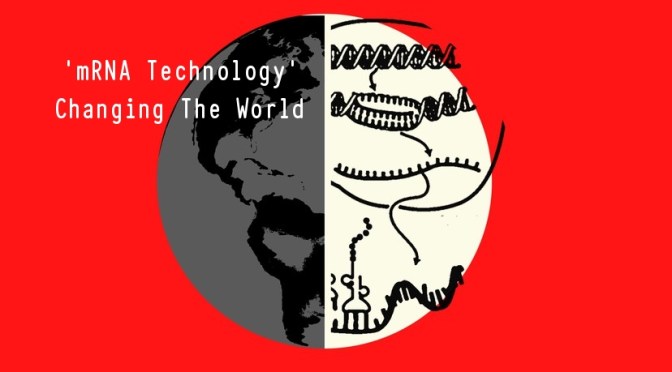
The dream of mRNA persevered in part because its core principle was tantalizingly simple, even beautiful: The world’s most powerful drug factory might be inside all of us.
Like so many breakthroughs, this apparent overnight success was many decades in the making. More than 40 years had passed between the 1970s, when a Hungarian scientist pioneered early mRNA research, and the day the first authorized mRNA vaccine was administered in the United States, on December 14, 2020. In the interim, the idea’s long road to viability nearly destroyed several careers and almost bankrupted several companies.
A selection of three essential articles read aloud from the latest issue of The Economist. This week: science after the pandemic, Rwanda: paragon or prison? (9:10) And Herbie goes electric (33:55)
Most research on aging has been done on model organisms with limited life spans, such as flies and worms. Host Meagan Cantwell talks to science writer Yao-Hua Law about how long-living social insects—some of which survive for up to 30 years—can provide new insights into aging.
Also in this episode, host Sarah Crespi talks with Noshir Contractor, the Jane S. & William J. White Professor of Behavioral Sciences at Northwestern University, about his AAAS session on keeping humans in harmony during long space missions and how mock missions on Earth are being applied to plans for a crewed mission to Mars.
News, Views and Reviews For The Intellectually Curious





 Intellicurious