
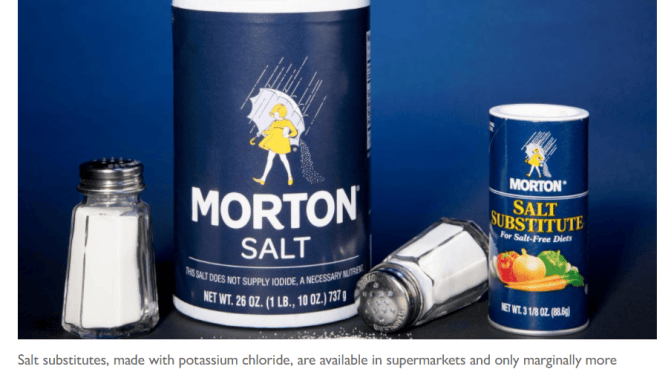
People who used a #salt substitute on their food had a lower risk of #stroke, #heartattack, and early death, compared with people who used regular salt, according to a large study published by The New England Journal of Medicine: https://t.co/JMsg9mnMwh #HarvardHealth pic.twitter.com/nBaYfYtlp7
— Harvard Health (@HarvardHealth) January 2, 2022
Tag Archives: Research
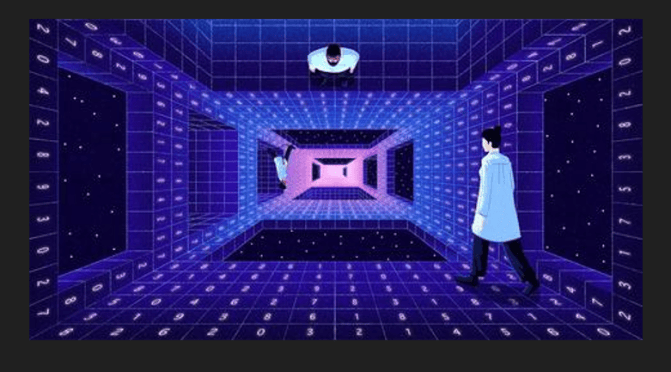
Review: Math & Computer Science Discoveries (2021)
It was a big year. Researchers found a way to idealize deep neural networks using kernel machines—an important step toward opening these black boxes. There were major developments toward an answer about the nature of infinity. And a mathematician finally managed to model quantum gravity. Read the articles in full at Quanta Magazine: https://www.quantamagazine.org/the-ye…
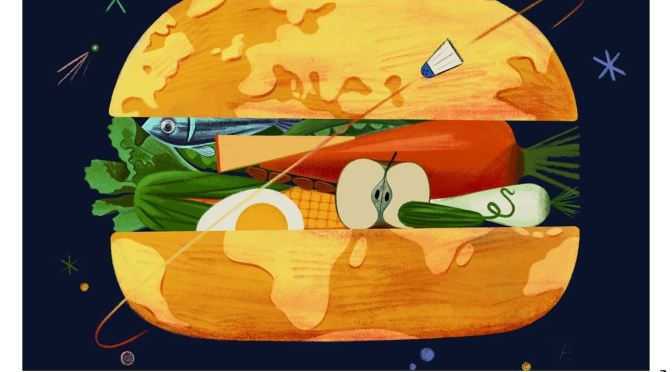
Diet Studies: Nutritious & Sustainable Food (Nature)
Science: Research Salary Survey, Jumping Spiders, NASA Smashing Asteroids
The Nature salary and satisfaction survey reveals researchers’ outlook, and NASA’s test of planetary defenses.
In this episode:
00:45 Salary and satisfaction survey
Like all aspects of life, scientific careers have been impacted by the pandemic. To get an insight into how researchers are feeling, Nature has conducted a salary and satisfaction survey. We hear from some of the respondents.
Careers Feature: Stagnating salaries present hurdles to career satisfaction
09:07 Research Highlights
The physics of a finger snap, and the surprisingly strong silk of jumping spiders.
Research Highlight: It’s a snap: the friction-based physics behind a common gesture
Research Highlight: High-speed spinning yields some of the toughest spider silk ever found
11:23 Briefing Chat
We discuss some highlights from the Nature Briefing. This time, the plans to smash a spacecraft into an asteroid, and how baby formula is changing to better resemble breast milk.
Nature News: NASA spacecraft will slam into asteroid in first planetary-defence test
Chemistry World: The science of breast milk and baby formula
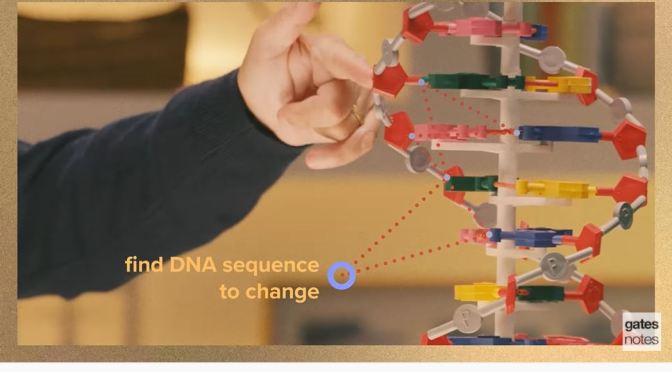
Research: How CRISPR Can Save Lives And End Disease
CRISPR is a technology that can be used to edit genes and, as such, will likely change the world. The essence of CRISPR is simple: it’s a way of finding a specific bit of DNA inside a cell. After that, the next step in CRISPR gene editing is usually to alter that piece of DNA.
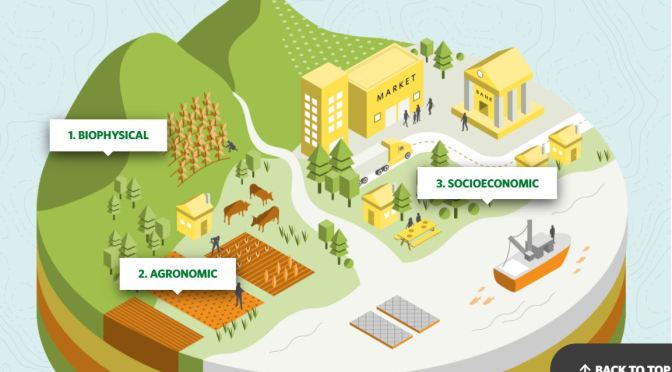
Foodscapes: Science Of The Global Food System
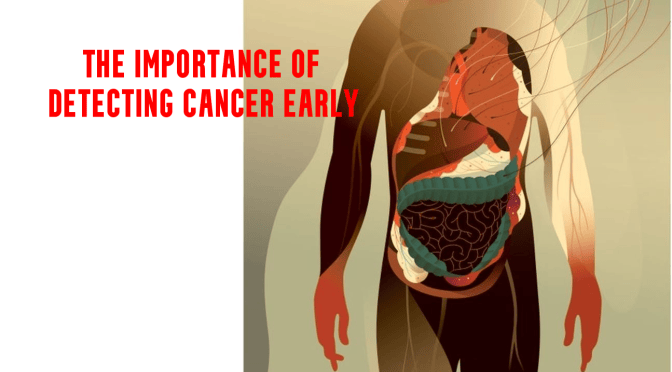
Health: The Importance Of Early Cancer Detection
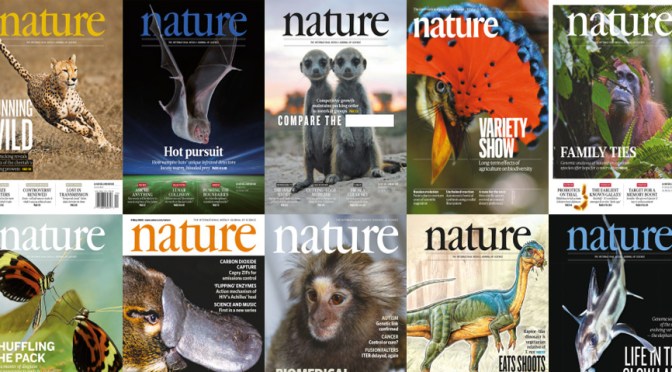
Front Covers: Nature Magazine – November 4
Research: Combatting Antibiotic Resistance
Covid-19: How BioNTech Used Its Cancer Research To Create A Vaccine (CNBC)
Over a month and a half before the World Health Organization officially declared a pandemic, BioNTech CEO Uğur Şahin met with his wife, BioNTech’s co-founder and chief medical officer Özlem Türeci, and together they agreed to redirect most of the company’s resources to developing a vaccine. Up until that point, BioNTech was little-known internationally and primarily focused on developing novel cancer treatments. The founders were confident in the potential of their mRNA technology, which they knew could trigger a powerful immune response. That confidence wasn’t necessarily shared by the broader medical community. No mRNA vaccine or treatment had ever been approved before. But the couple’s timely breakthrough was actually decades in the making. CNBC spoke with Şahin and Türeci about how they, along with Pfizer, created a Covid-19 vaccine using mRNA.
 Intellicurious