
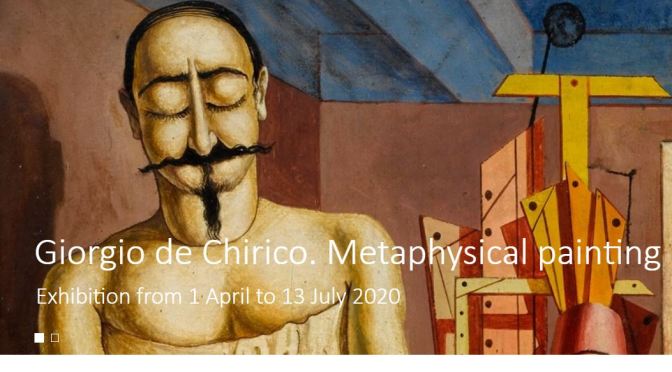
The exhibition Giorgio de Chirico. Metaphysical painting retraces the career and the artistic and philosophic influences of the artist Giorgio de Chirico from Munich to Turin, then to Paris where he discovered the artistic avant-garde of his era, and lastly Ferrare. The connections between the painter – discovered by Apollinaire and 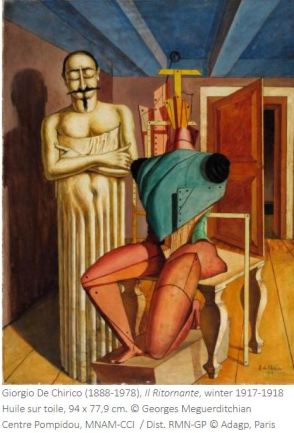 subsequently backed by the art dealer Paul Guillaume – and the Parisian cultural and literary circles will be highlighted as never before.
Born in Greece and trained in the fount of classical culture and late German Romanticism, de Chirico developed the foundations of a new artistic exploration alongside his younger brother Alberto Savinio. A student at the Academy of Fine Arts in Munich as of 1908, he discovered the thinking of Nietzsche and Schopenhauer as well as the works of Böcklin and Klinger. After travelling to Milan then Florence, it was in France, and more specifically Paris, as of autumn 1911, that he established his unique visual vocabulary through contact with the modernist artistic revolutions. He was quickly noticed by numerous artistic celebrities of the time, among whom Guillaume Apollinaire, Maurice Raynal, André Salmon, André Breton, Paul Éluard and Jean Paulhan were the first to take an interest in and promote his work.
 The exhibition thus comes into its own at the Musée de l’Orangerie alongside the figure of Paul Guillaume, the first art dealer to work with Giorgio de Chirico. On his return to Italy in 1915, he and his brother Savinio were sent to Ferrare for military reasons, where he continued his artistic research. This period (June 1915-December 1918) provided an opportunity for painters Carlo Carrà and Giorgio Morandi to get to know the two brothers, thus resulting in the creation of what was later to be known as the “metaphysical movement” which brings the exhibition to a close.
Exhibition organised by the Musée d’Orsay and the Musée de l’Orangerie, Paris and the Hamburger Kunsthalle, Hamburg
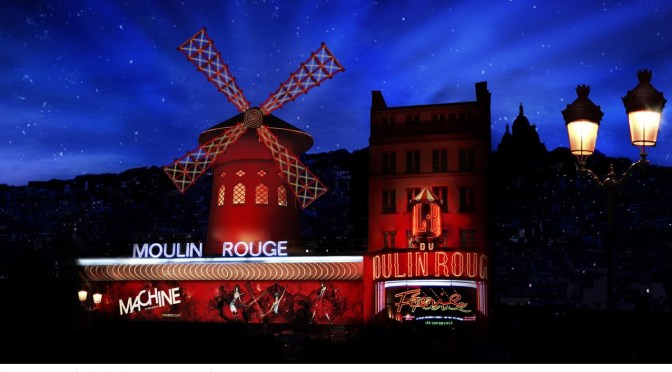
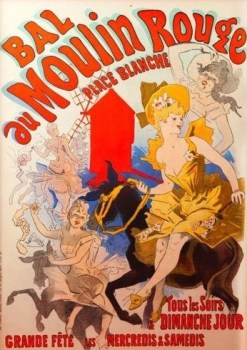 the inspiration for a hit Broadway musical. Correspondent Alina Cho visits the landmark that has inspired artists and writers (and even marriage proposals), and talks with its artistic director and dancers, along with the Tony Award-winning set designer of the new Broadway show, “Moulin Rouge!: The Musical.”
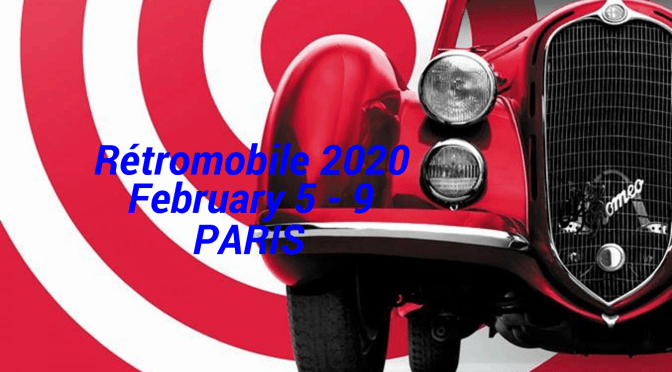

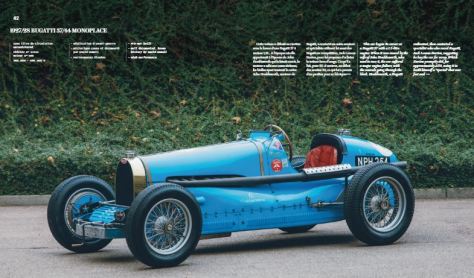 The annual salon is Paris provides manufacturers with a stage on which to show off their commitment to preserving their precious pasts, dealers the chance to set out their stalls and signal their intentions for the coming year and humble enthusiasts like us an opportunity to ogle thousands of collectable cars ranging from the affordable and the obscure to the rare and the downright priceless.


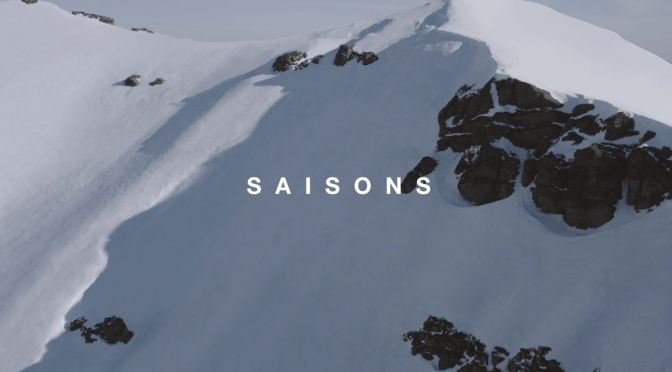
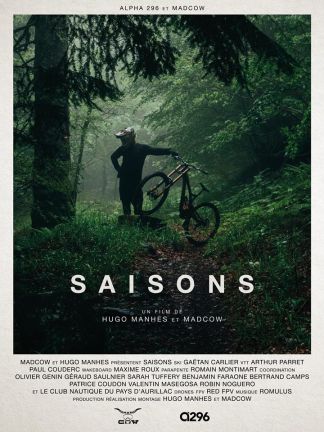 ‘SAISONS’ is a tribute to the grandiose and mystical landscapes of the Massif Central, an immaculate place located in the middle of France. From winter to spring, from summer to autumn, athletes practice their own disciplines in a wild and singular environment. Whether it’s on snow, land, water or in the air, they do it without any concession, in a full commitment.

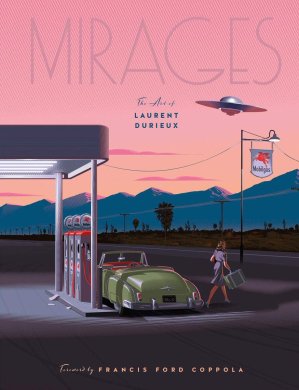 Laurent Durieux is a famous Belgian illustrator well known to lovers of pop culture and collectors for his reinterpretations of posters of cult films. Each of his American exhibitions was sold out during the opening night and in the presence of thousands of enthusiastic fans.

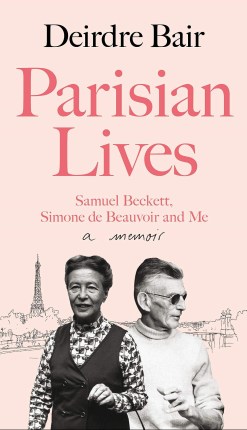 De Beauvoir and Beckett despised each other – and lived essentially on the same street. While quite literally dodging one subject or the other, and sometimes hiding out in the backrooms of the great cafés of Paris, Bair learned that what works in terms of process for one biography rarely applies to the next. Her seven-year relationship with the domineering and difficult de Beauvoir required a radical change in approach, yielding another groundbreaking literary profile.
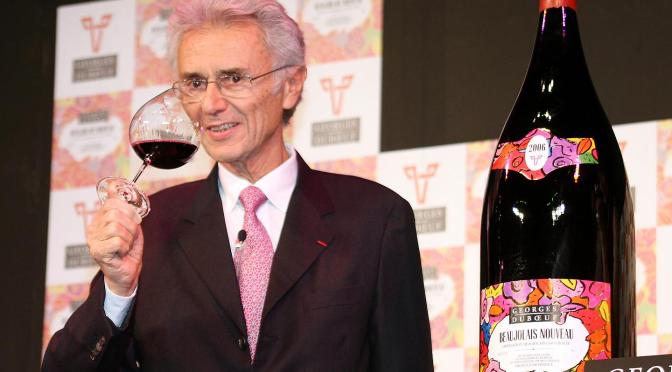
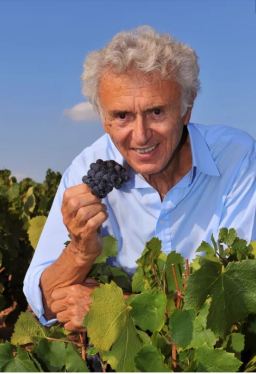 But it’s Beaujolais Nouveau that he is most famous for, the annual celebration, on the third Thursday of November, of the first red wine to be released from the region. It’s a tradition that dates back to the 19th century, but his efforts played a definitive role in making it the international celebration it is today, so much so that he was known as the “king of Beaujolais.” Over the years, Les Vins Georges Duboeuf has expanded their Beaujolais Nouveau offerings to include a rosé and a Beaujolais-Villages Nouveau (which was particularly lovely this past year, and is still drinking beautifully).
 There are a handful of names in the world of wine that have broken through the barriers of the business and come to signify an entire region, or style or more elementally, the deeply felt joy that drinking it evokes. Georges Duboeuf, who passed away on January 4, at home in Romanèche-Thorins, managed to achieve all three—and then some.

