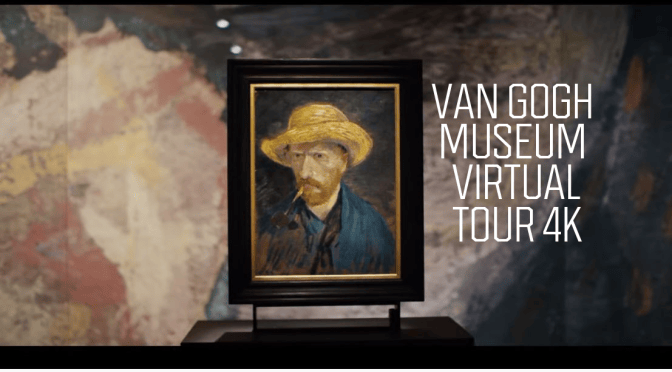
Van Gogh Museum Tour in 4K. Have you always wanted to be alone in the Van Gogh Museum? Step into Vincent’s world and enjoy the private video tour.
Episode 5: Van Gogh Museum Amsterdam

Van Gogh Museum Tour in 4K. Have you always wanted to be alone in the Van Gogh Museum? Step into Vincent’s world and enjoy the private video tour.
Episode 5: Van Gogh Museum Amsterdam
Filmed and Edited by: JÉRÉMIE ELOY, Wanali Films
Filmed on April 1, 2020
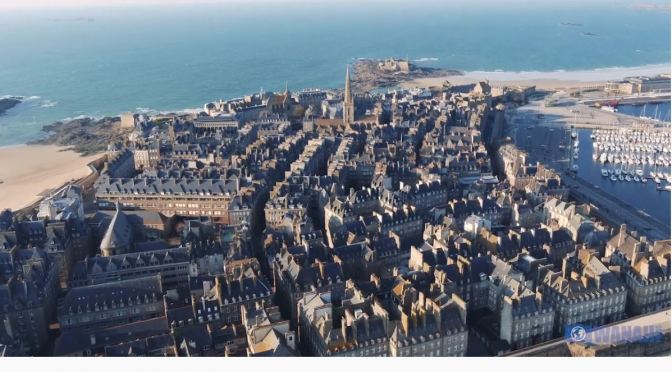
Saint-Malo is a historic French port in Ille-et-Vilaine, Brittany on the English Channel coast.
The walled city had a long history of piracy, earning much wealth from local extortion and overseas adventures. In 1944, the Allies heavily bombarded Saint-Malo, which was garrisoned by German troops. The city changed into a popular tourist centre, with a ferry terminal serving the Channel Islands of Jersey and Guernsey, as well as the Southern English settlements of Portsmouth, Hampshire and Poole, Dorset.
Founded by Gauls in the 1st century BC, the ancient town on the site of Saint-Malo was known as the Roman Reginca or Aletum. By the late 4th century AD, the Saint-Servan district was the site of a major Saxon Shore promontory fort that protected the Rance estuary from seaborne raiders from beyond the frontiers. According to the Notitia Dignitatum, the fort was garrisoned by the militum Martensium under a dux (commander) of the Tractus Armoricanus and Nervicanus section of the litus Saxonicum. During the decline of the Western Roman Empire, Armorica (modern-day Brittany) rebelled from Roman rule under the Bagaudae and in the 5th and 6th centuries received many Celtic Britons fleeing instability across the Channel. The modern Saint-Malo traces its origins to a monastic settlement founded by Saint Aaron and Saint Brendan early in the sixth century. Its name is derived from a man said to have been a follower of Brendan the Navigator, Saint Malo or Maclou, an immigrant from what is now Wales.
Saint-Malo is the setting of Marie de France’s poem “Laüstic,” an 11th-century love story. The city had a tradition of asserting its autonomy in dealings with the French authorities and even with the local Breton authorities. From 1590 to 1593, Saint-Malo declared itself to be an independent republic, taking the motto “not French, not Breton, but Malouin.
From Wikipedia
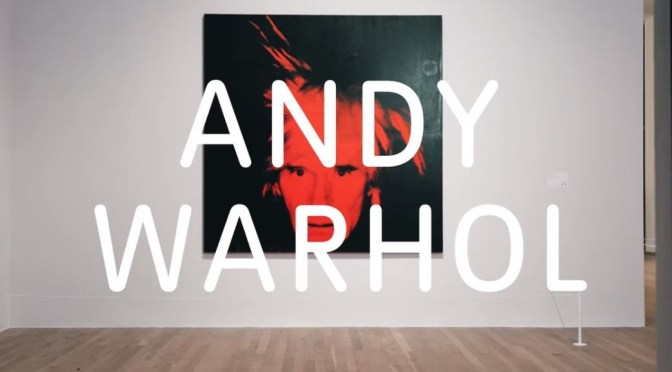
Although our galleries are temporarily closed we wanted to share the Andy Warhol exhibition at Tate Modern with you. Join Tate curators Gregor Muir and Fiontán Moran as they discuss Warhol through the lens of the immigrant story, his LGBTQI identity and concerns with death and religion.
Meet the man behind the brand. It’s a Warhol you might not know, with some artworks you may not have seen before.
Find out more about the exhibition here
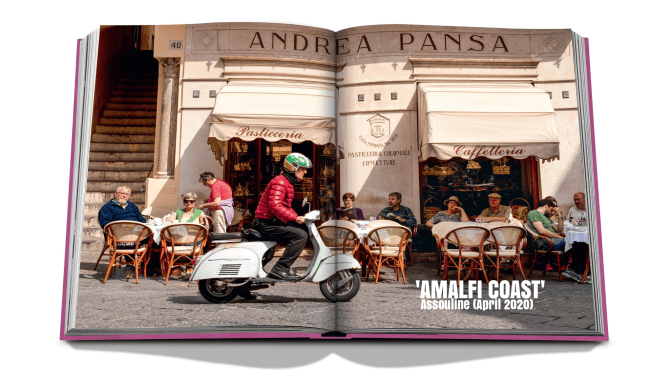
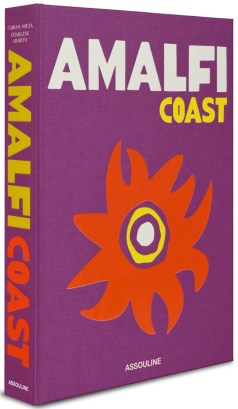 The Amalfi Coast is the pinnacle of the Italian dream. Tucked amongst the lemon blossoms and the bougainvillea is a line of thirteen towns that comprise the Amalfi Coast. Known for its vertical landscape, the villages are only accessible via the Strada Statale 163 — a narrow, winding, cliffside route that while unsettling to traverse, offers unparalleled views.
This magical strip joins the mountains and the Mediterranean Sea below and aesthetes from around the world flock here year after year to enjoy its quaint pebbled beaches, scenic hikes, perfect climate and legendary establishments, which are not limited to storied hotels and restaurants.
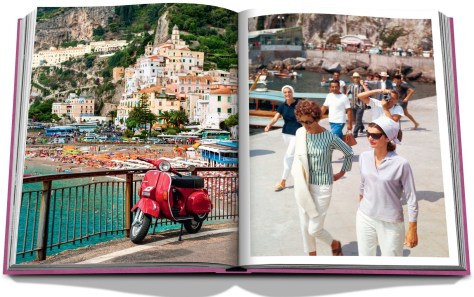
Landmarks from the Cathedral in Amalfi to Villa Rufolo in Ravello, all evoke the culture and the spirit of bygone centuries, and landmarks enjoyed by the likes of Jacqueline Kennedy, John Steinbeck, and Gore Vidal abound. With its signature limoncello, both grown and enjoyed locally, finest villas and breathtaking vistas, the Amalfi Coast is in a class of its own.
Carlos Souza is a global brand ambassador for Valentino and a contributor at Architectural Digest with over forty years of experience in the art and fashion world. His photography career began at the request of Andy Warhol, who asked him to shoot fashion shows for Interview. He has previously worked with Assouline on #Carlos’s Places (2014) and Comporta Bliss (2018).
Charlene Shorto was born in Recife, Brazil, and educated in Switzerland and Great Britain. She is wed to Carlos Souza and has two sons, Sean and Anthony. The family moved to Rome, where Charlene worked tirelessly under the fashion designer Valentino, eventually ascending to the position of director of Oliver by Valentino. Shorto also collaborated with Souza on Comporta Bliss (2018).
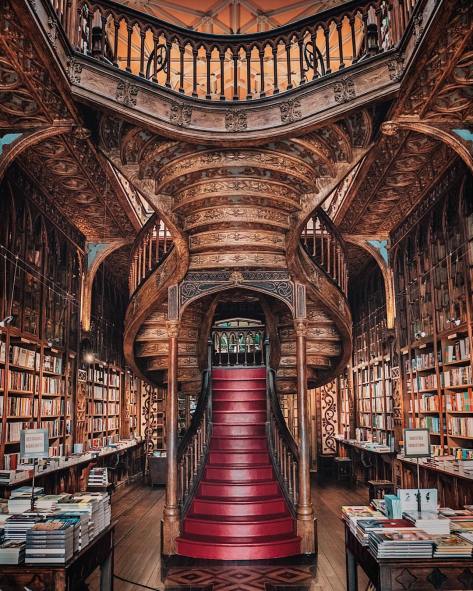
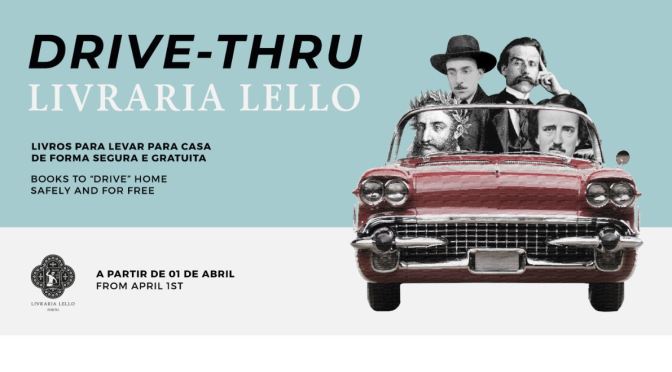
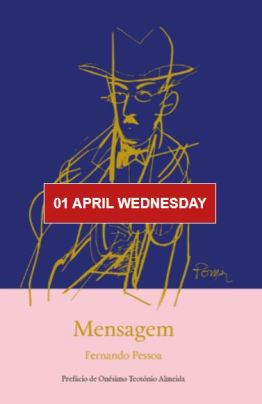 Bela do Mundo will offer one book from its “The Collection” per day to all readers who subscribe the day before to which they intend to address the “Drive-Thru” of Livraria Lello.
 This is a true act of “Love in the Times of Cholera” by Livraria Lello and her team towards their readers, their city, which is their world. A way to give the community some comfort and some encouragement in these difficult times.
From AtlasObscura.com (March 26, 2020):
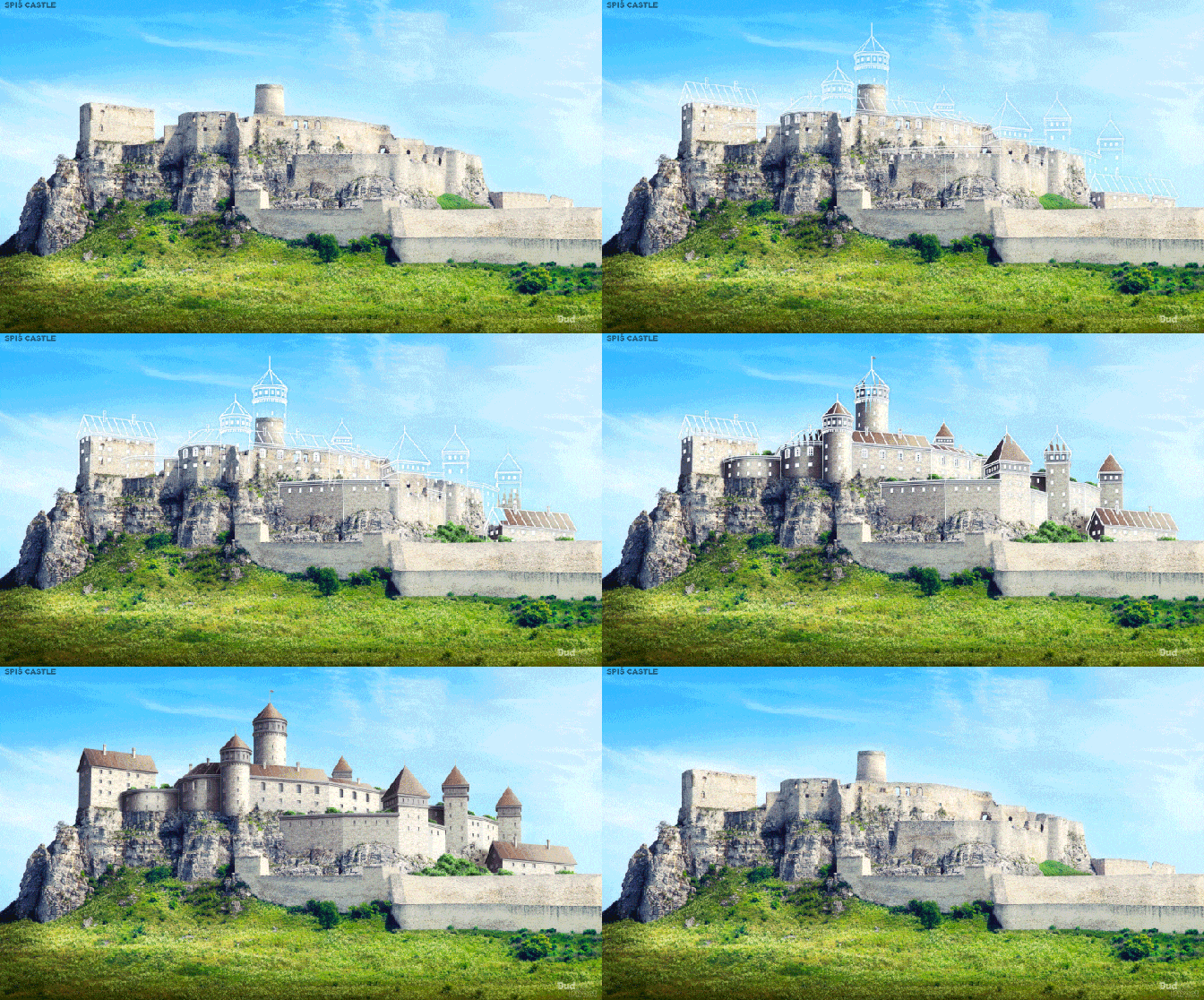
…a team of designers recently looked at the now-ruined castles of Middle Ages Europe, lifting the fortifications up from their dilapidated states and digitally reimagining the structures as they were in their heyday.
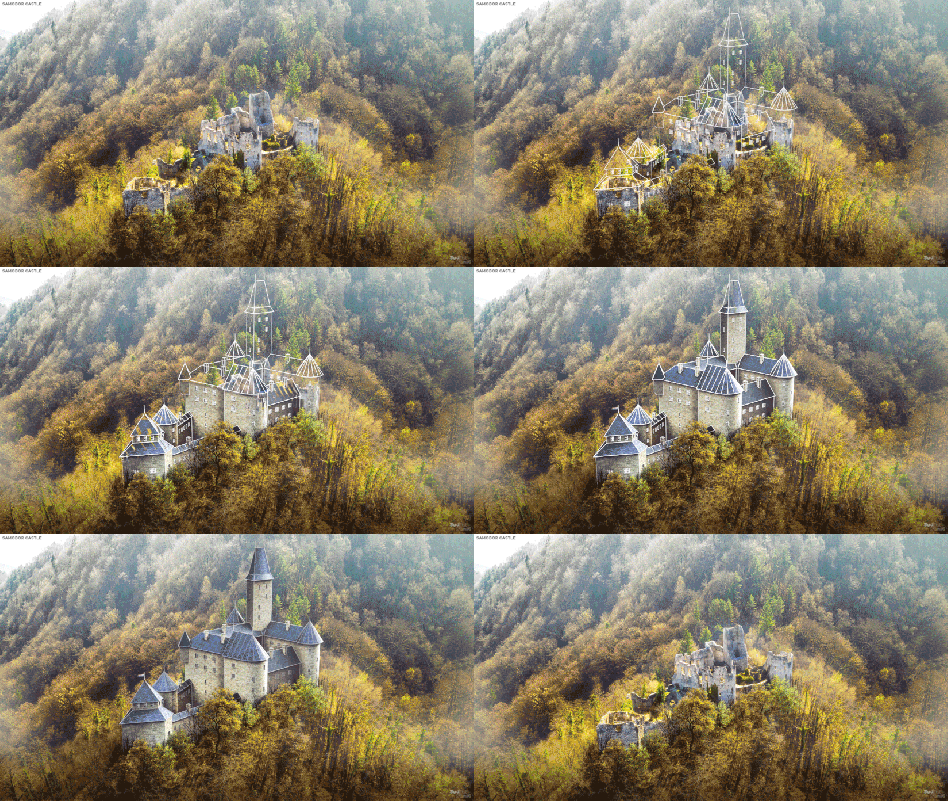
Seven European castles were virtually rebuilt, restoring them from their keeps to their baileys. Architects pored over old paintings, blueprints, and other research documents that describe the strongholds, then offered their opinions to the NeoMam Studios design team, which digitally revived the structures from the ground up.
A selection of essential articles read aloud from the latest issue of The Economist. This week, the role of big government in the time of covid-19, (10:20) assessing the havoc the pandemic is causing in emerging countries, (17:45).
In just a few weeks a virus a ten-thousandth of a millimetre in diameter has transformed Western democracies. States have shut down businesses and sealed people indoors. They have promised trillions of dollars to keep the economy on life support. If South Korea and Singapore are a guide, medical and electronic privacy are about to be cast aside. It is the most dramatic extension of state power since the second world war.
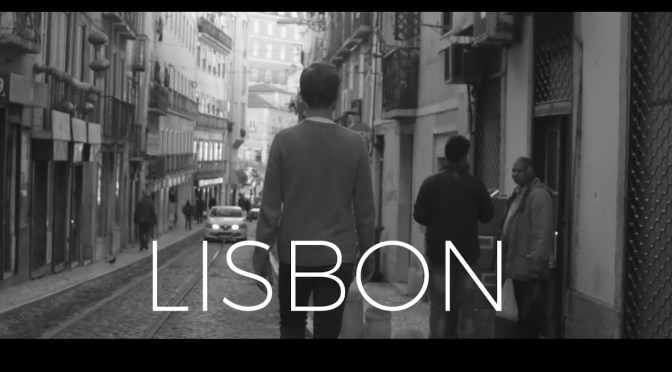
 Our Lisbon travel guide! What a treat this city is. Lisbon, and indeed much of Portugal, is a traveler’s dream come true. Easy to navigate, effortlessly enjoyable, endlessly delicious. Lisbon is a city that I could definitely live in…and I don’t say that often.
What a lot of people forget about Lisbon, and even Portugal, is their prodigious exploration over hundreds of years that created a huge global influence. And of course that legacy is experienced in Lisbon’s incredible food. Which we, of course, dive head into.

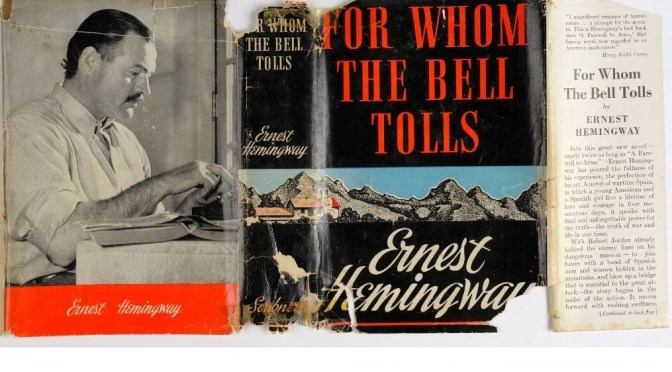
The first three chapters of Ernest Hemingway’s classic novel.
For Whom the Bell Tolls is a novel by Ernest Hemingway published in 1940. It tells the story of Robert Jordan, a young American volunteer attached to a Republican guerrilla unit during the Spanish Civil War. As a dynamiter, he is assigned to blow up a bridge during an attack on the city of Segovia.
It was published just after the end of the Spanish Civil War (1936–1939), whose general lines were well known at the time. It assumes the reader knows that the war was between a democratically elected, pro-working-class and anti-Catholic government, supported by the Soviet Union, which many foreigners like Robert went to Spain to help, and a successful, dictatorial, Catholic, pro-landowner revolt, supported by Nazi Germany and Fascist Italy. It was commonly viewed as the dress rehearsal for the Second World War. In 1940, the year the book was published, the United States had not yet entered the war, which had begun on Sept. 1, 1939, with Nazi Germany’s invasion of Poland.
The novel is regarded as one of Hemingway’s best works, along with The Sun Also Rises, A Farewell to Arms, and The Old Man and the Sea.
Ernest Miller Hemingway (July 21, 1899 – July 2, 1961) was an American journalist, novelist, short-story writer, and sportsman. His economical and understated style—which he termed the iceberg theory—had a strong influence on 20th-century fiction, while his adventurous lifestyle and his public image brought him admiration from later generations. Hemingway produced most of his work between the mid-1920s and the mid-1950s, and he won the Nobel Prize in Literature in 1954. He published seven novels, six short-story collections, and two nonfiction works. Three of his novels, four short-story collections, and three nonfiction works were published posthumously. Many of his works are considered classics of American literature.
From Wikipedia