Watch Episode 1, “Looking back to look forward,” in which Met image archivist Stephanie Post, educator and former-Project Runway host Tim Gunn, and New York City Ballet dancer Silas Farley share how their encounters with history and the Museum inform their sense of self and their creative practices.
As part of The Met’s 150th anniversary, Met Stories is a new video series and year-long social media initiative that shares unexpected and compelling stories gathered from the many people who visit The Met, whether artists, teachers, curators, actors, museum staff, designers, thought-leaders, or public figures.
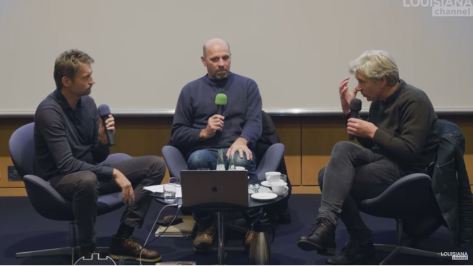
Enjoy this engaging and far-reaching conversation between two giants of art and literature, Scottish artist Peter Doig and Norwegian author Karl Ove Knausgård about the legendary Norwegian painter Edvard Munch (1863-1944).
Peter Doig (b. 1959) is a Scottish artist, who is celebrated as one of the most important representational painters working today. He has held several solo exhibitions including at the Scottish National Gallery in Edinburgh, Faurschou Foundation in Beijing, Louisiana Museum of Modern Art in Humlebæk, Musée des Beaux-Arts de Montreal, Musée d’Art Moderne de la Ville de Paris, and Tate Britain in London. His works are held in the collections of the Art Institute of Chicago, the National Gallery of Art in Washington, D.C., and Schirn Kunsthalle in Frankfurt, among others. Doig has received several prestigious awards such as the Prix Eliette von Karajan (1994) and the Wolfgang Hahn Prize of the Society for Modern Art (2008).
Karl Ove Knausgård (b. 1968) is a Norwegian author, internationally recognized for his prizewinning novel ‘My Struggle’. The novel, in which the author describes his own life, is in six volumes spanning over 3,000 pages. He is also the author of a four-volume series following the seasons – ‘On Spring’, ‘On Summer’, ‘On Fall’ and ‘On Winter’ (2015-16), ‘Inadvertent (Why I Write) (2018), and ‘So Much Longing in So Little Space: The Art of Edvard Munch’ (2019). Knausgård is the recipient of several prestigious prizes including the Austrian State Prize for European Literature.
Edvard Munch (1863-1944) is a Norwegian painter and one of the most important artists of the early 20th century. Munch was part of the Symbolist movement in the 1890s, and a pioneer of Expressionism. Among his most iconic paintings are ‘The Scream’ and ‘The Sick Child’.
Peter Doig and Karl Ove Knausgård were on stage with Christian Lund at Kunstsammlung Nordrhein-Westfalen in Düsseldorf in connection with the exhibition ‘Edvard Munch’, curated by Karl Ove Knausgård, in November 2019.
Patricia Lee Rubin Institute of Fine Arts, New York University
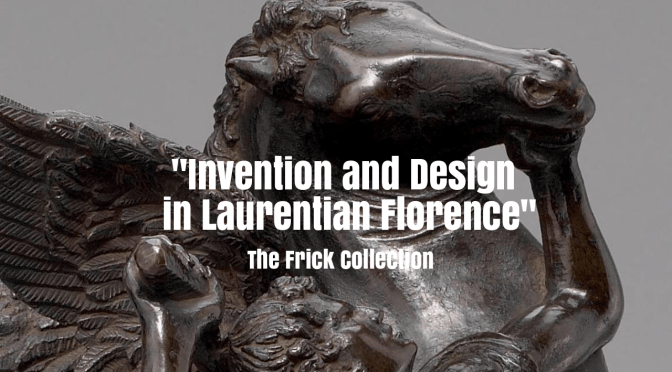
The promotion of Florentine excellence in all of the arts was a mainstay of Lorenzo de’ Medici’s cultural politics. Bertoldo di Giovanni’s sculptural production took place in a context of intense creative competition, resulting in works that are innovative, inventive, and beautiful, qualities explored in this lecture. This lecture is funded by Dino and Raffaello Tomasso.
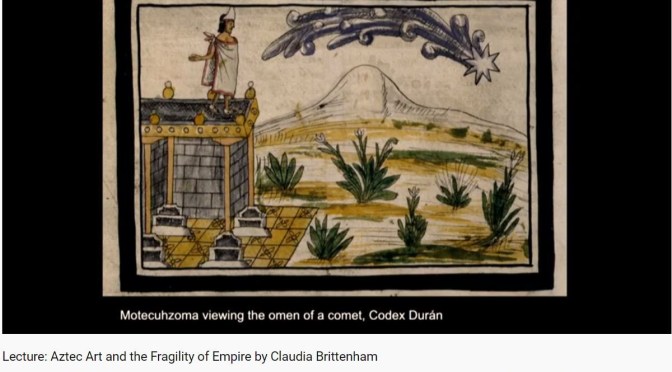
Aztec art drew on the Mesoamerican past, citing works from the ancient cities of Teotihuacan and Tula to lend authority and legitimacy to the new empire. But this engagement with the past also provoked reflection on the inevitable end of empire and the cyclicality of time, themes that resonate as the five hundredth anniversary of the Spanish invasion of Mexico unfolds this year. In this illustrated lecture, Claudia Brittenham, University of Chicago, discusses how Aztec art reflects this engagement with this historical past. This lecture delivered on October 31, 2019, was generously sponsored by the Boshell Foundation Lecture Fund.
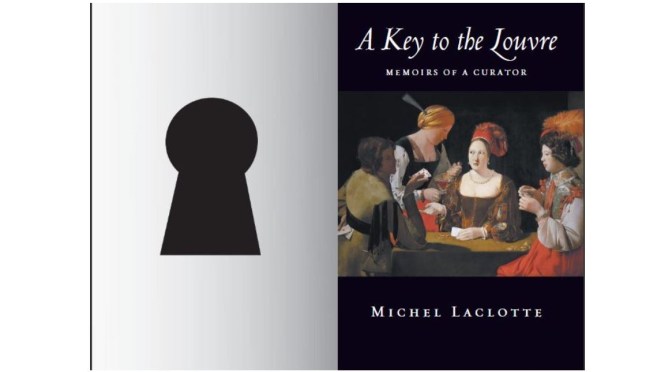
“…I am almost more interested in the paintings I didn’t get! I wish I could do a small photo exhibition of all the works that we failed to get. Of the early titans, we have two important ones, Giotto and Cimabue, but we don’t have Duccio, the third master of the birth of painting in Europe, if I may say. There was one in the Stoclet collection in Brussels, that we were following through dealer friends, but finally it was purchased by the Met. Also Velázquez, our biggest weakness!”
Michel Laclotte, President of the Louvre (1987 – 1995)
Joachim Pissarro (Rail): The premise of these three interviews is that all three personalities, each one, of course, with its own personal intonation and distinctive input, took charge of this antiquated and august institution, the Louvre, and you especially, Monsieur Laclotte, accompanied it towards the 21st century, end of the 20th century to 21st century. I think this was an incredible challenge. How did you take charge of such an ancient—two-century old—institution and how did you bring it into its present and prepare its future?
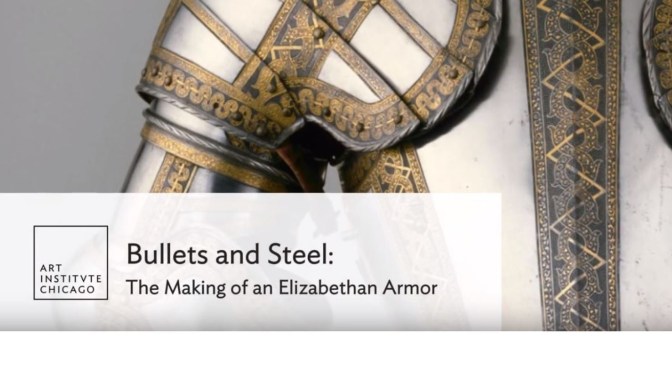
Jeffrey D. Wasson, the armorer who crafted the accurate replica of the Art Institute’s Greenwich armor, and Jonathan Tavares, the Art Institute’s associate curator of arms, armor and European decorative arts before 1700, discuss how utilizing experimental archaeology allowed them to uncover the methods used by Renaissance armorers in crafting the bulletproof protection.
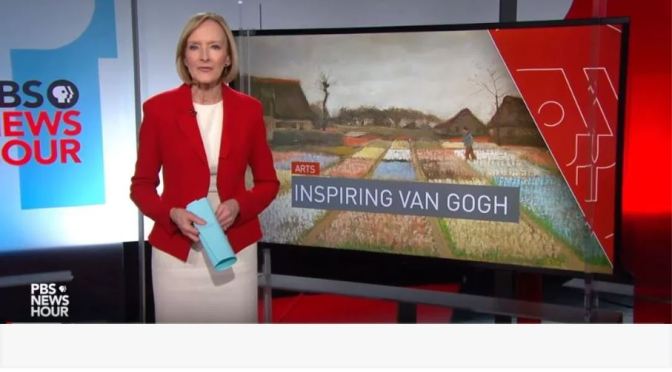
An exhibit at South Carolina’s Columbia Museum of Art shows Vincent van Gogh in a new light. “Van Gogh and His Inspirations” presents the younger, wayward artist who learned from looking hard at the world — and the work of artists around him. A private collection of his inspirations is made public for the first time and presented alongside a dozen original van Gogh works. Jeffrey Brown reports.
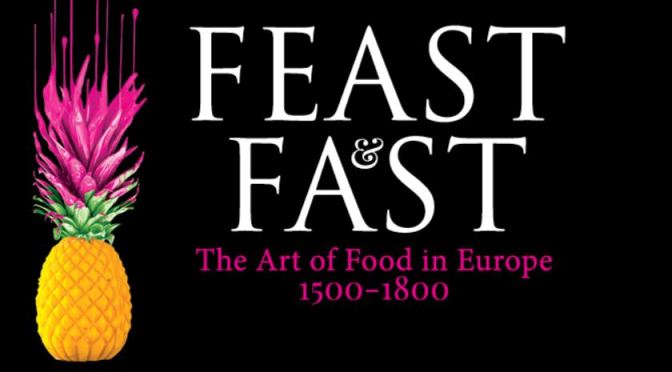
Food defines us as individuals, communities, and nations – we are what we eat and, equally, what we don’t eat. When, where, why, how and with whom we eat are crucial to our identity. Feast and Fast presents novel approaches to understanding the history and culture of food and eating in early modern Europe.
This richly illustrated book will showcase hidden and newly-conserved treasures from the Fitzwilliam Museum and other collections in and around Cambridge. It will tease out many contemporary and controversial issues – such as the origins of food and food security, overconsumption in times of austerity, and our relationship with animals and nature – through short research-led entries by some of the world’s leading cultural and food historians.
Feast and Fast explores food-related objects, images, and texts from the past in innovative ways and encourages us to rethink our evolving relationship with food.
Including beautiful full-color reproductions of the artworks, A Month in Siena is about what occurred between Matar, those paintings, and the city. That month would be an extraordinary period in the writer’s life: an exploration of how art can console and disturb in equal measure, as well as an intimate encounter with a city and its inhabitants. This is a gorgeous meditation on how centuries-old art can illuminate our own inner landscape—current relationships, long-lasting love, grief, intimacy, and solitude—and shed further light on the present world around us.
From the Pulitzer Prize–winning author of The Return comes a profoundly moving contemplation of the relationship between art and life.
Listen to an excerpt below:
After finishing his powerful memoir The Return, Hisham Matar, seeking solace and pleasure, traveled to Siena, Italy. Always finding comfort and clarity in great art, Matar immersed himself in eight significant works from the Sienese School of painting, which flourished from the thirteenth to the fifteenth centuries. Artists he had admired throughout his life, including Duccio and Ambrogio Lorenzetti, evoke earlier engagements he’d had with works by Caravaggio and Poussin, and the personal experiences that surrounded those moments.

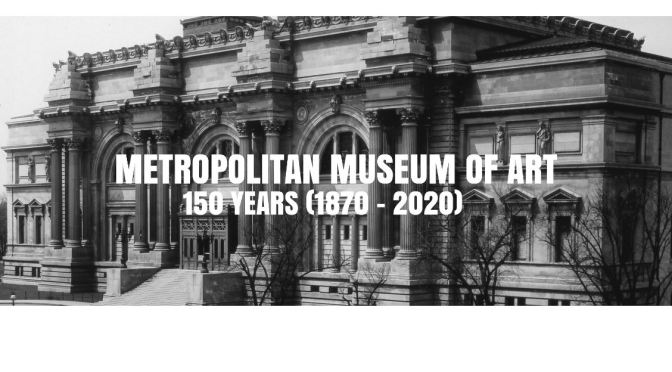
 Watch Episode 1, “Looking back to look forward,” in which Met image archivist Stephanie Post, educator and former-Project Runway host Tim Gunn, and New York City Ballet dancer Silas Farley share how their encounters with history and the Museum inform their sense of self and their creative practices.
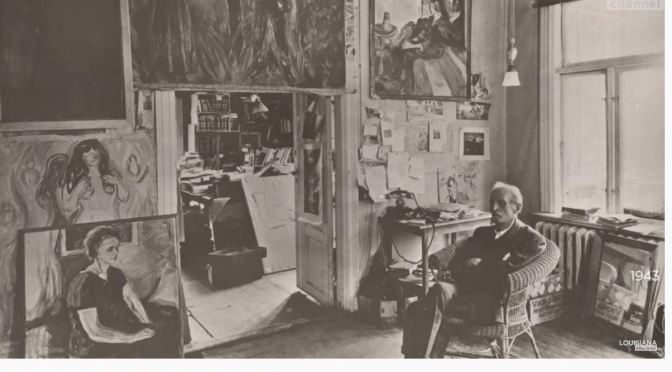
 Enjoy this engaging and far-reaching conversation between two giants of art and literature, Scottish artist Peter Doig and Norwegian author Karl Ove Knausgård about the legendary Norwegian painter Edvard Munch (1863-1944).
 “…I am almost more interested in the paintings I didn’t get! I wish I could do a small photo exhibition of all the works that we failed to get. Of the early titans, we have two important ones, Giotto and Cimabue, but we don’t have Duccio, the third master of the birth of painting in Europe, if I may say. There was one in the Stoclet collection in Brussels, that we were following through dealer friends, but finally it was purchased by the Met. Also Velázquez, our biggest weakness!”

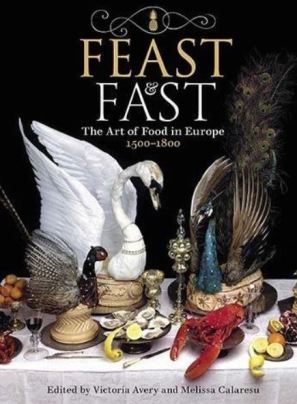 Food defines us as individuals, communities, and nations – we are what we eat and, equally, what we don’t eat. When, where, why, how and with whom we eat are crucial to our identity. Feast and Fast presents novel approaches to understanding the history and culture of food and eating in early modern Europe.
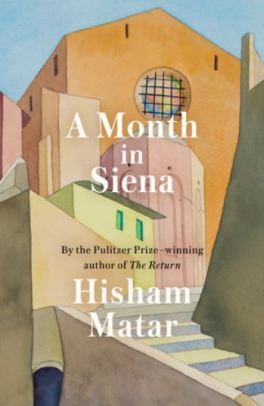 Including beautiful full-color reproductions of the artworks, A Month in Siena is about what occurred between Matar, those paintings, and the city. That month would be an extraordinary period in the writer’s life: an exploration of how art can console and disturb in equal measure, as well as an intimate encounter with a city and its inhabitants. This is a gorgeous meditation on how centuries-old art can illuminate our own inner landscape—current relationships, long-lasting love, grief, intimacy, and solitude—and shed further light on the present world around us.

