

Vaccine science and technology is advancing. Next generation vaccines could change how we combat infectious diseases, and it’s important to understand how the technology works.
Category Archives: Science

Video: ‘How Covid-19 Vaccines Are Tested’
Vaccines are rigorously studied and tested — but there are challenges along the way.
Covid-19: Penn Medicine Explains mRNA Vaccines
Vaccines are about to change the world…again. mRNA Vaccines are currently being used to battle COVID-19, and have the potential to eradicate diseases like HIV, herpes, sickle cell anemia, and even cancer. Learn how the vaccines work and where the technology could be headed in this explainer video.
Currently, the Pfizer-BioNTech and Moderna vaccines for COVID-19 use the mRNA technology developed at Penn by infectious disease expert Drew Weissman, MD, PhD, along with longtime research collaborator Katalin Karikó, PhD, an adjunct associate professor. Dr. Weissman has been studying mRNA vaccines for decades. This technology could change the way future vaccines are made to prevent countless other diseases.

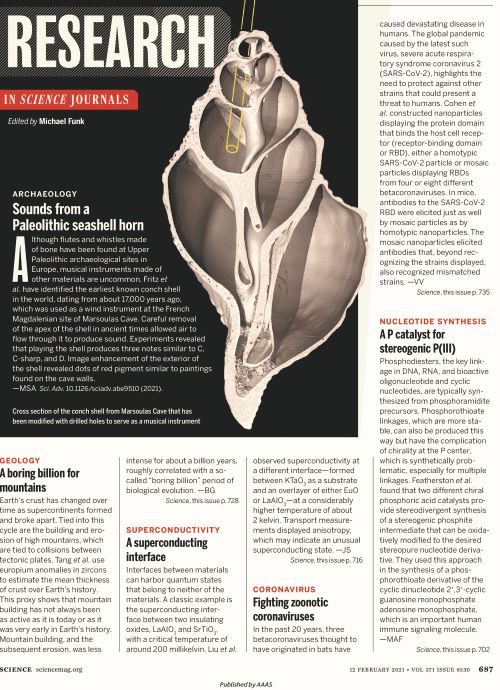
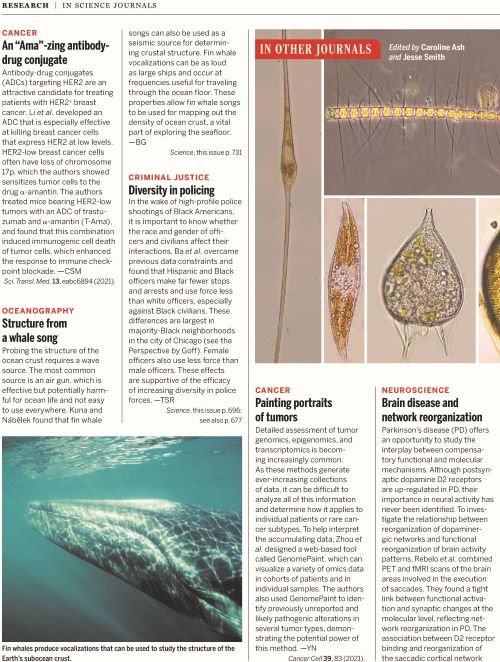
Science Podcast: Africa’s Great Green Wall, Whale Songs Image Ocean Floor
Science journalist Rachel Cernansky joins host Sarah Crespi to talk about progress on Africa’s Great Green Wall project and the important difference between planting and growing a tree.
Sarah also talks with Václav Kuna, a postdoctoral researcher at the Institute of Geophysics of the Czech Academy of Sciences, about using loud and long songs from fin whales to image structures under the ocean floor.
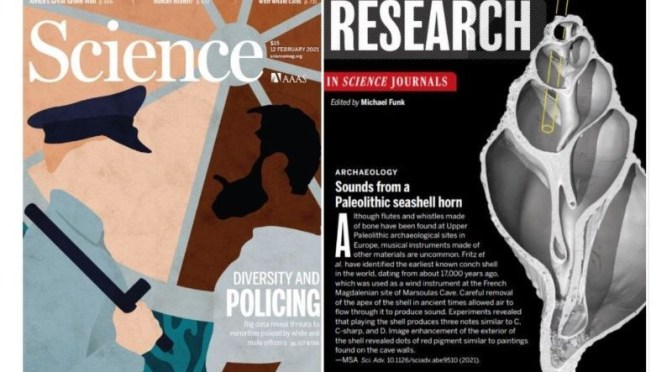
TOP JOURNALS: RESEARCH HIGHLIGHTS FROM SCIENCE MAGAZINE (FEB 12, 2021)
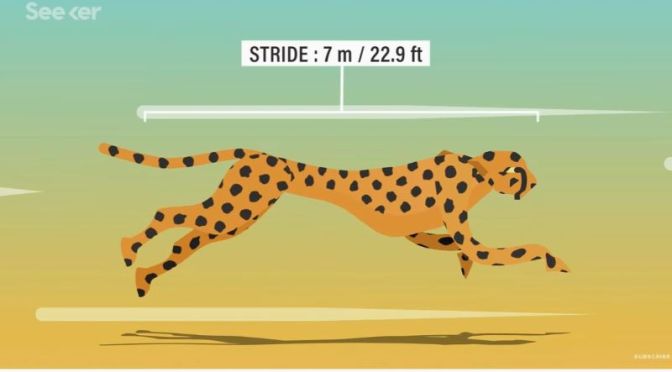
Wildlife Science: ‘Why Cheetahs Are So Fast’
Cheetahs are the fastest land animals on Earth. So what’s the secret to their incredible speed?
A cheetah has a short muzzle, small canines, and other features to help reduce the overall weight of its head. All this results in a skull that weighs around 500 grams. That’s just over a pound. Now, cheetahs need this light skull to make space for a large nasal cavity. Because cheetahs need LOTS of oxygen. To help meet this need, they have large nostrils that allow for quick and large intakes of air while the cheetah’s large chest holds its lungs and heart, which work together to help circulate the oxygen throughout its body. And that’s crucial, since a cheetah can take anywhere between 60 to 150 breaths per minute. This is a drastic increase, since at rest, a cheetah takes in about 9 breaths per minute. That means that when these cats really get going, their breathing rate goes up to SIXTEEN TIMES faster. What’s even more fascinating is that while running, you’ll notice that a cheetah’s head doesn’t move. It stays incredible still.
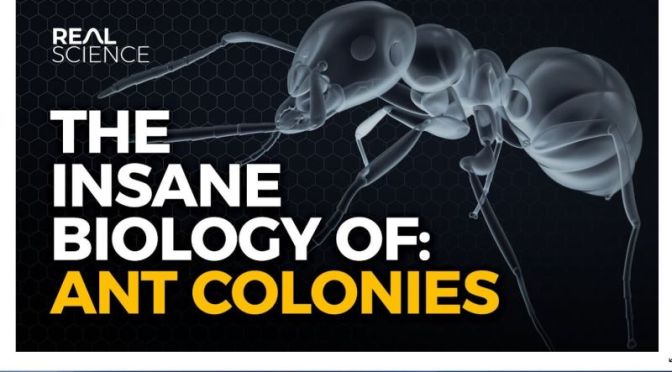
Science: ‘Insane Biology Of Ant Colonies’ (4K Video)
Ants are social insects which form small to large colonies. A typical colony contains an egg-laying queen and many adult workers together with their brood (eggs, larvae and pupae). Workers are by far the most numerous individuals in the nest. They are responsible for nest construction and maintenance, foraging, tending the brood and queen, and nest defence.
While all workers are female, they are sterile and do not lay eggs. Winged queens and males are present in the nest for only a short period. Soon after emerging they leave the nest to mate and establish new nests. Queens are generally similar to the workers, differing primarily in having larger bodies. In some species, fully winged queens are lacking and egg-laying is undertaken either by typical workers or by individuals which are morphologically intermediate between typical queens and workers (these are called ergatoid queens). Males are generally about the same size as the workers or smaller, and have smaller heads with large ocelli, very short scapes and small mandibles. In many cases males look more like wasps than ants.

Covid-19: Understanding The New Variants & New Vaccines Effectiveness
Researchers are scrambling to understand the biology of new coronavirus variants and the impact they might have on vaccine efficacy.
Around the world, concern is growing about the impact that new, faster-spreading variants of the SARS-CoV-2 virus will have on the pandemic.
In this episode of Coronapod, we discuss what these variants are, and the best way to respond to them, in the face of increasing evidence that some can evade the immunity produced by vaccination or previous infection.
News: ‘A bloody mess’: Confusion reigns over naming of new COVID variants
News: Fast-spreading COVID variant can elude immune responses
News: Could new COVID variants undermine vaccines? Labs scramble to find out
News: How to redesign COVID vaccines so they protect against variants
News: J&J’s one-shot COVID vaccine offers hope for faster protection
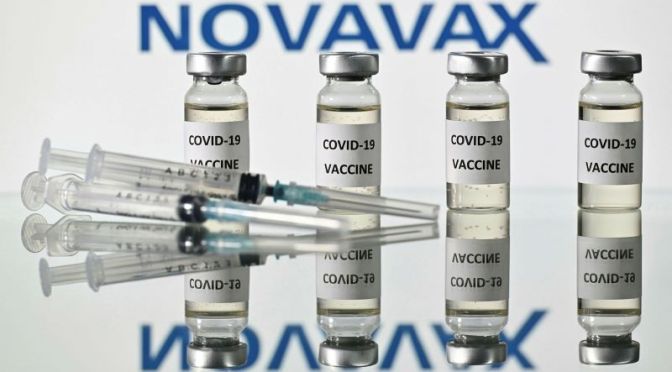
Protein Vaccine: Novavax Primes Immune System To Make Antibodies (Video)

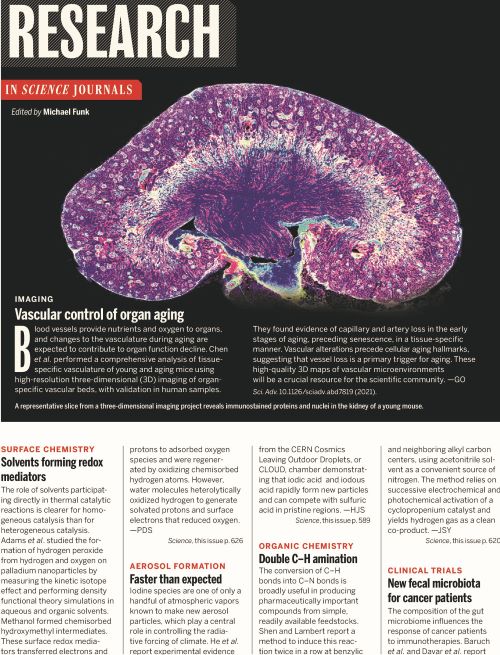
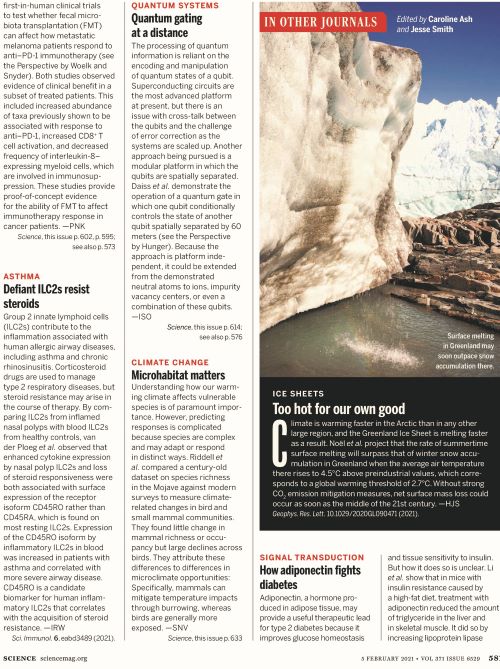
TOP JOURNALS: RESEARCH HIGHLIGHTS FROM SCIENCE MAGAZINE (FEB 5, 2021)
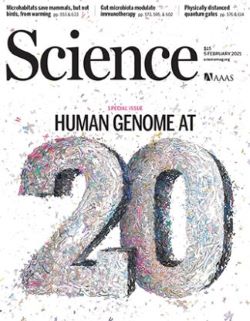
This week, Science celebrates the impending 20th anniversary of the publication of the draft human genome sequence—a landmark achievement by any measure…The Human Genome Project (HGP) was an internationally supported public project (Celera Genomics was the private effort that simultaneously sequenced the human genome). When the endeavor was launched in 1990, collaboration among a diverse group of scientists was essential because the sequencing was distributed across a number of international research sites.
The American Association for the Advancement of Science (AAAS, the publisher of Science) also looks forward to next week’s annual meeting, whose theme is “Understanding Dynamic Ecosystems.” At first glance, these two events may seem unrelated. But the successful completion of the human genome sequence ushered in biology’s era of “big science” and created a research ecosystem for tackling complex, technology-driven, and data-intensive multidisciplinary projects that continue to improve our understanding of cancer, the microbiome, the brain, and other areas of biology.
The Human Genome Project (HGP) was an internationally supported public project (Celera Genomics was the private effort that simultaneously sequenced the human genome). When the endeavor was launched in 1990, collaboration among a diverse group of scientists was essential because the sequencing was distributed across a number of international research sites. High-throughput technologies for DNA sequencing were critical to the project’s success, and the participation of biotech companies in the effort was instrumental in driving down the cost, speed, and throughput of generating DNA sequence. The ever-increasing amount of sequence data drove the development of mathematical and computational tools for assembling and annotating the data. Neither the laboratory scientists nor the computational scientists could have done this alone, and the convergence of these disciplines has been one of the most important legacies of the early genome efforts. There was also a commitment to train the next generation of genome scientists, and over the past 20 years, many colleges and universities have established new undergraduate and graduate programs in quantitative and systems biology. Life sciences students today graduate with a very different set of skills than they did in 2000.

