
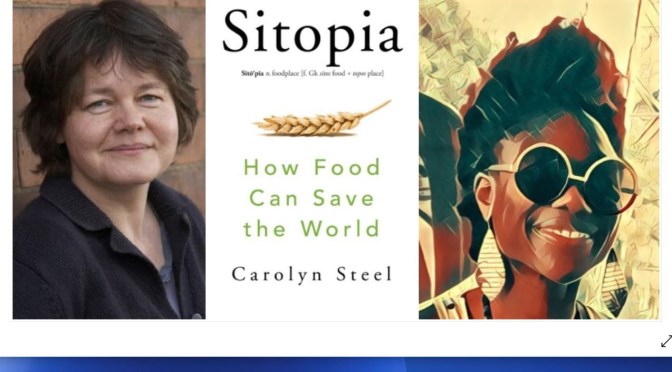
Andrew Tuck is joined by Carolyn Steel, author of ‘Sitopia’, and urban epidemiologist Tolullah Oni, who unpack the lessons for our cities from 2020. Plus: Jan Gehl brings us some inspiration and hope for what’s ahead.
Category Archives: Reviews
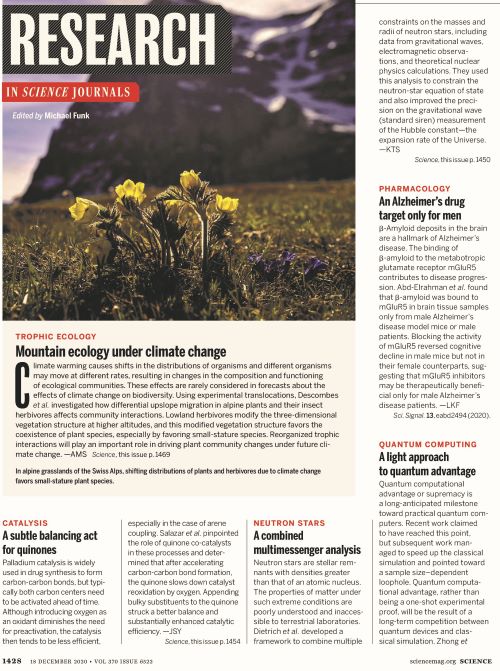
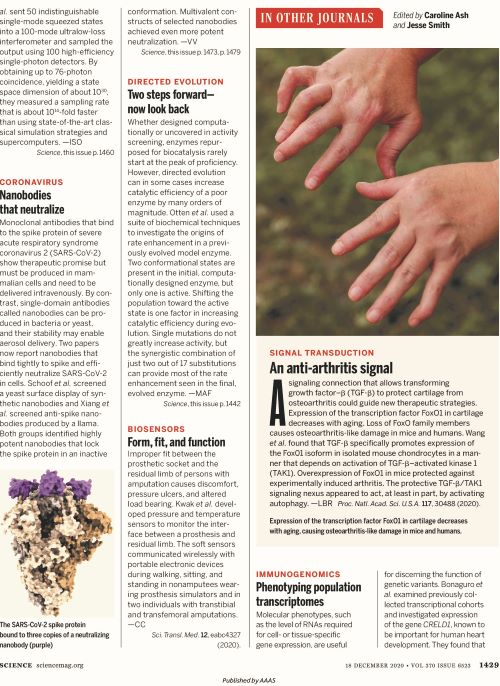
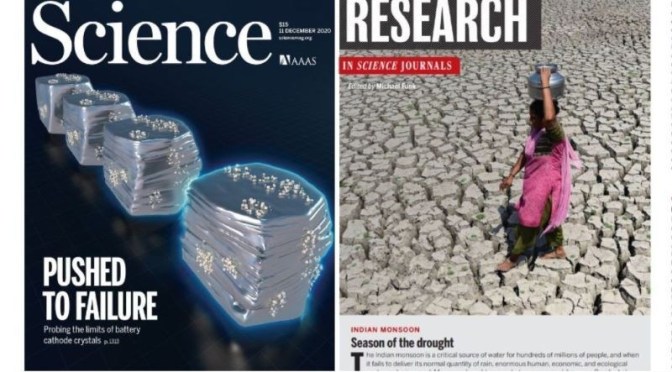
TOP JOURNALS: RESEARCH HIGHLIGHTS FROM SCIENCE MAGAZINE (DEC 18, 2020)

Science Podcast: The Top Stories, Breakthroughs And Books Of 2020

Our last episode of the year is a celebration of science in 2020. First, host Sarah Crespi talks with Online News Editor David Grimm about some of the top online news stories of the year—from how undertaker bees detect the dead to the first board game of death. (It’s not as grim as it sounds.)
Sarah then talks with Online News Editor Catherine Matacic about the Breakthrough of the Year, scientific breakdowns, and some of the runners-up—amazing accomplishments in science achieved in the face of a global pandemic. Finally, Book Review Editor Valerie Thompson joins Sarah to discuss highlights from the books section—on topics as varied as eating wild foods to how the materials we make end up shaping us.

Road Tests: The New ‘Harley-Davidson Serial 1 Electric Bikes’ (Video)
Harley-Davidson’s new Serial 1 electric bikes are coming, and we got one of the first test rides. The bikes are gorgeous, with a clean, non cluttered design and an impressive spec sheet. And they are an absolute joy to ride. But are they worth $5,000? Learn more about the Harley-Davidson Serial 1: http://bit.ly/3gXZL5B
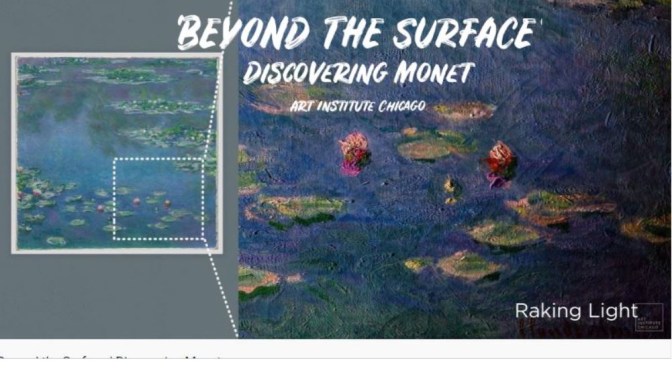
Art: ‘Beyond The Surface’ – Monet’s “Changing Light”
This video takes an in-depth look at Monet’s approach to painting in series, an approach that consumed his later years. From stacks of wheat in the French countryside to sites of foggy London to water lilies at his home garden in Giverny, Monet painted beloved subjects again and again, depicting changing light and atmospheric conditions in works that captivate us still today. New scientific discoveries, however, reveal that Monet’s genius goes well beyond what we see on the surface.
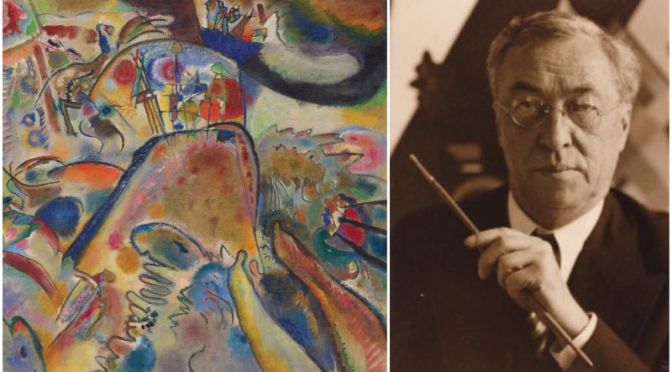
Exhibitions: ‘Kandinsky’ At The Guggenheim Bilbao In Spain (Nov ’20 To May ’21)
As a pioneer of abstraction and a renowned aesthetic theorist, Vasily Kandinsky (b. 1866, Moscow; d. 1944, Neuilly-sur-Seine, France) is among the foremost artistic innovators of the early twentieth century.
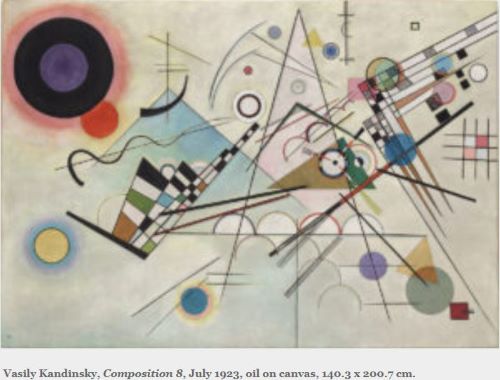
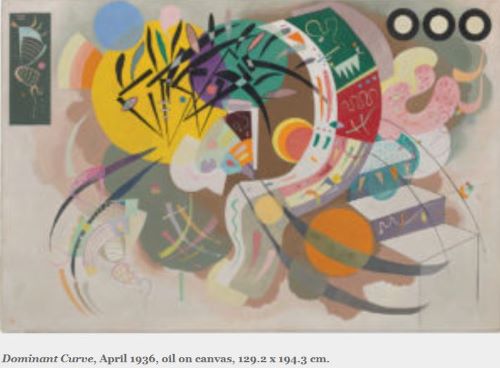
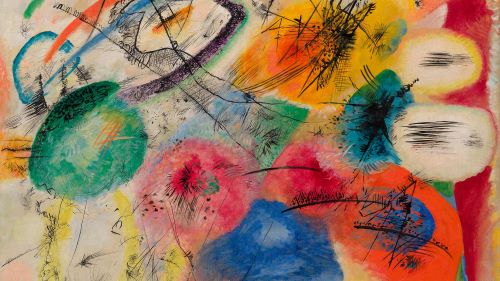
In his endeavor to free painting from its ties to the natural world, Kandinsky discovered a new subject matter based solely on the artist’s “inner necessity” that would remain his lifelong concern.
In Munich in the 1900s and early 1910s, Kandinsky began exploring the expressive possibilities of color and composition, but he was abruptly forced to leave Germany with the outbreak of World War I, in 1914. The artist eventually returned to his native Moscow, and there his pictorial vocabulary started to reflect the utopian experiments of the Russian avant-garde, who emphasized geometric shapes in an effort to establish a universal aesthetic language. Kandinsky subsequently joined the faculty of the Bauhaus, a German school of art and applied design that shared his belief in art’s ability to transform self and society. Compelled to abandon Germany again when the Bauhaus closed under Nazi pressure in 1933, he settled outside Paris, where Surrealism and the natural sciences influenced Kandinsky’s biomorphic imagery.
More so than any other artist, Kandinsky is intertwined with the history of the Solomon R. Guggenheim Foundation, established in New York in 1937. Industrialist and museum founder Solomon R. Guggenheim began collecting Kandinsky’s work in 1929 and met him at the Dessau Bauhaus the following year. This exhibition draws from the foundation’s extensive holdings to illustrate the full arc of Kandinsky’s seminal career.
Curator: Megan Fontanella
Organized by The Solomon R. Guggenheim Foundation, New York
Wassily Wassilyevich Kandinsky was a Russian painter and art theorist. Kandinsky is generally credited as the pioneer of abstract art. Born in Moscow, Kandinsky spent his childhood in Odessa, where he graduated at Grekov Odessa Art school. He enrolled at the University of Moscow, studying law and economics.
Science: Researchers Build Crash-Resistant Flying ‘Beetlebot’ (Video)
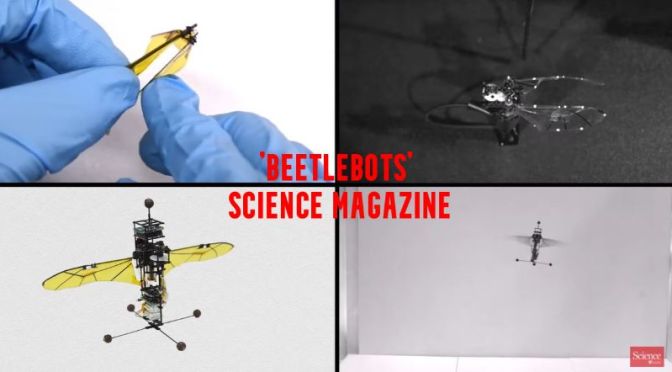
Beetles are virtually crash resistant. Their wings fold up when they collide with objects, and then quickly spring back into place. That helps the insects stay on course and fly straight, rather than spiral to the ground, while exerting little energy. Researchers have now built a winged robot that mimics this capability.
The “beetlebot” keeps flying, even after it crashes into poles, researchers report this month in Science. The energy-efficient robot could even navigate narrow environments, such as collapsed buildings, to aid rescue missions, the team says.

Reviews: TIME Magazine – Person Of The Year (2020)
The Biden-Harris ticket represents something historic. Person of the Year is not just about the year that was, but about where we’re headed.
TOP JOURNALS: RESEARCH HIGHLIGHTS FROM SCIENCE MAGAZINE (DEC 11, 2020)
Science Podcast: Shallow Pool Origins For Life On Earth, ‘Covidization’
How water chemistry is shifting researchers’ thoughts on where life might have arisen, and a new model to tackle climate change equitably and economically.
In this episode:
00:46 A shallow start to life on Earth?
It’s long been thought that life on Earth first appeared in the oceans. However, the chemical complexities involved in creating biopolymers in water has led some scientists to speculate that shallow pools on land were actually the most likely location for early life.
News Feature: How the first life on Earth survived its biggest threat — water
07:44 Coronapod
The COVID-19 pandemic has massively shifted the scientific landscape, changing research and funding priorities across the world. While this shift was necessary for the development of things like vaccines, there are concerns that the ‘covidization’ of research could have long-term impacts on other areas of research.
News: Scientists fear that ‘covidization’ is distorting research
20:45 Research Highlights
The Hayabusa2 mission successfully delivers a tiny cargo of asteroid material back to Earth, and a team in China claims to have made the first definitive demonstration of computational ‘quantum advantage’.
Nature News: Physicists in China challenge Google’s ‘quantum advantage’
22:38 Calculating carbon
Limiting carbon emissions is essential to tackling climate change. However, working out how to do this in a way that is fair to nations worldwide is notoriously difficult. Now, researchers have developed a model that gives some surprising insights in how to equitably limit carbon.
Research Article: Bauer et al.
News and Views: Trade-offs for equitable climate policy assessed
29:08 Briefing Chat
We discuss some highlights from the Nature Briefing. This time, bioluminescent Australian animals, and the collapse of the Arecibo telescope.

