Category Archives: Research

Research Preview: Science Magazine – March 10, 2023

Current Issue Cover

Science Magazine – March 10, 2023 issue: A honey bee (Apis mellifera) performs a complex dance to communicate resource location and value. Research now shows that novice bees dance better and communicate location more accurately if they were previously able to follow and socially learn from more experienced dancers. 

MRI for all: Cheap portable scanners aim to revolutionize medical imaging

A technician pushes a portable MRI scanner through a hospital hallway.

But will doctors embrace the grainier, lower-resolution images of the body’s insides?

Hidden hydrogen: Earth may hold vast stores of a renewable, carbon-free fuel

Overlooked by the oil industry, natural hydrogen could power society for thousands of years

Oceans away: Is raising salmon on land the next big thing in farming fish?

Giant tanks full of Atlantic salmon could help meet rising demand while lowering environmental impact

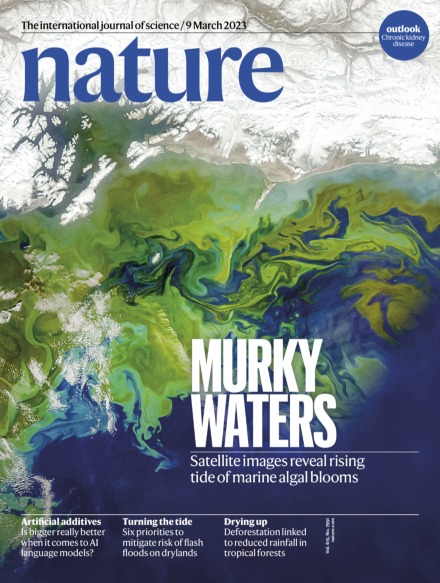
Research Preview: Nature Magazine – March 9, 2023

Volume 615 Issue 7951

nature Magazine – March 9, 2023 issue:

Sims-style ‘digital twin’ models can tell us if food systems will weather crises

From COVID-19 to the war in Ukraine, virtual models could inform global food policy before emergencies unfold.

Big bats fly towards extinction with hunters in pursuit

Human hunt at least 19% of bat species worldwide — especially flying foxes, which can have wingspans of 1.5 metres.

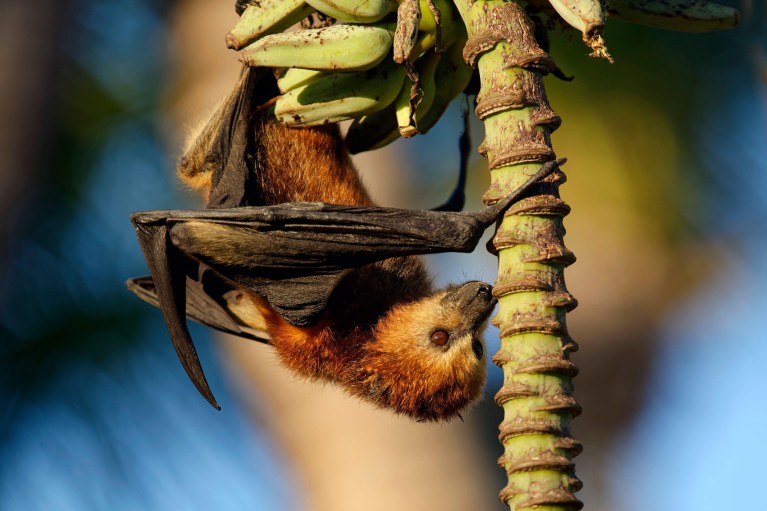
Close-up of a Mauritian flying fox resting upside-down on a banana plant.
The Mauritian flying fox (Pteroptus niger). As relatively large bats, flying foxes are hunted more heavily than other species. Credit: Fabrice Bettex Photography/Alamy

Large tropical bats with narrow home ranges are disproportionately likely to be hunted by humans, according to a global analysis of 1,320 bat species — nearly all of the 1,400 known to science1.

How to stop the bird flu outbreak becoming a pandemic

From tracking the disease’s spread in wild birds to updating human vaccines, there are measures that could help keep avian influenza in check.

A veterinarian injects avian flu vaccine into a goose in Taiyuan, Shanxi Province of China.
A goose being vaccinated against avian influenza in China.Credit: Wei Liang/China News Service/Getty

Fears are rising about bird flu’s potential to spark a human pandemic, as well as its destruction of wildlife and farmed birds. An 11-year-old girl tragically died in Cambodia last week after catching avian influenza. That followed reports earlier this year of the virus spreading from mammal to mammal through a mink farm, and causing mass mortality in Peruvian birds and sea lions. Since the beginning of 2022, more than 50 million poultry birds in the United States, and a similar number in Europe, have either died of the disease or been killed in efforts to stem its spread. Can bird flu be stopped, and if yes, how?

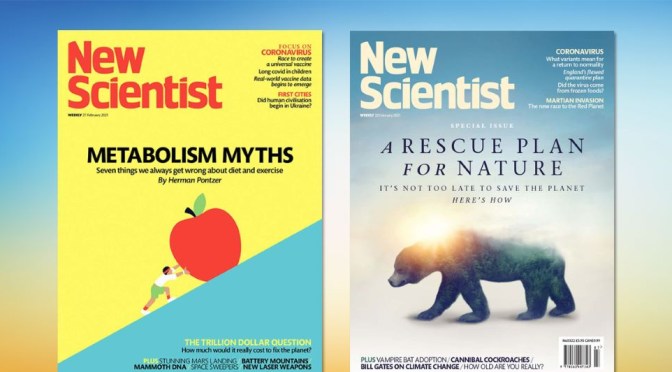
Previews: New Scientist Magazine – March 11, 2023

Issue 3429 | Magazine cover date: 11 March 2023 | New Scientist

New Scientist – March 11, 2023 issue:

Anaximander review: Did Anaximander create science, asks Carlo Rovelli

Ancient philosopher Anaximander’s discoveries about rain, wind and the cosmos may make him the true force behind modern science, argues physicist Carlo Rovelli in his newly republished first book

Restoring the brain’s mitochondria could slow ageing and end dementia

The surprisingly useful liquids that mop up gases like a sponge

The truth about cats’ domestication and why they really quite like us

Influenza viruses may have originated in fish 600 million years ago

Galaxies’ missing matter may be found – but now there’s too much of it

Changes to surrogacy laws must consider future reproductive technology

The UK’s official swimming rivers are too polluted to swim in

Research Preview: Science Magazine – March 3, 2023

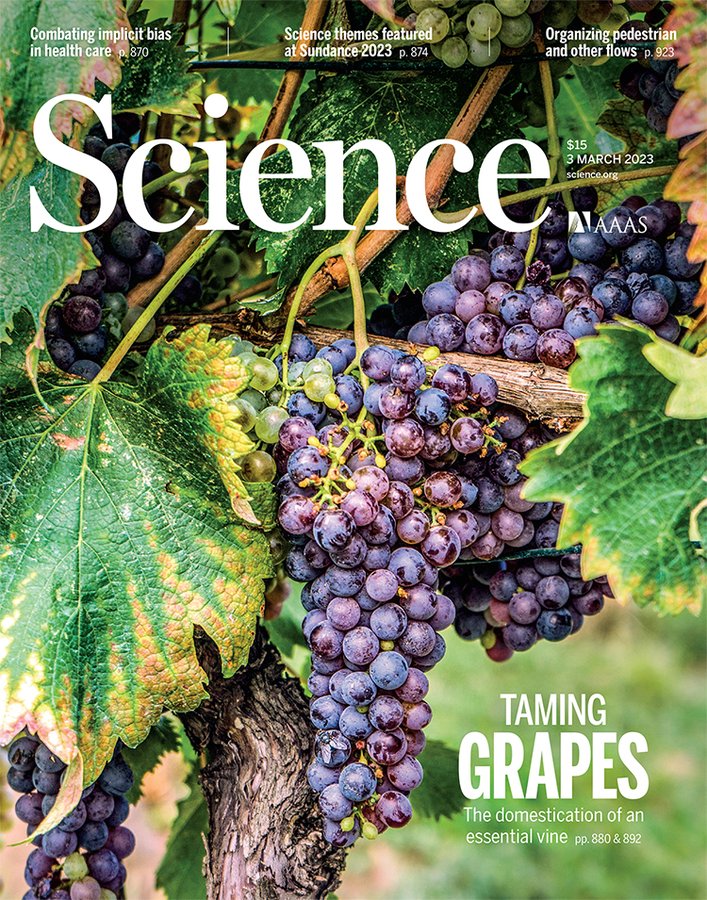
Image

Science Magazine – March 3, 2023 issue: The substantial grapevine diversity in the world, showcased here by the vigorous ‘Saperavi’ variety in the Kakheti region of Georgia, reveals secrets about human agricultural history. A genomic survey uncovers two concurrent domestication origins of this essential vine. It also shows how Western Asian table grapes diversified along human migration trails into muscat and unique western wine grapes. 

Ancient DNA upends European prehistory

Genes reveal striking diversity within similar ice age cultures

Hundred million years of landscape dynamics from catchment to global scale

Our capability to reconstruct past landscapes and the processes that shape them underpins our understanding of paleo-Earth. We take advantage of a global-scale landscape evolution model assimilating paleoelevation and paleoclimate reconstructions over the past 100 million years.

Research Preview: Nature Magazine – March 2, 2023

Volume 615 Issue 7950

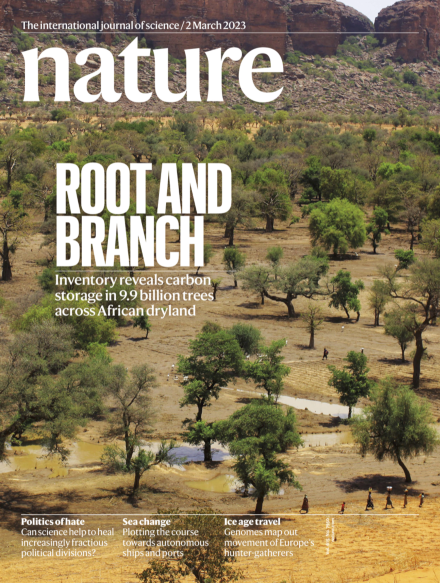
nature – March 2, 2023 issue:

Custom-built drug shows its powers against tuberculosis

An upgraded antibiotic holds promise for treating tuberculosis strains that are resistant to existing treatments.

Kevlar helps to make one tough synthetic tendon

A water-filled gel has the strength and elasticity of natural tendon.

Big dino, little dino: how T. rex’s relatives changed their size

‘Impressive’ fossil analysis reveals why some dinosaurs were massive but their cousins were tiny.

Research Preview: Science Magazine – Feb 24, 2023

Contents | Science 379, 6634

Science Magazine – February 24, 2023 issue:

Samples returned from the asteroid Ryugu are similar to Ivuna-type carbonaceous meteorites

The Hayabusa2 spacecraft made two landings on the asteroid (162173) Ryugu in 2019, during which it collected samples of the surface material. Those samples were delivered to Earth in December 2020. The colors, shapes, and morphologies of the returned samples are consistent with those observed on Ryugu by Hayabusa2, indicating that they are representative of the asteroid.

Journals take up arms against AI-written text

Many ask authors to disclose use of ChatGPT and other generative artificial intelligence

Iron stress threatens Southern Ocean phytoplankton

Lack of the nutrient limits the plants’ productivity, key to climate and ecosystems

Research Preview: Nature Magazine – Feb 23, 2023

Volume 614 Issue 7949

nature – February 23, 2023 issue:

Exercise triggers fat breakdown at some times of day and not others

Adipose tissue in mice dumps fat during early workouts rather than late ones.

Cities worldwide claw vast amounts of land from the sea

China, the United Arab Emirates and other countries are adding area by converting wetlands and shallow waters into solid land.

Genome editor tackles disease that can cause sudden death

Scientists repair a mutation that causes heart-muscle abnormalities and can kill without warning.

Previews: New Scientist Magazine – Feb 25, 2023

ISSUE 3427 | MAGAZINE COVER DATE: 25 February 2023 | New Scientist

New Scientist – February 25, 2023 issue:

The amazing ways electricity in your body shapes you and your health

Your cells crackle with electric signals that guide embryonic development and heal wounds. If we can learn to tweak this “bioelectric code”, we might be able to prevent cancer and even grow new limbs

How AI chatbots in search engines will completely change the internet

Moves by Google, Microsoft and Baidu to bring AI chatbots into their search engines may bring big advantages, but they could also damage many industries and change the very way we interact with the web

Science Reviews: Nature Magazine – Feb 16, 2023

Volume 614 Issue 7948

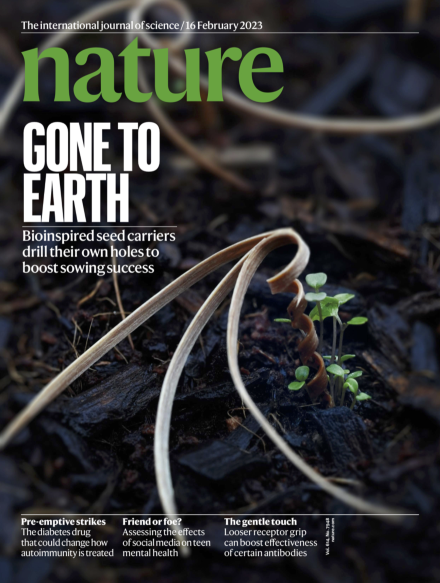
nature – February 16, 2023 issue:

Solar geoengineering is scary — that’s why we should research it

Research on blocking sunlight needs a dose of realpolitik.

How a tiny genetic change inflicts old age on young kids

Scientists identify a molecule key to the development of progeria, a lethal disease that causes hyper-accelerated ageing.

Noise shatters deep sleep thanks to dedicated brain circuit

Neurons that help to rouse you from sound slumber are connected to those that receive signals from the spinal cord.

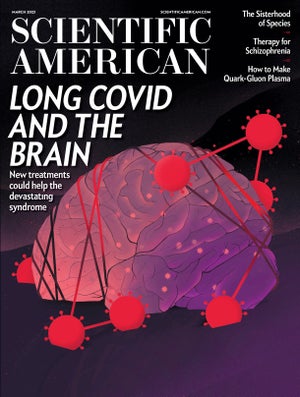
Science Review: Scientific American – March 2023

March 2023

Scientific American – March 2023 Issue:

Long COVID Now Looks like a Neurological Disease, Helping Doctors to Focus Treatments

The causes of long COVID, which disables millions, may come together in the brain and nervous system

Tiny Bubbles of Quark-Gluon Plasma Re-create the Early Universe

New experiments can re-create the young cosmos, when it was a mash of fundamental particles, more precisely than ever before

Babies Are Born with an Innate Number Sense

Plato was right: newborns do math