
Category Archives: Nature

Conservation: The Farne Islands And Long Nanny In Northumberland, UK

National Trust (March 13, 2023) – In the first episode of The Wild Life, a new series of nature films from the National Trust, presenter Levison Wood explores one of England’s most important seabird colonies. The Farne Islands, off the Northumberland coast, have been cared for by the National Trust since 1925 and are a breeding site for 23 species of seabird, including 43,000 puffin pairs.

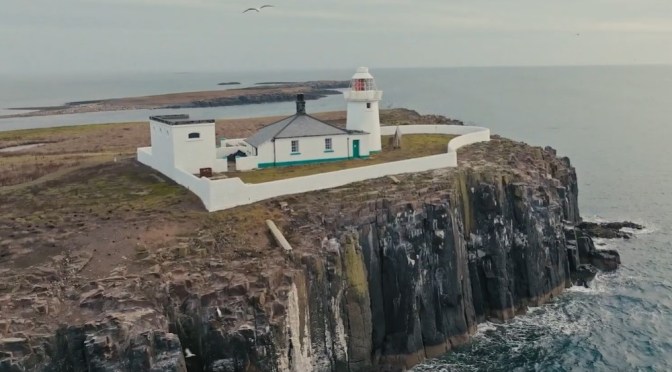
The islands are also home to grey seals with around 2,000 pups born every autumn. With an introduction from presenter Julia Bradbury, this film explores the Inner Farne, where you’ll see dive-bombing terns, a medieval chapel and a Victorian lighthouse. Levison finds out what life is like for the rangers who had to deal with the devastating impact of bird flu. He also learns more about the work being done to maintain and protect the area’s fragile ecosystem, address the impact of climate change, protect bird nests and monitor species.

Parts of the Farne Islands may be closed to the public and landing on the islands may not be possible due to bird flu. If closures are in place, you can still experience the islands on a boat tour. Please check the website before you visit: Farne Islands | Northumberland | National Trust With your support we can continue to care for coastal places like The Farne Islands.

Donate today and help protect wildlife and nature for future generations. https://www.nationaltrust.org.uk/supp…
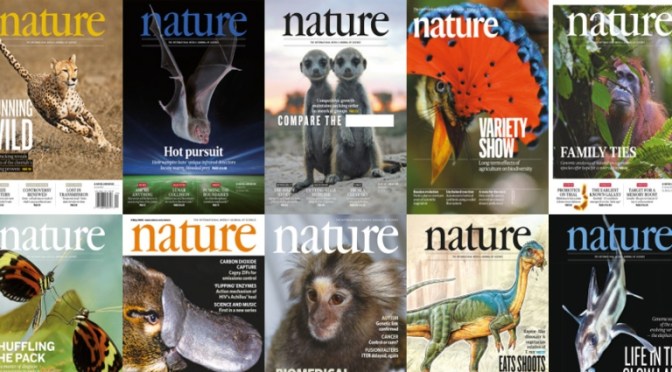
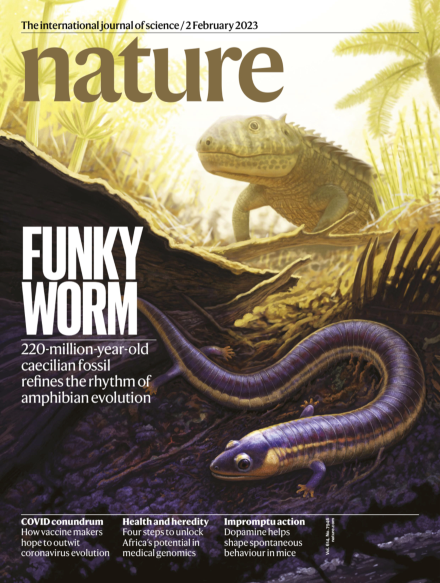
Research Preview: Nature Magazine- February 2, 2023

Volume 614 Issue 7946

nature magazine – February 2, 2023:

How your brain stays on task when sizing someone up

Two brain regions help humans to filter out irrelevant information and concentrate on the right stuff in social situations.

Unspoilt forests fall to feed the global supply chain

Export of minerals, wood and energy drives a surprisingly high fraction of deforestation.

Underwater volcano near Greece is a sleeping menace

Magma chamber is discovered beneath Kolumbo volcano, near the Greek island of Santorini.

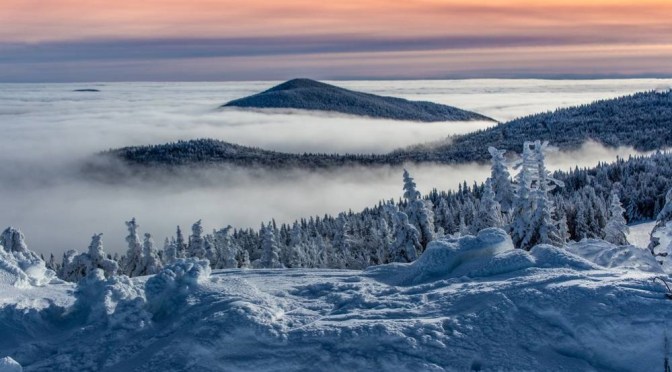
Nature: White Mountains Of New Hampshire (2023)

January 29, 2023: We leave you this Sunday morning in a snowstorm, in the White Mountains of New Hampshire. Videographer: Scot Miller.

There are 733 named mountains in the White Mountains of New Hampshire. The highest and most prominent of these mountains is Mount Washington, which stands at a respectable 6,288 feet (1,917 meters), making it the tallest peak in the Northeastern United States.

While the peaks of the White Mountains don’t manage to break the 6,500 ft (1,981m) barrier, they are home to some of the most difficult hiking terrain and worst weather in the continental United States.

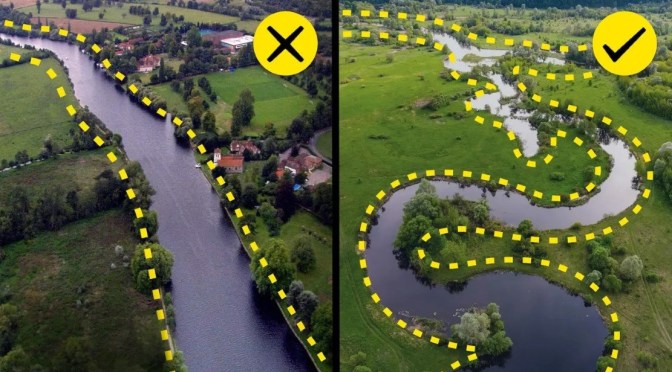
Restoration: How Rivers ‘Should Look’ In Nature

The Guardian – The quintessential image of a river you might recognize from post cards and paintings – nice and straight with a tidy riverbank – is not actually how it is supposed to look.

It’s the result of centuries of industrial and agricultural development. And it’s become a problem, exacerbating the impact of both extreme flooding and extreme drought. Josh Toussaint-Strauss looks into how so many rivers ended up this way, and how river restoration is helping to reestablish biodiversity and combat some of the effects of the climate crisis.

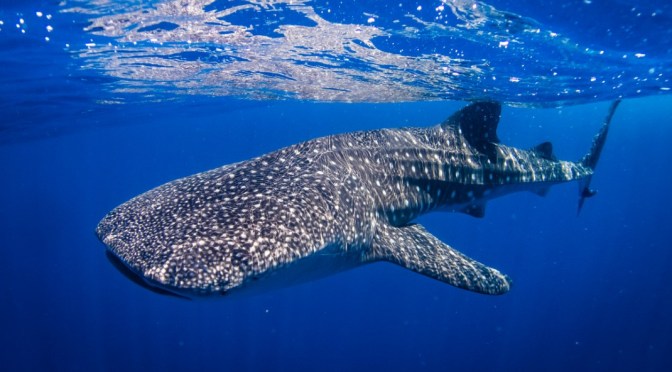
Views: Whale Sharks Off Coast Of Cancun, Mexico

CBS Sunday Morning – We leave you this Sunday morning with whale sharks near Holbox Island off the coast of Cancun, in Mexico. Videographer: Lance Milbrand.

As the largest fish in the sea, reaching lengths of 40 feet or more, whale sharks have an enormous menu from which to choose. Fortunately for most sea-dwellers—and us!—their favorite meal is plankton. They scoop these tiny plants and animals up, along with any small fish that happen to be around, with their colossal gaping mouths while swimming close to the water’s surface.

Filter Feeding

The whale shark, like the world’s second largest fish, the basking shark, is a filter feeder. In order to eat, the beast juts out its formidably sized jaws and passively filters everything in its path. The mechanism is theorized to be a technique called “cross-flow filtration,” similar to some bony fish and baleen whales.

Views: Ausable Canyon – ‘The Grand Canyon Of The Adirondacks’ In New York

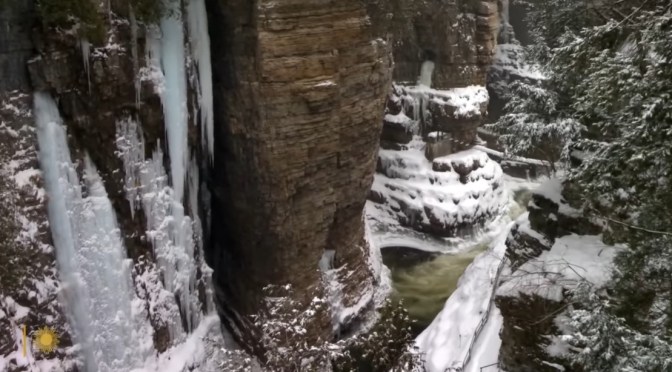
CBS Sunday Morning – We leave you this first Sunday of 2023 at Ausable Chasm (known as the “Grand Canyon of the Adirondacks”), near Lake Champlain in New York state. Videographer: Jaime McDonald.

Ausable Chasm, open since 1870, is the oldest and largest natural attraction in the Adirondacks. More than 10 million visitors have explored the chasm on the well-maintained scenic nature trails.

Winter Views: Good Earth State Park, South Dakota

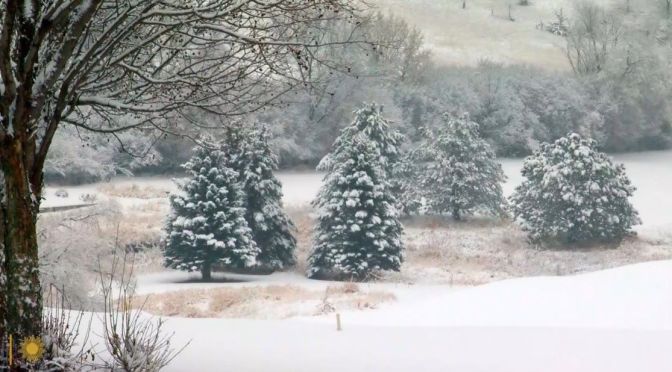
CBS Sunday Morning – A winter wonderland, at Good Earth State Park in South Dakota. Videographer: Kevin Kjergaard.

Good Earth State Park southeast of Sioux Falls is an important cultural and historical site as well as a unique nature retreat adjacent to the most developed and populated part of our state. The site itself is one of the oldest sites of long-term human habitation in the United States. The river, abundant wildlife, fertile flood plains, availability of pipestone (catlinite) and protection from winds made the area an important gathering place for seasonal ceremonies and a significant trading center for many tribal peoples from 1300-1700 A.D.

During this time, occupants were primarily Oneota Tradition Peoples, including Omaha, Ponca, Ioway and Otoe, but many other tribes were attracted and participated in trading agricultural product as well as hides, pelts and pipestone (catlinite).

This is the largest Oneota cultural site discovered to date in the upper Midwest. There are two other significant Oneota cultural sites located respectively in southwest Iowa and central Missouri.

Siberia Views: The Nomadic Nenets Reindeer Herders

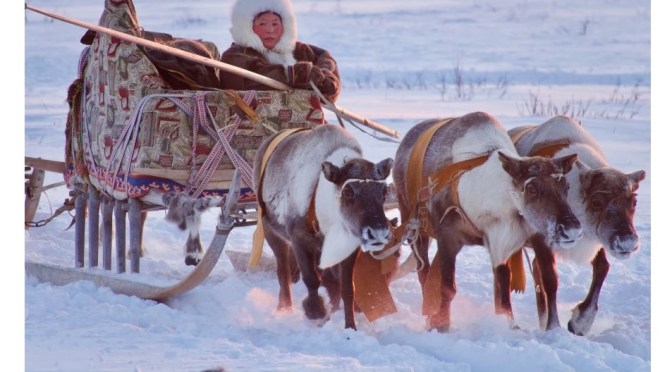
BBC Earth – Arctic Siberia’s Nomadic Nenets herders have migrated with reindeer for generations. Reindeer were among the last animals domesticated by humans.

According to the Nenets legend, the humans promised the reindeer that they would protect them on their long migration from the mainland to the seashores as long as the reindeer provide humans with all their needs, including milk, fat, meat, bones, horns, and skins. The nomadic reindeer herders reside in the taiga forests of the Russian tundra and northern Mongolia. 

Nordic Views: Reindeer In Northern Finland (CBS)

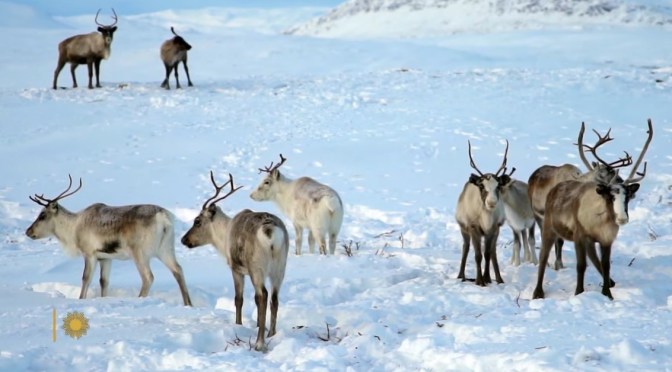
CBS Sunday Morning (December 2022) – We leave you this Sunday morning with reindeer in northern Finland, prepping for their big night! Videographer: David Cohen.

Northern Finland is the northernmost part of Finland. Administratively it comprises Finnish Lapland and the provinces of Kainuu and Northern Ostrobothnia. This region is very sparsely populated even for Finland – while it covers almost half of the country it has a population slightly larger than the city of Helsinki.