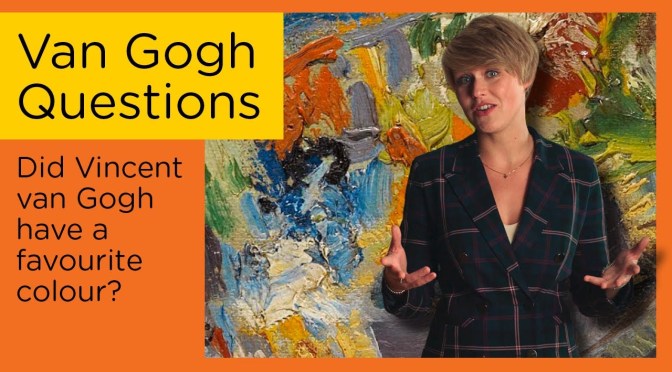
In Van Gogh Questions, our researcher Bregje Gerritse answers the most frequently asked questions about Vincent van Gogh.

In Van Gogh Questions, our researcher Bregje Gerritse answers the most frequently asked questions about Vincent van Gogh.
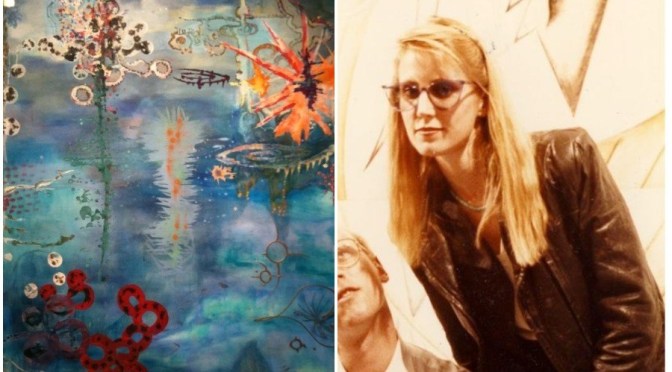
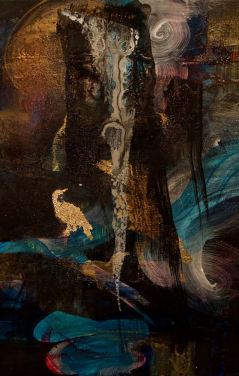 Peggy Cyphers has a persistent vision of nature that she translates into richly colored and textured quasi-abstract paintings. She pours and lightly brushes countless layers of paint and sand onto the canvas until she achieves luminous and sumptuous surface. Approaching each canvas as a kind of garden where organic and geometric elements intermingle with intense light, she nurtures elaborate hybrid forms. David Ebony, ArtNet Magazine
Peggy Cyphers (born 1954) is an American painter, printmaker, professor and art writer, who has shown her work in the U.S. and internationally since 1984. Since Cyphers’ move to New York City over 30 years ago, her inventive and combinatory approaches to the materials of paint, silkscreen and sand have developed into canvases that explore the “Politics of Progress” as it impacts culture and the natural world.
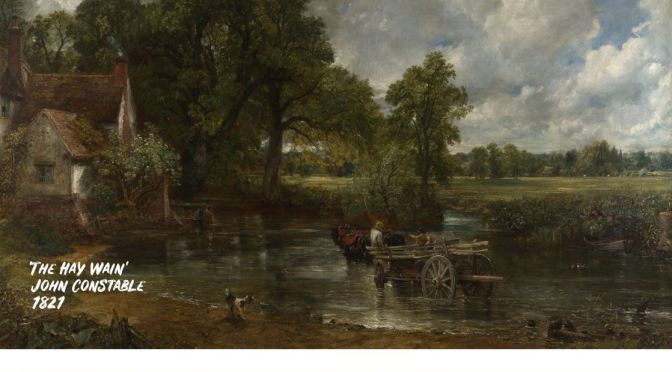
Lucy Chiswell, the Curatorial Fellow for Paintings 1600-1800, explores a day in the countryside through paintings by Rubens, Constable and Corot.
Paintings mentioned
0:50 Peter Paul Rubens ‘An Autumn Landscape with a View of Het Steen in the Early Morning’ 🎨 https://www.nationalgallery.org.uk/pa…
4:19 John Constable, ‘The Hay Wain’ 🎨 https://www.nationalgallery.org.uk/pa…
8:03 Jean-Baptiste-Camille Corot ‘The Four Times of Day: Night’ 🎨 https://www.nationalgallery.org.uk/pa…
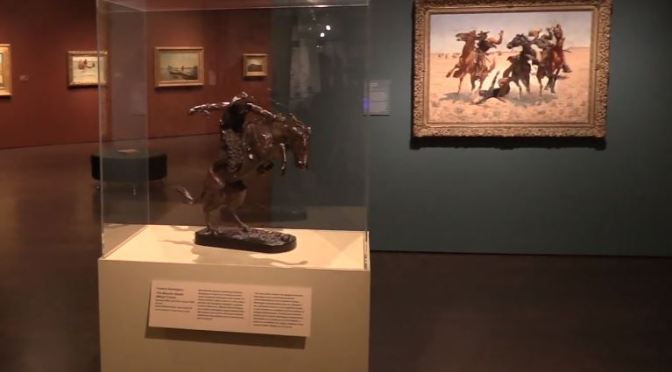
While the Denver Art Museum is temporarily closed, we are sharing this look at the Homer and Remington exhibition. Hear from DAM curators Thomas Brent Smith and Jennifer R. Henneman.
From The Iris (Getty Museum – April 17, 2020):
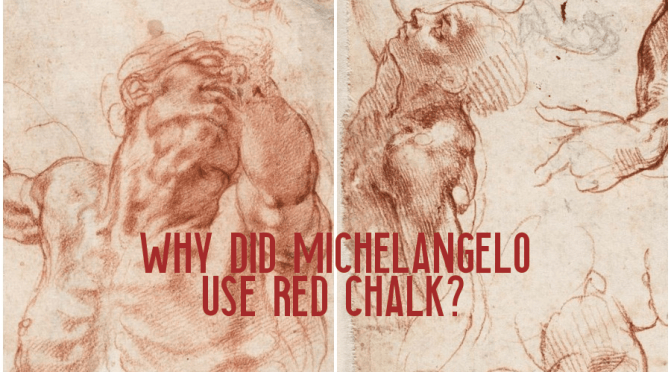
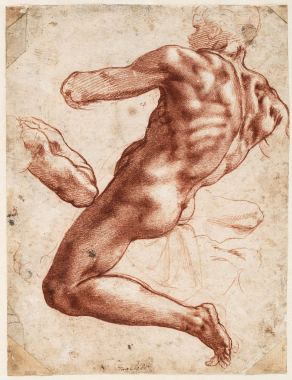 To work out the details of all the figures in pen and ink would have been extremely labor-intensive, and sharpening quills and mixing inks would’ve added an additional distraction. Drawing in chalk necessitated great skill, but it also allowed Michelangelo a flexibility. He could create subtle tonal variations by applying more or less pressure onto the chalk or by wetting it. The red chalk also provided an immediate mid-tone on the paper and could be easily blended when modeling and shading forms. Being a naturally occurring material that was available to artists in sticks that could be sharpened as desired, it was also convenient and portable.
 During his lifetime, Michelangelo likely produced tens of thousands of drawings. But being protective of his ideas, and to give an impression of effortless genius, he destroyed many of them. Today only about 600 drawings by the Renaissance artist survive. A Getty exhibition highlighted 28 of them, giving viewers a window into Michelangelo’s artistic process. “He used drawings to record his observations, to explore certain ideas, to further develop these ideas, to reconsider them entirely,” said Assistant Curator Edina Adam.
The exhibition included a relatively high number of drawings in red chalk, which prompted the question: Why did Michelangelo use this particular drawing material?
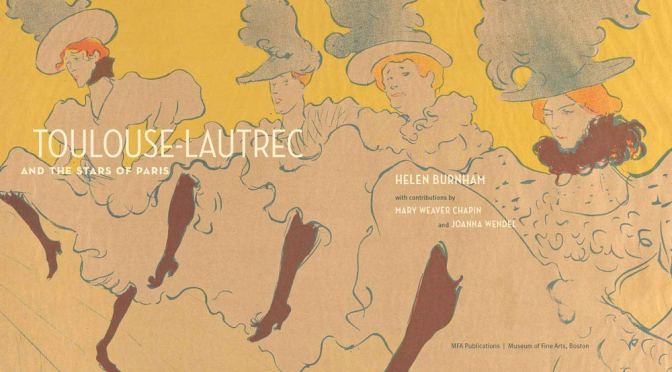
Curator Helen Burnham, Pamela and Peter Voss Curator of Prints and Drawings, introduces us to the celebrities of 19th-century Paris made famous by Henri de Toulouse-Lautrec and his contemporaries. The exhibition features the rich holdings of the MFA and its organizing partner, the Boston Public Library.
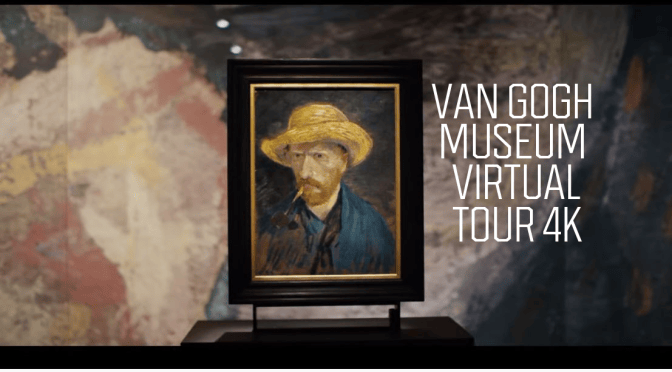
The Wheat Fields is a series of dozens of paintings by Vincent van Gogh, borne out of his religious studies and sermons, connection to nature, appreciation of manual laborers and desire to provide a means of offering comfort to others. The wheat field works demonstrate his progression as an artist from the drab Wheat Sheaves made in 1885 in the Netherlands to the colorful, dramatic paintings from Arles, Saint-Rémy and Auvers-sur-Oise of rural France.
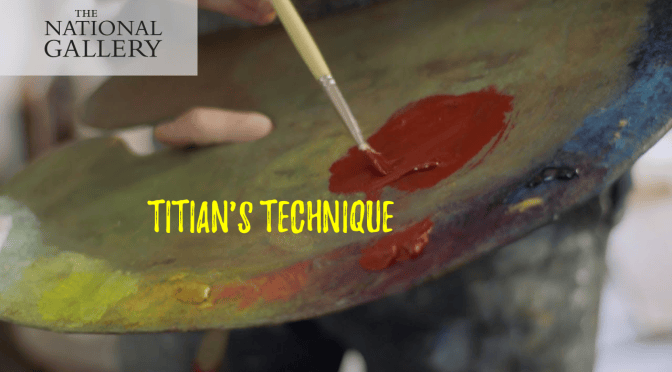
The way Titian painted was unlike other artists of his day. With little in the way of preliminary drawings, Titian worked very freely straight onto the canvas. Watch artist Andy Pankhurst show us how Titian would have worked.
Tiziano Vecelli or Vecellio, known in English as Titian, was an Italian painter during the Renaissance, considered the most important member of the 16th-century Venetian school. He was born in Pieve di Cadore, near Belluno. During his lifetime he was often called da Cadore, ‘from Cadore’, taken from his native region.
In Van Gogh Questions, our researcher Bregje Gerritse answers the most frequently asked questions about Vincent van Gogh.
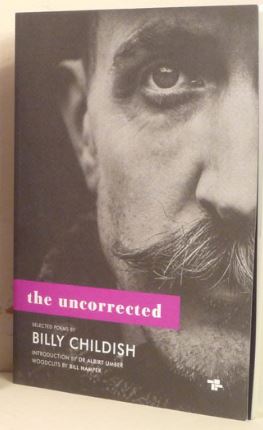 “The art world is the same as the rest of the world,” says British artist, writer, and punk-rocker Billy Childish. “What it requires is new, more, and now.” Childish has worked defiantly and prolifically outside of the mainstream since his expulsion from art school in the early 1980s. To the polymath—whose paintings, poems, novels, and music draw heavily from his autobiography—art is a deeply personal experience that should not rely on external validation, whether from critics or audiences. From his painting studio located on a historic dockyard in Kent, United Kingdom, Childish speaks passionately about the freedom that comes with self-validation. When asked about his perspective on the future of art, he demurs. “People think we’re continually ascending a mountain to success or to enlightenment,” he says. “It’s here and now and this is it.”