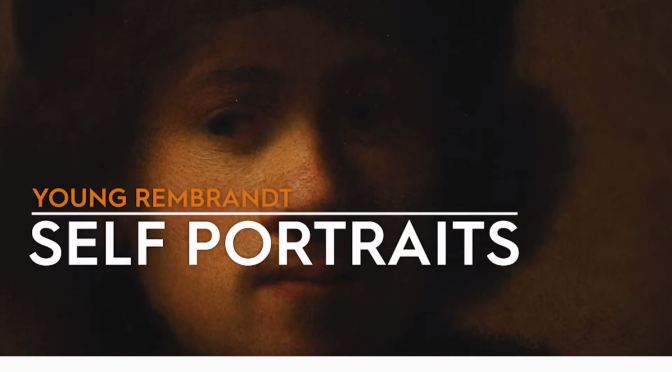
Curator An Van Camp tells us about Rembrandt’s obsession with self portraits and how he improved his skill throughout his life.
Rembrandt Harmenszoon van Rijn; 15 July 1606 – 4 October 1669) was a Dutch draughtsman, painter, and printmaker. An innovative and prolific master in three media, he is generally considered one of the greatest visual artists in the history of art and the most important in Dutch art history. Unlike most Dutch masters of the 17th century, Rembrandt’s works depict a wide range of style and subject matter, from portraits and self-portraits to landscapes, genre scenes, allegorical and historical scenes, and biblical and mythological themes as well as animal studies. His contributions to art came in a period of great wealth and cultural achievement that historians call the Dutch Golden Age, when Dutch art (especially Dutch painting), although in many ways antithetical to the Baroque style that dominated Europe, was extremely prolific and innovative and gave rise to important new genres. Like many artists of the Dutch Golden Age, such as Jan Vermeer of Delft, Rembrandt was also an avid art collector and dealer.
From Wikipedia
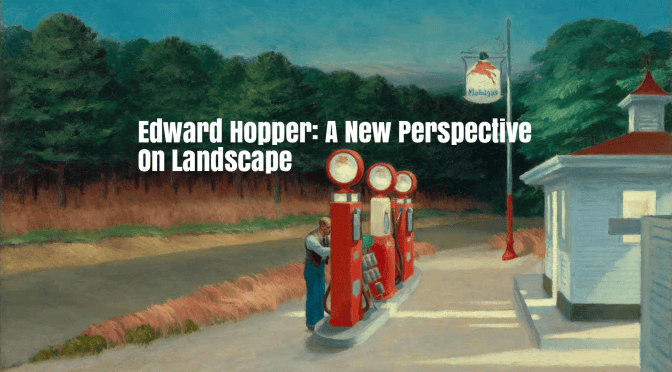
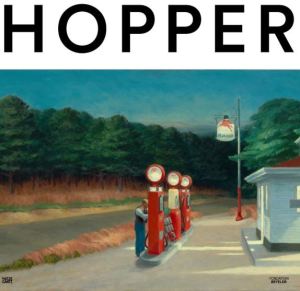 Edward Hopper’s world-famous, instantly recognizable paintings articulate an idiosyncratic view of modern life, unfolding in a world of lonely lighthouses, gas stations, movie theaters, bars and hotel rooms. With his impressive subjects, independent pictorial vocabulary and virtuoso play of colors, Hopper’s work continues to this day to color our memory and imaginary of the United States in the first half of the 20th century.
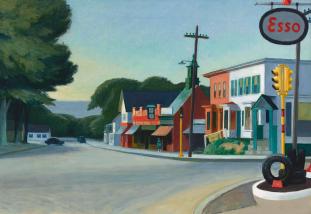 oil paintings. These paintings testify to the artist’s great interest in the effects of color and his mastery in depicting light and shadow, at work whether the artist was painting alienated figures in dreamlike interiors or desolate American landscapes.