
Tag Archives: Nature

Top Science Podcasts: 2019 PhD Survey, Older Women In Sci-Fi And Mummified Remains In Egypt (Nature)

Listen to the latest science updated, brought to you by Nick Howe and Shamini Bundell. This week, delving into the results of the latest graduate student survey, and assessing ageism in science fiction literature.

In this episode:

00:45 The graduate student experience

The results of Nature’s 2019 PhD survey are in. David Payne, Nature’s Chief Careers Editor, takes us through them. Nature’s PhD survey collection

06:45 Research Highlights

Giant tortoises are quick learners, and colour-changing magic mushrooms. Research Article: Gutnick et al.; Research Highlights: Why magic mushrooms turn dark blue when picked

08:52 Where are the older women in sci-fi?

Author Sylvia Spruck Wrigley has been looking into the number of older women that appear in sci-fi novels, and the roles they play. Essay: Space ageing: why sci-fi novels shun the badass older woman

16:45 News Chat

A trove of mummified remains causes excitement in Egypt, and Italy plans a new science funding body. News: Rare mummified lions add to Egyptology buzz; News: Italy’s plan to create €300-million research agency draws fire

Top Science Podcasts: A New Antibiotic From Nematodes, “Grants” Thru Lotteries (Nature)

Nature PodcastBenjamin Thompson brings you the latest science news. This week, an antibiotic that targets difficult to treat bacteria, and a roundup of the latest science news.

In this episode:

00:49 Discovering darobactin

Researchers looked inside nematode guts and have identified a new antibiotic with some useful properties. Research Article: Imai et al.

05:45 Research Highlights

Using urine as a health metric, and sniffing out book decay with an electronic nose. Research Article: Miller et al.; Research Article: Veríssimo et al.

07:54 News Chat

Adding an element of chance to grant funding, a continental butterfly-sequencing project, and tracking endangered animals via traces of their DNA. News: Science funders gamble on grant lotteries; News: Every butterfly in the United States and Canada now has a genome sequence; News: Rare bird’s detection highlights promise of ‘environmental DNA’

To read more: https://www.nature.com/articles/d41586-019-03588-z

Top New Science Podcasts: 3D Printer Advances, Gut Microbes Linked To Liver Disease (Nature Magazine)

Nature PodcastHear this week’s science news, with Nick Howe and Shamini Bundell. This week, a new 3D printer allows quick shifting between many materials, and understanding the link between gut microbes and liver disease.

In this episode:

00:46 A new dimension for 3D printers

A new nozzle lets a 3D printer switch between materials at a rapid rate, opening the door to a range of applications. Research Article: Skylar-Scott et al.; News and Views: How to print multi-material devices in one go

08:07 Research Highlights

The slippery secrets of ice, and cells wrapping up their nuclei. Research Highlight: Viscous water holds the secret to an ice skater’s smooth glide; Research Highlight: Super-thin layer of ‘bubble wrap’ cushions a cell’s nucleus

10:17 Linking bacteria to liver disease

Researchers have isolated a bacterial strain that appears to play an important role in alcoholic liver disease. Research paper: Duan et al.; News and Views: Microbial clues to a liver disease

17:10 News Chat

‘Megaconstellations’ of satellites concern astronomers, and a report on the gender gap in chemistry. News: SpaceX launch highlights threat to astronomy from ‘megaconstellations’; News: Huge study documents gender gap in chemistry publishing

Top New Nature Books: “Turning The Boat For Home” By Richard Mabey

From a Cotswold Life online interview/review:

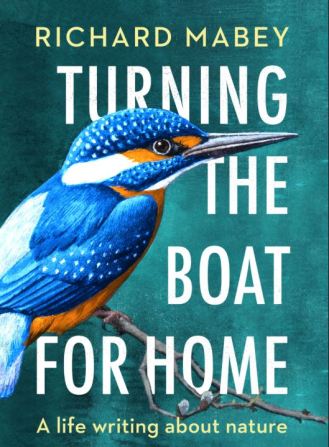
Turning The Boat For Home Richard Mabey cover“I suppose I started off with a fairly literal view of the world,” he says. “But, quite early on, it became clear to me that there was much more going on than simply the picture I was seeing; that the natural world had an agenda of its own; that it was going to live out life, regardless of how we viewed it and how we used it; and, indeed, regardless of the fancy metaphors that we used.”

Oh my goodness. Where to begin?

I could start with the ‘Praying Beech’ – a tree whose (‘whose’? The human possessive feels simultaneously wrong and yet just right) two branch stubs clasped each other like hands. Once, when the rain fell in an apocalyptic burst, Richard Mabey watched its bark melt in front of his eyes. It was, of course, no stranger to extremes of weather: one summer past, the tree had been split by lightning, bees hunkering down in its newly-created hollows. Sometime later, a storm had toppled it, leaving fungi free to colonise its delicious surfaces: knobbly coral spots; dead man’s fingers rising corpse-like from the tree’s own rot; white porcelain tufts, like Royal Worcester plates awaiting a delicate slice of egg-yellow sponge.

To read more: https://www.cotswoldlife.co.uk/people/interview-with-nature-writer-richard-mabey-1-6357450?utm_medium=email&utm_source=eshot&utm_campaign=newsletterlinknewtemplate

Top Science Podcasts: AI Beats Humans At A Video Game, Arthropods In Decline (Nature)

Nature PodcastHear the latest science news, with Benjamin Thompson and Shamini Bundell. This week, a computer beats the best human players in StarCraft II, and a huge study of insects and other arthropods.

In this episode:

00:51 Learning to play

By studying and experimenting, an AI has reached Grandmaster level at the video game Starcraft II. Research Article: Vinyals et al.; News Article: Google AI beats experienced human players at real-time strategy game StarCraft II

10:08 Research Highlights

A record-breaking lightning bolt, and identifying our grey matter’s favourite tunes. Research Highlight: Here come the lightning ‘megaflashes’; Research Highlight: Why some songs delight the human brain

12:24 Arthropods in decline

Researchers have surveyed how land-use change has affected arthropod diversity. Research article: Seibold et al.

18:30 News Chat

Young Canadians file a lawsuit against their government, an Alzheimer’s drug gets a second chance, and South Korean efforts to curb a viral epidemic in pigs.


Top Science Podcasts: Earthworm Study, Bias In Health Algorithms & “Dr. Space Junk” (ScienceMag)

scimag_pc_logo_120_120 (1)This week in Science, Helen Philips, a postdoctoral fellow at the German Centre for Integrative Biodiversity Research and the Institute of Biology at Leipzig University, and colleagues published the results of their worldwide earthworm study, composed of data sets from many worm researchers around the globe. 

Sarah also talks with Ziad Obermeyer, a professor in the School of Public Health at the University of California, Berkeley, about dissecting out bias in an algorithm used by health care systems in the United States to recommend patients for additional health services.

Finally, in the monthly books segment, books host Kiki Sanford interviews author Alice Gorman about her book Dr. Space Junk vs The Universe: Archaeology and the Future. Listen to more book segments on the Science books blog: Books, et al.

To read more: https://www.sciencemag.org/podcast/worldwide-worm-survey-and-racial-bias-health-care-algorithm

Top Science Podcasts: Quantum Computing, Speediest Ants & Altering The “Deaf” Gene (Nature)

Nature PodcastListen to the latest from the world of science, with Nick Howe and Shamini Bundell. This week, a milestone in quantum computing, and rethinking early mammals.

In this episode:

00:43 A quantum computing milestone

A quantum computer is reported to have achieved ‘quantum supremacy’ – performing an operation that’s essentially impossible for classical computers. Research Article: Arute et al.; News and Views: Quantum computing takes flight; Editorial: A precarious milestone for quantum computing; News: Hello quantum world! Google publishes landmark quantum supremacy claim

08:24 Research Highlights

The world’s speediest ants, and the world’s loudest birdsong. Research Highlight: A land-speed record for ants set in Saharan dunes; Research Highlight: A bird’s ear-splitting shriek smashes the record for loudest song

10:19 The mammals that lived with the dinosaurs

Paleontologists are shifting their view of Mesozoic era mammals. News Feature: How the earliest mammals thrived alongside dinosaurs

18:00 News Chat

A Russian researcher’s plans to edit human embryos, and ‘prime editing’ – a more accurate gene editing system. News: Russian ‘CRISPR-baby’ scientist has started editing genes in human eggs with goal of altering deaf gene; News: Super-precise new CRISPR tool could tackle a plethora of genetic diseases