Tag Archives: Nature

Travel & Nature Videos: “Castleton Tower”, Utah (Conservation Alliance)

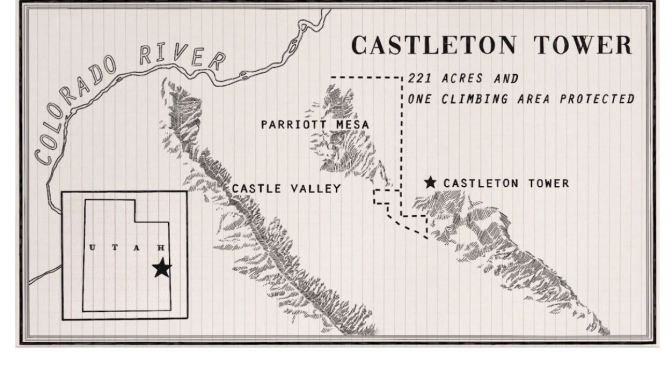
This The Conservation Alliance success story is a classic. In 2001, funding by The Conservation Alliance lead to the acquisition of 221 acres surrounding iconic Castleton Tower in Castle Valley, Utah—home to one of the “Fifty Classic Climbs of North America.”

Castleton Tower Utah The Conservation Alliance Uncage The Soul Video January 7 2020

In the clip, you’ll see Dave Erley, former two-term mayor of Castle Valley, and Wendy Fisher, Executive Director of Utah Open Lands, explain the history of the Castleton Tower Preservation Initiative. Once threatened by development, the climbing community and Utah Open Lands worked together to secure permanent access to Castleton Tower.

Uncage The Soul Video Productions logo
https://uncagethesoul.com/

Website

Nature Videos: Steelhead Sanctuary, Oregon (Conservation Alliance)

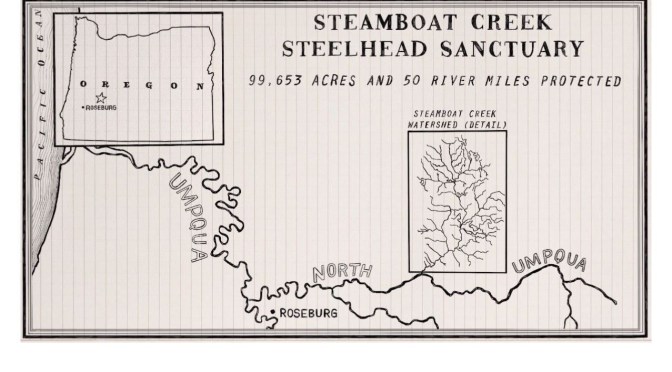
The first video in our six-part success story series celebrates the new 99,000-acre Steamboat Creek Steelhead Sanctuary along Oregon’s Umpqua River.

The Conservation Alliance - Steamboat Creek Steelhead Sanctuary Oregon Uncage The Soul Productions Video January 2020

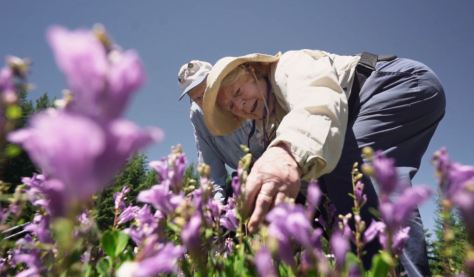
The backstory: Frank and Jeanne Moore are decades-long stewards and conservation champions for the Steamboat Creek watershed, located in the northeastern portion of the Umpqua River basin, and recognize it as a sanctuary for wildlife, plants, and people.

The Conservation Alliance - Steamboat Creek Steelhead Sanctuary Oregon Uncage The Soul Productions Frank and Jeanne Moore Video January 2020

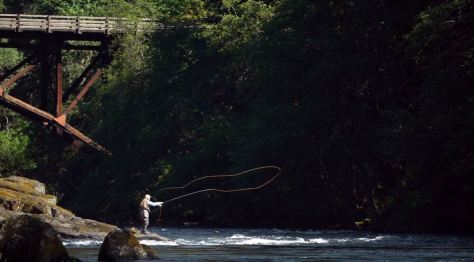
While recent protections identify the wild steelhead as the preeminent beneficiary, Frank also discovered that spending time fly fishing along the river in this area acted as therapy for PTSD induced by his service in World War II.

Uncage The Soul Video Productions logo
https://uncagethesoul.com/

See the full video here and follow the grantees who helped protect this wild place: Pacific Rivers and Backcountry Hunters & Anglers.

Top Science Podcasts: Soles And Calluses, Far Side Of The Moon & Nobel Prize Winner Q&A (Nature)

Nature PodcastsThe podcast team share some of their highlights from the past 12 months: A sole sensation, The make up of the far side of the Moon, Growth Mindset, ‘Manferences’ and Q&A with Nobel Prize winner John Goodenough.

In this episode:

00:33 A sole sensation

A study of people who do and don’t wear shoes looks into whether calluses make feet less sensitive. Nature Podcast: 26 June 2019; Research article: Holowka et al.; News and Views: Your sensitive sole

08:56 The make up of the far side of the Moon

Initial observations from the first lander to touch down on the far side of the Moon. Nature Podcast: 15 May 2019; Research article: Li et al.

15:43 Growth Mindset

How a one hour course could improve academic achievement. Nature Podcast: 07 August 2019; Research article: Yeager et al.

27:44 ‘Manferences’

Nature investigates the prevalence of conferences where most of the speakers are male. Nature Podcast: 11 September 2019; News Feature: How to banish manels and manferences from scientific meetings

34:02 Q&A with Nobel Prize winner John Goodenough

We talk to John Goodenough, who was jointly awarded the 2019 Nobel Prize in Chemistry for his role in the development of the lithium-ion battery. Podcast Extra: 09 October 2019


Health: “Understanding Parkinson’s Disease” (Nature Videos)

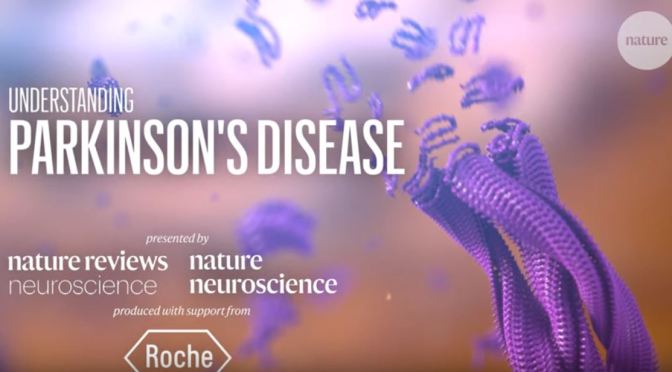
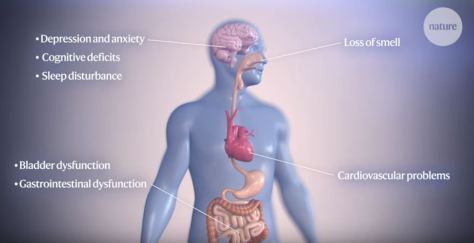
Parkinson’s disease is a neurological condition that affects the brain and other parts of the nervous system. The gradual loss of nerve cells leads to a suite of characteristic motor and non-motor symptoms.

Understanding Parkinson's Disease Nature Neuroscience Videos Dec 16 2019

What causes these cells to die and how the pathology develops in the nervous system are not yet clear but multiple lines of investigation are being pursued to answer these questions. In this animation, we explore some of the latest in Parkinson’s disease research.

Website: https://www.nature.com/articles/s41583-019-0254-x

Top Science Podcasts: Sequencing Genomes, Genetic Surveillance And Solar Winds (Nature)

Nature PodcastHear the latest science news, brought to you by Benjamin Thompson and Shamini Bundell. This week, exploring two very different issues surrounding genomic sequencing, and the latest results from NASA’s Parker Solar Probe.

In this episode:

00:45 The GenomeAsia 100k project

Researchers have released the first data from an ambitious project to sequence the genomes of 100,000 people from populations across Asia. Research Article: GenomeAsia100K Consortium

08:56 Research Highlights

Bare riverbanks make meanders move, and human activity affects picky penguins. Research Highlight: The meandering rivers that speed across barren landscapes; Research Highlight: Climate change splits two penguin species into winners and losers

11:18 Curbing the rise in genetic surveillance

Concerns are growing around the use of commercial DNA databases for state-level surveillance. Comment: Crack down on genomic surveillance

20:02 News Chat

NASA’s Parker Solar Probe has sent back the most detailed information yet about the birthplace of solar wind. News: Sun-bombing spacecraft uncovers secrets of the solar wind

Studies: “Blood-Based ‘Liquid Health Check’ Beats Traditional Predictors of Multiple Disease Risks” (Nature)

From a Genetic Engineering & Biotechnology News release:
Nature Medicine Journal Dec 2019“This proof of concept study demonstrates a new paradigm that measurement of blood proteins can accurately deliver health information that spans across numerous medical specialties and that should be actionable for patients and their healthcare providers,” said Peter Ganz, MD, co-leader of this study and the Maurice Eliaser distinguished professor of medicine at UCSF and director of the Center of Excellence in Vascular Research at Zuckerberg San Francisco General Hospital and Trauma Center. 

Specific patterns of protein levels in our blood could be used to provide a comprehensive “liquid health check” that gives a snapshot of health and potentially an indication of the likelihood that we will develop certain diseases or health risk factors in the future, according to research by scientists in the U.S. and U.K. working with SomaLogic. The results of their proof-of-concept study involving more than 16,000 participants, and published in Nature Medicine, showed that while the accuracy of models based on specific protein expression patterns varied, they were all either better predictors than models based on traditional risk factors, or would constitute more convenient and less expensive alternatives to traditional testing.

Study published in Nature Medicine: https://www.nature.com/articles/s41591-019-0665-2

To read more: https://www.genengnews.com/news/blood-based-liquid-health-check-beats-traditional-predictors-of-multiple-disease-risks/?utm_medium=newsletter&utm_source=GEN+Daily+News+Highlights&utm_content=01&utm_campaign=GEN+Daily+News+Highlights_20191203&oly_enc_id=5678C5137845J4Z