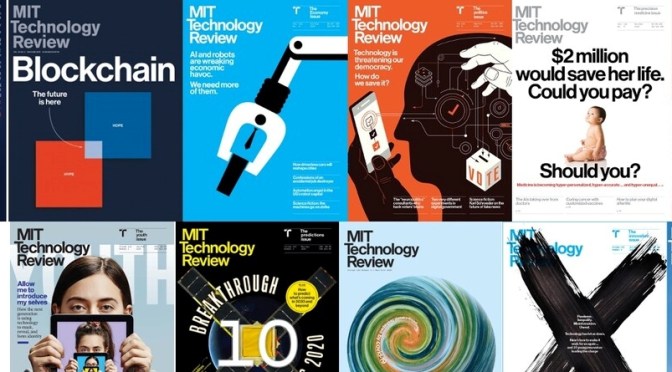
MIT TECHNOLOGY REVIEW (February 26, 2025): The ‘Relationships Issue’ features AI, Automation, and Surveillance will improve productivity. Or else.
This issue explores the many ways technology is transforming our relationships, from the AI chatbot revolution that’s changing how we connect with one another to the increasing power imbalance in the workplace that’s happening as monitoring increases and protections fall far behind. Plus animating ancient animals, lab-grown spandex, and adventures in the genetic time machine.
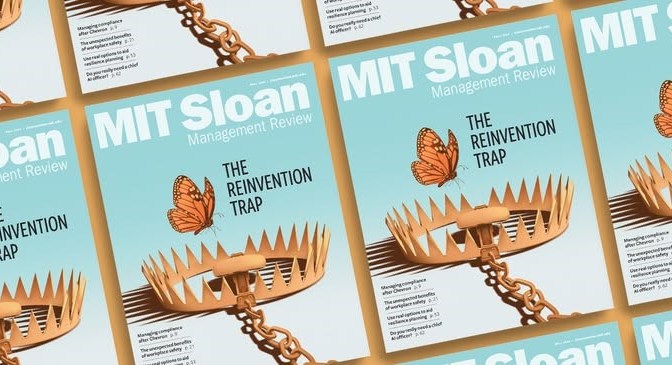
MIT Sloan Management Review (December 4, 2024):Looking beyond AI, many of our top 10 stories involve tough culture and people management challenges, like dealing with the informal meetings that happen after formal meetings (No. 2) and getting people to stop self-censoring with company leaders (No. 5). These two stories, by Phillip G. Clampitt and Jim Detert, respectively, truly struck a nerve with readers. At a time of radical change, communication and trust have never been more important.
In this brief video, learn what the latest research and current examples say about return-to-office mandates — and what leaders can do instead to boost productivity and retain talent.
Most people know what can’t be said in their organization. But leaders can apply these techniques to break through the unwritten rules that make people self-censor.
Michael Schrage, David Kiron, François Candelon, Shervin Khodabandeh, and Michael Chu
This artificial intelligence and business strategy report looks at how organizations are using AI to evolve their key performance indicators to better align with their strategies and deliver on enterprise goals.
MIT Technology Review (Novemer 24, 2024): This week’s round up includes Google DeepMind has a new way to look inside an AI’s “mind”. Inside Clear’s ambitions to manage your identity beyond the airport. Who’s to blame for climate change? And more.
How this grassroots effort could make AI voices more diverse A massive volunteer-led effort to collect training data in more languages, from people of more ages and genders, could help make the next generation of voice AI more inclusive and less exploitative.
The rise of Bluesky, and the splintering of social You may have read that it was a big week for Bluesky. If you’re not familiar, Bluesky is, essentially, a Twitter clone that publishes short-form status updates.
Ben Zhao remembers well the moment he officially jumped into the fight between artists and generative AI: when one artist asked for AI bananas.
MIT Technology Review (Novemer 17, 2024): This week’s round up includes Generative AI taught a robot dog to scramble around a new environment; The AI lab waging a guerrilla war over exploitative AI; Life-seeking, ice-melting robots could punch through and Europa’s icy shell.
The tools Glaze and Nightshade are giving artists hope that they can fight back against AI that hoovers internet data to train. Are they enough?
Generative AI taught a robot dog to scramble around a new environment
A new system could help train robots entirely in generated worlds.
Why AI could eat quantum computing’s lunch
Rapid advances in applying artificial intelligence to simulations in physics and chemistry have some people questioning whether we will even need quantum computers at all.
AI search could break the web
Life-seeking, ice-melting robots could punch through Europa’s icy shell
Researchers are working on technology that could follow NASA’s Europa Clipper mission and hunt for life in the ocean of Jupiter’s moon.
MIT Technology Review (October 23, 2024):The Food issue November/December 2024 – Is technology helping—or harming—our food supply? Featuring: The ominous rise of superweeds, the quest to grow food on Mars, and the surprising ways your refrigerator may be making your food less nutritious. Plus robots that do experiments, jumping spiders, digital forestry, and The AI Hype Index.
MIT Technology Review (August 17, 2024): The 125th Anniversary issue features ‘Greetings from the Future’ – Personalized AI, Genetically-Engineered Immunity and Digital Immortaility. We’ll see it all in the next century.
MIT Technology Review (June 26, 2024): The new issue features The Play issue – Did you know you could surf in the desert? New pools make it possible–but at what cost? Learn how AI is bringing an unprecedented expansiveness to computer and video games and how high-tech supershoes are helping athletes run faster and more safely. Plus: Gamification was always a dubious concept–so how did it take over the world?
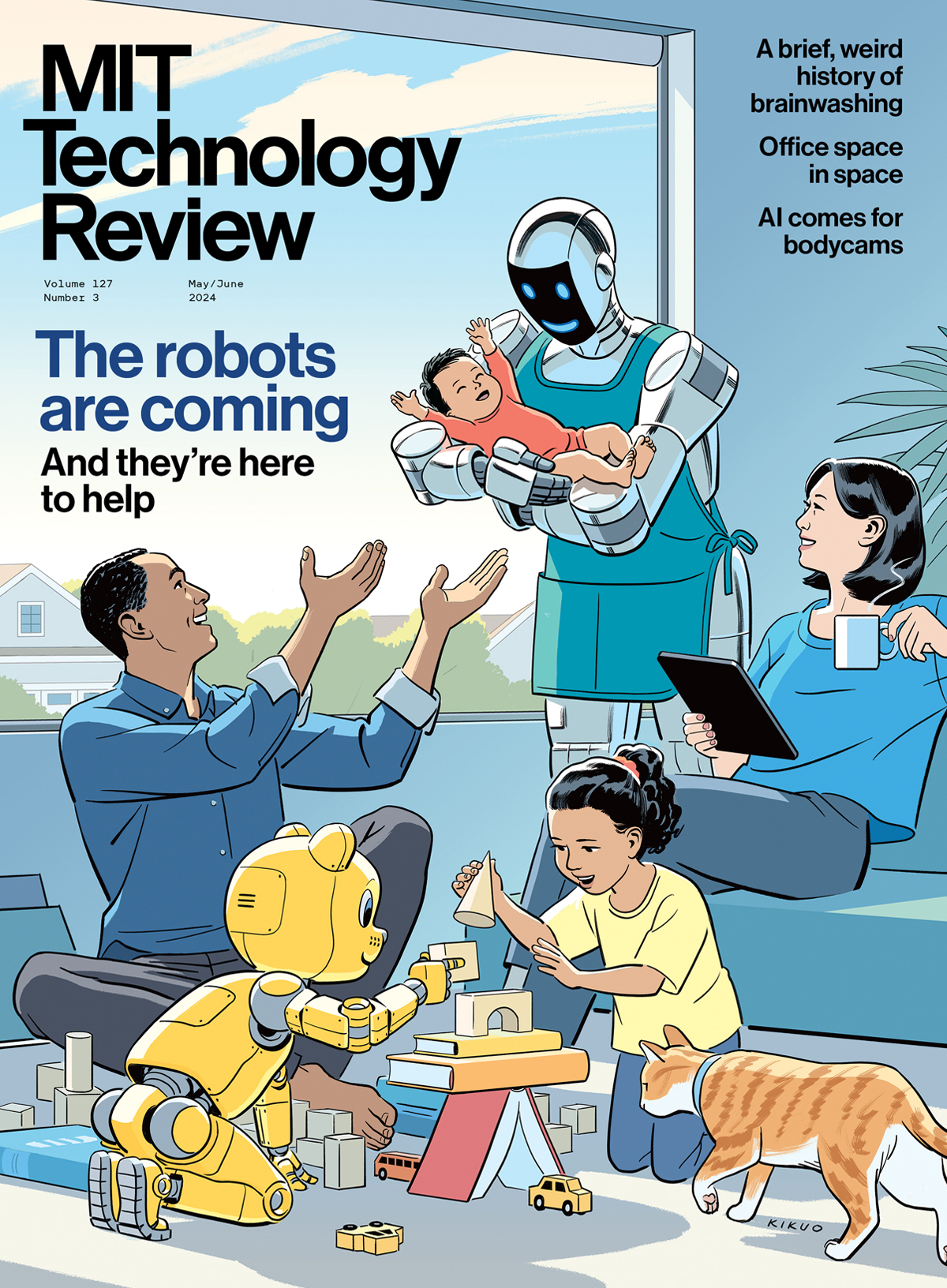
MIT Technology Review (April 29, 2024): The new issue features ‘The Robots Are Coming’ – And they’re here to help; A brief, weird history of brainwashing; Office space in space; AI comes for bodycams…
The Build issue
Who says we can’t still build things? In this issue: a look at the robots we’ve always wanted; a new model for space exploration; and efforts to flood-proof Louisiana’s coastline. Plus a wild, weird history of brainwashing; designing cheese with AI; and glow-in-the dark petunias.
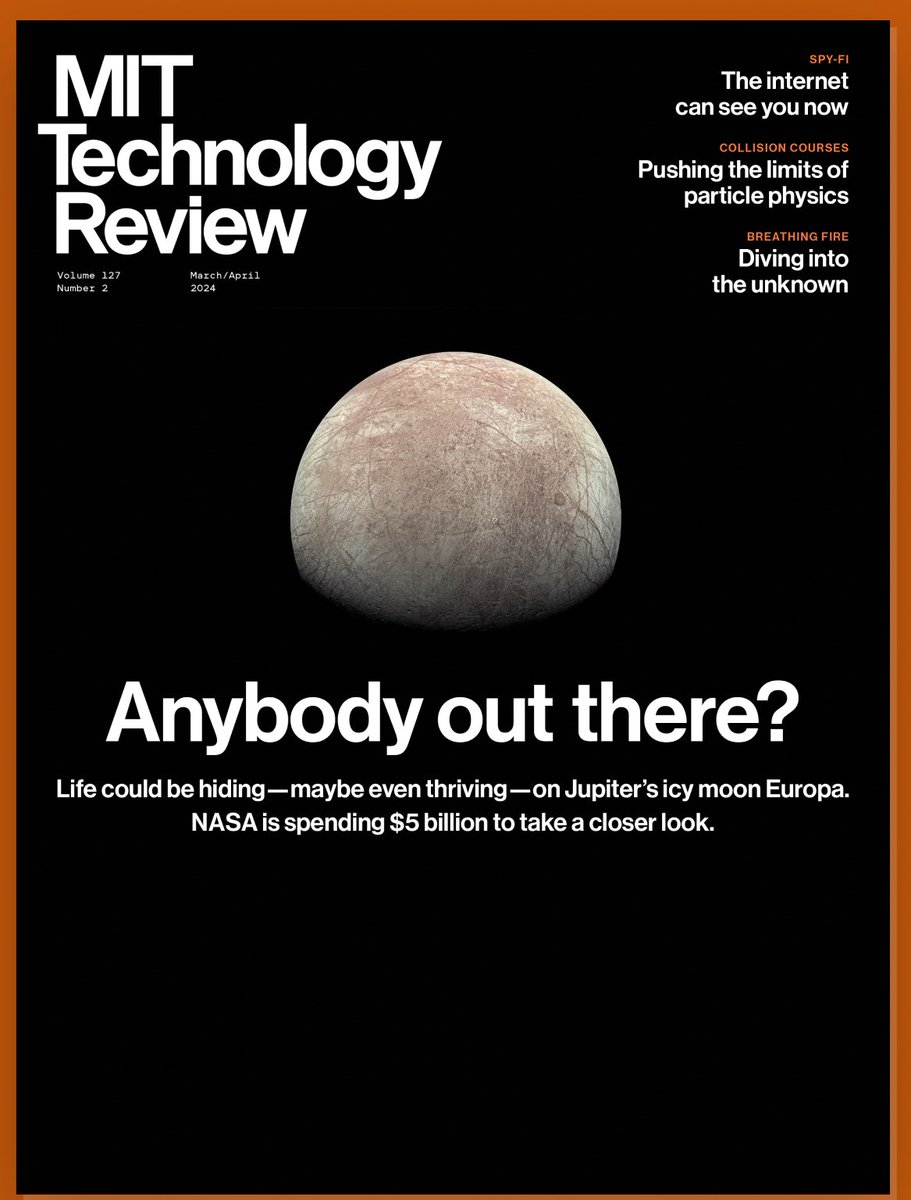
MIT Technology Review (February 29, 2024): The new issue features ‘The Hidden Worlds Issue’ – Is Anybody Out There? Using technology to explore and expose hidden worlds, from enabling deeper dives into ocean depths to journeying to one of Jupiter’s orbiting bodies to pushing the boundaries of particle physics. Plus: wearables for wildlife, Wi-Fi sensing, and a reconsideration of Luddites.
The Large Hadron Collider hasn’t seen any new particles since the discovery of the Higgs boson in 2012. Here’s what researchers are trying to do about it.
Figuring out how the human body can withstand underwater pressure has been a problem for over a century, but a ragtag band of divers is experimenting with hydrogen to find out.
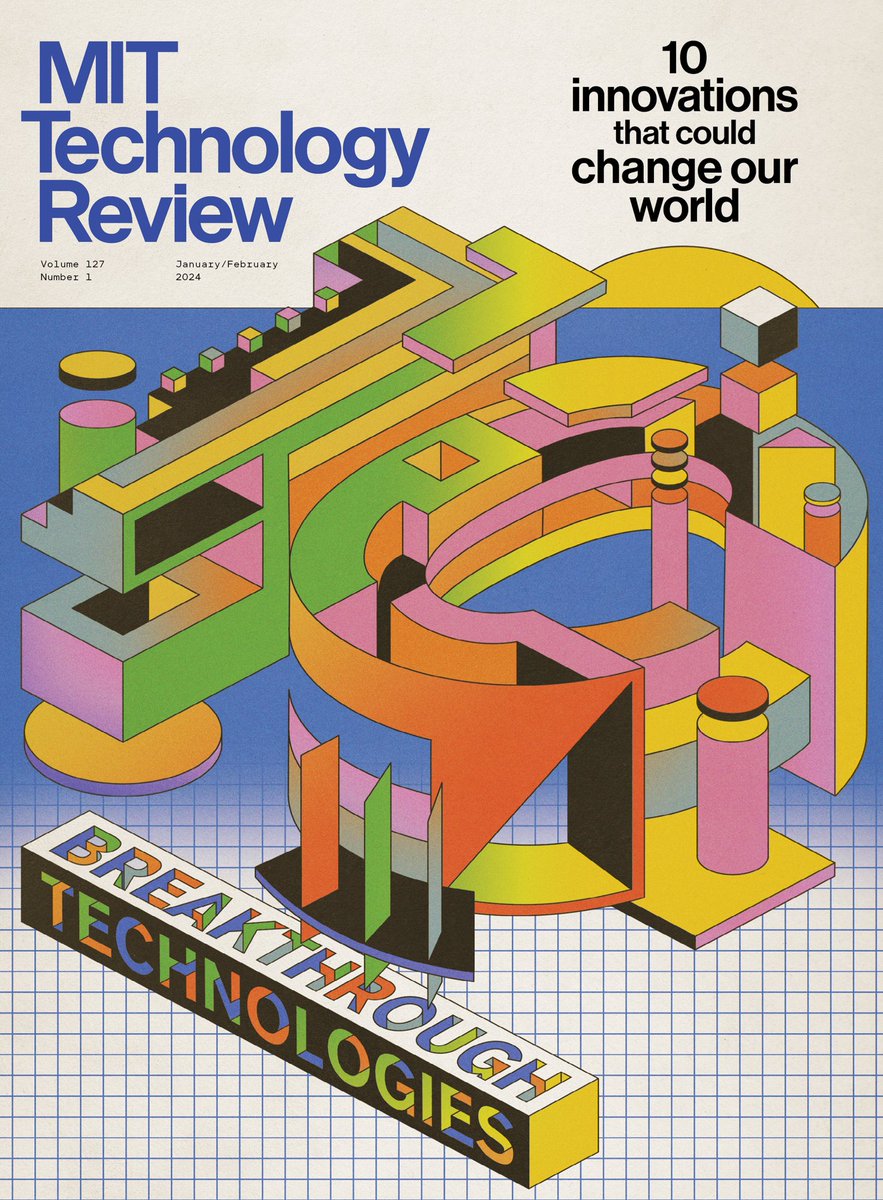
Every year, we look for promising technologies poised to have a real impact on the world. Here are the advances that we think matter most right now.
AI for everything
We now live in the age of AI. Hundreds of millions of people have interacted directly with generative tools like ChatGPT that produce text, images, videos, and more from prompts. Their popularity has reshaped the tech industry, making OpenAI a household name and compelling Google, Meta, and Microsoft to invest heavily in the technology.
Super-efficient solar cells
Solar power is being rapidly deployed around the world, and it’s key to global efforts to reduce carbon emissions. But most of the sunlight that hits today’s panels isn’t being converted into electricity. Adding a layer of tiny crystals could make solar panels more efficient. WHY IT MATTERS
Apple Vision Pro
Apple will start shipping its first mixed-reality headset, the Vision Pro, this year. Its killer feature is the highest-resolution display ever made for such a device. Will there be a killer app? It’s early, but the world’s most valuable company has made a bold bet that the answer is yes. WHY IT MATTERS
Weight-loss drugs
The global rise in obesity has been called an epidemic by the World Health Organization. Medications like Mounjaro and Wegovy are now among the most powerful tools that patients and physicians have to treat it. Evidence suggests they can even protect against heart attacks and strokes. WHY IT MATTERS
News, Views and Reviews For The Intellectually Curious