
Tag Archives: Culture
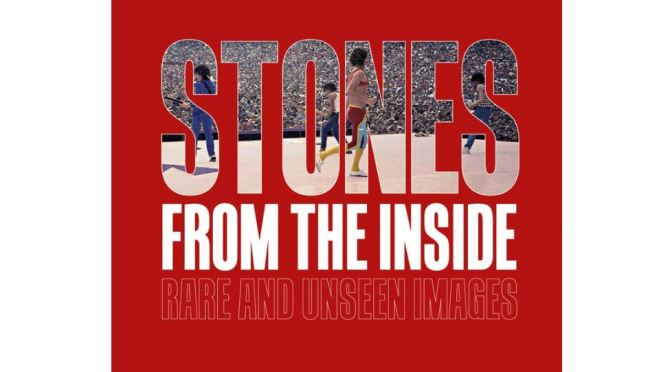
New Photography Books: “Stones From The Inside – Rare And Unseen Images”
 Along with the images of the band at work and play, Wyman includes remarkable images of those along for the ride, from John Lennon, Eric Clapton, David Bowie and Iggy Pop to John Belushi and Dan Aykroyd. To accompany his photographs, Wyman offers up wonderful insights, anecdotes and behind-the-photo stories, giving all us a front-row seat and backstage pass to what it was like to be there, as music history was made as a member of The Rolling Stones.
Known, unknown, rare and unseen images from former Rolling Stones bassist Bill Wyman, capturing life on-stage, backstage and on the road
In addition to this trade edition, there will also be a limited edition of 300 copies, which comes in a slipcase, with an open-edition A4 print
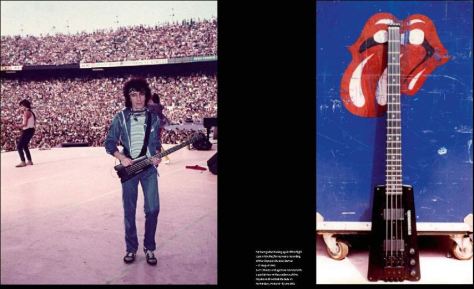
As soon as Bill Wyman was given a camera as a young boy, he quickly developed a passion for photography. After joining what would become the world’s greatest rock ‘n’ roll band, Wyman continued his hobby. When he didn’t have his bass, he had his camera. The result is an arresting, insightful and often poignant collection of photographs, showing his exclusive inside view of the band. From travelling to relaxing, backstage and on, Stones From the Inside is a unique view captured by a man who was there, every step of the way.
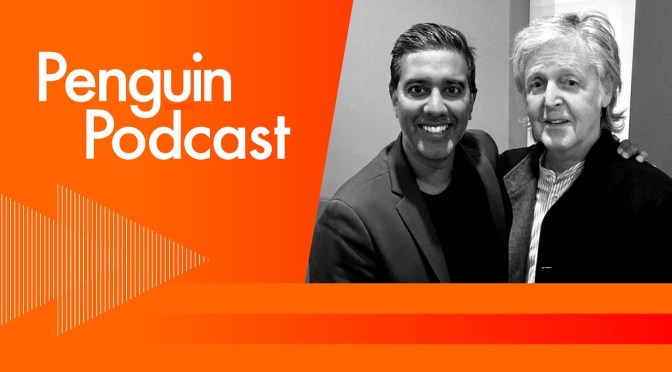
Interview Podcasts: Singer Paul McCartney Reminisces (Penguin)
In a special Christmas edition, Sir Paul McCartney tells Nihal about persuading John Lennon to believe in himself, the one famous person that even he feels nervous around, and his new children’s book ‘Hey Grandude’ and how being a grandad inspires him.
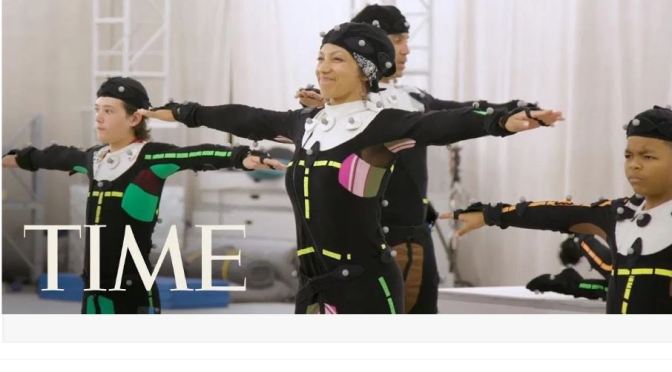
1960’s Culture: “The 1963 March On Washington” Recreated For Virtual Reality (Time Video)
TIME goes behind the scenes of the making a virtual reality recreation of the 1963 March on Washington for Jobs and Freedom, bringing the experience to life for a new generation.
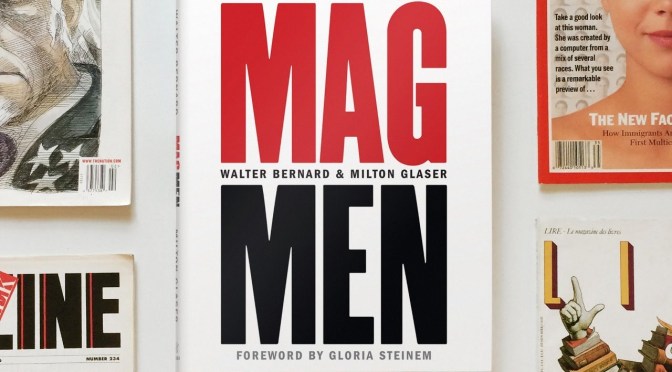
Top New Media Books: “Mag Men – Fifty Years Of Making Magazines”
Richly illustrated with the covers and interiors that defined their careers, Mag Men is bursting with vivid examples of Bernard and Glaser’s work, designed to encapsulate their distinctive approach to visual storytelling and capture the major events and trends of the past half century.
 For more than fifty years, Walter Bernard and Milton Glaser have revolutionized the look of magazine journalism. In Mag Men, Bernard and Glaser recount their storied careers, offering insiders’ perspective on some of the most iconic design work of the twentieth century. The authors look back on and analyze some of their most important and compelling projects, from the creation of New York magazine to redesigns of such publications as Time, Fortune, Paris Match, and The Nation, explaining how their designs complemented a story and shaped the visual identity of a magazine.
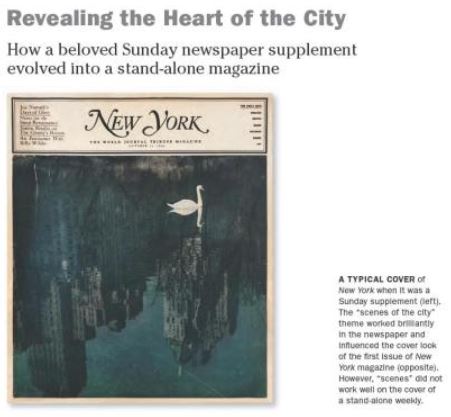
Highlighting the importance of collaboration in magazine journalism, Bernard and Glaser detail their relationships with a variety of writers, editors, and artists, including Nora Ephron, Tom Wolfe, Gail Sheehy, David Levine, Seymour Chwast, Katherine Graham, Clay Felker, and Katrina vanden Heuvel. The book features a foreword by Gloria Steinem, who reflects on her work in magazines and her collaborations with Bernard and Glaser. At a time when uncertainty continues to cloud the future of print journalism, Mag Men offers not only a personal history from two of its most innovative figures but also a reminder and celebration of the visual impact and sense of style that only magazines can offer.
To read more and/or purchase: http://cup.columbia.edu/book/mag-men/9780231191807

Comics Books: “George Herriman’s Krazy Kat – The Complete Color Sundays 1935-1944” (Taschen)
 The premise is simple: a black cat loves scheming a white mouse who incessantly throws bricks at the cat’s head, which police dog Officer Pupp, secretly harboring a passionate love for the cat, tries to prevent.
George Herriman endlessly plays with the above formula in his legendary newspaper strip Krazy Kat, published from 1913 until his death in 1944. Through his wit, detailed characterization, and visual-verbal creativity, Herriman introduced even the least comically-inclined to the young medium; Gertrude Stein, F. Scott Fitzgerald, Pablo Picasso, James Joyce, US President Woodrow Wilson, Jackson Pollock, Charlie Chaplin, Frank Capra, P.G. Wodehouse, Willem de Kooning—all KK fans among many others.
It was thanks to media tycoon William Randolph Hearst, a confirmed fan who gave Herriman carte blanche in his newspapers, that the artist was allowed to freely explore countless absurd and melancholy variations on the theme of unrequited love for years on end. Herriman unabashedly took advantage of this, radically exploring the medium’s potential and pushing all of its formal boundaries; readers had to put up with surreal, Dadaist sceneries, a language that whirled slang, neologisms, phonetic spelling, and scholarly references, and diffuse gender roles—making Krazy Kat probably the first gender-fluid star in comic history.
To read more or purchase: https://www.taschen.com/pages/en/catalogue/graphic_design/all/01173/facts.george_herrimans_krazy_kat_the_complete_color_sundays_19351944.htm
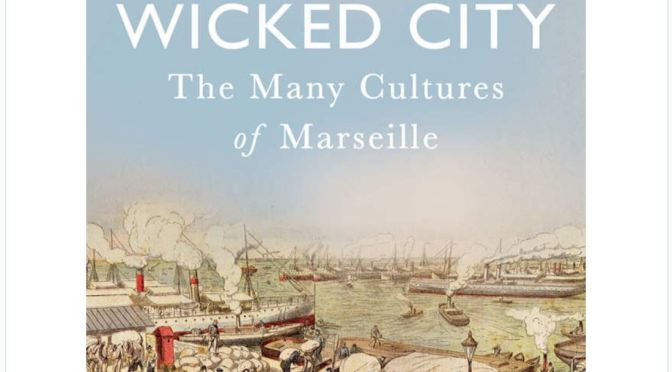
Cultural History Books: “Wicked City – The Many Cutures Of Marseille”
From a Literary Review online review:
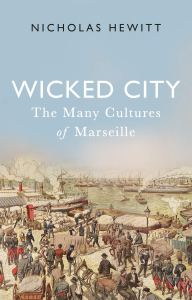 The Toulousain Charles Dantzig wrote, ‘I find the Marseillais tiresome, especially those who, as soon as you speak to them, start to bang on about the uniqueness of being Marseillais, adding with a particular sort of whining machismo that no one likes them and everyone defames them. Their humour is nothing more than pitiable braggadocio.’ Régis Jauffret, who grew up there, is pithier: ‘Marseille is a tragic city. It formed my imagination.’ (It’s an imagination of peerless bleakness.)
 Nicholas Hewitt died in March, less than a month after completing the text of Wicked City. It’s a fine monument to his curiosity, compendious knowledge, resourcefulness and measured enthusiasm. He calls it ‘a series of snapshots’, which is perhaps too modest. If they are snapshots, they have been photoshopped and retouched to accord with his vision of the city and its well-rehearsed mythology of outsiderdom and exceptionalism, edginess and banditry. And his aspiration to explore Marseille’s hold on the ‘nation’s imagination’ is also too modest. The ‘international imagination’ would be more apt.
To read more: https://literaryreview.co.uk/babylon-on-sea
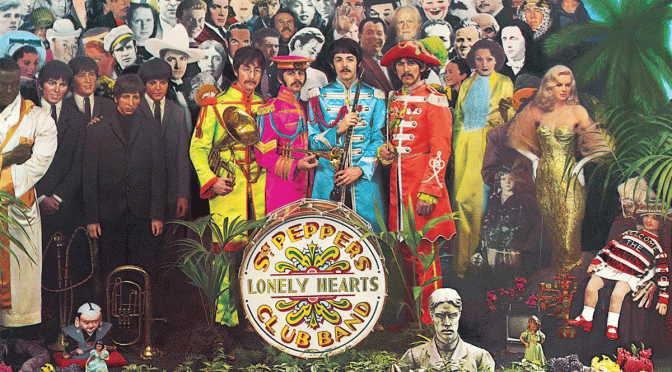
1960’s Music: Kenneth Womack Discusses “The Beatles” Early “Proto-Feminism” (Harvard)
From a Harvard News online article:
 Rock ’n’ roll, or even popular music, [was] often highly gendered and sexist. It certainly was paternalistic in the ’60s and prior, in terms of songs being directed at women as objects, women as needing to be “counseled” about love, [or] it was about coming on to them, even if it was just something innocent and romantic, “I Want to Hold Your Hand.” And the Beatles very consciously in 1965 began to change their tone. They created a very specific type of female character who would think for herself and did not need a man.
 Looking back at your favorite classic rock songs through the lens of today’s attitudes about women’s empowerment, male privilege, and even sexual violence can be cringeworthy at best. But just as they were trailblazers in music, film, fashion, and popular culture, the Beatles were ahead of their time in embracing feminism, argues Kenneth Womack, a well-known authority on the band and dean at Monmouth University, evolving from early patronizing “hey, girl” entreaties to songs filled with independent women who don’t need a man, not even a Beatle. Ideological Diversity, a Harvard Kennedy School student organization, hosts a free talk with Womack on Thursday about how the group explored issues of feminism, gender, and inclusion in ways few rock bands dared in the 1960s.
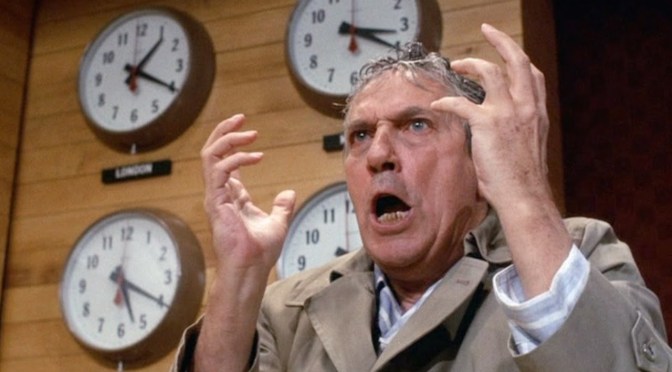
Culture: “Anger” In Society Explored By Artists And Writers (MoMA Video)
Anger. A word that often does the rounds in the 21st century. On a global scale, citizens are increasingly dissatisfied with their governments — from discord within the current American administration to rising hostility within France, Germany, Greece, Iraq, and Lebanon. Anger due to the persistence of racial violence, threats against the rights of women and workers, discrimination against the LGBTQ community, repression, as well as fear and instability surrounding health care systems, income inequality, the environmental crisis, and the effects of mass migration.
Join a nuanced conversation in this MoMA R&D Salon hosted by Paola Antonelli, Senior Curator of Architecture & Design and Director of Research & Development at MoMA, with speakers (in alphabetical order):
Shaun Leonardo: a multidisciplinary artist whose work discusses societal expectations of manhood––namely definitions surrounding black and brown masculinities––along with its notions of achievement, collective identity, and experience of failure.
Lydia Lunch: a writer, singer, poet, actress, and speaker whose career was spawned by the New York City “No Wave” scene. Widely considered one of the most influential performers originating from New York City, Lydia has worked with a range of bands and artists.
Andrew Marantz: a staff writer at The New Yorker, where he has worked since 2011. His work has also appeared in Harper’s, New York, and Mother Jones. He recently published his first book, Antisocial: Online Extremists, Techno-Utopians, and the Hijacking of the American Conversation.
Marilyn Minter: a contemporary artist whose works are in the collections of MoMA, the Solomon R. Guggenheim Museum in New York, the San Francisco Museum of Modern Art, and the Museum of Contemporary Art in Los Angeles, among others.
Pamela Sneed: a poet, writer, visual artist, and performer. She is the author of the books Imagine Being More Afraid of Freedom than Slavery (1998) and Kong and Other Works (2009), as well as the chapbooks Lincoln (2014), Gift (2015), and Sweet Dreams (2018).
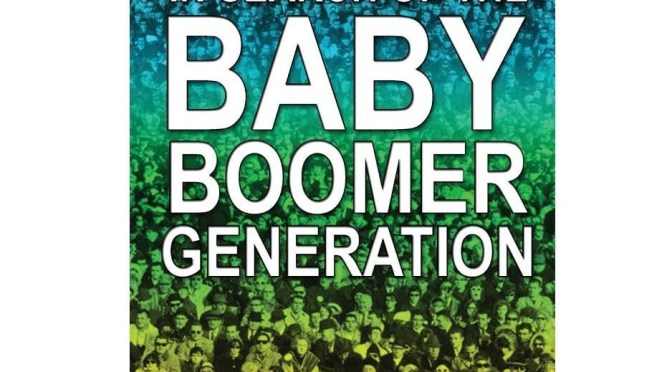
Culture: “Top 10 Defining Events Baby Boomers Lived Through” (Video)
Ok boomer, these are the moments that marked a generation. For this list, we’ll be looking at the cultural and political moments, events and trends that shaped the Baby Boomer generation, focusing on the US. The exact age range of various generations are debated, but we’ll be following the Pew Research definition, which identifies baby boomers as individuals born between 1946 and 1964. Welcome to WatchMojo, and today we’ll be counting down our picks for the Top 10 Defining Moments for Baby Boomers.
- 10. The Rise of Television (1946-)
- 9. The Army-McCarthy Hearings (1954)
- 8. The Cuban Missile Crisis (1962)
- 7. The Watergate Scandal (1972-74)
- 6. Beatlemania (1960s)
- 5. The Vietnam War (1955-73)
- 4. The First Moon Landing (1969)
- 3. Assassination of John F. Kennedy (1963)
- 2. Woodstock (1969)
- 1. The Passing of the Civil Rights Act (1964)

