The podcast crew looks back at the biggest political moments of 2019 and looks ahead to the most pressing questions of 2020.

Website: http://fivethirtyeight.com/

The podcast crew looks back at the biggest political moments of 2019 and looks ahead to the most pressing questions of 2020.
Website: http://fivethirtyeight.com/
We spent 10 days exploring Japan in November 2019. The beauty of the country far exceeded our expectations, and it’s easy to see why!
For more about our travels check out my blog: embracesomeplace.com
For more about our trip to Japan, including helpful guides and location information: embracesomeplace.com/category/asia
Music: For What It’s Worth | Kygo
NEXTON, an indoor vertical farm startup in Korea, realized world’s first vertical farm in a tunnel which naturally maintains temperatures of 10-20C throughout the year even without active heating or cooling solutions.
The farm inside the tunnel is 600 meters long (0.37 miles) with its floor area of ~71,000 sqft, making it one of the world’s largest indoor vertical farms. Integrating this unique tunnel environments with NEXTON’s in-house designed photosynthetically-active LED light sources and proprietary growth system, NEXTON is able to dramatically cut down the cost structure which has plagued profitability and viability of the indoor vertical farming business.
Inside the tunnel, NEXTON is hydroponically growing leafy greens and others without pesticide or herbicide with nutrient water fully-recycled and disinfected chemical-free. NEXTON tuned the environmental and nutritional conditions in such a way to produce crispy and savory leafy greens, well suited for salads. Thanks to our eco-friendly growth methods and clean/controlled environments, our produce needs no or minimal cleaning processes which, in turn, will deliver overall cost benefits to our enterprise customers.
edition.cnn.com/2019/12/09/asia/south-korea-vertical-farm-intl-c2e/index.html
From Wikipedia:
 The Citroën DS is a front-engine, front-wheel-drive executive car that was manufactured and marketed by the French company Citroën from 1955 to 1975 in sedan, wagon/estate and convertible body configurations across three series/generations.
Noted for its aerodynamic, futuristic body design and innovative technology, the DS set new standards in ride quality, handling, and braking — the latter as the first mass production car equipped with disc brakes.
Italian sculptor and industrial designer Flaminio Bertoni and the French aeronautical engineer André Lefèbvre styled and engineered the car, and Paul Magès developed  the hydropneumatic self-levelling suspension. Citroën sold 1,455,746 examples, including 1,330,755 manufactured at the manufacturer’s Paris Quai André-Citroën production plant.
The DS placed third in the 1999 Car of the Century poll recognizing the world’s most influential auto designs and was named the most beautiful car of all time by Classic & Sports Car magazine.
Memory sits at the core of both literature and lives. Yet forgetting is also a part of our brains’ daily working, bringing its own human truths and a necessary path for moving forward. Lewis Hyde’s new _A Primer for Forgetting: Getting Past the Past_, provides inspiration for a deep-dive discussion of memory’s other side, with this august panel of writers and neuroscientists: poets Jane Hirshfield and Margaret Gibson, author Lewis Hyde, and UCSF neuroscientists Aimee Kao, Bruce Miller, and Virginia Sturm.
Co-hosted by Litquake, San Francisco’s Literary Festival
Jane Hirshfield’s ninth poetry collection, Ledger (Knopf), appears in 2020. Chancellor emerita of the Academy of American Poets and recently elected into the American Academy of Arts & Sciences, she works frequently at the intersection of poetry and science. Her work appears in The New Yorker, Atlantic, Poetry, et al.
Listen to Poet and Professor Margaret Gibson below:
Margaret Gibson, current Connecticut Poet Laureate, is the author of 12 books of poetry, including Not Hearing the Wood Thrush (2018) and Broken Cup (2014), centered on memory loss from Alzheimer’s disease and the gifts of sustaining presence through lament, acceptance, and love. She is Professor Emerita at the University of Connecticut.
Listen to author Lewis Hyde below:
Lewis Hyde’s recent book, A Primer for Forgetting (FSG, 2019), explores the many situations in which forgetfulness is more useful than memory—in myth, personal psychology, politics, art and spiritual life. A MacArthur Fellow, Hyde taught for many years at Kenyon College.
Following the important publishing of “The Benefits Of Intermittent Fasting” study by Johns Hopkins in the New England Journal of Medicine on December 26, 2019, the 60-year old editor of Boomers-Daily.com (“B-D”) will launch, participate in, and document a decade-long, 18-Hour Intermittent Fasting Diet on December 30, 2019. The following protocol will be followed:
All readers of Boomers-Daily.com are encouraged to communicate with B-D and launch their own 18-hour Intermittent Fasting Diet (the 6-hour eating period can be varied 1-2 hours later or earlier). Please email boomersdaily@gmail.com to join the study, comment or inquire about this or your own 18-Hour Intermittent Fasting Diet. We will be looking to start an online chat room and other online platforms to increase the size, scope, visibility and transparency of the study over the next decade.

It may be yet another “comeback” for the former star of “Saturday Night Live,” but it may be his biggest, as he gets acclaim for his starring role in the Netflix comedy “Dolemite Is My Name.” Tracy Smith reports.
From a Restaurant Business online article (December 2019):
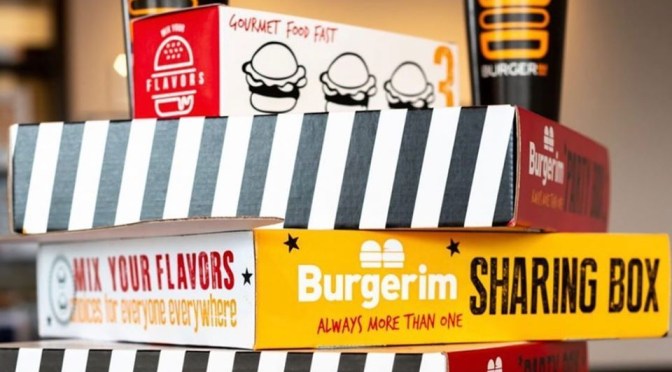
 With 11 protein options for its burgers (including salmon, lamb, falafel and dry-aged beef), two patty sizes and a host of toppings, Burgerim—which increased its unit count by nearly 250% in 2018 to become the country’s fastest-growing emerging chain—is upping the complexity of the traditional burger concept.

The quick-service chain, which has now nearly 200 units (up from 80 in 2018) and another 350 in the “active conception” pipeline, is focusing on training and systems to ensure all those burger variations get executed properly, says Collette Kakuk, Burgerim’s VP of marketing.

From a Cambridge University Press (CUP) listing:
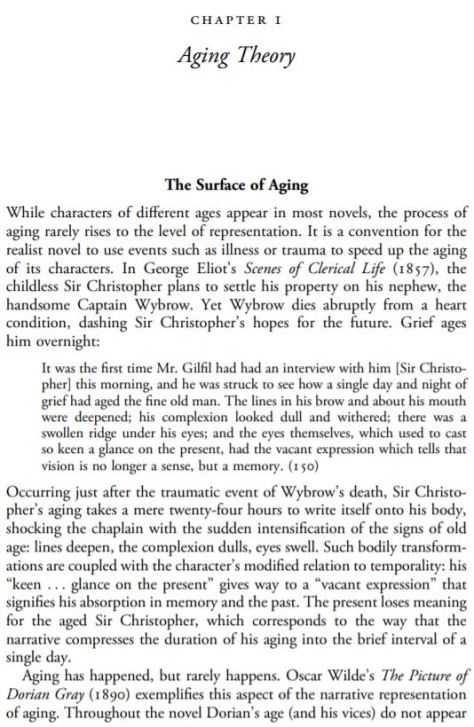
 Aging, Duration, and the English Novel argues that the formal disappearance of aging from the novel parallels the ideological pressure to identify as being young by repressing the process of growing old. The construction of aging as a shameful event that should be hidden – to improve one’s chances on the job market or secure a successful marriage – corresponds to the rise of the long novel, which draws upon the temporality of the body to map progress and decline onto the plots of nineteenth-century British modernity.
The rapid onset of dementia after an illness, the development of gray hair after a traumatic loss, the sudden appearance of a wrinkle in the brow of a spurned lover. The realist novel uses these conventions to accelerate the process of aging into a descriptive moment, writing the passage of years on the body all at once.
 “Future of Food” series on PBS. In this episode they discussed technology in food production including fast-growing salmon (Aquabounty), cell-based meat (Memphis Meats), diversified crop rotation in Iowa, and other trends.