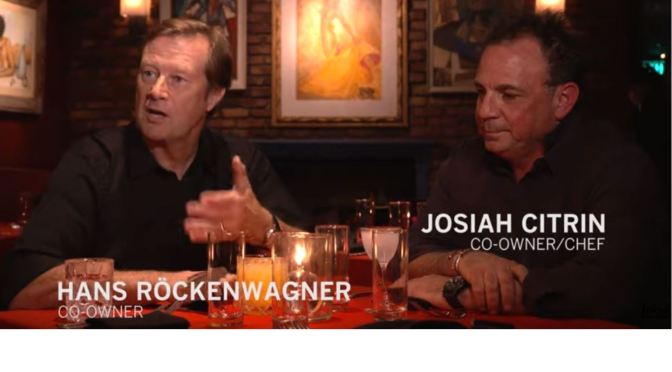
In 1962, Johnny Harlowe made the jump from the silver screen to chef and owner of Dear John’s. Convinced by his pal Frank Sinatra, Johnny opened the iconic spot just a ways down from Sony Studios on Culver Blvd. It became the watering-hole for the Hollywood elite with Sinatra often in the corner playing the piano against the dark brick walls once lined with portraits of famous John’s. Seasoned chefs and entrepreneurs Hans Röckenwagner and Josiah Citrin have teamed up to re-open Dear John’s this April with an updated classic American menu and old-school cocktail list.
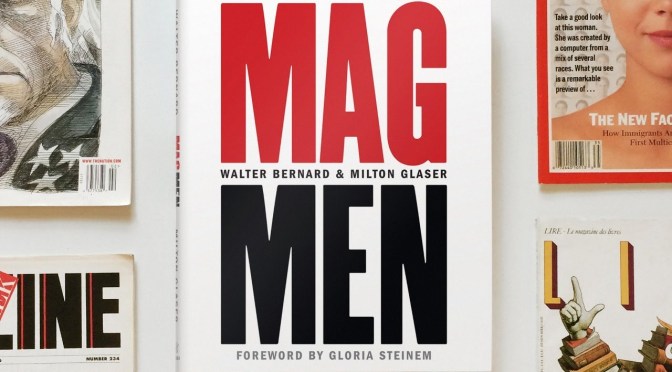
Richly illustrated with the covers and interiors that defined their careers, Mag Men is bursting with vivid examples of Bernard and Glaser’s work, designed to encapsulate their distinctive approach to visual storytelling and capture the major events and trends of the past half century.
For more than fifty years, Walter Bernard and Milton Glaser have revolutionized the look of magazine journalism. In Mag Men, Bernard and Glaser recount their storied careers, offering insiders’ perspective on some of the most iconic design work of the twentieth century. The authors look back on and analyze some of their most important and compelling projects, from the creation of New York magazine to redesigns of such publications as Time, Fortune, Paris Match, and The Nation, explaining how their designs complemented a story and shaped the visual identity of a magazine.
Highlighting the importance of collaboration in magazine journalism, Bernard and Glaser detail their relationships with a variety of writers, editors, and artists, including Nora Ephron, Tom Wolfe, Gail Sheehy, David Levine, Seymour Chwast, Katherine Graham, Clay Felker, and Katrina vanden Heuvel. The book features a foreword by Gloria Steinem, who reflects on her work in magazines and her collaborations with Bernard and Glaser. At a time when uncertainty continues to cloud the future of print journalism, Mag Men offers not only a personal history from two of its most innovative figures but also a reminder and celebration of the visual impact and sense of style that only magazines can offer.
The premise is simple: a black cat loves scheming a white mouse who incessantly throws bricks at the cat’s head, which police dog Officer Pupp, secretly harboring a passionate love for the cat, tries to prevent.
George Herriman endlessly plays with the above formula in his legendary newspaper strip Krazy Kat, published from 1913 until his death in 1944. Through his wit, detailed characterization, and visual-verbal creativity, Herriman introduced even the least comically-inclined to the young medium; Gertrude Stein, F. Scott Fitzgerald, Pablo Picasso, James Joyce, US President Woodrow Wilson, Jackson Pollock, Charlie Chaplin, Frank Capra, P.G. Wodehouse, Willem de Kooning—all KK fans among many others.
It was thanks to media tycoon William Randolph Hearst, a confirmed fan who gave Herriman carte blanche in his newspapers, that the artist was allowed to freely explore countless absurd and melancholy variations on the theme of unrequited love for years on end. Herriman unabashedly took advantage of this, radically exploring the medium’s potential and pushing all of its formal boundaries; readers had to put up with surreal, Dadaist sceneries, a language that whirled slang, neologisms, phonetic spelling, and scholarly references, and diffuse gender roles—making Krazy Kat probably the first gender-fluid star in comic history.
The 300 SL celebrated its premiere at the? International Motor Sports Show? in New York, which took place from February 6th to 14th, 1954. Mercedes-Benz experienced an enormously positive response from visitors to the 300 SL at the Motor Show, so series production began in August 1954 at the Sindelfingen plant.
A total of 1,858 units of the Mercedes 300 SL Roadster were produced between 1957 and 1963.
This 300 SL Roadster was delivered in Germany on September 22, 1960. In the mid-1980s, the car came into the possession of an experienced Mercedes specialist. The roadster underwent extensive restoration under his direction. According to the available documentation, the body was separated from the chassis and completely overhauled. Since then, the car has only been moved about 28,000 km and serviced regularly. A few years ago, the vehicle changed hands within Germany to a businessman and classic car enthusiast who used the roadster for nice trips and events.
The arresting visual beauty of “A Hidden Life,” which was shot by Joerg Widmer, is essential to its own argument, and to Franz’s ethical and spiritual rebuttal to the concerns of his persecutors and would-be allies. The topography of the valley is spectacular, but so are the churches and cathedrals. Even the cells and offices are infused with an aesthetic intensity at once sensual and picturesque.
The hallmarks of Malick’s later style are here: the upward tilt of the camera to capture new vistas of sky and landscape; the brisk gliding along rivers and roads; the elegant cutting between the human and natural worlds; the reverence for music and the mistrust of speech. (The score is by James Newton Howard.)
The LA Times 101 restaurant rankings are here. Yale historian Paul Freedman traces the history of American cuisine. Journalist Charlotte Druckman shares what she learned from more than 100 women in the food world. Plus: a look at the surprising connections that take you from one recipe to another.
Thankfully, Willem Dafoe and Willem Dafoe’s face have used this innate recognisability to their joint advantage. To date, the actor has appeared in well over 100 films, and his prolific career can be charted through the cracks and comments — some nice, some not so nice — that those in the industry have made about his looks.
In fact, in the intervening decades, Hollywood has called many, many times — as have independent filmmakers, foreign studios, animation houses, video game developers and scores of theatres. On the big screen, Dafoe has taken roles in Platoon, Mississippi Burning, Born on the Fourth of July, The English Patient, American Psycho and Shadow of the Vampire. He flew into The Aviator for a cameo, swung into the Spider-Man trilogy as the villainous Green Goblin and dipped his toe in voiceover work with Finding Nemo. He’s taken on John Carter, John Wick and narrated films from Vox Lux to The Great Wall. He’s been Oscar-nominated several times, for playing characters as wild and disparate as hammy vampires, Floridian motel managers and Vincent van Gogh. The man is a chameleon — and has managed to become one despite having Willem Dafoe’s face.
Lo—TEK, derived from Traditional Ecological Knowledge, is a cumulative body of multigenerational knowledge, practices, and beliefs, countering the idea that indigenous innovation is primitive and exists isolated from technology. It is sophisticated and designed to sustainably work with complex ecosystems.
Three hundred years ago, intellectuals of the European Enlightenment constructed a mythology of technology. Influenced by a confluence of humanism, colonialism, and racism, this mythology ignored local wisdom and indigenous innovation, deeming it primitive. Today, we have slowly come to realize that the legacy of this mythology is haunting us.
With a foreword by anthropologist Wade Davis and four chapters spanning Mountains, Forests, Deserts, and Wetlands, this book explores thousands of years of human wisdom and ingenuity from 20 countries including Peru, the Philippines, Tanzania, Kenya, Iran, Iraq, India, and Indonesia. We rediscover an ancient mythology in a contemporary context, radicalizing the spirit of human nature.
Described as “one of the more significant milestones of the postwar industry”, the car offered combined safety and high-speed performance. Subsequent to Studebaker’s discontinuation of the model, a series of five owner arrangements continued manufacture and marketing of the Avanti model.
The Studebaker Avanti was manufactured and marketed between June 1962 and December 1963. The automaker marketed the Avanti as “America’s only four-passenger high-performance personal car.”
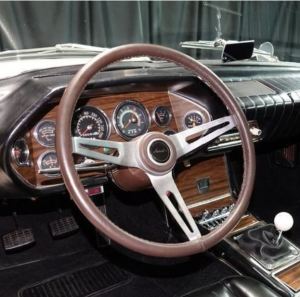
The Avanti was developed at the direction of Studebaker president, Sherwood Agbert. “The car’s design theme is the result of sketches Egbert “doodled” on a jet-plane flight west from Chicago 37 days after becoming president of Studebaker in February 1961.” Designed by Raymond Loewy’s team, the Avanti featured a radical fiberglass body mounted on a modified studebaker Lark Daytona 109-inch convertible chassis and powered by a modified 289 Hawk engine. APaxton supercharger was offered as an option.
The Toulousain Charles Dantzig wrote, ‘I find the Marseillais tiresome, especially those who, as soon as you speak to them, start to bang on about the uniqueness of being Marseillais, adding with a particular sort of whining machismo that no one likes them and everyone defames them. Their humour is nothing more than pitiable braggadocio.’ Régis Jauffret, who grew up there, is pithier: ‘Marseille is a tragic city. It formed my imagination.’ (It’s an imagination of peerless bleakness.)
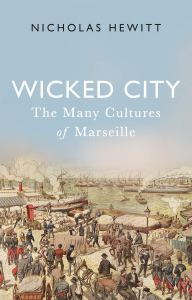
Nicholas Hewitt died in March, less than a month after completing the text of Wicked City. It’s a fine monument to his curiosity, compendious knowledge, resourcefulness and measured enthusiasm. He calls it ‘a series of snapshots’, which is perhaps too modest. If they are snapshots, they have been photoshopped and retouched to accord with his vision of the city and its well-rehearsed mythology of outsiderdom and exceptionalism, edginess and banditry. And his aspiration to explore Marseille’s hold on the ‘nation’s imagination’ is also too modest. The ‘international imagination’ would be more apt.

 For more than fifty years, Walter Bernard and Milton Glaser have revolutionized the look of magazine journalism. In Mag Men, Bernard and Glaser recount their storied careers, offering insiders’ perspective on some of the most iconic design work of the twentieth century. The authors look back on and analyze some of their most important and compelling projects, from the creation of New York magazine to redesigns of such publications as Time, Fortune, Paris Match, and The Nation, explaining how their designs complemented a story and shaped the visual identity of a magazine.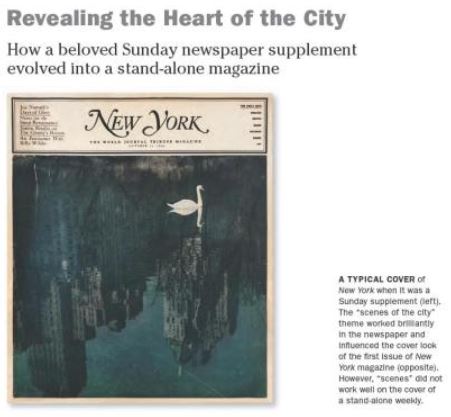

 The premise is simple: a black cat loves scheming a white mouse who incessantly throws bricks at the cat’s head, which police dog Officer Pupp, secretly harboring a passionate love for the cat, tries to prevent.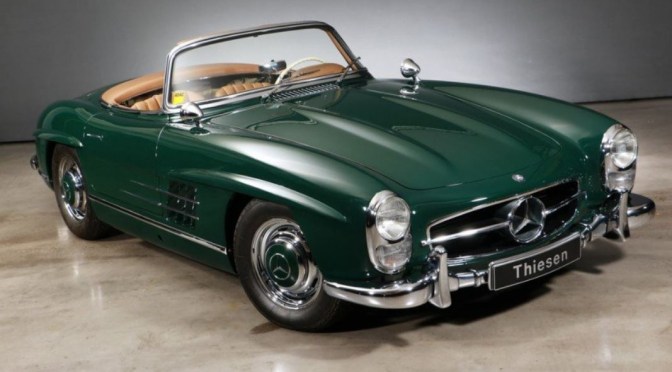
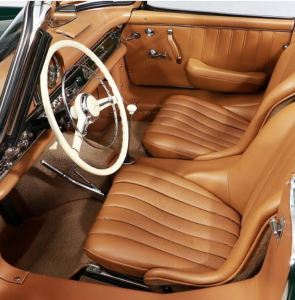 The 300 SL celebrated its premiere at the? International Motor Sports Show? in New York, which took place from February 6th to 14th, 1954. Mercedes-Benz experienced an enormously positive response from visitors to the 300 SL at the Motor Show, so series production began in August 1954 at the Sindelfingen plant.
 This 300 SL Roadster was delivered in Germany on September 22, 1960. In the mid-1980s, the car came into the possession of an experienced Mercedes specialist. The roadster underwent extensive restoration under his direction. According to the available documentation, the body was separated from the chassis and completely overhauled. Since then, the car has only been moved about 28,000 km and serviced regularly. A few years ago, the vehicle changed hands within Germany to a businessman and classic car enthusiast who used the roadster for nice trips and events.
 The arresting visual beauty of “A Hidden Life,” which was shot by Joerg Widmer, is essential to its own argument, and to Franz’s ethical and spiritual rebuttal to the concerns of his persecutors and would-be allies. The topography of the valley is spectacular, but so are the churches and cathedrals. Even the cells and offices are infused with an aesthetic intensity at once sensual and picturesque.
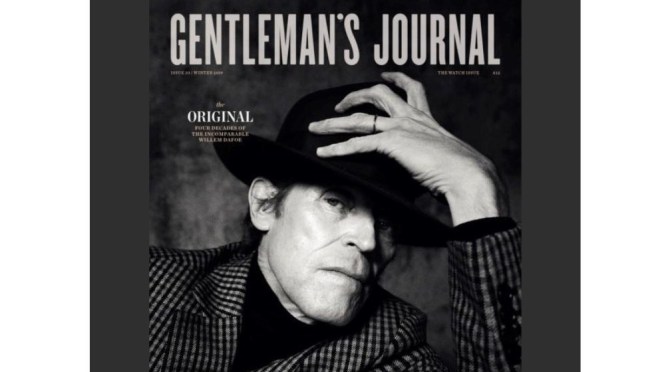
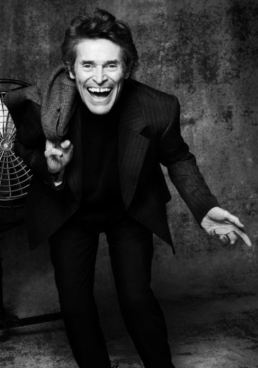 Thankfully, Willem Dafoe and Willem Dafoe’s face have used this innate recognisability to their joint advantage. To date, the actor has appeared in well over 100 films, and his prolific career can be charted through the cracks and comments — some nice, some not so nice — that those in the industry have made about his looks.
 Lo—TEK, derived from Traditional Ecological Knowledge, is a cumulative body of multigenerational knowledge, practices, and beliefs, countering the idea that indigenous innovation is primitive and exists isolated from technology. It is sophisticated and designed to sustainably work with complex ecosystems.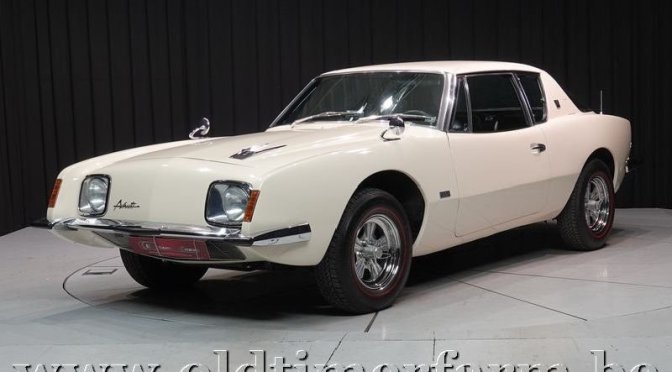
 Described as “one of the more significant milestones of the postwar industry”, the car offered combined safety and high-speed performance. Subsequent to Studebaker’s discontinuation of the model, a series of five owner arrangements continued manufacture and marketing of the Avanti model.
 The Avanti was developed at the direction of Studebaker president, Sherwood Agbert. “The car’s design theme is the result of sketches Egbert “doodled” on a jet-plane flight west from Chicago 37 days after becoming president of Studebaker in February 1961.” Designed by Raymond Loewy’s team, the Avanti featured a radical fiberglass body mounted on a modified studebaker Lark Daytona 109-inch convertible chassis and powered by a modified 289 Hawk engine. APaxton supercharger was offered as an option.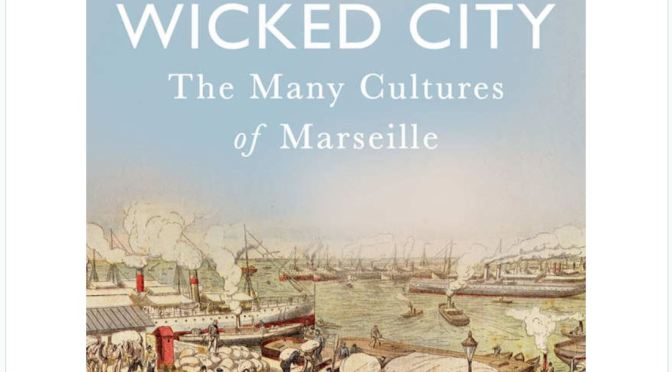
 The Toulousain Charles Dantzig wrote, ‘I find the Marseillais tiresome, especially those who, as soon as you speak to them, start to bang on about the uniqueness of being Marseillais, adding with a particular sort of whining machismo that no one likes them and everyone defames them. Their humour is nothing more than pitiable braggadocio.’ Régis Jauffret, who grew up there, is pithier: ‘Marseille is a tragic city. It formed my imagination.’ (It’s an imagination of peerless bleakness.)
 Nicholas Hewitt died in March, less than a month after completing the text of Wicked City. It’s a fine monument to his curiosity, compendious knowledge, resourcefulness and measured enthusiasm. He calls it ‘a series of snapshots’, which is perhaps too modest. If they are snapshots, they have been photoshopped and retouched to accord with his vision of the city and its well-rehearsed mythology of outsiderdom and exceptionalism, edginess and banditry. And his aspiration to explore Marseille’s hold on the ‘nation’s imagination’ is also too modest. The ‘international imagination’ would be more apt.
 Intellicurious