
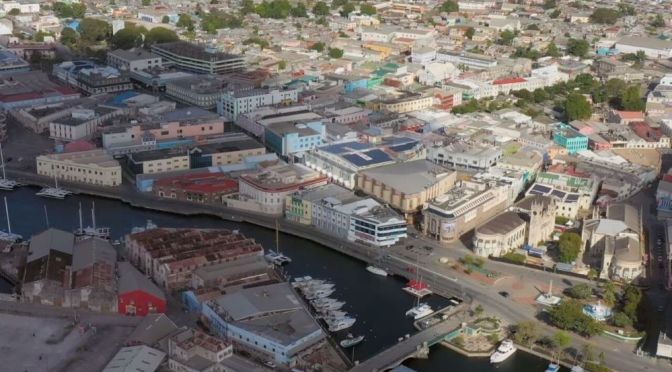
On November 30, 2021, #Barbados became the world’s youngest #republic, cutting historic ties with the British monarchy. In the 17th century, the #Caribbean island state became a British colony dedicated to sugar production. Some 90 percent of its population are descended from slaves. Since independence in 1966, Barbados had long been ambivalent about its colonial heritage. But today, Prime Minister Mia Amor Mottley is taking the country into a new era. Our team reports.
Category Archives: Profiles
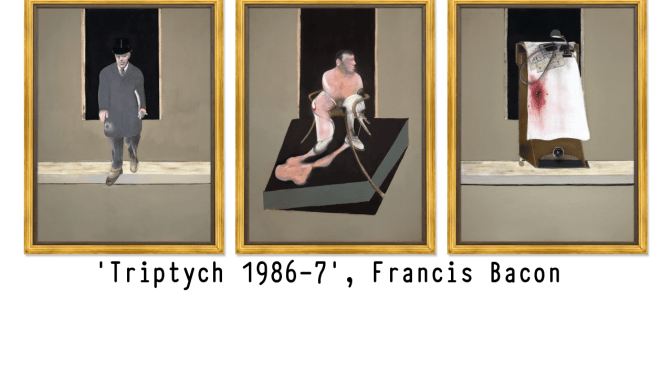
20th Century: Was Francis Bacon The Best Painter?
Is Francis Bacon really the greatest painter of the 20th century?

It was not an enormous surprise that an exhibition of works by Francis Bacon at the Royal Academy that is supported by Christie’s should swiftly be followed by an announcement of the auction house offering a large work for sale. Triptych 1986-7, whose central panel depicts the artist’s partner John Edwards, with Woodrow Wilson on one side and the assassinated Trotsky’s study on the other, is being offered in the sale that takes place on 1 March with an estimate of £35m–£55m. Nor is it a surprise that an auction house should drum up interest in one of their lots using superlatives. But Rakewell was a little taken aback by the claim on Instagram from a Christie’s specialist that ‘Francis Bacon is unmistakably on of the greatest painters of the 20th century.’

Museum Insider : ‘Wheat Fields After The Rain’ By Vincent Van Gogh (1890)
Wheat Fields after the Rain (The Plain of Auvers) – 1890
Wheat Fields is a series of dozens of paintings by Dutch Post-Impressionist artist Vincent van Gogh, borne out of his religious studies and sermons, connection to nature, appreciation of manual laborers and desire to provide a means of offering comfort to others. The wheat field works demonstrate his progression as an artist from the drab Wheat Sheaves made in 1885 in the Netherlands to the colorful and dramatic 1888–1890 paintings from Arles, Saint-Rémy and Auvers-sur-Oise in rural France.

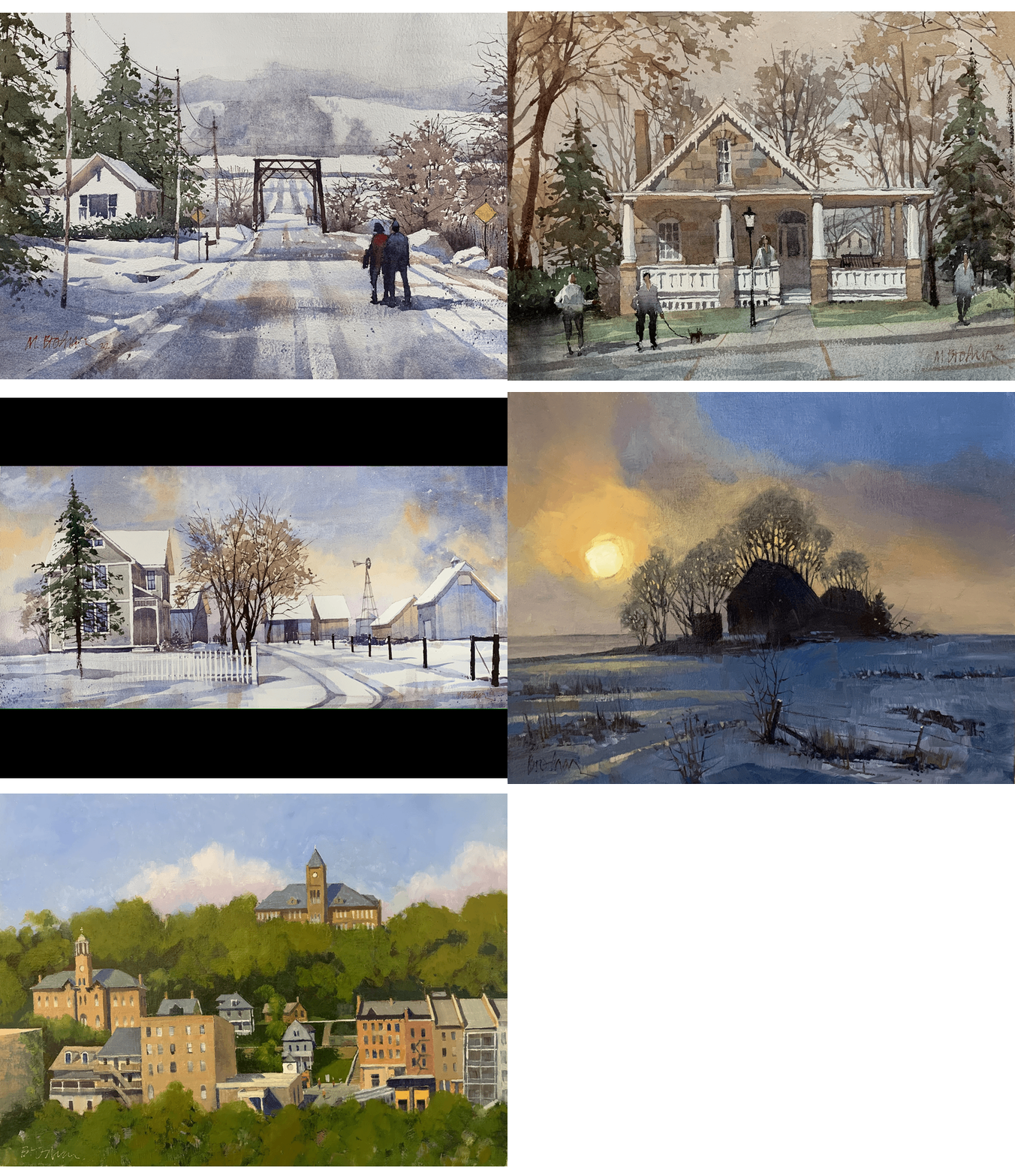
Top Artists: Watercolors Of Michael Broshar (2022)
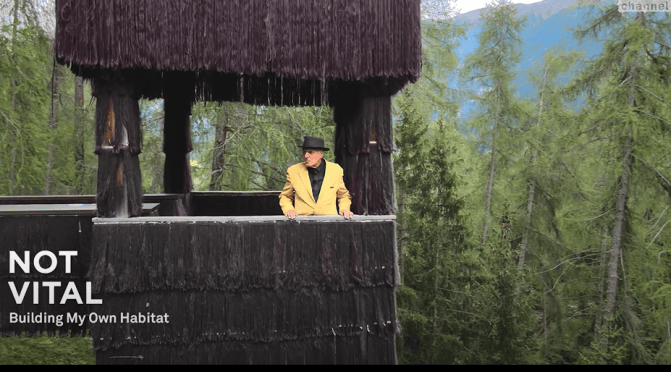
Profiles: Swiss Artist Builds His Own Habitat
“If you’re a painter, you need a canvas. If you’re a sculptor, you need marble or plaster. And if you build a house, you need a piece of land.” Welcome to the wonderful world of Not Vital. The Swiss multi-faceted artist shows us his sculpture park, foundation, and castle in this video.
We meet Not Vital in his studio in Sent, the town in Switzerland where he grew up and one of the places where he still lives. Building places to live have been with him since childhood: “My first work was more related to trying to build a house or a habitat. The first one was when I was only three years old in 1951. There was so much snow that my brother and I built a tunnel,” he says and continues: “I think that it was the first time I realised that I like to build my own habitat.
Even though it was much more comfortable to live in the house, I spent the day in the tunnel. I remember the light, the smell of the snow. I just felt great.” Through the years, Vital has led a nomadic life, seeking and building homes in various cities around the globe: Paris, New York, Beijing, Rio de Janeiro. He has bought an island made of Marble in Patagonia, called NotOna.
In Niger, he has built a house whose only purpose is to watch the sunset. He calls these hybrids of sculpture and architecture ‘Scarch’: “It opened up a whole new world for me, which became very important. I’m calling that ‘Scarch’ because it’s a kind of sculpture and architecture. Because I’m not an architect, I didn’t want to be an architect or study architecture because I would probably have gone in a different direction.” Buying pieces of land worldwide is essential for his artistic practice.
He explains: “If you’re a painter, you need a canvas. If you’re a sculptor, you need marble or plaster. And if you build a house, you need a piece of land. That’s kind of all related.” ‘Scarch’ is not the only thing Vital makes. He also creates sculptures in silver, makes humorous wordplays with antlers and paints portraits: “I want to show the way I see. I don’t want to change anything.”
The portraits he started painting in 2008. Often they depict the people surrounding him. Other times, it is significant artists such as a young Rembrandt and Nina Simone. “When I paint, I think about a lot of Rothko. The colours. How to put two colours together. But of course, this is figurative,” Vital reflects and continues: “Actually, they have everything in it. They have eyes and noses.
And that’s great by painting that whatever you put in the canvas stays in the canvas. Even though you paint it over, it’s still there.” Not Vital does not differ between the many different artforms he works with: “Art is one. It doesn’t matter if it’s the 15th century or if it’s now. It’s all related.” Not Vital (b. 1948) is a Swiss artist who works in diverse media across installations, paintings, drawings and sculptures, typically integrating architecture. Vital divides his time between the U.S., Niger, Italy, China and Switzerland, and his art is centred on personal impressions and experiences from around the world. This somewhat anthropological approach is also reflected in how his career is structured into sections, e.g. glass blowers in Murano or paper artists in Bhutan. Vital’s work has been featured in the 49th Venice Biennale in Italy (2001), and he has held significant exhibitions at prominent venues such as the Kunsthalle Bielefeld in Germany (2005), The Arts Club of Chicago in the U.S. (2006), Ullens Center For Contemporary Art in Beijing, China (2011), the Museo d’arte di Mendrisio in Switzerland (2014-15) and Galerie Thaddaeus Ropac, London (2021).
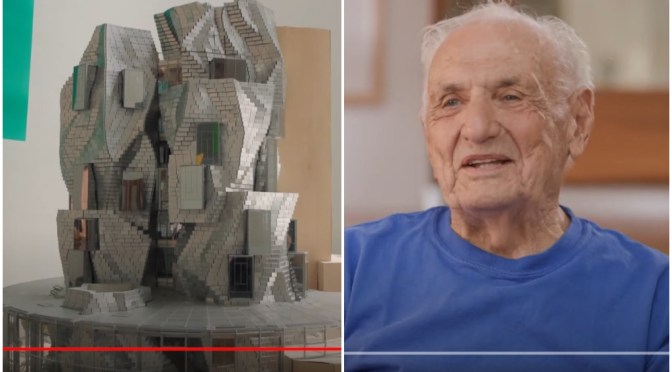
Profiles: Frank Gehry’s ‘Playful Architecture’
At 92, famed architect Frank Gehry is not resting on his substantial laurels. The designer behind such landmarks as the Walt Disney Concert Hall in downtown Los Angeles and the Guggenheim Museum in Bilbao, Spain, talks with “60 Minutes” correspondent Bill Whitaker about his creative process, and how aerospace technology has enabled him to turn his playful ideas into reality.
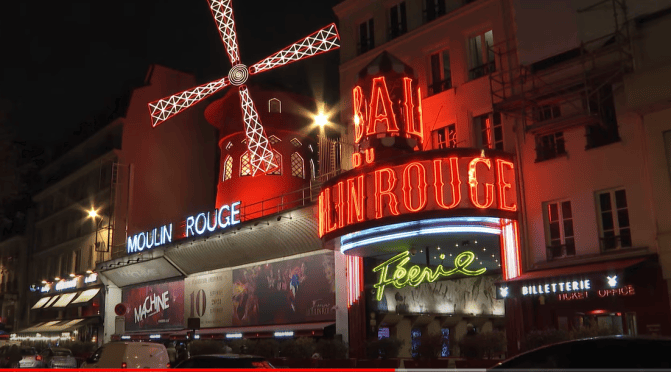
Paris Views: The Daily Life Of A Moulin Rouge Dancer
The legendary revue theater Moulin Rouge is one of Paris’s big attractions and the workplace of dancer Nora Mogalle. She has been dancing the Cancan here for 19 years. Behind the scenes of the famous Moulin Rouge we get to know the dancer and doctor, and catch a glimpse of the spectacular shows.
Moulin Rouge is a cabaret in Paris, France. The original house, which burned down in 1915, was co-founded in 1889 by Charles Zidler and Joseph Oller, who also owned the Paris Olympia.
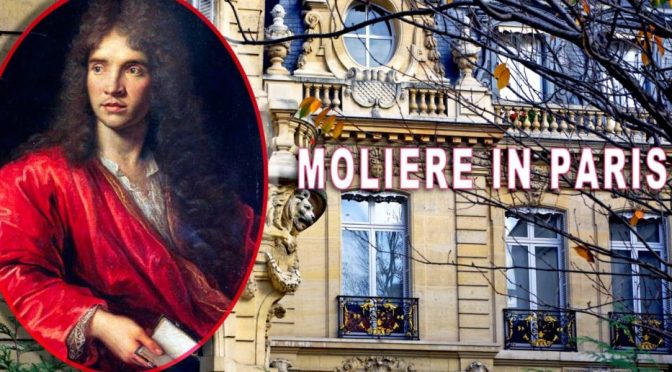
History: Legacy Of French Playwright Molière
He’s known as the father of French #theatre, but the influence of #Molière goes well beyond France. His impact is still felt today all over the world. To mark the 400th #anniversary of the famed playwright’s birth, we speak to Georges Forestier, professor at the Sorbonne and a specialist in the works of Molière. We also take you on a tour of Molière’s Paris.
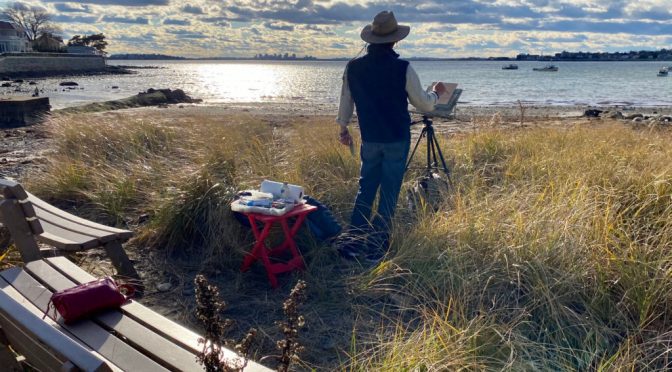
Profiles: A Day With Plein Air Painter Mark Shasta

Profiles: Holiday Classic ‘The Grinch’ Narrator & Movie Actor Boris Karloff
He’s mean and green and one of the holiday season’s best-known characters. But the man who gave voice to the “Grinch” had a monster-sized career all his own. Michelle Miller has his story.
William Henry Pratt, better known by his stage name Boris Karloff, was an English actor, who starred as Frankenstein’s monster in the horror film Frankenstein, which established him as a horror icon. He reprised the role in Bride of Frankenstein and Son of Frankenstein.
 Intellicurious