
From a Genetic Engineering & Biotechnology News release:
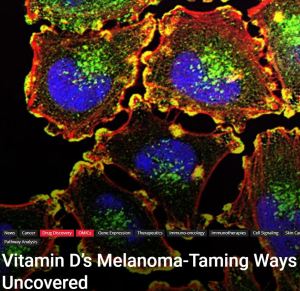 “But what’s really intriguing is that we can now see how vitamin D might help the immune system fight cancer. We know when the Wnt/beta-catenin pathway is active in melanoma, it can dampen down the immune response causing fewer immune cells to reach the inside of the tumor, where they could potentially fight the cancer better.
“Although vitamin D on its own won’t treat cancer, we could take insights from the way it works to boost the effects of immunotherapy, which uses the immune system to find and attack cancer cells.”

In melanoma patients, elevated serum levels of vitamin D appear to be helpful. Tumors are thinner. Outcomes are improved. But how, exactly, are these benefits realized? To answer this question, researchers at the University of Leeds scrutinized the interaction between vitamin D and the vitamin D receptor (VDR) on melanoma cells. The researchers, fully aware that vitamin D on its own won’t treat cancer, hoped to identify cell signaling pathways that could lead to new therapeutic strategies.
To read more: https://www.genengnews.com/news/vitamin-ds-melanoma-taming-ways-uncovered/
 “This study identifies a new molecular connection between exercise and inflammation that takes place in the bone marrow and highlights a previously unappreciated role of leptin in exercise-mediated cardiovascular protection,” said Michelle Olive, program officer at the National Heart, Lung, and Blood Institute Division of Cardiovascular Sciences. “This work adds a new piece to the puzzle of how sedentary lifestyles affect cardiovascular health and underscores the importance of following physical-activity guidelines.”
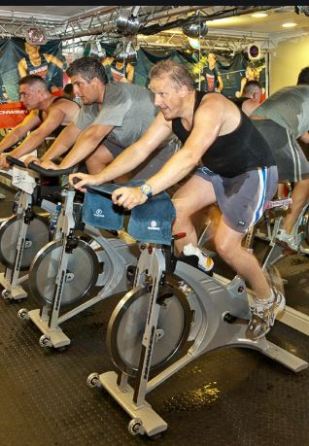 The investigators discovered that patients with a higher genetic risk for depression were more likely to be diagnosed with depression over the next 2 years. However, more physically active patients at baseline were less likely to depression, even after they accounted for genetic risks.
 “The results we saw were stunning and suggest that holistically addressing aging via gene therapy could be more effective than the piecemeal approach that currently exists,” said first author Noah Davidsohn, a former research scientist at the Wyss Institute and HMS who is now chief technology officer of Rejuvenate Bio. “Everyone wants to stay as healthy as possible for as long as possible, and this study is a first step toward reducing the suffering caused by debilitating diseases.”
 “Another behavior change is physical exercise,” Pillemer said. “A paradox of pain is that exercise helps reduce it, but it’s difficult for people in pain to think about exercising. So they don’t exercise, they get more sedentary and the pain increases; it’s a vicious circle. So how do you get people to actually change their behavior?”
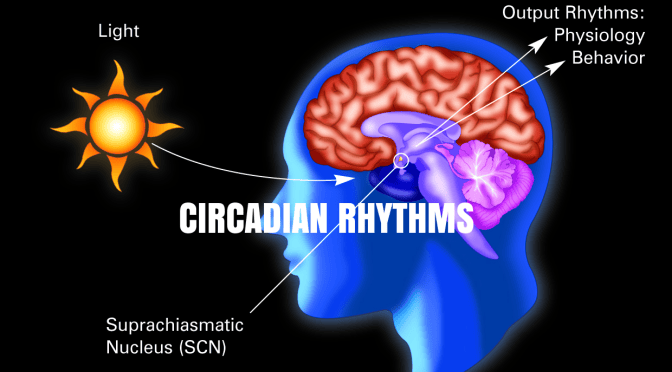
 When people are awake during the night, their behaviors are often mismatched with their internal body clocks. This can lead to nighttime eating, which can influence the way the body processes sugar and could lead to a higher risk in diabetes. “What happens when food is eaten when you normally should be fasting?” Scheer asked the audience. “What happens is that your glucose tolerance goes out the window….So your glucose levels after a meal are much higher.” This can increase people’s risk for diabetes.
 Measles is a dangerous infection that can kill. As many as 100,000 people die from the disease each year. For those who survive infection, the virus leaves a lasting mark—it appears to wipe out the immune system’s memory. News Intern Eva Fredrick joins host Sarah Crespi to talk about a pair of studies that looked at
 For new patients, whose visits entail more work than those of established patients,
  Intellicurious