Category Archives: Health

Sleep Studies: Increase In Preventable Diseases Tied To Disrupted “Circadian Rhythms” (Harvard)

From a Sleep Review Magazine online article:
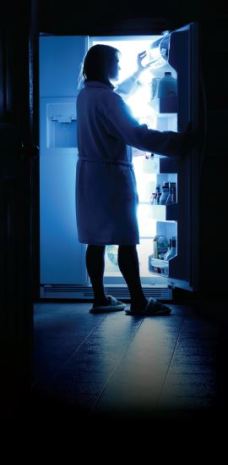
Nighttime EatingWhen people are awake during the night, their behaviors are often mismatched with their internal body clocks. This can lead to nighttime eating, which can influence the way the body processes sugar and could lead to a higher risk in diabetes. “What happens when food is eaten when you normally should be fasting?” Scheer asked the audience. “What happens is that your glucose tolerance goes out the window….So your glucose levels after a meal are much higher.” This can increase people’s risk for diabetes.

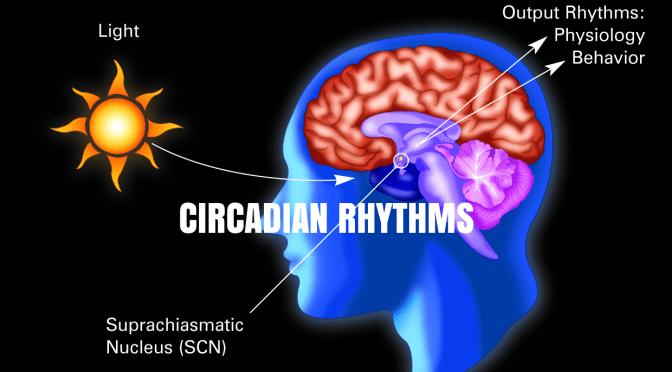
Frank Scheer, PhD, professor of medicine at Harvard Medical School and director of the medical chronobiology program at Brigham and Women’s Hospital in Boston, says disruption of the body’s circadian rhythms may be one major reason why more Americans are living with preventable diseases. During his keynote talk at the 2019 AAST annual meeting in St. Louis, he outlined how recent research supports the hypothesis that higher rates of shiftwork and other forms of nighttime disruption could be contributing to increased rates of obesity, diabetes, and other common ailments.

To read more: http://www.sleepreviewmag.com/2019/10/circadian-rhythm-disruption-increase-preventable-diseases/
Top Science Podcasts: Measles Wipes Out Immune System Memory, Black Holes (Science Magazine)

scimag_pc_logo_120_120 (2)Measles is a dangerous infection that can kill. As many as 100,000 people die from the disease each year. For those who survive infection, the virus leaves a lasting mark—it appears to wipe out the immune system’s memory. News Intern Eva Fredrick joins host Sarah Crespi to talk about a pair of studies that looked at how this happens in children’s immune systems.
In our second segment this week, Sarah talks with Todd Thompson, of Ohio State University in Columbus, about his effort to find a small black hole in a binary pair with a red giant star. Usually black holes are detected because they are accruing matter and as the matter interacts with the black hole, x-rays are released. Without this flashy signal, black hole detection gets much harder. Astronomers must look for the gravitational influence of the black holes on nearby stars—which is easier to spot when the black hole is massive. Thompson talks with Sarah about a new approach to finding small, noninteracting black holes.

https://www.sciencemag.org/podcast/how-measles-wipes-out-immune-memory-and-detecting-small-black-holes

Health Care Costs: $250+ Per Visit “Facility Fees” Increasingly Charged By Medical Practices

From a New York Times online article:

Facility FeeFor new patients, whose visits entail more work than those of established patients, facility fees typically range from $131 to $322 per visit; for established patients, they are slightly lower. In surgical centers and free-standing emergency rooms, the facility fee can be thousands of dollars.
A facility fee is an additional charge that some medical practices can add to the cost of each doctor visit. The additional charge usually comes as a surprise because, unlike an exam or a test or treatment, the facility fee is not tied directly to hands-on care.

The purpose of the facility fee is to compensate hospitals for the expense of maintaining the physical premises. Hospital-owned, off-campus medical practices are also allowed to charge the facility fee to cover specific regulatory requirements, such as building codes, disaster preparedness, equipment redundancy and other items that are largely invisible to patients.

To read more: https://www.nytimes.com/2019/11/01/well/live/why-was-my-doctor-visit-suddenly-so-expensive.html

Research: Older Adults’ Memory Benefits From High-Intensity Workouts (No Change W/ Moderate)

From a MedicalXpress.com online release:

largepreviewResearchers suggest that intensity is critical. Seniors who exercised using short, bursts of activity saw an improvement of up to 30 percent in   performance while participants who worked out moderately saw no improvement, on average.
Researchers at McMaster University who examine the impact of exercise on the brain have found that high-intensity workouts improve memory in older adults.

Studies: Surging Number Of Deaths From Heart Failure Tied To Aging Population, Obesity Rates

From a Wall Street Journal online article:

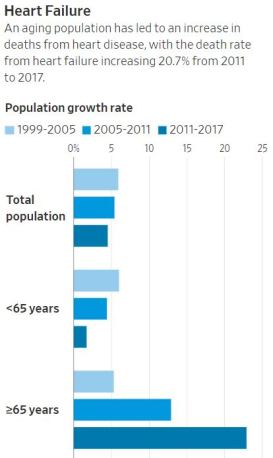
The rapid aging of the population, together with high rates of obesity and diabetes in all ages, are pushing both the rate and number of deaths from heart failure higher, the study said. Most deaths from heart failure occur in older Americans, but they are rising in adults under 65, too, the study showed.

Heart Failure Increase in Aging PopulationThe findings help explain why a decadeslong decline in the death rate from cardiovascular disease has slowed substantially since 2011 and started rising in middle-aged people, helping drive down U.S. life expectancy.
Deaths from heart failure, one of the nation’s biggest killers, are surging as the population ages and the health of younger generations worsens.

The death rate from the chronic, debilitating condition rose 20.7% between 2011 and 2017 and is likely to keep climbing sharply, according to a study published Wednesday in the journal JAMA Cardiology.

To read more: https://www.wsj.com/articles/heart-failure-deaths-rise-contributing-to-worsening-life-expectancy-11572411901

Dementia Studies: Healthy Sleep, Diet And Exercise Changes Boost Cognition

From a Wall Street Journal online article:

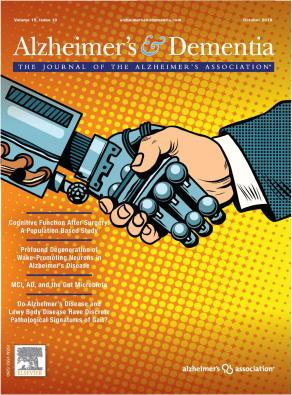
Alzheimer's & Dementia JournalMr. Chambers, a 48-year-old physical therapist in Jersey City, N.J., modified his sleep, diet and exercise routines. Eighteen months later, his performance on a battery of cognitive tests improved, particularly in areas like processing speed and executive function, such as decision-making and planning.
Most surprising, says Dr. Isaacson, is that the MCI patients who followed at least 60% of their recommendations showed cognitive improvement. However, MCI patients who followed less than 60% of the recommendations experienced cognitive declines similar to the control groups, he notes.

Mr. Chambers is among 154 patients in a study, published Wednesday in Alzheimer’s & Dementia: The Journal of the Alzheimer’s Association, that doctors say shows encouraging results. Among healthy patients, people who made changes in nutrition and exercise showed cognitive improvements on average. People who were already experiencing some memory problems also showed cognitive improvement—if they followed at least 60% of the recommended changes.

To read actual study: https://els-jbs-prod-cdn.literatumonline.com/pb/assets/raw/Health%20Advance/journals/jalz/JALZ_2985-1572445934507.pdf?mod=article_inline

To read more: https://www.wsj.com/articles/the -link-between-diet-exercise-and-alzheimers-11572427802


Ethics Of Lying About A Terminal Cancer Diagnosis Explored In Movie “The Farewell”

From a New Scientist online review:

The prevailing narrative of “battling cancer” in Western society has its own issues, with its discourse of personal triumph that values individual responsibility and determination. But the alternative – to lie outright – might seem inconceivable, particularly to those accustomed to the norms of Western culture. It is, however, a common practice in China, rooted in the belief that telling a person about their diagnosis can make their condition deteriorate quicker.


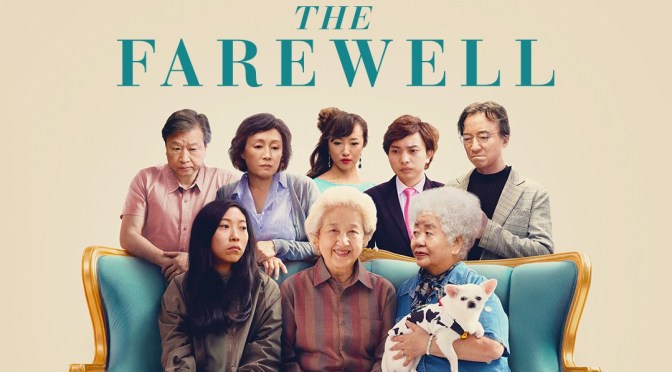
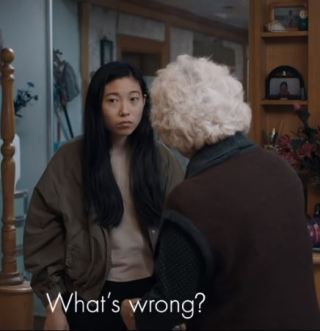
The Farewell Movie about Cancer DiagnosisThe plot line of The Farewell is familiar to me. Like Billi’s Nai Nai, my aunt was diagnosed with metatastic lung cancer. Nobody in the family told her – nor did the doctors when she later underwent surgery to remove a tumour. The last time I saw her was in north-eastern China a few years ago. Her once-plump figure had shrunk to a wiry frame. She was in her early 70s, in good spirits, but a far cry from the feisty matriarch who used to dominate conversations.
The Farewell is a heartfelt film, punctuated by moments of unexpected – and unexpectedly uplifting – humour. In a darkly comical scene in a printing shop, Nai Nai’s younger sister demands that the results of a medical report be doctored to edit out references to cancerous nodules and replaced with the nebulous term “benign shadows”.

Read more: https://www.newscientist.com/article/2221673-the-farewell-explores-the-ethics-of-lying-about-a-cancer-diagnosis/#ixzz63pnQELiY

Health: Important Facts Regarding Flu Vaccines And Influenza Virus

From a The Week online article:

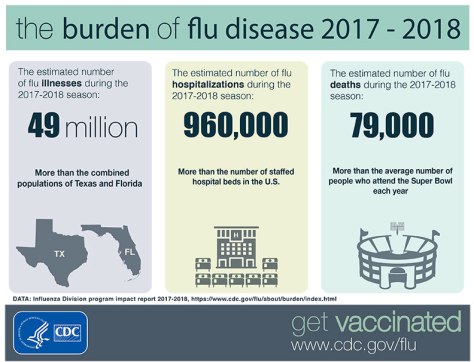
The disease kills 12,000 Americans during mild flu seasons and up to 56,000 in severe ones, with 90 percent of the victims over 65 years old. 

Although the U.S. has one of the highest vaccination rates in the world, only 45 percent of adults and 63 percent of children get flu shots each year. Scientists estimate that if the vaccination rates were boosted to between 80 and 90 percent, it could effectively stop seasonal flu from spreading because of herd immunity. 

burden-flu-infographic-update

How does the vaccine work?
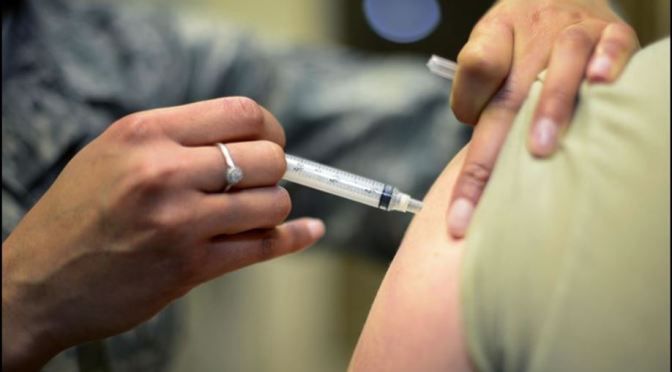
The flu vaccine contains inactive or weakened versions of three or four different strains of the influenza virus. Most people receive the vaccine via injection, but there is also a nasal spray available. The weakened viruses can’t cause serious illness, but they trigger and train the immune system to fight off the invading microorganisms. White blood cells generate an army of antibodies, which attack and destroy the vaccine viruses by attaching themselves to parts of the virus known as antigens. The vaccine antigens have the same shape as real flu antigens, so the immune system now has antibodies that match up with the real flu virus. That experience teaches the immune system to recognize future flu infections and quickly make antibodies to attack the invading viruses. It takes about two weeks after receiving the vaccine to develop immunity, which is why doctors recommend getting it early in the flu season, which begins in October and can last as late as May.

To read more: https://theweek.com/articles/874101/flu-vaccine-everything-need-know

Health Care Technology: Facebook Unveils Tool For “Preventative Health”

From a The Verge online article:

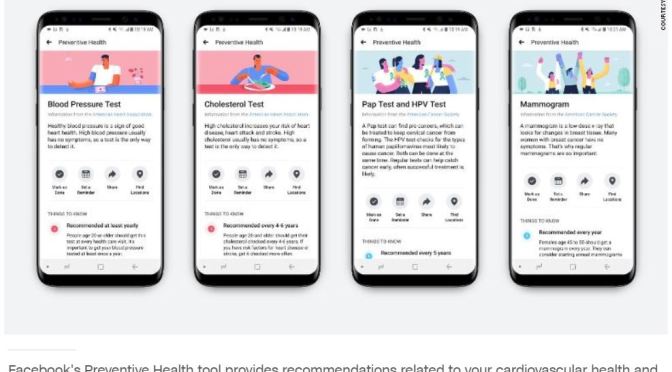
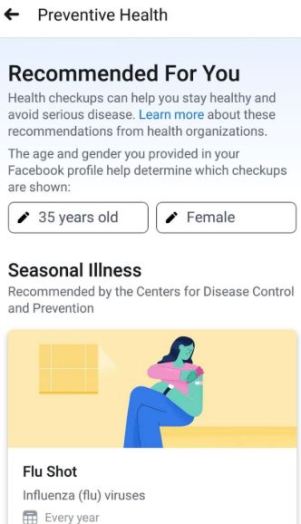
Facebook Preventative HealthThe tool is simply called Preventive Health, and is now available to Facebook users in the United States. It takes a user’s age and sex from their Facebook profile and provides them with a list of recommended screenings based on those two data points.

“Let’s say you’re 52 years old,” Freddy Abnousi, Facebook’s head of health care research, tells The Verge. “One of the things that will come to you — based on the American Cancer Society’s recommendations — is that you should have a colorectal cancer screening.” Abnousi says that the app will then give you more information about what kinds of tests are available, from a colonoscopy to a stool test or a CT scan. Abnousi hopes that users will then take what they’ve learned and talk to their primary care physician about what would be best for them. Users can also adjust the age and sex in the tool to get different screening recommendations without having it affect anything on their profile.

To read more: https://www.theverge.com/2019/10/28/20936541/facebook-preventative-health-cancer-heart-disease-flu-tool