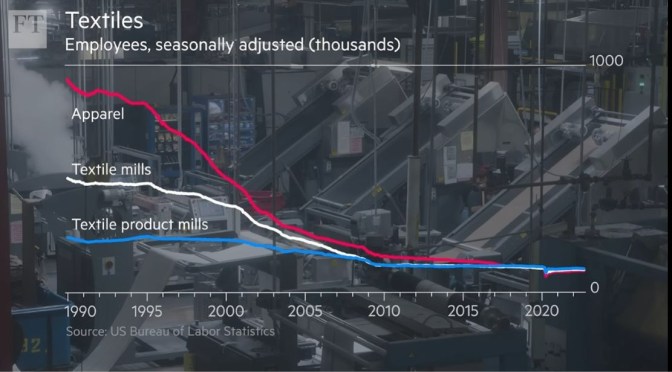
Financial Times – The FT’s global business columnist Rana Foroohar looks at why the US should bring manufacturing jobs back home. In the second of three films based on her new book, ‘Homecoming: the path to prosperity in a post-global world’, she follows the all-American supply chain of clothing company American Giant, to see how it impacts jobs, businesses and communities
Video timeline: 00:00 Made in America, Again 01:20 An all-American supply chain starts here 03:17 What went wrong with globalization? 07:00 The cotton gin – a risky business 09:53 Automation at a high-tech mill 13:16 Why manufacturing is important 19:59 The family-run finishing factory 23:21 Worker innovation at the sewing factory 27:33 Education, training and community 29:07 A moment for change?
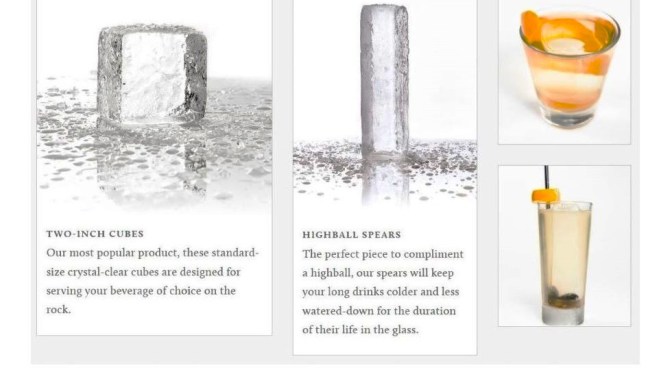
CBS Sunday Morning – Let’s be clear: Ice is more than just frozen cubes of water. Correspondent Serena Altschul checks out how the quality of ice is key to a cocktail.
Hundredweight Ice has been fabricating and delivering crystal-clear ice to bars and restaurants throughout New York City and beyond since 2011. It is a family owned and operated business, and proudly honors the strong pedigree of bartenders from whence it came. Hundredweight is the first ice company of its kind, dedicated solely to supplying the finest quality of frozen water intended for use in exemplary cocktails–wherever they are sought and enjoyed.
0:15 Global Population Reaches 8 Billion – That’s 8 times more humans than existed in 1800. Even so, the world’s population is growing at its slowest rate since 1950 due to a declining global fertility rate. Today there are an average of 2.3 births per woman. In 1950 it was 5. The world’s population is projected to peak at 10.4 billion by 2080.
1:49 The Economic Case for Climate Adaption – Climate adaptation means preparing our ecological, social and economic systems so they can cope with the future impacts of climate change. Heatwaves, storms, wildfires: the costs of climate change are already mounting but so far only 20% of climate finance has gone towards adaptation.
3:44 French Start Up Blends Wind and Solar Energy – Unéole’s energy system combines a photovoltaic rooftop panel with 2 compact wind turbines, generating 40% more energy than an ordinary rooftop panel. Solar panels work best in strong sunlight but Unéole’s units generate power when it’s overcast or during winter and can turn through the night to ensure a steady flow of power. The turbines are silent, so they don’t disturb building occupants and they’re built from mostly recycled aluminium and steel.
4:54 Lab Grown Blood Used in World First – UK scientists have transfused lab-grown blood into humans for the first time. It could revolutionize treatment for people with rare blood types, especially those who need regular transfusions. Two people were injected with 1-2 teaspoons of the synthetic blood to see how how their bodies respond. So far, so good – the trial participants are fit and healthy with no reported side effects.
0:15The World’s Fastest Shoes – These inventors have made the ‘world’s fastest shoes’. They let you walk at 11kph, which is the speed of a run. The shoes are called Moonwalkers and they’re powered by a tiny electric motor that turns 8 wheels on the base of the shoe.
1:37These Cities Are Facing a Housing Bubble – Years of low interest rates and cheap mortgages have increased demand among homebuyers but the supply of housing has not grown at the same rate. This mismatch has caused house prices to shoot up around the world, creating housing ‘bubbles’. When these bubbles burst, prices can plummet and experts say rising interest rates could be the pin that pops them
2:53First Female Crash Test Dummies – The crash test dummy most often used as a stand-in for women Is just a scaled-down version of the male dummy. At 149cm tall and weighing 48kg, it’s actually the size of a 12-year-old girl. The new crash test dummy is 163cm tall and weighs 62kg, taking into account the physiology of the female body. It was created by Astrid Linder and her team in Linköping, Sweden.
4:22This Company Is Making Chocolate Healthier – The world’s biggest chocolatier has created a new, healthier chocolate. Which contains 50% less sugar, 60-80% more cocoa and zero processed additives. Second-generation’ chocolate uses a new method of preparation. Growing, fermenting and roasting the cocoa beans differently reduces their bitterness without the need for lots of sugar.
World Economic Forum – Stories of the Week November 4, 2022:
0:15 – This small airport is Europe’s largest outdoor music venue – The 20-hectare RCF Arena is located on the fringes of Reggio Emilia Airport, just outside Bologna in northern Italy.
01:38 – 7 tips to create a healthy remote working culture from this fully remote team – Tango is a software company with 30 team members working remotely. With all employees working remotely, they ask new hires to write a personal user manual with questions such as ‘how do you like to receive feedback’ and ‘what’s commonly misunderstood about you?’. They also suggest that each team member shares their thoughts on the week; they can celebrate each other, highlight customer feedback or just talk about something going on in their life. Here are some more of their tips for remote workers.
03:31 – This is India’s first solar powered village – Modhera in the state of Gujarat has round-the-clock solar energy with 12 hectares of land covered in solar panels.
04:31 – New Zealand’s parliament has more women than men – New Zealand now has 60 women lawmakers and 59 men in Parliament after Soraya Peke-Mason was recently sworn in as an MP.
The World Economic Forum is the International Organization for Public-Private Cooperation. The Forum engages the foremost political, business, cultural and other leaders of society to shape global, regional and industry agendas. We believe that progress happens by bringing together people from all walks of life who have the drive and the influence to make positive change.
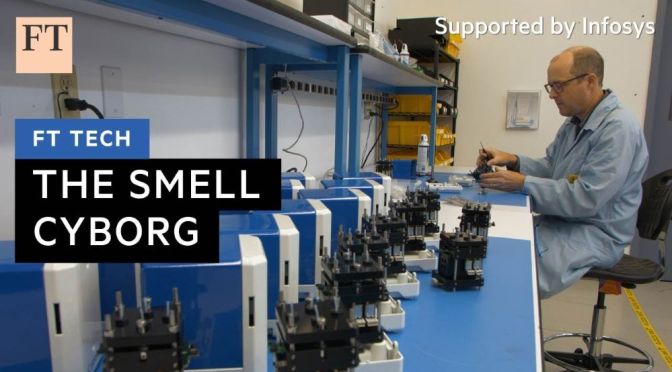
Financial Times – It could be the Shazam of smells. A California-based start-up has developed a device to sniff out substances such as drugs, explosives and viruses. Sniff tech is a burgeoning sector which could have major implications in fields including healthcare and security but may also raise issues over individual privacy. The FT’s Patrick McGee takes a trip to the lab and gets a good whiff of how the future might smell.
Koniku builds smell cyborgs. We will put out small form factor smell cyborgs in 10 million homes inside this decade. We aim to securely and safely diagnose disease and maintain health and wellness in real-time. We are building a marketplace that makes every individual the CEO of their own health.







 Intellicurious