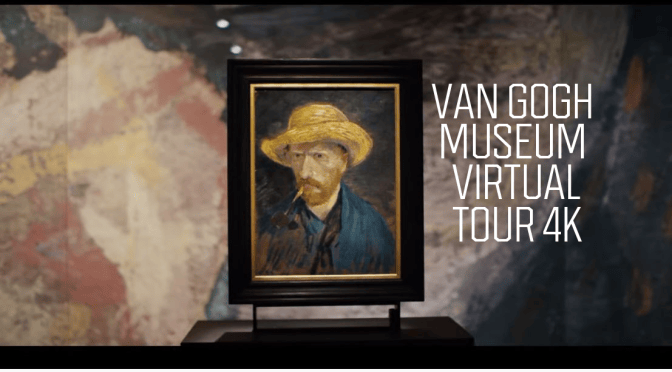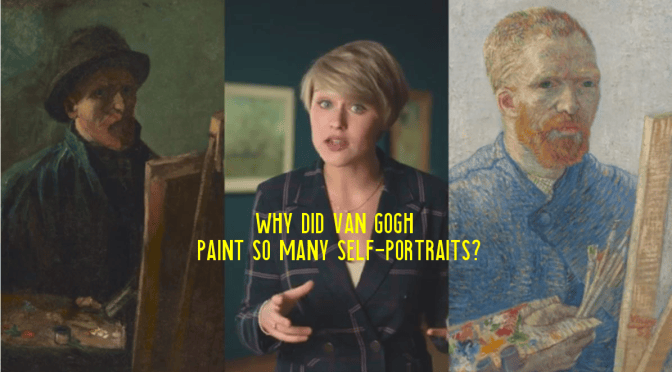
In Van Gogh Questions, our researcher Bregje Gerritse answers the most frequently asked questions about Vincent van Gogh.

In Van Gogh Questions, our researcher Bregje Gerritse answers the most frequently asked questions about Vincent van Gogh.
From Apollo Magazine article (April 13, 2020):
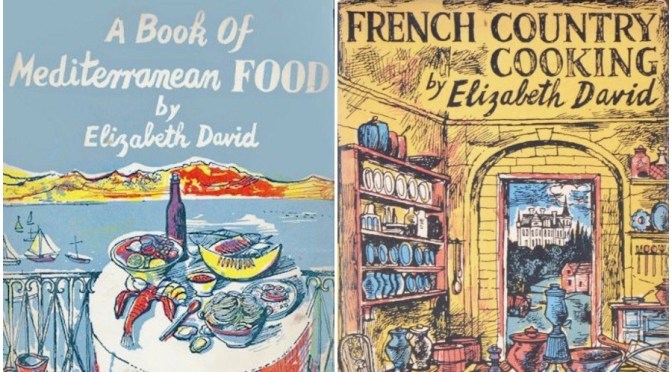
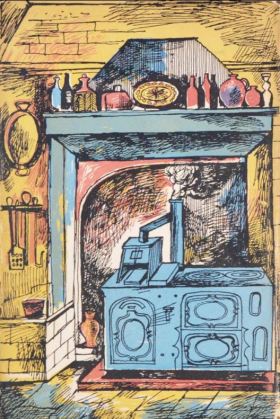 Minton had gone on to produce a series of spectacularly colourful oil paintings of Corsica on his return to London, exhibiting them at the Lefevre Gallery in 1949. Many of them depicted fruit and fish and other ingredients for Mediterranean cuisine, and so confirmed Minton as the obvious choice for the David commission.
David delightedly recalled that: ‘In the shop windows [Minton’s] brilliant blue Mediterranean bay, his tables spread with white cloths and bright fruit, bowls of pasta and rice, a lobster, pitchers and jugs and bottles of wine, could be seen far down the street.’
Variations on these two images were used for the double-page spread on which the title appeared in David’s second book, French Country Cooking (1951), while the wrap-around image on the dust jacket depicted the interior of a well-stocked kitchen, many of its utensils borrowed from the author to ensure accurate representation.
Francis John Minton (25 December 1917 – 20 January 1957) was an English painter, illustrator, stage designer and teacher. After studying in France, he became a teacher in London, and at the same time maintained a consistently large output of works. In addition to landscapes, portraits and other paintings, some of them on an unusually large scale, he built up a reputation as an illustrator of books.
In the mid-1950s, Minton found himself out of sympathy with the abstract trend that was then becoming fashionable, and felt increasingly sidelined. He suffered psychological problems, self-medicated with alcohol, and in 1957 died by suicide.
From Wikipedia
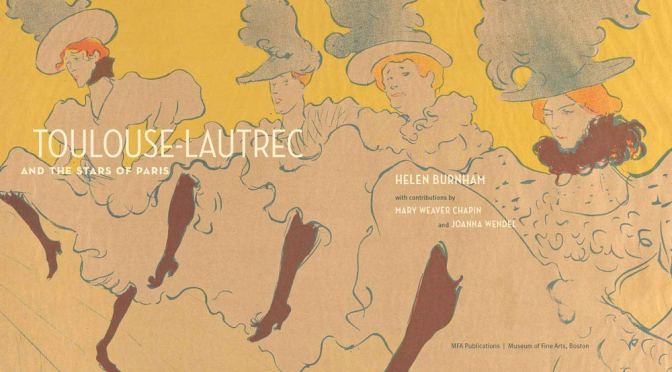
Curator Helen Burnham, Pamela and Peter Voss Curator of Prints and Drawings, introduces us to the celebrities of 19th-century Paris made famous by Henri de Toulouse-Lautrec and his contemporaries. The exhibition features the rich holdings of the MFA and its organizing partner, the Boston Public Library.
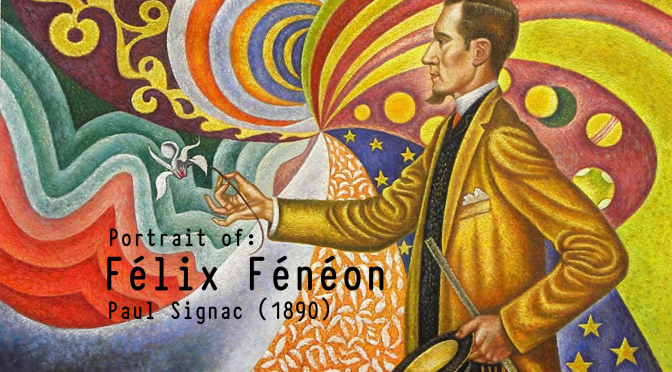
“It would not be a commonplace portrait at all, but a carefully composed picture, with very carefully arranged colors and lines. A rhythmic and angular pose. A decorative Félix, entering with his hat or a flower in his hand.”
With these words, in 1890, Paul Signac described to Félix Fénéon the extraordinary portrait he was dedicating to him. In it, Signac paid homage to Fénéon’s distinctive appearance, his generous but enigmatic personality, and his innovative approach to modernism.
This painting, a masterpiece in the Museum’s collection, will be the centerpiece of Félix Fénéon, the first exhibition dedicated to Fénéon (1861–1944). An art critic, editor, publisher, dealer, collector, and anarchist, Fénéon had a wide-ranging influence on the development of modernism in the late 19th and early 20th centuries.
In the late 1880s, he played a key role in defining the new movement known as Neo-Impressionism, a term he coined himself, whose artists, including Signac, used tiny dabs of color that would mix in the eye of the viewer. Over the next five decades, he championed the careers of artists from Georges-Pierre Seurat and Signac to Pierre Bonnard, Henri Matisse, and Amedeo Modigliani.
He amassed a renowned collection of paintings by these artists and many others, and he was also a pioneering collector of art from Africa and Oceania. The exhibition will feature some 130 objects, including major works that Fénéon admired, championed, and collected, as well as contemporary photographs, letters, and publications that trace key chapters in his biography. Together these works reveal the profound and lasting legacy of Fénéon’s keen eye and bold, forward-looking vision.
 He collaborated with Francis Bacon and Salvador Dalí, he made diaries with Andy Warhol, worked on books with scientists like Dr. Norman Borlaug, Dr. Richard Laws, and Alistair Graham, and toured with Truman Capote, Terry Southern, and the Rolling Stones—all of whom are brought to life, literally and figuratively, in his work. He delved into the world of fashion for its beautiful women, taking Vogue stars like Veruschka to Africa and bringing new ones back to the U.S. with him.
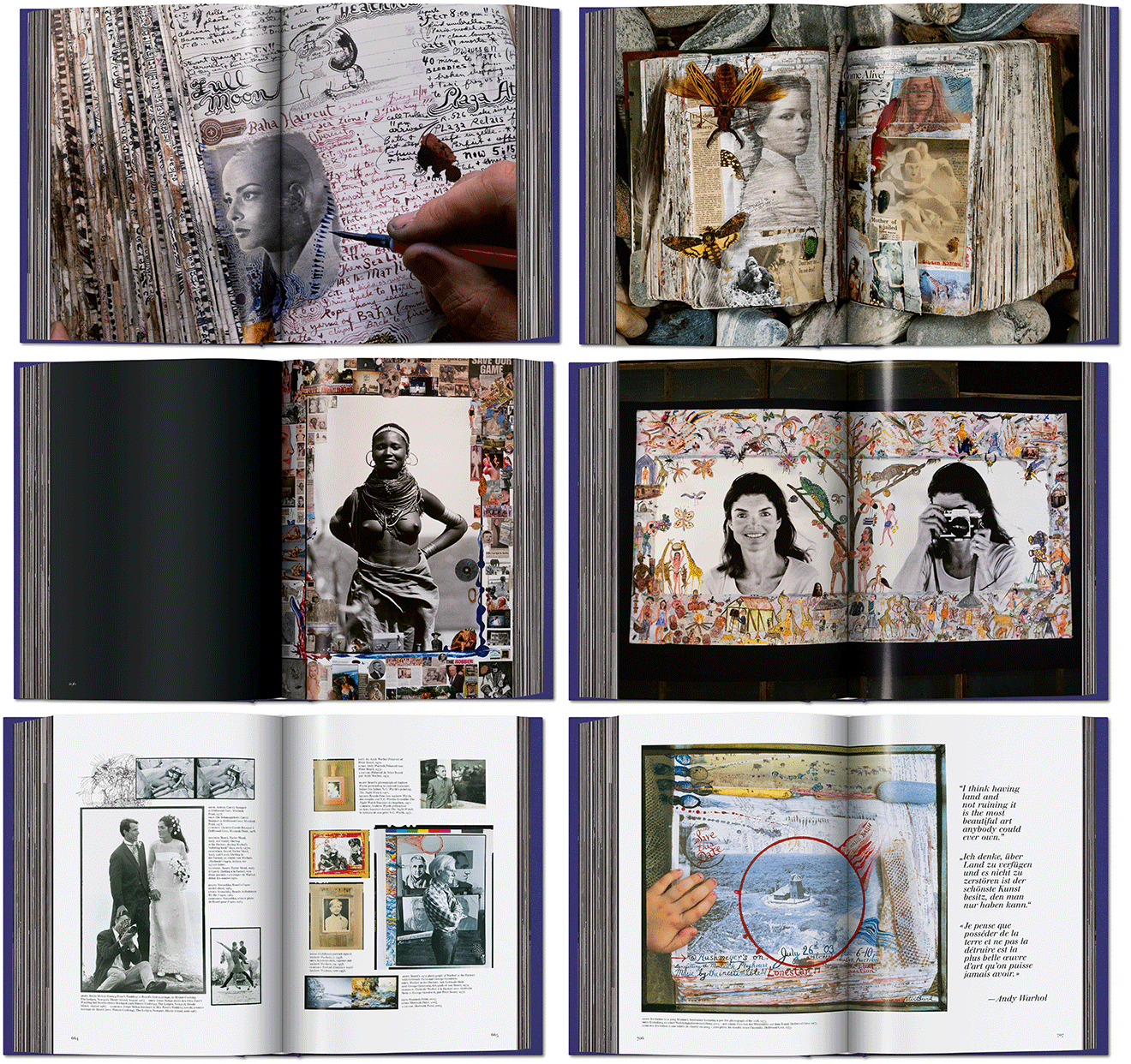
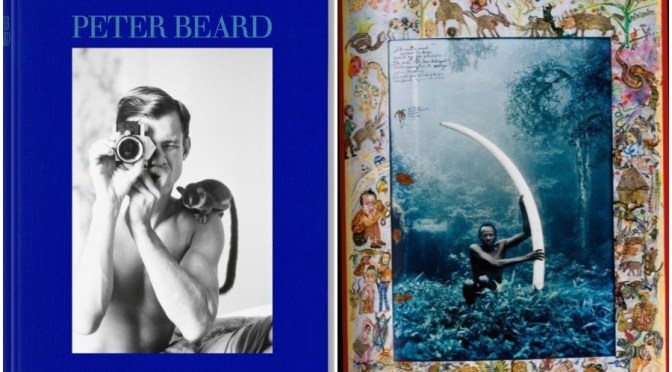
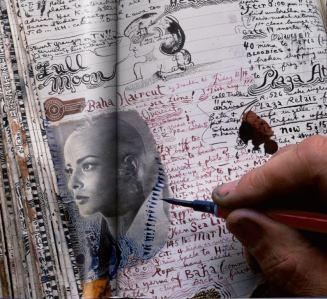
Artist, diarist, collector, and writer Peter Beard has fashioned his life into a work of art; the illustrated diaries he kept from a young age evolved into a serious career as an artist and earned him a central position in the international art world.
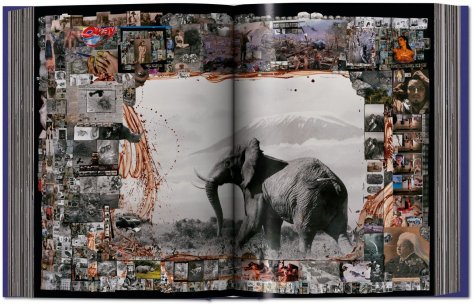
After spending time in Kenya and striking up a friendship with the author Isak Dinesen (Karen Blixen) in the early 1960s, Beard bought 50 acres next to her farm with the stipulation that he would film and write about the land and its flora and fauna. He witnessed the dawn of Kenya’s population explosion, which challenged finite resources and stressed animal populations—including the starving elephants of Tsavo dying by the tens of thousands in a wasteland of eaten trees. So he documented what he saw—with diaries, photographs, and collages. He went against the wind in publishing unique and sometimes shocking books of these works, including The End of the Game. The corpses were laid bare; the facts carefully recorded, sometimes in type and often by hand. Beard uses his photographs as a canvas onto which he superimposes multi-layered contact sheets, ephemera, found objects, newspaper clippings that are elaborately embellished with meticulous handwriting, old-master inspired drawings, and often swaths of animal blood used as paint.
In 2006, TASCHEN first published the book that has come to define his oeuvre, signed by the artist and published in two volumes. It sold out instantly and became a highly sought-after collector’s item. In the decade since, the monograph has been revived in two smaller versions; but sometimes, bigger is better. Now, the book you haven’t been able to get your hands on is available in one large-format volume.
The Wheat Fields is a series of dozens of paintings by Vincent van Gogh, borne out of his religious studies and sermons, connection to nature, appreciation of manual laborers and desire to provide a means of offering comfort to others. The wheat field works demonstrate his progression as an artist from the drab Wheat Sheaves made in 1885 in the Netherlands to the colorful, dramatic paintings from Arles, Saint-Rémy and Auvers-sur-Oise of rural France.
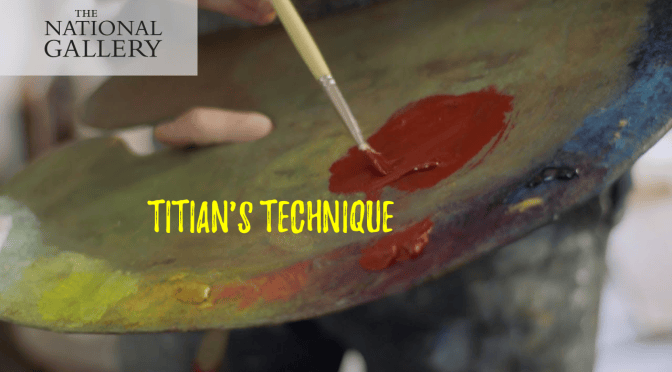
The way Titian painted was unlike other artists of his day. With little in the way of preliminary drawings, Titian worked very freely straight onto the canvas. Watch artist Andy Pankhurst show us how Titian would have worked.
Tiziano Vecelli or Vecellio, known in English as Titian, was an Italian painter during the Renaissance, considered the most important member of the 16th-century Venetian school. He was born in Pieve di Cadore, near Belluno. During his lifetime he was often called da Cadore, ‘from Cadore’, taken from his native region.
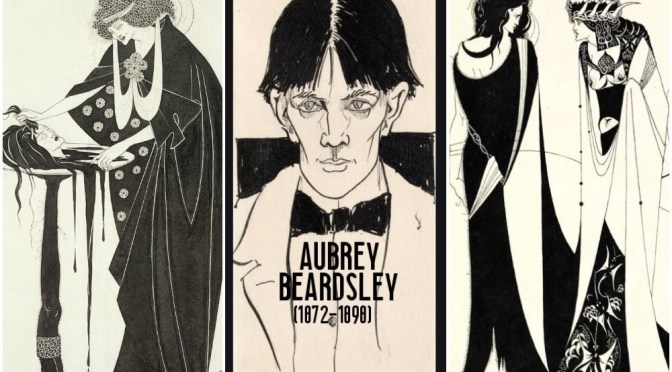
Although our galleries are temporarily closed we wanted to share the Aubrey Beardsley exhibition at Tate Britain with you. Join Tate curators Caroline Corbeau-Parsons and Alice Insley as they discuss the iconic illustrator’s short and scandalous career.
Before his untimely death aged twenty-five, Beardsley produced over a thousand illustrations. He drew everything from legendary tales featuring dragons and knights, to explicit scenes of sex and debauchery. His fearless attitude to art continues to inspire creatives more than a century after his death.
Aubrey Vincent Beardsley (1872-1898) was an English illustrator and author. His drawings in black ink, influenced by the style of Japanese woodcuts, emphasized the grotesque, the decadent, and the erotic. He was a leading figure in the aesthetic movement which also included Oscar Wilde and James McNeill Whistler.
From a The Architectural Review online article (April 9, 2020):
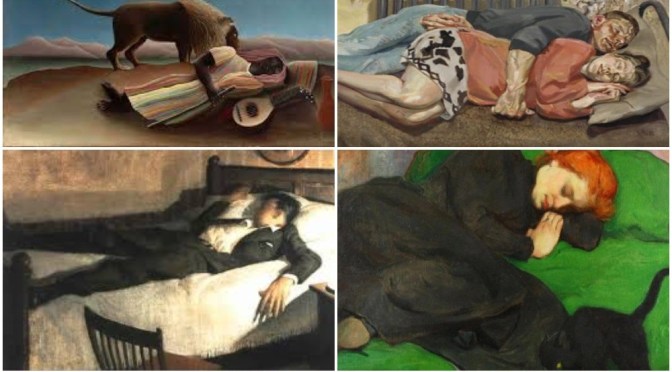
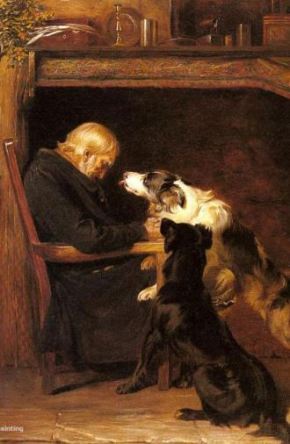 The sleep industry caters to a working consumer’s wish to sleep less, yet sleep more productively, and accommodates transnational industry which has joined the state as a custodian of biopolitics. Jonathan Crary’s 24/7 spells out in detail how the state and a capitalist economy are encroaching stupendously on the private sphere, in which sleep was one of the last vestiges of unfettered time.
About 15 years ago, someone calculated the financial loss US companies incurred through workers’ illicit practice of sleeping on the job. Indeed, the trope of the lazy sleeper is an old one, resignified at present in our more than callous attitude towards the homeless, whose sleeping bodies punctuate many a journey to and from work.
Even in this most passive stance – someone simply disregarding normative codes and regulations by giving in to a physical need – sleep seems suspiciously subversive. Less an act than a way of being, the sleeper, by sleeping when and where it is not condoned, challenges everyone else, who is doing/working/functioning/functionalised. Contrary to the tree falling in the forest, the sleeper in the workplace or in public space affects and thus ever so slightly transforms those around them.
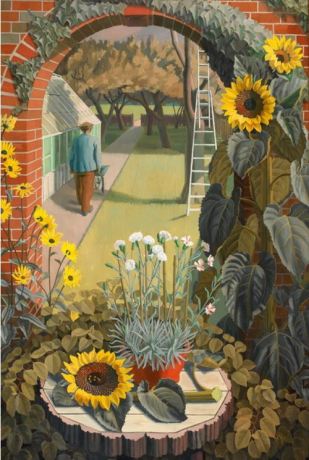
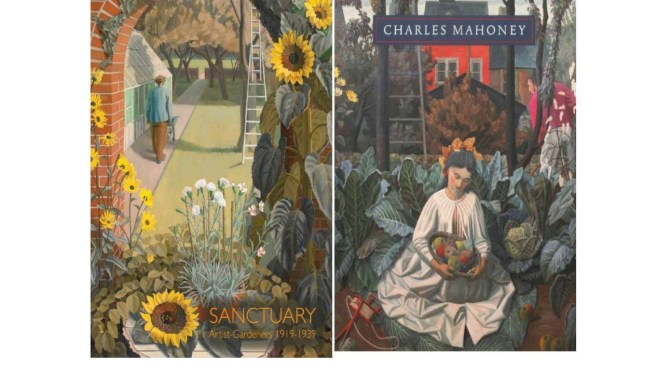
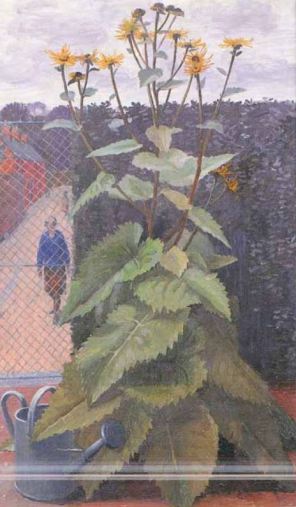
Charles Mahoney,(18 November 1903 – 11 May 1968): Painter, muralist, draughtsman and teacher, born Cyril Mahoney in London – his fellow-student Barnett Freedman re-christened him Charlie at the Royal College of Art, which he attended 1922-6 after a period at Beckenham School of Art under Percy Jowett. Early on, Mahoney established a reputation as a conscientious teacher.
He was at the Royal College 1928-53, from 1948-53 as a painting tutor, and was noted there for his concern for academic discipline.
His portrait is included in Rodrigo Moynihan’s celebrated Teaching Staff of the Painting School at the Royal College of Art, 1949-50. From 1954 to 1963 he taught at the Byam Shaw School of Drawing and Painting and from 1961 to 1968 at the Royal Academy Schools. He painted murals at Morley College 1928-30 with his colleagues Eric Ravillious and Edward Bawden.
Unfortunately these murals were destroyed during World War II. The work led to further murals: at Brockley School, Kent, with Evelyn Dunbar; and at Campion Hall Lady Chapel, Oxford. His oil paintings are frequently of a religious nature. He was a skilled botanist, and many of his drawings depict his garden at Wrotham, Kent.
He exhibited at NEAC and the RA, being made an RA elect in 1968. He is represented in the Tate Gallery and other public collections. The Ashmolean Museum, Oxford, held a memorial exhibition in 1975. Exhibitions were held in 2000 at the Harris Museum and Art Gallery, Preston, Royal Museum and Art Gallery, Canterbury, and the Fine Art Society plc in association with Liss Fine Art.