Tag Archives: Videos

Analysis: Multiresistant Bacteria That Outsmart Antibiotics (Video)

Antimicrobial resistance is one of the greatest medical challenges of our time. Among the causes are industrial livestock farming, poor hygiene in hospitals, and the misuse of antibiotics. This documentary looks at approaches to fighting multiresistant strains of bacteria.

Each year 33,000 people in Europe die after becoming infected with bacteria that are resistant to antibiotics. Hygiene specialist Dr. Ron Hendrix has been working for years to prevent outbreaks of infectious disease in hospitals. Dr. Hendrix says that he and other experts in the Netherlands recognized early on that they’d have to fight the spread of bacteria just as actively as they would the actual infection.

Hendrix has convinced a number of German hospitals to re-open their diagnostic laboratories, as well. In the early 2000s, many of these labs had been shut down as a cost-cutting measure. And farmers in Denmark voluntarily chose to sharply reduce their use of antibiotics, after evidence showed that intensive livestock farming caused multiresistant bacteria to multiply.

Infectious disease specialist Dr. Patrick Soentjens was able to convince Belgium’s health ministry to allow the use of “phages” to treat stubborn antimicrobial resistant pathogens. Phages are special viruses that kill bacteria. Dr. Soentjens is certain that this well-known, but largely forgotten option could save many lives. Belgium has become the first western European country where phages have been officially recognized as a legitimate medical treatment.

Europe: An Economic History Of Iceland (Video)

Iceland’s Economy had a banking debt ten times larger than its GDP. Iceland was that one Economy which went left when everybody else went right. Whilst most thought the banks were too big to fail, Iceland thought they were too big to save. It let its largest banks go bankrupt and threw dozens of bankers in jail. And yet despite its unusual approach, its Economy recovered. Going on to enjoy a decade of unbroken economic growth and high standard of living. But why did an island just outside the arctic circle have a financial crisis? What strategies did it deploy to rack up such monumental debts? How did it recover? And does its future rely on impressive tourist growth and crypto currencies?

Walks: ‘Tübingen’ In Southwest Germany

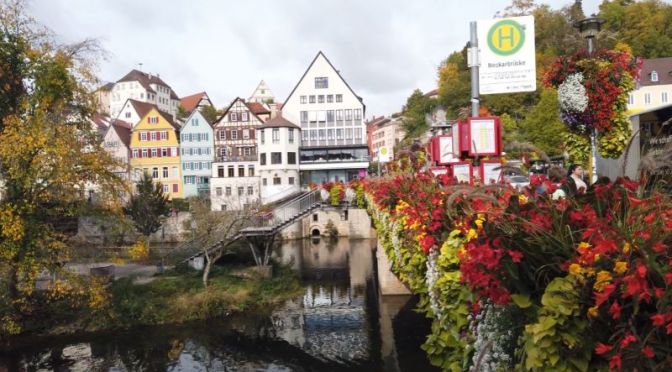
Tübingen is a city in southwest Germany and home to one of Europe’s oldest universities. In the old town, Stiftskirche St. Georg is a late-Gothic church with stained-glass windows and city views from its tower. The ornately painted 15th-century City Hall is topped with a functioning astronomical clock. Hilltop Hohentübingen Castle is home to the Museum of Ancient Cultures, with Greek, Roman and Egyptian artifacts. 

Aerial Views: ‘Sacramento – California’ (4K Video)

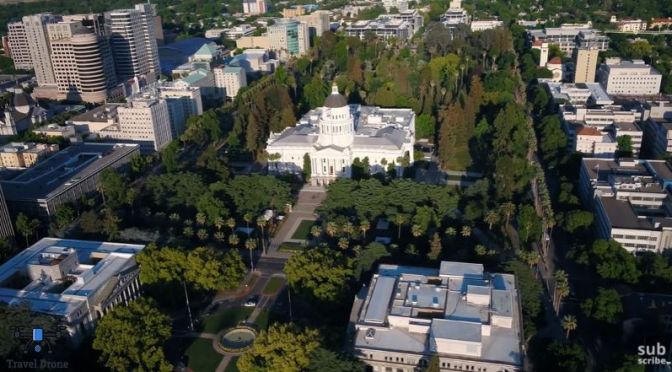
Sacramento, capital of the U.S. state of California, lies at the confluence of the Sacramento River and American River. The district of Old Sacramento harkens back to the city’s Gold Rush era, with wooden sidewalks and wagon rides. One of several museums in Old Sacramento, the California State Railroad Museum depicts the construction of the Transcontinental Railroad, one of the country’s earliest technological feats.

Innovation: Diamonds Made From CO2 Emissions

A UK company named Skydiamond hopes to revolutionize the traditional diamond mining industry by using carbon capture technology to do just that. The company calls it a ‘zero-impact diamond’ because the process pulls carbon dioxide right out of the air.

Although, a diamond traps only a modest amount of carbon — one carat contains just 200 milligrams. Pure carbon can take many forms — it all depends on how the atoms are arranged. Graphite is arranged into multiple layers, graphene in a single layer, and if it’s rolled-up, it forms carbon nanotubes. But when each carbon forms 4 strong bonds in a tetrahedral structure, it becomes a diamond.

Most natural diamonds were formed over a billion years ago, more than 120 kilometers beneath the Earth’s surface. This is where intense temperature and pressure cause carbon atoms to strongly bond together and arrange into crystal structures. Volcanic eruptions bring these crystals embedded in magma to the surface. When the magma cools, it hardens in long vertical shafts called kimberlite pipes. And these pipes are what’s sought after in the mining industry.

Views: ‘Top 3 Places To Visit In The Dolomites, Italy’

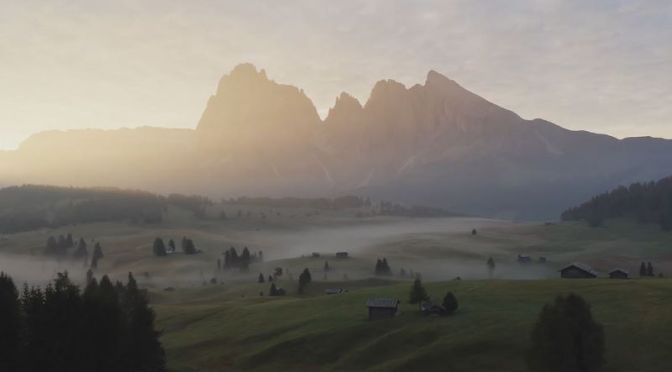
The Dolomites are without a doubt one of my favorite places ever! I’ve been there twice and made a drone video showing you my favorite top 3 must visit spots!

First place: Alpe di Siusi/Seiser Alm

Second place: Cadini di Misurina & Tre Cime di Lavaredo

Third place: Lago di Braies/Pragser wildsee even though it’s always crowded, even at sunrise this place will always be magical

Political News: ‘Brooks & Capehart’ On Biden’s Executive Actions (Video)

New York Times columnist David Brooks and Washington Post columnist Jonathan Capehart join Judy Woodruff to discuss the week in politics, including President Biden’s use of executive actions, Biden’s $1.9 trillion relief package, and the state of the Republican Party after former President Trump.

Views: ‘Tomo, Fukuyama’ – Hiroshima, Japan (4K Video)

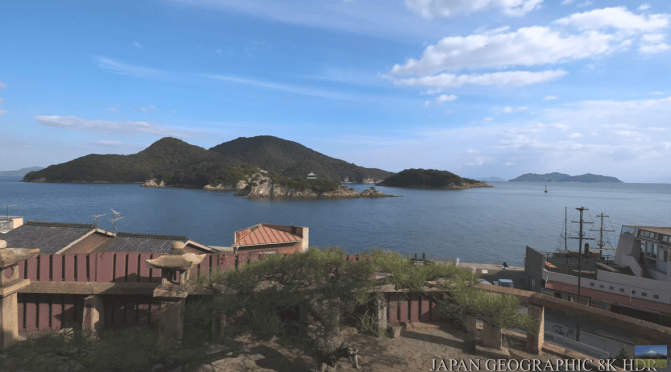
Tomonoura, formerly known as Tomonotsu, is a port in the Tomo ward of Fukuyama, Hiroshima Prefecture, Japan. It stands on the southern point of the Numakuma Peninsula, 14 kilometers south of Fukuyama Station. Tomonoura has been a prosperous port since ancient times. 

Fukuyama is a city on Japan’s Ashida River. Myōō-in Temple has an ornate 5-story pagoda built in the 1300s. The grounds of Fukuyama Castle feature cherry blossoms in spring and colorful foliage in fall. The Hiroshima Prefectural Historical Museum displays the ruins of Kusado Sengen, the area’s medieval port. South, Tomonoura is a port town known for its Edo-era buildings and the stone Jōyatō Lighthouse.

Cocktails With A Curator: ‘El Greco’s “Vincenzo Anastagi”‘ (Frick Video)

In this week’s episode of “Cocktails with a Curator,” journey to sixteenth-century Rome with Deputy Director and Peter Jay Sharp Chief Curator Xavier F. Salomon as he discusses El Greco’s “Vincenzo Anastagi,” one of three important paintings by the Renaissance artist in the Frick’s collection. Born in Crete, El Greco spent a formative seven years in Rome, where he painted this rare, full-length portrait of a minor aristocrat from Perugia then serving as Sergeant Major of Castel Sant’Angelo. Look closely at this unusual painting while sipping an Ouzo Lemonade, which gets its kick from the anise-flavored spirit popular in the artist’s birthplace.

To view this painting in detail, please visit our website: https://www.frick.org/anastagielgreco

Aerial Views: ‘KBO Ranch’ – Cripple Creek, Colorado

Located just over an hour’s drive, 42 miles west of Colorado Springs and at the end of a private road, KBO Ranch is 360± acres of raw, undeveloped mountain terrain and exceptional wildlife habitat. Views from the property are spectacular and include Pikes Peak, Mount Pisgah, the Collegiate Peaks, and the sun-soaked Sangre De Cristo Mountains.

The land is vacant and undeveloped, while approximately 70 percent is tree covered with large stands of mature ponderosa pine, Douglas fir and aspen surrounded by meadows and oak-covered hillsides. The topography is varied and elevations range from 9,500 feet at the high bluff site, down to 8,550 feet in the secluded valley bottom. The current owners have developed extensive trail systems, only allowed ATV access, and limited the use of the property to hunting only.

Large herds of elk and mule deer roam the property along with bears, turkey, and mountain lions. With over 3.6 miles of common boundary with adjacent conserved lands, this property will remain a private and secluded retreat.