

From an Apollo Magazine article:
 Jencks’s book grew out of his PhD thesis, supervised by Reyner Banham at the University of London in the late 1960s, and paved the way for his later, more explicitly polemical The Language of Post-Modern Architecture (1977). In this bestselling book, Jencks set out his stall for a pluralist architecture that rejected what he saw as modernism’s reductive ‘univalent’ approach, swapping it for a symbolically rich and historically engaged ‘multivalent’ postmodernism. For good or bad it became the defining book of its era, an unabashed rejection of mainstream modernism that ushered in a new architectural style.
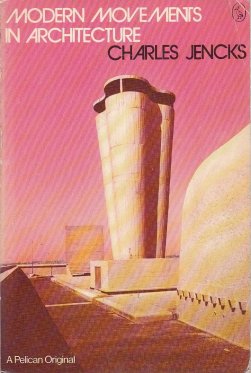 Modern Movements in Architecture (1973) by Charles Jencks was one of the first books on architecture I read, a birthday present given to me the summer before I started my degree. In some ways, it spoiled things: I thought all architecture books would be that much fun. Modern Movements in Architecture is a complex and sophisticated history, but it wears its learning lightly. It relates architecture to a wider cultural discourse and it is unafraid to be critical, even of some architects, such as Mies van der Rohe, who were previously considered to be above criticism.

 “Everywhere is the wait and the gathering,” concludes “Resort.” A kind of soporific haze has seeped into de Chirico’s imagination, asserted through evocations of sleeping and dreaming. Even the violence and ambiguous sexual imagery of “The Mysterious Night” yield to a final note of definitive somnolence: “Everything sleeps; even the owls and the bats who also in the dream dream of sleeping.”
 He daydreams of Mexico or Alaska and invokes a future-oriented “avant-city” and a distant day where he is immortalized, albeit in an old-fashioned mode as a “man of marble.”
 Every possible step is done online, and for most meals customers must reserve—and often pay—in advance, essentially buying tickets through a service called Tock that’s mostly used only by high-end restaurants. This means no host manning a podium, no reservation or PR teams, no extra staff on a slow night, almost no food waste, and better guest communications. It also allowed them to go from 20 employees to four full-time and three part-time workers.




 One of the most impressive aspects of the book is the wealth of contextual material, which never feels digressional but illuminatingly sets the scene for Hilliard’s remarkable life and achievement. His early life in Exeter; the family networks of goldsmiths in Devon and London; the political, religious and cultural worlds he would have encountered in London, Geneva, Paris and also – usually overlooked – in Wesel and Frankfurt; all make for compelling reading. This book is not just the definitive biography of Hilliard but essential reading for anyone interested in late 16th- and early 17th-century England.

 In this artist’s book of 120 iPhone and iPad drawings,

 The VillageMD primary care clinic, called Village Medical at Walgreens, is the first of five sites to open in Houston. Four more clinics are slated to open by the end of the year. The Village Medical clinics are
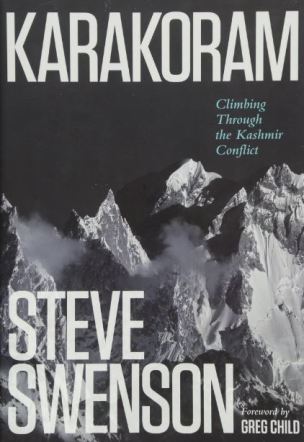 In the spring and summer, he trained two to four hours a day, six days a week, running daily and carrying 60 pounds of water up a 4,000-foot peak near his home in Seattle twice a week. “All the research has shown that 80 percent of training for alpine ascents needs to be long duration and low intensity, to build a huge foundation of endurance,” Swenson says. “There are no shortcuts to this. There’s no thirty-minute-a-day gym workout. You have to have the discipline to put the time in.”
 “We do inherently cross over multiple verticals so we compete for share against other fast casuals in Denver,” he said.
 “If restaurants aren’t paying attention to this they should probably start now because grocers are in a position to do some serious business [in delivery],” Frank Beard, GasBuddy analyst, told Restaurant Dive.
 Intellicurious