Tag Archives: Nature

Top New Science Podcasts: Tougher Diamonds, Whale Hideouts & Ancient Incest

Nature PodcastsThis week, researchers make diamonds tough, and evidence of incest in a 5,000 year old tomb.

In this episode:

00:51 Tough versus hard

Diamonds are famed for their hardness, but they are not so resistant to fracture. Now, researchers have toughened up diamonds, which could open up new industrial applications. Research Article: Yue et al.

06:07 Research Highlights

A spacecraft helps physicists work out the lifespan of a neutron, and the icy hideaway of an endangered whale. Research Highlight: The vanishing-neutron mystery might be cracked by a robot in outer space; Research Highlight: A secluded icy fortress shelters rare whales

08:33 Ancient inbreeding

Analysis of the genomes of humans buried in an ancient Irish tomb has uncovered many surprises, including evidence of incest amongst the elite. Research Article: Cassidy et al.; News and Views: Incest uncovered at the elite prehistoric Newgrange monument in Ireland

21:13 #ShutdownSTEM

Nature reporter Nidhi Subbaraman joins us to talk about the #ShutdownSTEM movement, and anti-black racism in academia. Editorial: Note from the editors: Nature joins #ShutDownSTEM; News: Grieving and frustrated: Black scientists call out racism in the wake of police killings; News: Thousands of scientists worldwide to go on strike for Black lives; News: How #BlackInTheIvory put a spotlight on racism in academia
Top New Science Podcasts: Quantum States In Space Lab, Barcode Bacteria

nature-podcastsThis week, the spaceborne lab that allows investigation of quantum states, and the debate surrounding how mountain height is maintained.
In this episode:

01:18 Space lab

Scientists have built a lab on the international space station, allowing them to remotely investigate quantum phenomena in microgravity. Research Article: Aveline et al.; News and Views: Quantum matter orbits Earth

08:37 Research Highlights

Trackable ‘barcode’ bacteria, and physicists simulate near light speed cycling. Research Highlight: ‘Barcode’ microbes could help to trace goods — from lettuce to loafers; Research Highlight: What Einstein’s theory means for a cyclist moving at almost light speed

10:48 Maintaining mountain height

For a long time many researchers have thought that mainly erosion controls the height of mountains, but new research suggests that tectonic forces play a bigger role. Research Article: Dielforder et al.; News and Views: Mountain height might be controlled by tectonic force, rather than erosion

16:12 Pick of the Briefing

We pick our highlights from the Nature Briefing, including how sleep deprivation kills, and a monumental Maya structure hidden in plain sight. Quanta Magazine: Why Sleep Deprivation Kills; National…

Top New Science Podcasts: New Skin That Grows Hair, Spontaneous RNA (Nature)

Nature PodcastThis week, Nature looks at a new method to grow hairy skin in a dish, and new research takes aim at the RNA world hypothesis.
In this episode:

00:45 Hairy Skin

Researchers may have developed a way to make skin that can grow hair in the lab, paving the way for treatment of a variety of skin disorders, and perhaps even baldness. Research Article: Lee et al.; News and Views: Regenerative medicine could pave the way to treating baldness

08:56 Research Highlights

How mercury moved during the ‘Great Dying’, and the link between mobile phones and gender equality. Research Highlight: Giant eruptions belched toxic metal during the ‘Great Dying’; Research Article: Rotondi et al.

11:21 Does DNA predate life?

The RNA world hypothesis posits that RNA formed spontaneously leading eventually to life. Now new research suggests that RNA and DNA formed together, before life. Research Article: Xu et al.; News and Views: How DNA and RNA subunits might have formed to make the first genetic alphabet

19:25 Pick of the Briefing

We pick our highlights from the Nature Briefing, including the recent SpaceX launch, and the earliest fossil of a land animal. CBC: Scientists find oldest fossil of a land animal; Nature News: SpaceX to launch astronauts — and a new era of private human spaceflight

Subscribe to Nature Briefing, an unmissable daily round-up of science news, opinion and analysis free in your inbox every weekday.

Other links

Video: We test a home antibody kit for tracking Covid-19 transmission

Coronavirus: “Confusing Hydroxychloroquine Studies” (Nature Podcast)

Coronapod ReportPresident Trump’s preferred coronavirus treatment is the focus of a new study suggesting it could cause more harm than good, but not everybody agrees. We discuss the fallout as trials around the world are paused and countries diverge over policy advice.
12:12 Are we rushing science?

Coronavirus papers are being published extremely quickly, while normally healthy scientific debate is being blown up in the world’s press. Is there a balancing act between timely research and accurate messaging?

18:49 One good thing

Our hosts pick out things that have made them smile in the last week, including hedgerow brews and a trip into the past using AI.

Recipe: Elderflower ‘Champagne’

Video: Denis Shiryaev restores historic footage with AI

22:30 The latest coronavirus research papers

Noah Baker takes a look through some of the key coronavirus papers of the last few weeks.

News: Coronavirus research updates

medRxiv: Full genome viral sequences inform patterns of SARS-CoV-2 spread into and within Israel

Harvard Library: Reductions in commuting mobility predict geographic differences in SARS-CoV-2 prevalence in New York City

Science: DNA vaccine protection against SARS-CoV-2 in rhesus macaques

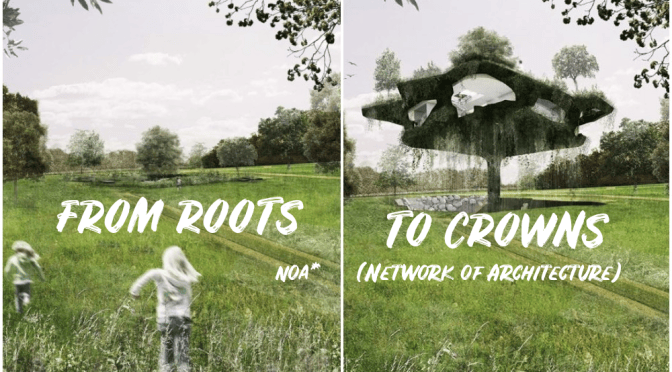
Homes In Nature Design: “From Roots To Crowns” – Visionary “Lifting House” From Italian Studio NOA*

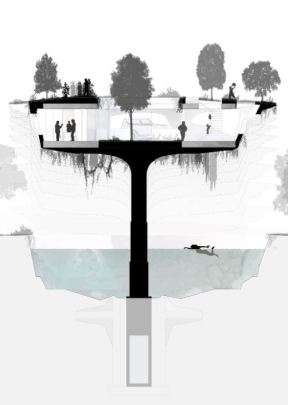
noa* Lifting House - From Roots to Crowns“from roots to crowns” describes the vertical metamorphosis of a hybrid building, moving from below ground through fields and trunks up to the crowns. It is a living shell on the move, able to take on 3 main positions “under the earth”(-1), “on the fields” (0) and “in the tree crowns” (+1+2). The lifting house is a visionary way of adapting the concept of “living and working in nature” to the varying requirements of its inhabitants. 
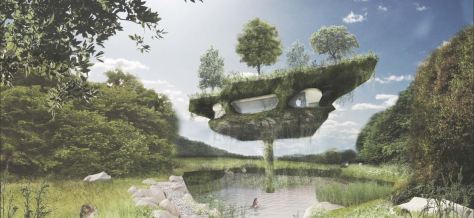
noa* (Network of Architecture) is the essential expression of a collaborative work-ethos: the young team of architects & designers, led by founders Lukas Rungger and Stefan Rier and based in Bolzano (Italy) and Berlin (Germany), explores and examines interdisciplinary methods of design, continuously evolving depending on both nature and requirements of each project.

noa Lifting House - From Roots to Crowns

By following the concept of „emergence“, where the whole is perceived as being far greater than the sum of its parts, a holistic approach and strategy is central to noa*s way of conceiving design.

Website

Gardens & Nature Videos: “Proserpina Returns Home” By Jonathan Gelez

Filmed and Produced by: Jonathan Gelez (The World Is Art)

Music:  “Spenta Mainyu” by Jesse Gallagher

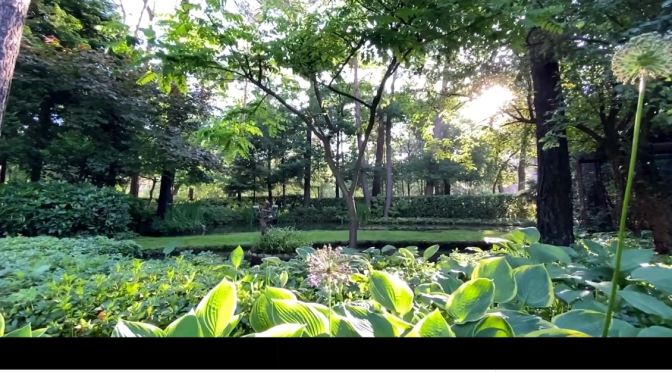
Here is a simple and relaxing film about the beginning of the spring season as it happened in my garden. Since going outside wasn’t an option due to the confinement measures in place, I tried to capture the beauty of nature at home.

Website


Top New Science Podcasts: Splitting Water With Light, Missing Matter And Working Memory (Nature)

nature-podcastsThis week, perfecting catalysts that split water using light, the mystery of missing matter in the Universe and how working memory ‘works’ in children.
In this episode:

00:44 Water splitting

After decades of research scientists have managed to achieve near perfect efficiency using a light-activated catalyst to separate hydrogen from water for fuel. Research Article: Takata et al.; News and Views: An almost perfectly efficient light-activated catalyst for producing hydrogen from water

05:37 Research Highlights

The hidden water inside the earth’s core, and how working memory ‘works’ in children. Research Highlight: Our planet’s heart is watery; Research Highlight: A child’s memory prowess is revealed by brain patterns

07:53 Measuring matter

Estimations of baryonic matter in the Universe have conflicted with observations, but now researchers have reconciled these differences. Research Article: Macquart et al.

13:42 Pick of the Briefing

We pick our highlights from the Nature Briefing, including the possibility of a black hole in our solar system, and the biting bees that force plants to bloom. Physics World: If ‘Planet Nine’ is a primordial black hole, could we detect it with a fleet of tiny spacecraft?; Scientific American: Bumblebees Bite Plants to Force Them to Flower (Seriously)

New Science Podcast: New Artificial Eyes, Elephant Seals And Disk-Galaxies

nature-podcastsThis week, crafting an artificial eye with the benefits of a human’s, and understanding how disk-galaxies formed by peering back in time.

In this episode:

00:45 Biomimetic eye

Researchers fabricate an artificial eye complete with a human-like retina. Research Article: Gu et al.; News and Views: Artificial eye boosted by hemispherical retina

09:27 Research Highlights

Dazzling elephant seals to avoid predation, and helping blind people ‘see’ through brain stimulation. Research Highlight: Mighty seals humbled by prey that flickers and flashes; Research Highlight: Blind people ‘read’ letters traced on their brains with electricity

11:36 Early disk-galaxy

There’s an open question about how disk-galaxies form, but now new observations are pointing to an answer, from the very early Universe. Research Article: Neeleman et al.; News and Views: Galaxy disk observed to have formed shortly after the Big Bang

17:47 Pick of the Briefing

We pick our highlights from the Nature Briefing, including a HIV ‘vaccine’, and incredibly hardy bacteria. Science: Long-acting injectable drug prevents HIV infections; Quanta Magazine: Inside Deep Undersea Rocks, Life Thrives Without the Sun

Top Health Podcasts: Dubious Coronavirus Content, Funding Fears

Coronapod ReportWith questionable coronavirus content flooding airwaves and online channels, what’s being done to limit its impact?

In this episode:

00:57 The epidemiology of misinformation

As the pandemic spreads, so does a tidal wave of misinformation and conspiracy theories. We discuss how researchers’ are tracking the spread of questionable content, and ways to limit its impact.

News: Anti-vaccine movement could undermine efforts to end coronavirus pandemic, researchers warn

Nature Video: Infodemic: Coronavirus and the fake news pandemic


17:55 One good thing

Our hosts pick out things that have made them smile in the last week, including walks in new places, an update on the Isolation Choir, and a very long music playlist.

Video: The Isolation Choir sing What a Wonderful World

Spotify: Beastie Boys Book Complete Songs

22:30 Funding fears for researchers

Scientists around the world are concerned about the impacts that the pandemic will have on their funding and research projects. We hear from two who face uncertainty, and get an update on the plans put in place by funding organisations to support their researchers.