
Tag Archives: Nature

Top New Science Podcasts: First Humans In Americas, Covid-19 And Green Frogs

Nature PodcastWhen did people arrive in the Americas? New evidence stokes debate. New evidence may push back the date on human arrival to the Americas, and an examination of science’s flaws.

In this episode:

00:59 Ancient Americans

Two papers suggest that humans were present in the Americas thousands of years before many people have thought. We examine the evidence. Research Article: Ardelean et al.; Research Article: Becerra-Valdivia and Higham; News and Views: Evidence grows that peopling of the Americas began more than 20,000 years ago

10:44 Coronapod

We discuss the latest results from vaccine trials around the world, and controversy in the US as COVID-19 data collection moves out of the CDC. News: Coronavirus vaccines leap through safety trials — but which will work is anybody’s guess

24:38 Research Highlights

How being green makes things easy for some frogs, and how waves will be affected by climate change. Research Highlight: How frogs became green — again, and again, and again; Research Highlight: Extreme Arctic waves set to hit new heights

27:11 How can science improve?

A new book highlights some of the flaws of how science is done. We caught up with the author to find out his thoughts on how science can be cleaned up. Books and Arts: Fraud, bias, negligence and hype in the lab — a rogues’ gallery

35:54 Briefing Chat

We take a look at some highlights from the Nature Briefing. This time we discuss a puzzling new insight into the expansion of the Universe, and an update to Plan S that will allow open-access research to be published in any journal. Nature News: Mystery over Universe’s expansion deepens with fresh data; Nature News: Open-access Plan S to allow publishing in any journal
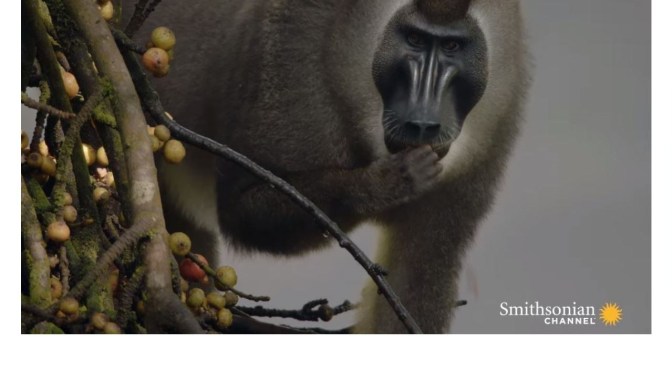
New Wildlife Videos: “The Drill – Among Rarest Primates In The World”

Roughly 20 miles off the coast of West Africa, the island of Bioko sits alone in the Atlantic Ocean. This rainforest-dominated terrain is home to one of the rarest primates in the world: the drill.
From the Show: Monkeys of Bioko https://bitly.com/2DlbNX9

Top New Science Podcasts: Exploring Graphene’s Superconductivity, Covid-19 In The Air & Lungs

Nature PodcastProbing the superconducting properties of graphene and a bacteria that can use manganese to grow. If you sandwich two sheets of graphene together and twist one in just the right way, it can gain some superconducting properties. Now, physicists have added another material to this sandwich which stabilises that superconductivity, a result that may complicate physicists’ understanding of magic angles. 

08:22 Coronapod

With evidence mounting that SARS-CoV2 can spread in tiny aerosolized droplets, researchers have called on the WHO to change their guidance for disease prevention. News: Mounting evidence suggests coronavirus is airborne — but health advice has not caught up; Research article: Morwaska et al.; WHO: Transmission of SARS-CoV-2: implications for infection prevention precautions

19:27 Research Highlights

Repairing human lungs by hooking them up to pigs, and a new form of carbon. Research Highlight: How to use a live pig to revitalize a human lung; Research Highlight: This material is almost as hard as diamond — but as light as graphite

21:46 Manganese munchers

For decades it’s been thought that microbes that use manganese as an energy source must exist. Now, for the first time, researchers have found evidence that they do. Research Article: Yu and Leadbetter

29:12 Briefing Chat

We take a look at some highlights from the Nature Briefing. This time we discuss DNA evidence of contact between ancient Native Americans and Polynesians, reintroduction of bison to the UK, and the first extinction of a modern marine fish. Nature News: Ancient voyage carried Native Americans’ DNA to remote Pacific islands; The Guardian: Wild bison to return to UK for first time in 6,000 years; Scientific American: 

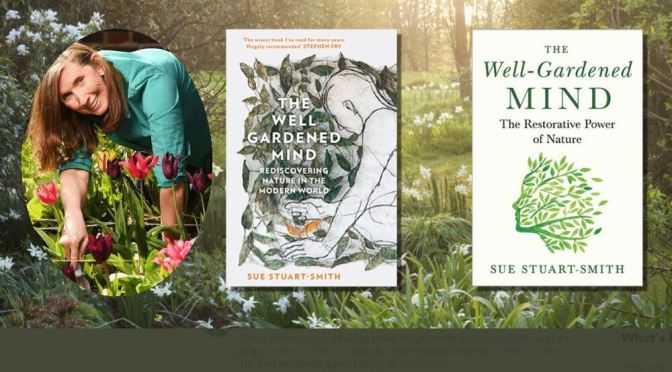
Health & Nature Books: “The Well-Gardened Mind” By Sue Stuart-Smith (2020)

 ‘The Well-Gardened Mind’ provides a new perspective on the power of gardening to change people’s lives. Here, Sue Stuart-Smith investigates the many ways in which mind and garden can interact and explores how the process of tending a plot can be a way of sustaining an innermost self.

A distinguished psychiatrist and avid gardener offers an inspiring and consoling work about the healing effects of gardening and its ability to decrease stress and foster mental well-being in our everyday lives.

The garden is often seen as a refuge, a place to forget worldly cares, removed from the “real” life that lies outside. But when we get our hands in the earth we connect with the cycle of life in nature through which destruction and decay are followed by regrowth and renewal. Gardening is one of the quintessential nurturing activities and yet we understand so little about it.

Stuart-Smith’s own love of gardening developed as she studied to become a psychoanalytic psychotherapist. From her grandfather’s return from World War I to Freud’s obsession with flowers to case histories with her own patients to progressive gardening programs in such places as Rikers Island prison in New York City, Stuart-Smith weaves thoughtful yet powerful examples to argue that gardening is much more important to our cognition than we think. Recent research is showing how green nature has direct antidepressant effects on humans. Essential and pragmatic, The Well-Gardened Mind is a book for gardeners and the perfect read for people seeking healthier mental lives.

Read more or purchase

Health Podcasts: Massive Coronavirus Outbreak At San Quentin Prison

Nature PodcastNature discusses the massive coronavirus outbreak that struck the iconic Californian prison after it rejected expert aid.

In this episode:

01:47 Disaster in San Quentin

San Quentin prison is facing a massive outbreak, we dig into how they got there. The crisis has arisen despite warnings from experts, and offers of free tests, which were declined. We ask why? And what can be done now?

News: California’s San Quentin prison declined free coronavirus tests and urgent advice — now it has a massive outbreak

29:51 One good thing

For the last episode of Coronapod, our hosts pick out ways that the pandemic has changed them for the better, including professional flexibility, a renewed focus on the power of reporting and time with family

36:07 Lockdown and children’s health

Reporter Stewart asks if lockdowns could have any lasting impact on her young children – what evidence is there on the effect of isolation on young minds?

Survey: Co-Space Study: Supporting Parents, Adolescents and Children during Epidemics

Covid-19 Update Podcast: Researchers Simulate New Outbreaks “Military-Style”

coronapod-reportResearchers have run numerous military-style simulations to predict the consequences of fictitious viral outbreaks. We discuss how these simulations work, what recommendations come out of them and if any of these warnings have been heeded.
24:08 One good thing

Our hosts pick out things that have made them smile in the last week, including audience feedback, the official end of the Ebola outbreak in the northeastern Democratic Republic of the Congo, and an enormous t-shirt collection.

News: World’s second-deadliest Ebola outbreak ends in Democratic Republic of the Congo

28:50 The latest coronavirus research papers

Benjamin Thompson takes a look through some of the key coronavirus papers of the last few weeks.

Top New Science Podcasts: Tooth Enamel And Decay, Heart Attack Patches, ‘Hot Neptune Deserts’ (Nature)

Nature PodcastsOn this week’s podcast, how the molecular structure of tooth enamel may impact decay, adhesive patches to heal heart attacks, and a mysterious planetary core from a half-formed gas giant.
In this episode:

00:46 Unravelling tooth enamel

Researchers have been looking into the structure and composition of enamel in an effort to better understand tooth decay. Research Article: DeRocher et al.

07:02 Research Highlights

An adhesive patch to help heal heart-attacks, and a new technique to inspect the structure of 2D ‘wonder materials’. Research Highlight: A healing patch holds tight to a beating heart; Research Highlight: A snapshot shows off super-material only two atoms thick

09:21 Unusual planet

In the region close to stars known as the ‘hot Neptune desert’ planets of Neptune’s size are rarely found, but this week scientists have uncovered one and are trying to untangle its mysteries. Research Article: Armstrong et al.

14:52 Briefing Chat

We take a look at some highlights from the Nature Briefing. This time we talk about the pitfalls of using CRISPR in human embryos, and renaming of moon craters inadvertently named after Nazi scientists. Nature News: CRISPR gene editing in human embryos wreaks chromosomal mayhem; Prospect Magazine: Astronomers unknowingly dedicated moon craters to Nazis. Will the next historical reckoning be at cosmic level?

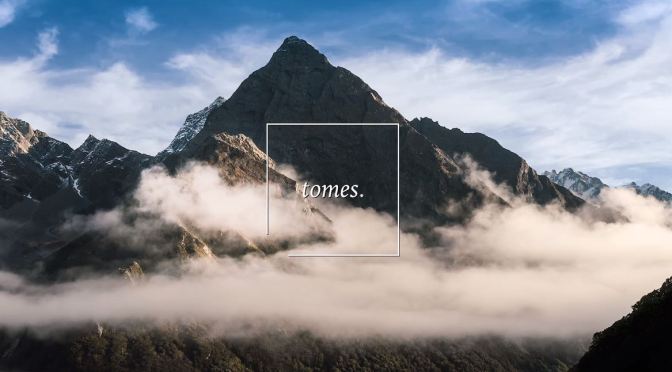
Nature & Adventure Videos: “Earth – Tomes” By Rhett Cutrell (2020)

Filmed and Directed by: Rhett Cutrell (ForNever Productions)

Fornever Productions specializes in telling the difficult stories in, and about, the natural world we inhabit but our 2020 Demo Reel is inspired by the stories Earth tells US. Earth: tomes. features a collection of our favorite moments over the past few years that were captured in the highest cinematic quality imaginable. We are very proud of our past work and are excited for what the future holds in the way of Outdoor Cinema

Website

Top New Science Podcasts: Poker’s Life Lessons, Peer Reviews & Mars’ Greenness

Nature PodcastsOn this week’s podcast, life lessons from poker, keeping things civil during peer review, a sweaty synthetic skin that can exude useful compounds, and Mars’s green atmosphere.

In this episode:

00:44 Deciding to play poker

When writer Maria Konnikova wanted to better understand the human decision making process, she took a rather unusual step: becoming a professional poker player. We delve into her journey and find out how poker could help people make better decisions. Books and Arts: What the world needs now: lessons from a poker player

09:12 Research Highlights

A sweaty synthetic skin that can exude useful compounds, and Mars’s green atmosphere. Research Highlight: An artificial skin oozes ‘sweat’ through tiny pores; Research Highlight: The red planet has a green glow

11:21 Developing dialogues

The peer-review process is an integral part of scientific discourse, however, sometimes interactions between authors and reviews can be less than civil. How do we tread the fine line between critique and rudeness? Editorial: Peer review should be an honest, but collegial, conversation

18:47 Briefing Chat

We take a look at some highlights from the Nature Briefing. This time we talk about research into racism, and a possible hint of dark matter. Nature News: What the data say about police brutality and racial bias — and which reforms might work; Nature News: Mathematicians urge colleagues to boycott police work in wake of killings; Quanta: Dark Matter Experiment Finds Unexplained Signal

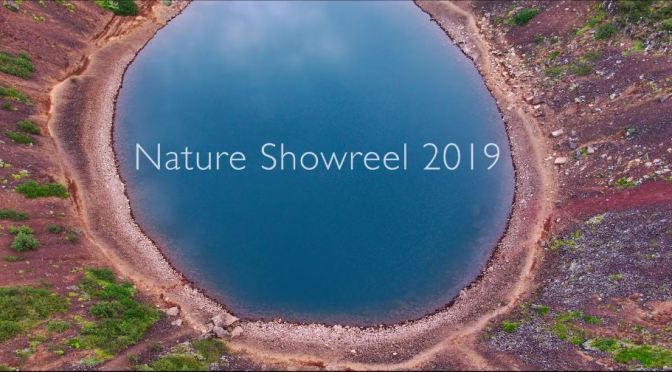
Top New Travel Videos: “Nature Showreel 2019” In Europe By Hans Leysieffer

https://vimeo.com/429640367

Filmed and Edited by: Hans Leysieffer

Sequences mainly from my first feature film “Ars Natura” which has beside other nominations and awards been nominated as “Best Independent Production” at the European leading GREEN SCREEN International Wildlife Filmfestival Eckernförde 2019. “Ars Natura” is a 95 min non-verbal emotional and meditative movie about the beauty of nature and life based on an inspiring surround sound track.

Music: “Harpoon” by Igor Dvorkin, Duncan Pittock, and Ellie Kidd

Movie website: arsnatura-thefilm.com