
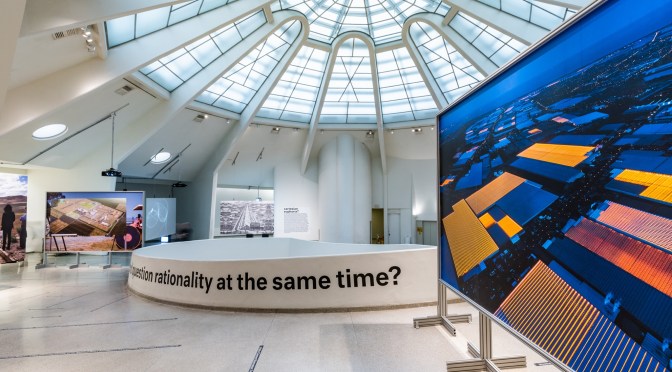
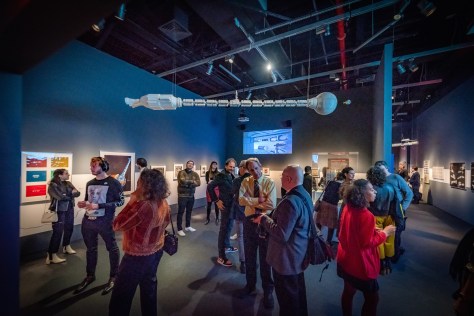
Countryside, The Future is an exhibition addressing urgent environmental, political, and socioeconomic issues through the lens of architect and urbanist Rem Koolhaas and Samir Bantal, Director of AMO, the think tank of the Office for Metropolitan Architecture (OMA).
A unique exhibition for the Guggenheim Museum, Countryside, The Future will explore radical changes in the rural, remote, and wild territories collectively identified here as “countryside,” or the 98% of the Earth’s surface not occupied by cities, with a full rotunda installation premised on original research. The project presents investigations 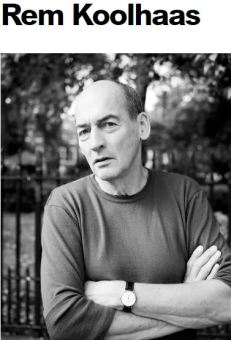 by AMO, Koolhaas, with students at the Harvard Graduate School of Design; the Central Academy of Fine Arts, Beijing; Wageningen University, Netherlands; and the University of Nairobi. The exhibition will examine the modern conception of leisure, large-scale planning by political forces, climate change, migration, human and nonhuman ecosystems, market-driven preservation, artificial and organic coexistence, and other forms of radical experimentation that are altering landscapes across the world.
Rem Koolhaas (Rotterdam, 1944) founded OMA in 1975 together with Elia and Zoe Zenghelis and Madelon Vriesendorp. He graduated from the Architectural Association in London and in 1978 published Delirious New York: A Retroactive Manifesto for Manhattan. In 1995, his book S,M,L,XL summarized the work of OMA in “a novel about architecture”. He co-heads the work of both OMA and AMO, the research branch of OMA, operating in areas beyond the realm of architecture. His built work includes the Qatar National Library and the Qatar Foundation Headquarters (2018), Fondation Galeries Lafayette in Paris (2018), Fondazione Prada in Milan (2015/2018), Garage Museum of Contemporary Art in Moscow (2015), the headquarters for China Central Television (CCTV) in Beijing (2012), Casa da Musica in Porto (2005), Seattle Central Library (2004), and the Netherlands Embassy in Berlin (2003). Current projects include the Taipei Performing Arts Centre, a new building for Axel Springer in Berlin, and the Factory in Manchester. Koolhaas directed the 2014 Venice Architecture Biennale, is a professor at Harvard University, and is preparing a major exhibition for the Guggenheim museum to open in 2019 entitled Countryside: Future of the World.
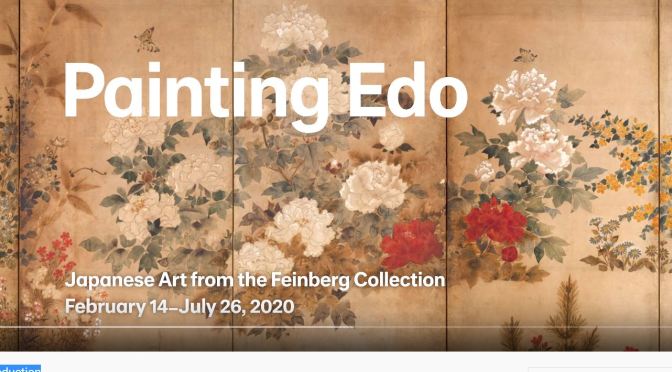
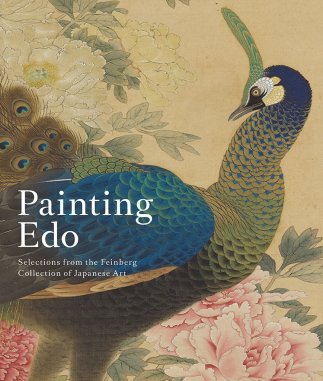 Painting Edo — the largest exhibition ever presented at the Harvard Art Museums — offers a window onto the supremely rich visual culture of Japan’s early modern era. Selected from the unparalleled collection of Robert S. and Betsy G. Feinberg, the more than 120 works in the exhibition connect visitors with a seminal moment in the history of Japan, as the country settled into an era of peace under the warrior government of the shoguns and opened its doors to greater engagement with the outside world. The dizzying array of artistic lineages and studios active during the Edo period (1615–1868) fueled an immense expansion of Japanese pictorial culture that reverberated not only at home, but subsequently in the history of painting in the West.
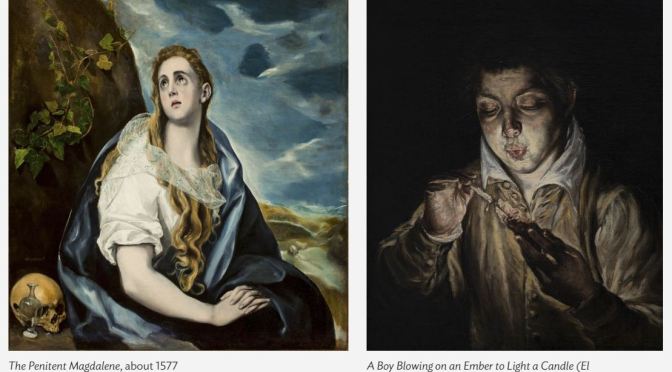
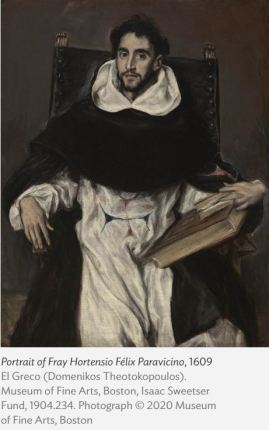 Born in Crete as Domenikos Theotokopoulos (1541–1614), El Greco trained in the traditional manner of Byzantine icon painting. He moved to Venice in 1567 to learn a new artistic approach, absorbing developments in Venetian Renaissance painting through the lens of artists such as Titian and Tintoretto. The works El Greco painted during his time in Venice, however, reveal both his embrace of and struggles to fully adapt to this manner of painting.
 Following this transformative period, El Greco went to Rome, probably in an attempt to attract patronage within the papal circle. There his acceptance into the elevated circle of Cardinal Alessandro Farnese brought a close association with the painter Giulio Clovio and the erudite historian and collector Fulvio Orsini. El Greco’s portraits, allegories, and religious paintings between 1570 and 1577 reflect these relationships as well as his complicated engagement with Michelangelo and other artistic luminaries of the 16th century.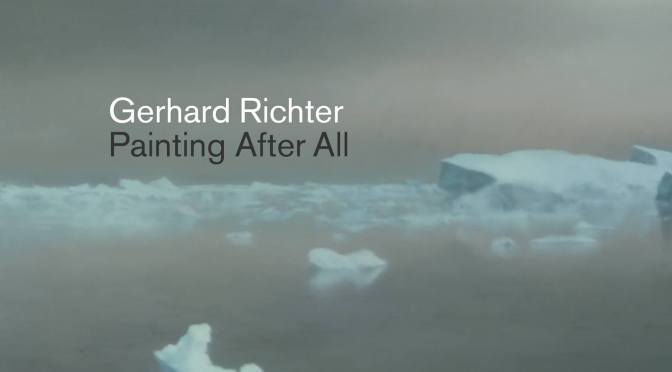
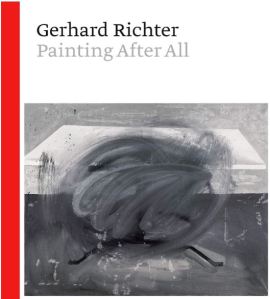 Over the course of his acclaimed 60-year career, Gerhard Richter (b. 1932) has employed both representation and abstraction as a means of reckoning with the legacy, collective memory, and national sensibility of post–Second World War Germany, in both broad and very personal terms.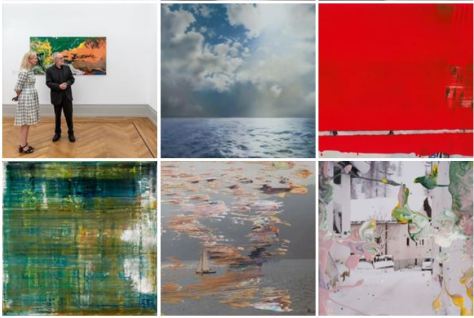
 New essays by eminent scholars address a variety of themes: Sheena Wagstaff evaluates the conceptual import of the artist’s technique; Benjamin H. D. Buchloh discusses the poignant Birkenau paintings (2014); Peter Geimer explores the artist’s enduring interest in photographic imagery; Briony Fer looks at Richter’s family pictures against traditional painting genres and conventions; Brinda Kumar investigates the artist’s engagement with landscape as a site of memory; André Rottmann considers the impact of randomization and chance on Richter’s abstract works; and Hal Foster examines the glass and mirror works. As this book demonstrates, Richter’s rich and varied oeuvre is a testament to the continued relevance of painting in contemporary art.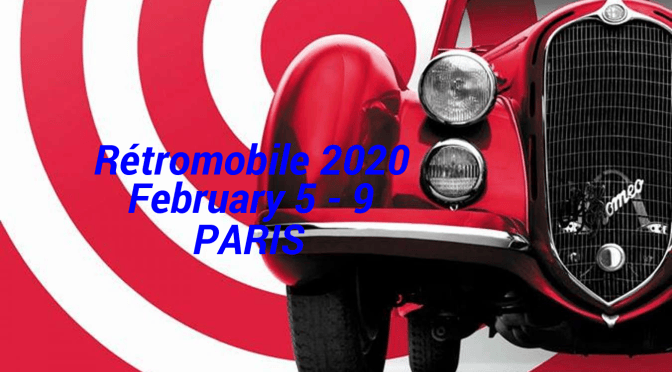
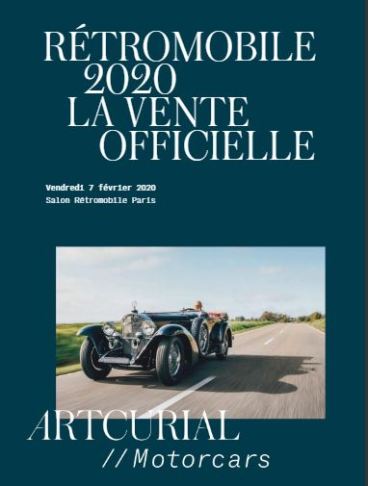
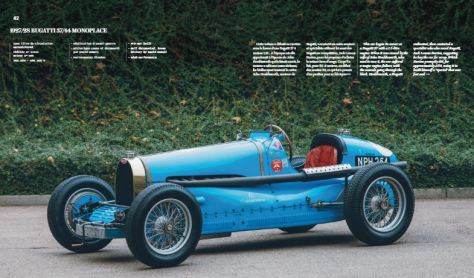 The annual salon is Paris provides manufacturers with a stage on which to show off their commitment to preserving their precious pasts, dealers the chance to set out their stalls and signal their intentions for the coming year and humble enthusiasts like us an opportunity to ogle thousands of collectable cars ranging from the affordable and the obscure to the rare and the downright priceless.

 Intellicurious