
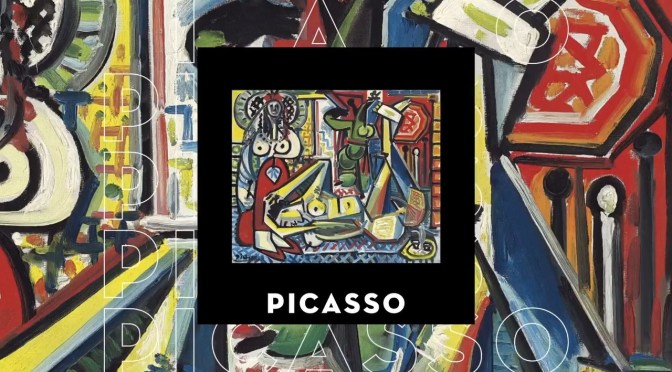
 Between 13 December 1954 and 14 February 1955, Picasso painted a series of fifteen canvases based on Eugène Delacroix’s masterwork Les femmes d’Alger, each of which he assigned an identifying letter from A to O. Together, these paintings constitute Picasso’s single greatest achievement in the decades following the end of the Second World War. They represent his first comprehensive appropriation and thoroughgoing exploration of an important painting by an earlier artist, as well as the most focused analysis he had done since the war years of the female figure set within a specific spatial environment.
Picasso painted the present Femmes d’Alger, Version F on 17 January 1955, around the halfway point in the cycle. It is the culminating, most fully resolved canvas from the first phase of the series, when Picasso favored medium-sized formats for his protean explorations.
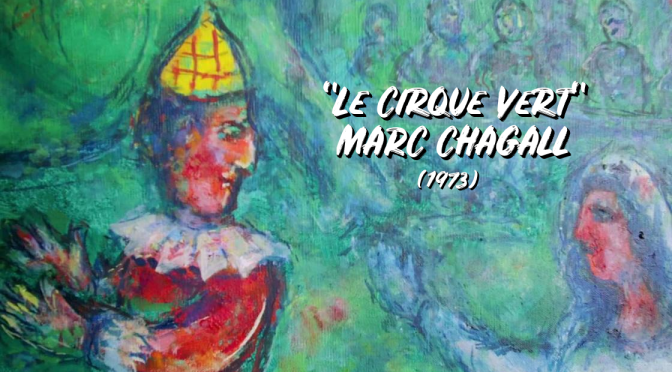
 As a child, Marc Chagall would marvel at the traveling acrobatic troupes that passed through his Village. The animals, dancers and musicians of the circus seemed to conjure a distinct joy that would consistently manifest itself throughout the artist’s career. In this episode of Expert Voices, discover how Chagall was able to uniquely translate this fascination to canvas as Edith Eustis delves into the deep greens and brilliant reds of Marc Chagall’s Le Cirque Vert. Painted in 1973, this work captures the magical allure of the spectacle and incorporates many of the artist’s most iconic motifs. Le Cirque Vert will be offered as a highlight of Sotheby’s Impressionist & Modern Art Evening Sale in New York.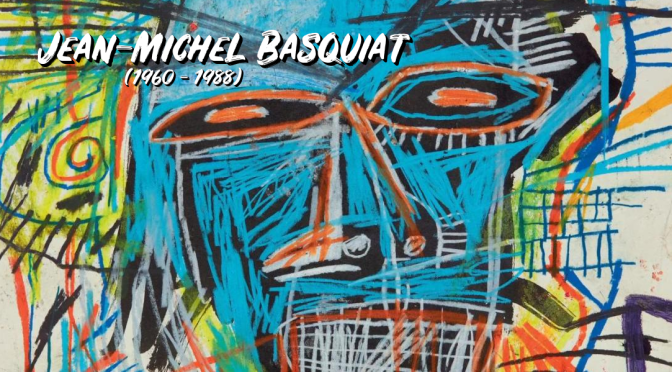
 From the anatomical features of Da Vinci to the fractured features of modernist portraiture, the human head has reigned supreme in Art History. Enter Jean Michel Basquiat – the consummate draftsman for a new age. Discover how Basquiat revolutionized the genre and captured the manic core of the human condition through his masterwork Untitled (Head), 1982, to be offered as a highlight of Sotheby’s Contemporary Art Evening Auction in New York. Encapsulating the incredible dexterity that defines the very best of the artist’s works, and extraordinary for its use of India ink under the oilstick to lend depth and contrast to the composition, Untitled (Head) is a heroic depiction that reflects the explosive talent and brilliance of its author.
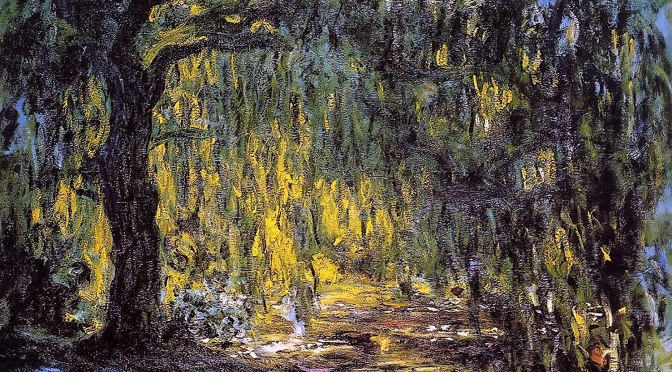
 …what perhaps absorbed him most was a suite of 10 paintings of one of the weeping willows he had planted on the shores of his pond in 1893, when he had purchased the property to construct his aquatic paradise. The tree had grown in girth and grandeur over the intervening years, its leafy arms now extending out over the dappled waters like an impassioned conductor energizing an orchestra.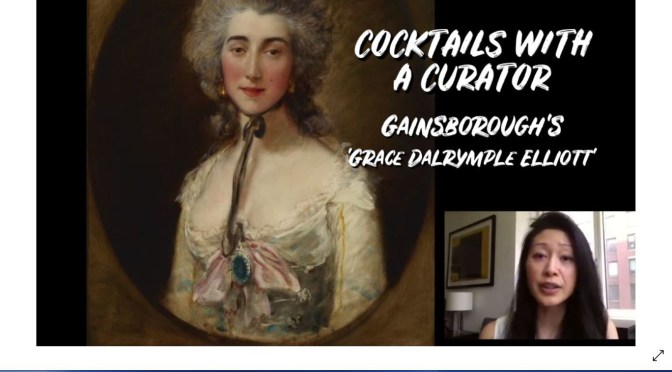
 In this week’s episode of “Cocktails with a Curator,” Curator Aimee Ng studies Thomas Gainsborough’s scandalous portrait of Grace Dalrymple Elliott. Discover why this painting met with a negative reception when it was shown at the Royal Academy in 1782. Mrs. Elliott later moved to France, where she lived through the Reign of Terror and died in 1823 in the outskirts of Paris. This week’s complementary cocktail is the Pimm’s Cup, a traditional summer drink in Britain.
 Intellicurious