Every morning, Jon Aars, a senior researcher at the Norwegian Polar Institute, receives a batch of emails from several female polar bears in the High Arctic, checking in and letting him know where they are. “It’s always a nice way to start the day,” he says.
This was shot as part of Call to Earth, for CNN International.
What are some skywatching highlights in January 2021? Mark Earth’s closest approach to the Sun for the year, called perihelion, at the start of the month, then spot a couple of elusive planets: Uranus on Jan. 20th and Mercury throughout the second half of the month. Additional information about topics covered in this episode of What’s Up, along with still images from the video, and the video transcript, are available at https://solarsystem.nasa.gov/whats-up….
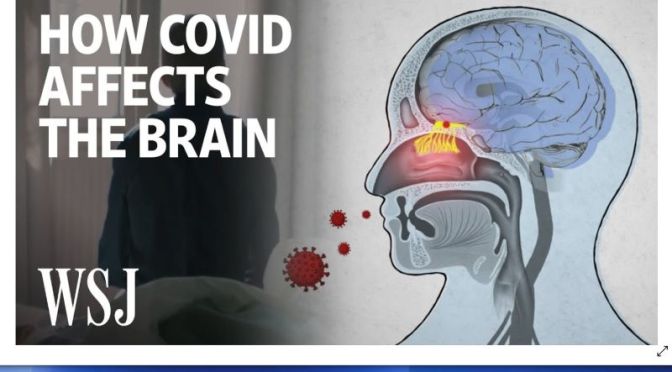
New research could help explain why thousands of Covid-19 survivors are facing debilitating neurological symptoms months after initially getting sick. WSJ breaks down the science behind how the coronavirus affects the brain, and what this could mean for long-haul patients. Illustration: Nick Collingwood/WSJ
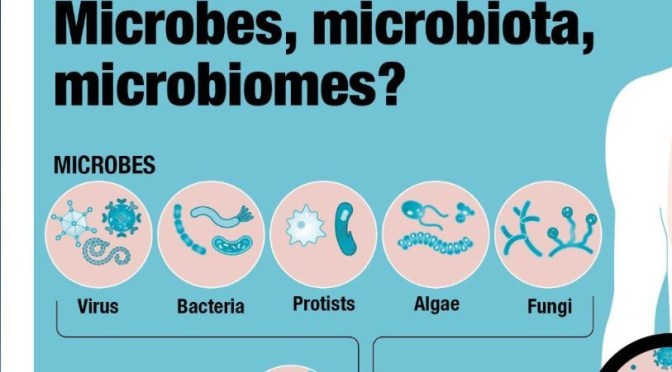
The common cold is the most common human disease in the world. So, why haven’t we found a cure yet?!
Called human rhinoviruses, these respiratory viruses measure between 15 to 30 nanometers in diameter, making them some of the smallest types of viruses out there. And it’s partly thanks to the viruses’ genetic makeup that they’re so good at replicating.
Human rhinoviruses travel like most other respiratory viruses via nasal secretions, which can be released through sneezing, or through contact with fomites, which are surfaces like a keyboard or a doorknob that can help spread the virus from one person to another. From there, all it takes is for a hand to touch one of the body’s mucous membranes like the eyes, nose, or mouth and bam — the virus has gained entry.
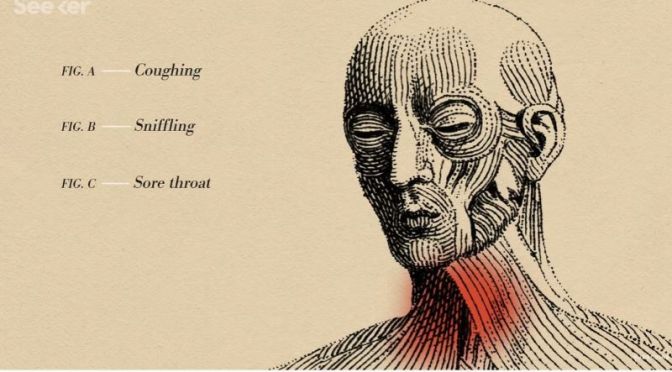
Soon after infection, coughing, sneezing, headaches, a mild fever and body aches can soon follow. And these symptoms may easily be confused with those of the flu. But unlike the flu, where symptoms start quite suddenly, it can take a couple of days for cold symptoms to fully develop. And they usually last anywhere from 7 to 14 days.
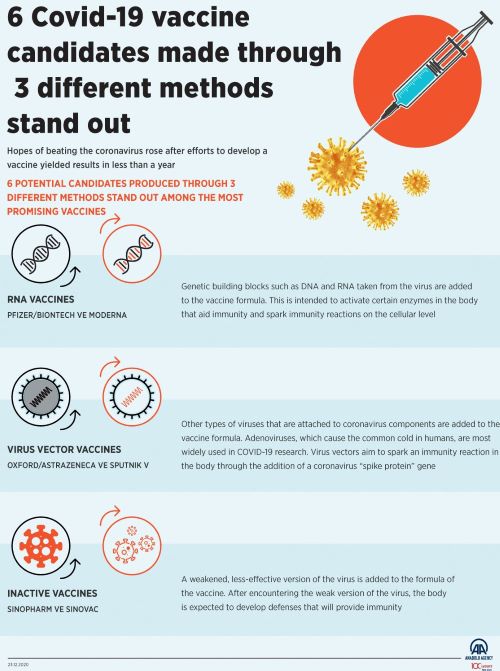
Stephen Hahn, U.S. Food and Drug Administration Commissioner, Sigal Atzmon, founder and chief executive officer of Medix Global, and Roche CEO Severin Schwan, on the pandemic, Covid-19 vaccines and the new mutation.
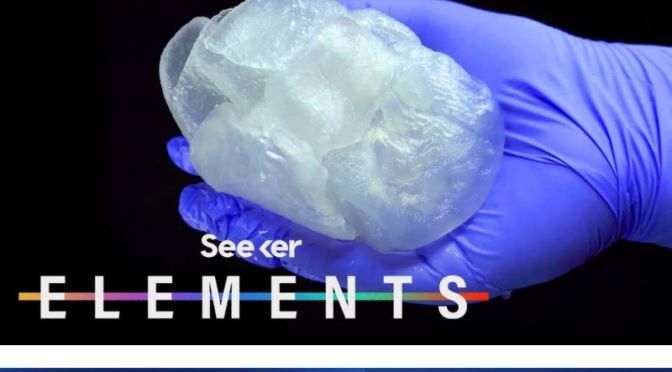
Imagine having the option to get a 3D-printed organ. Well, a team of biomedical engineers from Carnegie Mellon University has just developed the first flexible, full-size, 3D-print of a human heart, bringing us one step closer to that reality.
Additive manufacturing printers are popular, but are typically known to build hard objects using materials like plastic or metal. But rigid plastic organs aren’t very practical. These printers could be used with softer materials, like biological hydrogels — you know, to make a heart — but those tend to collapse mid-print. But this new method can change the game.
The 3D-printing technique is called Freeform Reversible Embedding of Suspended Hydrogels or FRESH. It can print biological structures with soft squishy materials like alginate, a biomaterial made from seaweed, which feels like human tissue. AND it cleverly solves that collapsing problem during print by suspending flexible materials inside a container of gelatin.
For this team of researchers it all starts with a MRI scan from a real heart. The scan gets “chopped-up” digitally into horizontal slices by a program which then translates them into code that a printer will understand. A needle-like nozzle moves through the gelatin support bath, extruding thin layers of alginate. The layers stack on top of each other to build the shape. When the print is complete, it’s put in an incubator overnight, where the temperature is raised to 37°C to gently melt away the gelatin support structure, leaving only the 3D-printed heart.
For mathematicians and computer scientists, 2020 was full of discipline-spanning discoveries and celebrations of creativity. We’d like to take a moment to recognize some of these achievements.
1. A landmark proof simply titled “MIP* = RE” establishes that quantum computers calculating with entangled qubits can theoretically verify the answers to an enormous set of problems. Along the way, the five computer scientists who authored the proof also answered two other major questions: Tsirelson’s problem in physics, about models of particle entanglement, and a problem in pure mathematics called the Connes embedding conjecture.
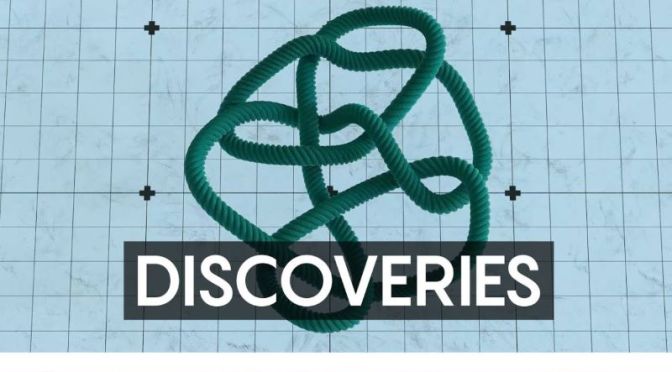
2. In February, graduate student Lisa Piccirillo dusted off some long-known but little-utilized mathematical tools to answer a decades-old question about knots. A particular knot named after the legendary mathematician John Conway had long evaded mathematical classification in terms of a higher-dimensional property known as “sliceness.” But by developing a version of the knot that yielded to traditional knot analysis, Piccirillo finally determined that the Conway knot is not “slice.”
3. For decades, mathematicians have used computer programs known as proof assistants to help them write proofs — but the humans have always guided the process, choosing the proof’s overall strategy and approach. That may soon change. Many mathematicians are excited about a proof assistant called Lean, an efficient and addictive proof assistant that could one day help tackle major problems. First, though, mathematicians must digitize thousands of years of mathematical knowledge, much of it unwritten, into a form Lean can process. Researchers have already encoded some of the most complicated mathematical ideas, proving in theory that the software can handle the hard stuff. Now it’s just a question of filling in the rest.
News, Views and Reviews For The Intellectually Curious