
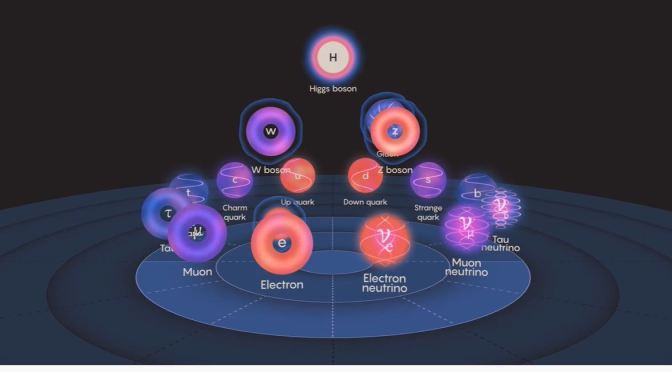
The Standard Model of particle physics is the most successful scientific theory of all time. It describes how everything in the universe is made of 12 different types of matter particles, interacting with 3 forces, all bound together by a rather special particle called the Higgs boson. It’s the pinnacle of 400 years of science, and gives the correct answer to hundreds of thousands of experiments. In this explainer, Cambridge physicist David Tong creates the model, piece by piece, to provide some intuition for how all of the parts fit together to create the fundamental building blocks of our universe. At the end of the video, he also points out what’s missing from the model, and what work is left to do in order to complete the Theory of Everything.
Category Archives: Science
Science: Race-Based Medicine, Space Tourism & Western U.S. Heatwave
Race-based medical practises are being challenged more and more, as it becomes increasingly clear they have little basis in science.
The team finds out why adjustments for race and ethnicity are still being made in medicine, despite the potential harm and healthcare implications they cause. It’s been a massive week for the future of space tourism – the team shares a clip of a very excited Richard Branson who’s recent journey into microgravity has set the stage for the launch of Virgin Galactic’s first commercial space flights. The team gives an update on the dramatic heatwave ravaging the US, as more record high temperatures are set, continuing to leave destruction in its wake. They also explain what ‘impact gardening’ is and why it might help us find alien life on Jupiter’s moon Europa, and they share important news on the state of the cosmetics industry in Neolithic times. On the pod are Rowan Hooper, Chelsea Whyte, and Layal Liverpool.
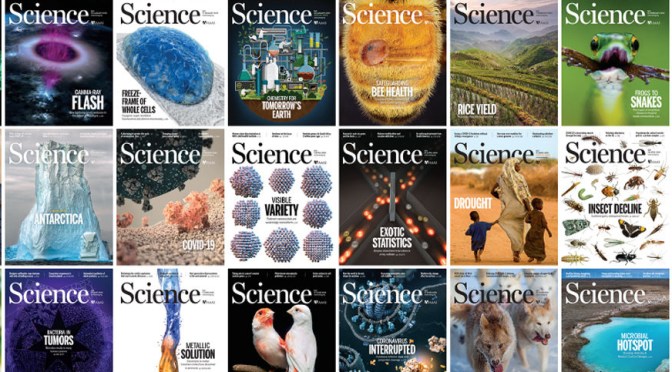
Journal Views: ‘Science Magazine’ – July 16, 2021
Science: Heat Waves In U.S. Impacting Minorities, Graphene Layers, Twitter
Why heat waves disproportionately impact minorities in US cities, and the researcher that critiqued his whole career on Twitter.
In this episode:
00:45 How heat waves kill unequally
Researchers are beginning to unpick how historic discrimination in city planning is making the recent heat waves in North America more deadly for some than others.
News Feature: Racism is magnifying the deadly impact of rising city heat
11:59 Research Highlights
A graphene layer can protect paintings from age, and a new and endangered species of ‘fairy lantern’.
Research Highlight: A graphene cloak keeps artworks’ colours ageles
Research Highlight: Newfound ‘fairy lantern’ could soon be snuffed out forever
14:25 Self-criticism
When researcher Nick Holmes decided to criticise his past papers, in 57 tweets, he found the reflection enlightening. Now he’s encouraging other researchers to self-criticise, to help speed scientific progress.
World View: I critiqued my past papers on social media — here’s what I learnt
20:53 Briefing Chat
We discuss some highlights from the Nature Briefing. This time, Richard Branson’s commercial space flight, and the Maori perspective on Antarctic conservation.
The Washington Post: Richard Branson and his Virgin Galactic crew are safely back from space, ushering in a new era
The New York Times: The Maori Vision of Antarctica’s Future (intermittent paywall)
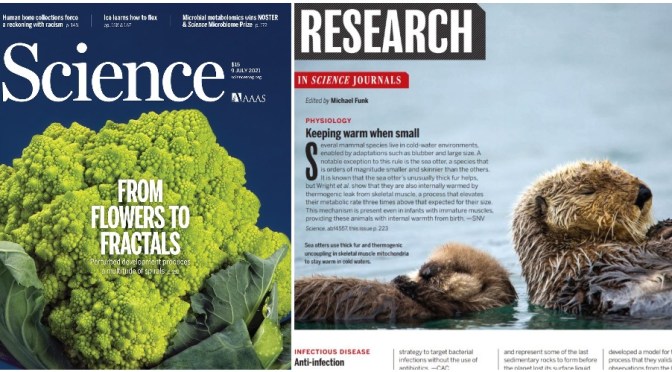
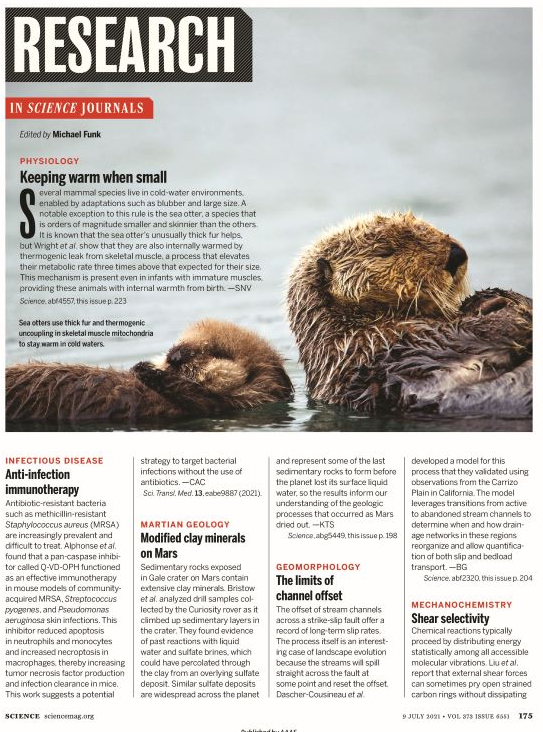
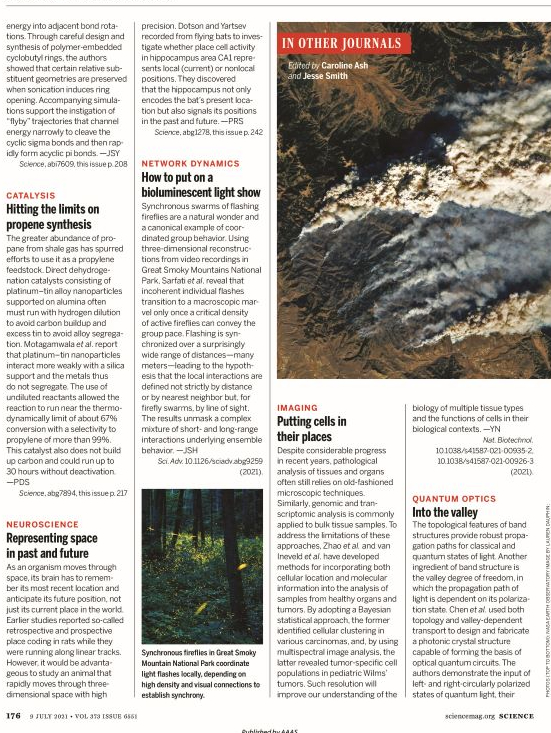
TOP JOURNALS: RESEARCH HIGHLIGHTS FROM SCIENCE MAGAZINE (JULY 9, 2021)
Science: History Of U.S. Opioid Crisis, 3-D Printed Protein Candy & Books
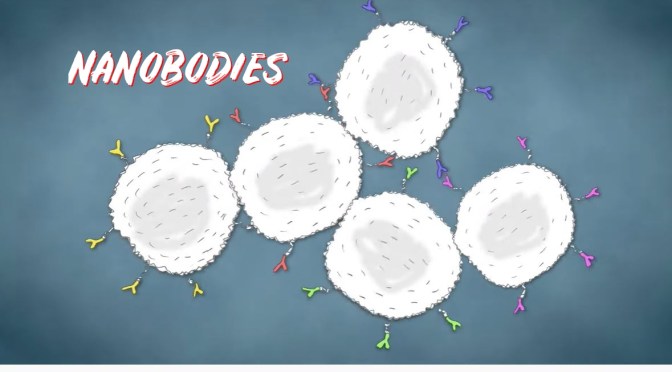
Harvard: ‘Nanobodies’ Evolved From Synthetic Antibody Fragments
A new approach developed by Harvard Medical School researchers uses yeast to rapidly evolve synthetic antibody fragments called nanobodies with the aim to find variants that are effective at binding to selected antigens, including SARS-CoV-2. The antibodies are intended for use in diagnostic tests and disease treatments. Read the full story: https://hms.harvard.edu/news/antibody…
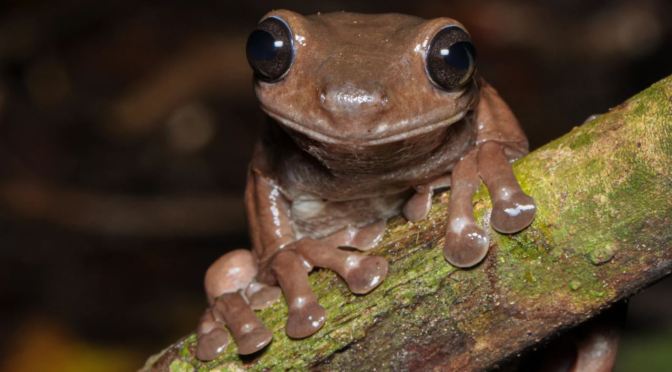
Photography: Best Of Nature (July 2021)

Science: Avoiding Sudden Food Scarcity, Lattice Strength, Time Neurons
Addressing the problem of sudden food scarcity in US cities, and the up-and-coming field of computational social science.
In this episode:
00:45 Food shocks
Climate change, the COVID-19 pandemic, and geopolitical crises can cause food shortages. To tackle this issue, Alfonso Mejia and colleagues have modelled how to best mitigate these food shocks in US cities. Alfonso tells us about the new analyses and what steps cities could take in the future.
Research Article: Gomez et al.
News and Views: How to buffer against an urban food shortage
06:07 Research Highlights
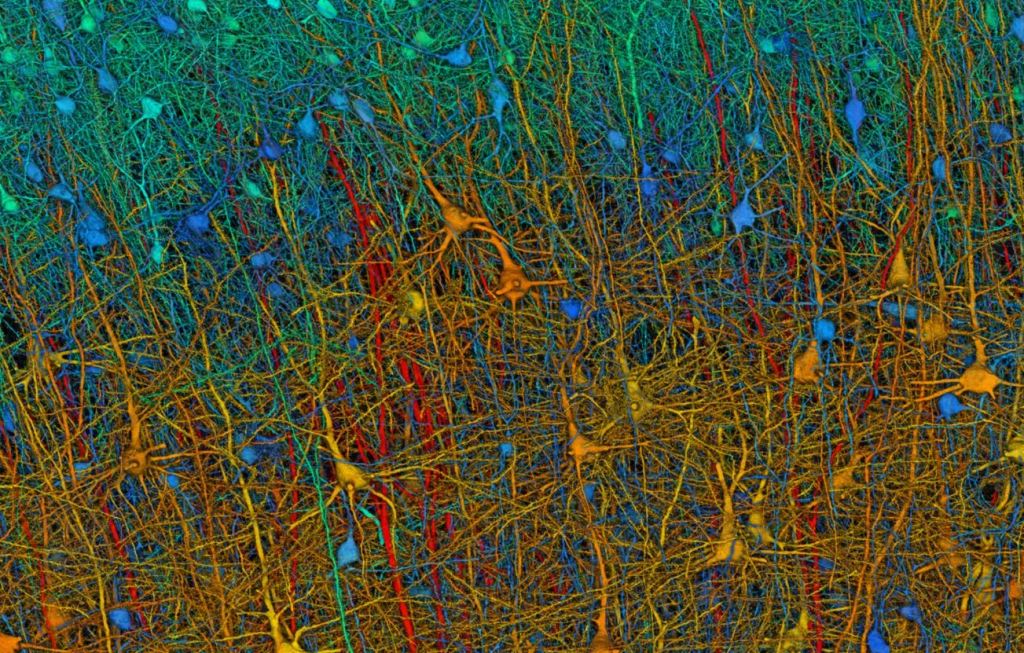
A tiny lattice can withstand the impacts of projectiles at twice the speed of sound, and the neurons that allow humans to perceive time.
Research Highlight: Supersonic strikes leave just a dent in this super-light material
Research Highlight: The ‘time neurons’ that help the brain keep track
08:25 Computational Social Science
Big data is transforming research, and social science is no exception. This week, Nature is running a special issue on ‘computational social science’. We catch up with some of the editors involved to find out more about this up-and-coming field.
Collections: Computational Social Science
19:27 Briefing Chat
We discuss some highlights from the Nature Briefing. This time, discovering the dazzling diversity of viruses, and how China eradicated malaria.
Nature News Feature: Beyond coronavirus: the virus discoveries transforming biology
Health: Understanding Chronic Pain (Podcast)
Chronic pain affects about 40% of the UK population. While there is growing recognition that pain can be an illness in and of itself, there is still a lot we don’t know.
Anand Jagatia hears from fibromyalgia sufferer Vicky Naylor on what it’s like to live with chronic pain, and the Guardian’s science correspondent Linda Geddes about the causes for these sometimes debilitating conditions.

