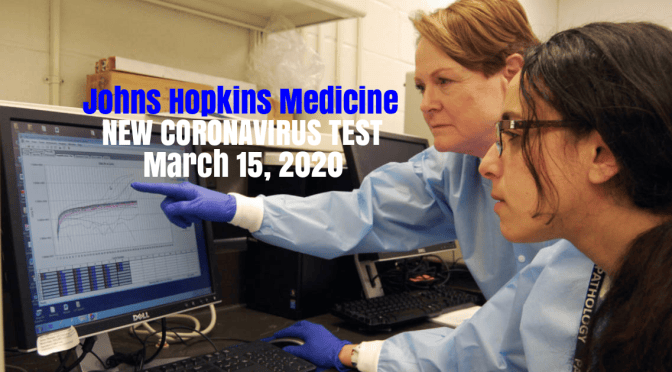
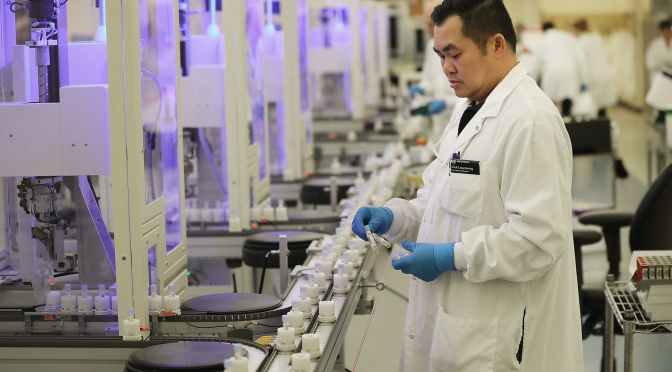
New Coronavirus test developed by Johns Hopkins microbiologists Karen Carroll and Heba Mostafa, look to test as many as 1,000 suspected Covid-19 cases per day in the Johns Hopkins Health System.

New Coronavirus test developed by Johns Hopkins microbiologists Karen Carroll and Heba Mostafa, look to test as many as 1,000 suspected Covid-19 cases per day in the Johns Hopkins Health System.
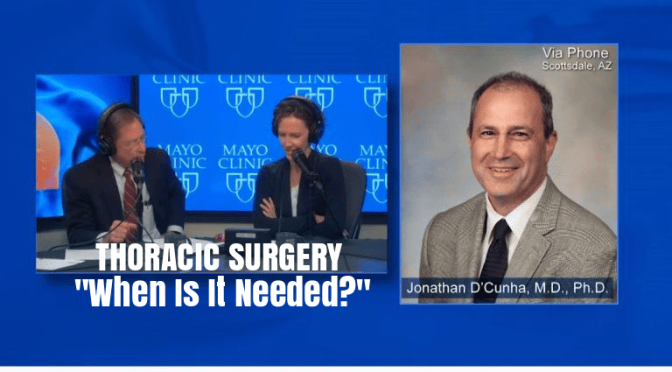
On the Mayo Clinic Radio program, Dr. Jonathan D’Cunha, a Mayo Clinic thoracic surgeon, explains when thoracic surgery might be needed.
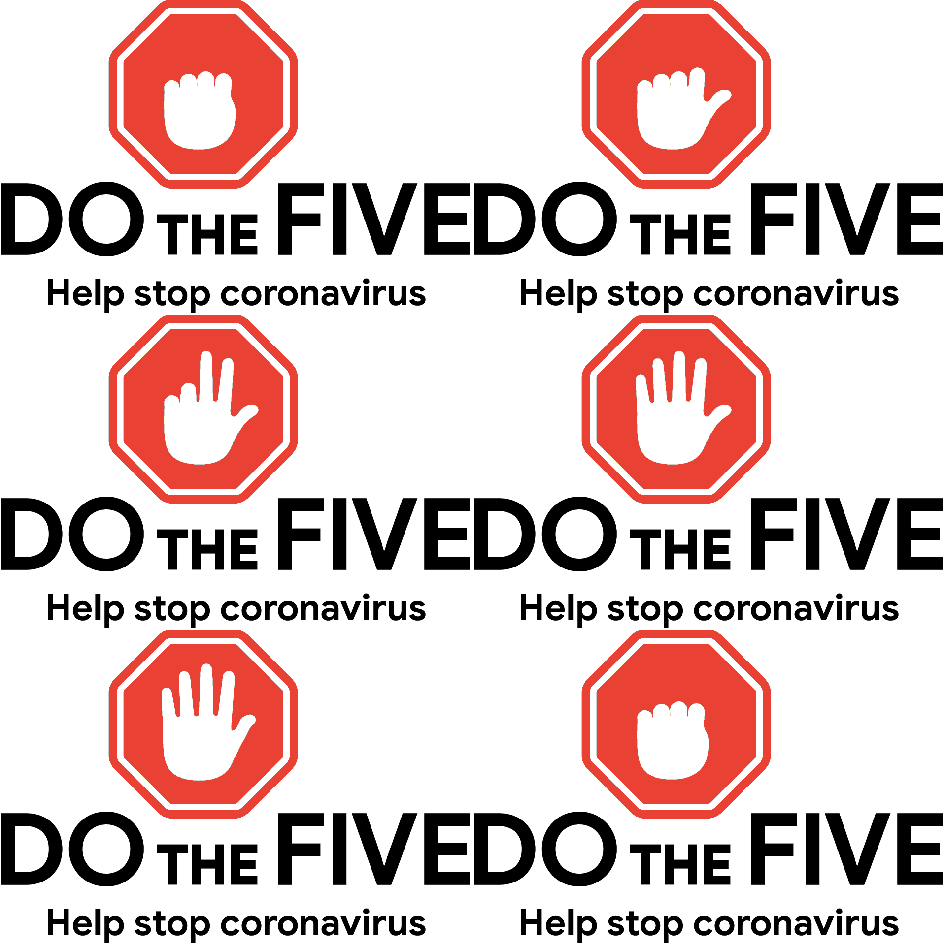
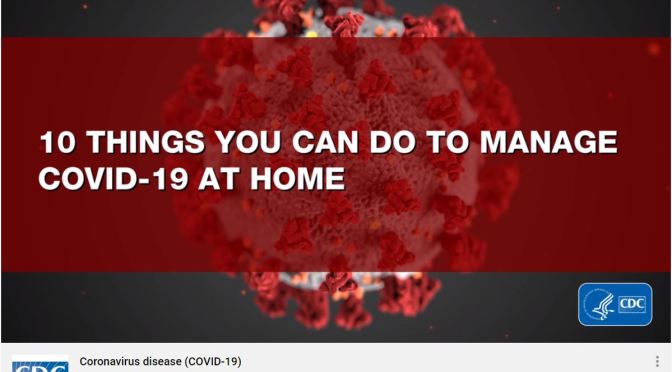
If you are sick with COVID-19 or suspect you are infected with the virus that causes COVID-19, follow the steps below to help prevent the disease from spreading to people in your home and community.
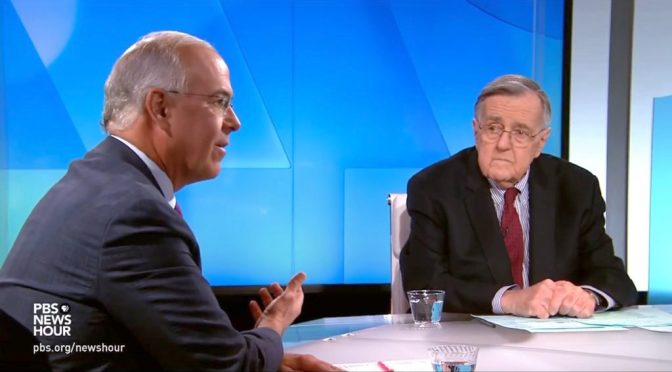
Syndicated columnist Mark Shields and New York Times columnist David Brooks join Judy Woodruff to discuss the week’s political news, including the unique magnitude of the novel coronavirus pandemic, how President Trump is handling the crisis, what the government should do to reassure fearful Americans, and how the outbreak might affect the 2020 Democratic presidential primary race.
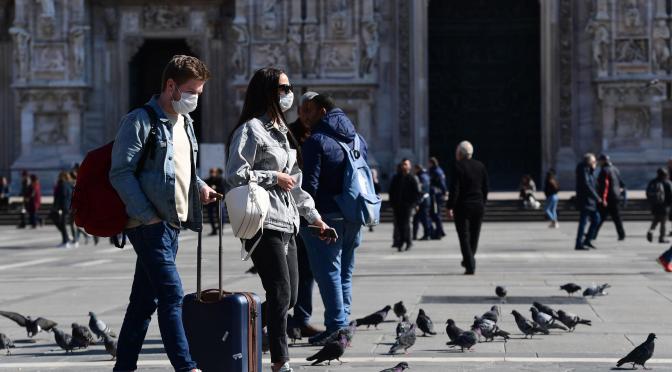
 Monocle 24 “The Urbanist” discusses the impact that quarantines can have on cities and what lessons city planners can learn when an outbreak causes borders to close. Here is a report from the ground on the changing nature of city life in Milan.
What happens if you overwater a plant? How does gravity actually work? And should we be cancelling mass events to contain the coronavirus?
It’s Q&A time on the show, and this week Phil Sansom is joined by a brainy panel of experts: plant biologist Nadia Radzman, particle physicist Chris Rogers, bioarchaeologist Emma Pomeroy, and virologist and Naked Scientist Chris Smith. Prepare to have your curiosity satisfied…
Dr. Matthew Binnicker oversees Mayo Clinic’s laboratory response in developing a test to detect COVID-19 in clinical samples. A process that usually takes six months to a year, was accomplished in under a month, thanks to a dedicated team working around the clock. The test should help ease the burden currently being felt at the Centers for Disease Control & Prevention and state health labs. That will also mean faster turnaround times for results. Patients can expect results within 24 hours of when samples are collected and sent to Mayo Clinic Laboratories. Initially, Dr. Binnicker says the laboratory has the capacity to run between 200-300 tests daily. Additional equipment has been ordered to double that capacity in the coming weeks.
More health and medical news on the Mayo Clinic News Network. https://newsnetwork.mayoclinic.org/
 On this week’s show, freelance writer Christa Lesté-Lasserre talks with host Sarah Crespi about the scientists working on the restoration of Notre Dame, from testing the changing weight of wet limestone, to how to remove lead contamination from four-story stained glass windows.
As the emergency phase of work winds down, scientists are also starting to use the lull in tourist activity to investigate the mysteries of the cathedral’s construction.
Also this week, Felipe Quiroz, an assistant professor in the biomedical engineering department at the Georgia Institute of Technology and Emory University, talks with Sarah about his paper on the cellular mechanism of liquid-liquid phase separation in the formation of the tough outer layer of the skin. Liquid-liquid phase separation is when two liquids “demix,” or separate, like oil and water. In cells, this process created membraneless organelles that are just now starting to be understood. In this work, Quiroz and colleagues create a sensor for phase separation in the cell that works in living tissue, and show how phase separation is tied to the formation of the outer layers of skin in mice.
Global health officials have praised China and South Korea for the success of their efforts to contain the coronavirus. What are those countries getting right — and what can everyone else learn from them?
Guest: Donald G. McNeil Jr., a science and health reporter for The New York Times. For more information on today’s episode, visit nytimes.com/thedaily.
Background reading:
 Intellicurious