FEATURES | Michael Prodger visits the newly resplendent Gemäldegalerie Alte Meister in Dresden; Yinka Shonibare talks to Samuel Reilly; Seamus Perry considers the visual qualities of Wordsworth’s poems; Tim Smith-Laing on the modern monsters of Léopold Chauveau; Emilie Bickerton looks at how museums tackle the subject of cinema; Christopher Turner talks to Grażyna Kulczyk, founder of the Muzeum Susch
REVIEWS | Matthew Sperling on Picasso’s works on paper at the Royal Academy; Nicholas Hatfull on Edward Hopper at the Fondation Beyeler; Scott Nethersole on Renaissance art in the regions of Italy; Alan Powers on the life of Humphrey Stone; Max Norman on a new study of Poussin; Peter Parker on John Minton’s illustrations for Elizabeth David’s cookery books
MARKET | Tim Maxwell and Tamara Bell on cybersecurity; and the latest art market columns from Susan Moore and Emma Crichton-Miller
A selection of essential articles read aloud from the latest issue of The Economist. This week, the role of big government in the time of covid-19, (10:20) assessing the havoc the pandemic is causing in emerging countries, (17:45).
In just a few weeks a virus a ten-thousandth of a millimetre in diameter has transformed Western democracies. States have shut down businesses and sealed people indoors. They have promised trillions of dollars to keep the economy on life support. If South Korea and Singapore are a guide, medical and electronic privacy are about to be cast aside. It is the most dramatic extension of state power since the second world war.
Monocle 24’s Tyler Brûlé is joined by Benno Zogg and Juliet Linley for a look at how the global press is covering the pandemic and whether the tone of the discussion needs a rethink. Plus: Andrew Mueller’s look at what we learnt this week.
New York Times columnist David Brooks and Washington Post columnist Ruth Marcus join Judy Woodruff to discuss the week in politics, including whether Americans are ready for the mounting coronavirus crisis, why the U.S. government wasn’t better prepared for the pandemic, the significance of the $2.2 trillion economic relief package and the status of the 2020 Democratic presidential primary.
When your heart beats faster than usual, it can mean that you’re coming down with a cold, flu, coronavirus, or other viral infection. That’s the conclusion of recent medical research.
So wearable devices that measure your resting heart rate—made by Apple, Fitbit, Garmin, and others—might help scientists spot viral outbreaks, and also give you more insight into your own health.
Scripps Research designed DETECT (Digital Engagement & Tracking for Early Control & Treatment), a study that will monitor your heart rate and allow you to record symptoms like fever or coughing.
On this week’s show, host Joel Goldberg gets an update on the coronavirus pandemic from Senior Correspondent Jon Cohen. In addition, Cohen gives a rundown of his latest feature, which highlights the relationship between diseases and changing seasons—and how this relationship relates to a potential coronavirus vaccine.
Also this week, from a recording made at this year’s AAAS annual meeting in Seattle, host Meagan Cantwell speaks with Alexandra Maertens, director of the Green Toxicology initiative at Johns Hopkins University, Baltimore, about the importance of incorporating nonanimal testing methods to study the adverse effects of chemicals.
Though U.S. legislation targeting the problem of surprise medical bills advanced out of key congressional committees in 2019 with support from leaders in both parties, Congress ultimately failed to pass a law to end such bills.
Erin Fuse Brown is an associate professor of law at Georgia State University. Stephen Morrissey, the interviewer, is the Executive Managing Editor of the Journal.
Researchers have developed an ultra-fast electrical switch that they hope can be used in communication and imaging applications.
In this episode:
01:57 Speedy switches
Researchers have developed an ultra-fast electrical switch that they hope can be used in communication and imaging applications. Research Article: Nikoo et al.
Chloroquine was shown in 2004 to be active in vitro against SARS coronavirus but is of unproven efficacy and safety in patients infected with SARS-CoV-2. The drug’s potential benefits and risks for COVID-19 patients, without and with azithromycin, is discussed by Dr. David Juurlink, head of the Division of Clinical Pharmacology and Toxicology at Sunnybrook Health Sciences Centre in Toronto.
From Wall Street Journal article:
Our experience suggests that hydroxychloroquine, with or without a Z-Pak, should be a first-line treatment. Unfortunately, there is already a shortage of hydroxychloroquine. The federal government should immediately contract with generic manufacturers to ramp up production. Any stockpiles should be released.
As a matter of clinical practice, hydroxychloroquine should be given early to patients who test positive, and perhaps if Covid-19 is presumed—in the case of ill household contacts, for instance. It may be especially useful to treat mild cases and young patients, which would significantly decrease viral transmission and, as they say, “flatten the curve.”





 Monocle 24’s Tyler Brûlé is joined by Benno Zogg and Juliet Linley for a look at how the global press is covering the pandemic and whether the tone of the discussion needs a rethink. Plus: Andrew Mueller’s look at what we learnt this week.
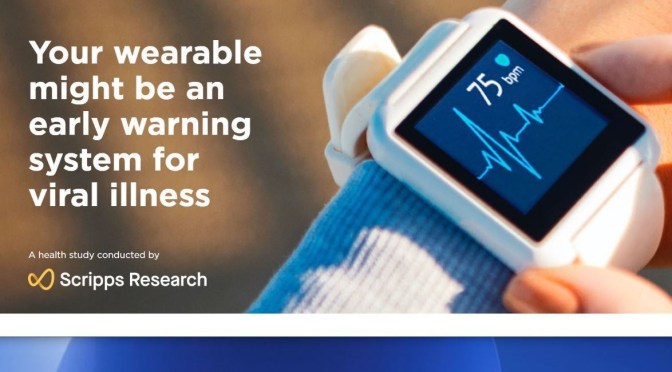
 When your heart beats faster than usual, it can mean that you’re coming down with a cold, flu, coronavirus, or other viral infection. That’s the conclusion of recent medical



 On this week’s show, host Joel Goldberg gets an update on the coronavirus pandemic from Senior Correspondent Jon Cohen. In addition, Cohen gives a rundown of
 Though U.S. legislation targeting the problem of surprise medical bills advanced out of key congressional committees in 2019 with support from leaders in both parties, Congress ultimately failed to pass a law to end such bills.
 Researchers have developed an ultra-fast electrical switch that they hope can be used in communication and imaging applications.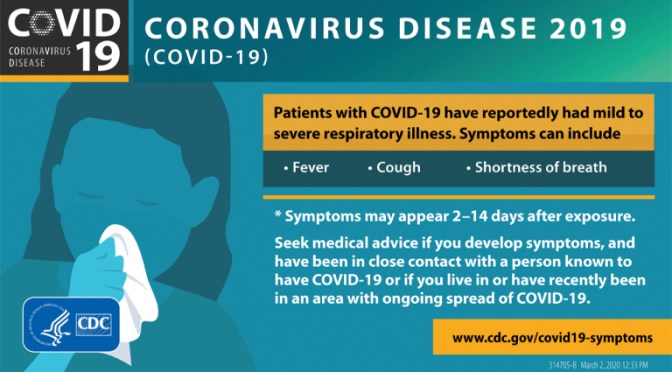

 Chloroquine was shown in 2004 to be active in vitro against SARS coronavirus but is of unproven efficacy and safety in patients infected with SARS-CoV-2. The drug’s potential benefits and risks for COVID-19 patients, without and with azithromycin, is discussed by Dr. David Juurlink, head of the Division of Clinical Pharmacology and Toxicology at Sunnybrook Health Sciences Centre in Toronto.
 Intellicurious