Contributing Correspondent Dennis Normile talks about a long-term study involving the survivors of the Hiroshima and Nagasaki bombings. Seventy-five years after the United States dropped nuclear bombs on the two cities in Japan, survivors are still helping scientists learn about the effects of radiation exposure.
Also this week, Sarah talks with Winnie Lau, senior manager for preventing ocean plastics at Pew Charitable Trusts about her group’s paper about what it would take to seriously fight the flow of plastics into the environment. This week’s episode was produced with help from Podigy.
NPR News reports on Federal Agents being sent to states to stem violent crime, Covid-19 and the possibilities for ‘natural herd immunity, federal funding for public lands and more.
When did people arrive in the Americas? New evidence stokes debate. New evidence may push back the date on human arrival to the Americas, and an examination of science’s flaws.
Many school districts are still debating whether to go with a virtual, in classroom or hybrid education model for the year, but some families are taking their children’s education into their own hands. Neighbors are banding together to form schooling “pods” with private instructors as a way to secure child care and make sure their kids don’t fall behind in school.
But this trend could deepen the educational divide along racial and class lines.
President Trump changes tact on Coronavirus safety
Re-branding the Washington Redskins
Guests: Axios’ Caitlin Owens, Margaret Talev, and Kendall Baker.
The U.K. and China made big news with promising results in vaccine development for the coronavirus — the US, Russia and at least five other countries are also working on possible vaccines.
But for a vaccine to work effectively, these countries should be working together. Instead, they’re clashing. Countries like the US and Canada have even accused Russia of stealing our vaccine research. Plus:
Pennsylvania, Wisconsin, North Carolina and Georgia are all swing states at the center of the 2020 voting crisis.
And, how the virus will wreak havoc on your fall TV lineup.
Guests: Axios’ Dave Lawler, Stef Kight, and Sara Fischer
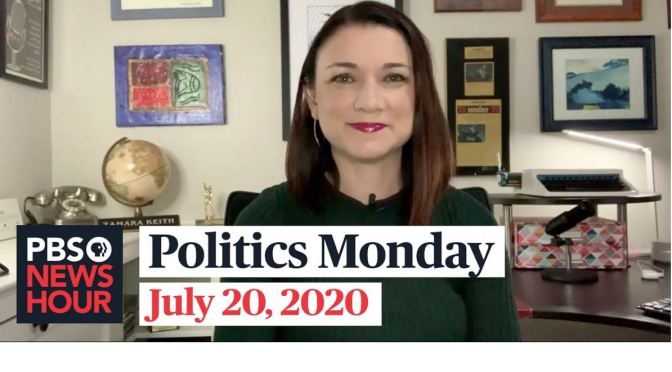
NPR’s Tamara Keith and Amy Walter of the Cook Political Report join Judy Woodruff to discuss the latest political news, including what President Trump is saying about the coronavirus and competitor Joe Biden, whether those messages are resonating with voters and what pandemic legislation to expect from Congress before the school year begins.
Lawmakers are back on the hill negotiating the next trillion dollar relief package for the struggling economy. Meanwhile, COVID-19 cases surge in 40 states. Finally, an update on the clash between protesters and police in Portland, Oregon.
The Economist reviews the world’s top headlines including Blackrock’s earnings, new Covid-19 cases rise in America and other countries, airline industry updates and more.
Syndicated columnist Mark Shields and New York Times columnist David Brooks join Amna Nawaz to discuss the week in politics, including the growing rift between President Trump and Dr. Anthony Fauci, what GOP criticism of Trump means for his reelection bid, the latest primary election results and poll numbers and the ongoing debate over mail-in ballots.
News, Views and Reviews For The Intellectually Curious

 Contributing Correspondent Dennis Normile talks about a long-term study involving the survivors of the Hiroshima and Nagasaki bombings. Seventy-five years after the United States dropped nuclear bombs on the two cities in Japan, survivors are still helping scientists learn about the effects of radiation exposure.
 NPR News reports on Federal Agents being sent to states to stem violent crime, Covid-19 and the possibilities for ‘natural herd immunity, federal funding for public lands and more.
 When did people arrive in the Americas? New evidence stokes debate. New evidence may push back the date on human arrival to the Americas, and an examination of science’s flaws.
 Many school districts are still debating whether to go with a virtual, in classroom or hybrid education model for the year, but some families are taking their children’s education into their own hands. Neighbors are banding together to form schooling “pods” with private instructors as a way to secure child care and make sure their kids don’t fall behind in school.
 Lawmakers are back on the hill negotiating the next trillion dollar relief package for the struggling economy. Meanwhile, COVID-19 cases surge in 40 states. Finally, an update on the clash between protesters and police in Portland, Oregon.
 A selection of three essential articles read aloud from the latest issue of The Economist. This week,
  The Economist reviews the world’s top headlines including Blackrock’s earnings, new Covid-19 cases rise in America and other countries, airline industry updates and more.
 Intellicurious