Some of the country’s largest school districts have already made the decision to go online-only for this coming school year. Many are talking about hybrid models that combine distance and in-person learning, but whether they’re online or in the classroom, teachers will bear the brunt of making their classes work.
Plus, why Joe Biden’s campaign is dreading foreign policy.
Contributing Correspondent Gretchen Vogel talks about what can be learned from schools around the world that have reopened during the coronavirus pandemic. Unfortunately, few systematic studies have been done, but observations of outbreaks in schools in places such as France or Israel do offer a few lessons for countries looking to send children back to school soon.
The United Kingdom and Germany have started studies of how the virus spreads in children and at school, but results are months away. In the meantime, Gretchen’s reporting suggests small class sizes, masks, and social distancing among adults at schools are particularly important measures.
Also this week, Sarah talks with Kiristie Thompson, a Ph.D. student in the Georgia Institute of Technology’s Department of Chemistry and Biochemistry, about increasing the efficiency of petroleum processing. If all—or even some—petroleum processing goes heat free, it would mean big energy savings. Around the world, about 1% of all energy use goes to heating up petroleum in order to get useful things such as gas for cars or polymers for plastics. These days, this separation is done through distillation, heating, and separating by boiling point. Kirstie describes a heat-free way of getting this separation—by using a special membrane instead. Read a related Insight.
This week, the Trump administration ordered hospitals to bypass the Centers for Disease Control and Prevention send all coronavirus-related data straight to the Department of Health and Human Services. This is just the latest step in President Trump’s war on public health experts.
Plus, a shakeup on Trump’s 2020 campaign team.
And, a major Twitter hack Wednesday afternoon left some of the most powerful people on the platform vulnerable to a cryptocurrency scam.
Guests: Axios’ Sam Baker, Mike Allen, and Ina Fried.
Probing the superconducting properties of graphene and a bacteria that can use manganese to grow. If you sandwich two sheets of graphene together and twist one in just the right way, it can gain some superconducting properties. Now, physicists have added another material to this sandwich which stabilises that superconductivity, a result that may complicate physicists’ understanding of magic angles.
For decades it’s been thought that microbes that use manganese as an energy source must exist. Now, for the first time, researchers have found evidence that they do. Research Article: Yu and Leadbetter
Buildings are getting tested for coronavirus, too. Research teams in Oregon are conducting real-time coronavirus tests on ventilation systems in buildings that could be essential for returning to the office or school.
Plus, small businesses are facing an existential threat.
And, in a rare move, the Trump administration rescinds a recent guideline that would have sent hundreds of thousands of international students packing.
Guests: Axios’ Joann Muller, Dion Rabouin, and Mike Allen.
With antibodies having implications for both our understanding of previous coronavirus infections and potential future immunity, Nicola Davis talks to Prof Eleanor Riley about how best to test for them and asks whether antibodies are the only thing we should be looking for.
NPR’s Tamara Keith and Amy Walter of the Cook Political Report join Amna Nawaz to discuss the latest political news, including President Trump’s commutation of Roger Stone’s prison sentence and the Lincoln Project’s TV ad response, Trump’s attacks on U.S. health experts during the pandemic and what poll numbers in states struggling with COVID-19 could mean for Trump and Republican senators.
Coronavirus cases are on the rise in 33 states — and California and Florida hit record high numbers of daily cases last week. Now, hospitals and other medical facilities are feeling déjà vu, as they start to experience personal protective equipment shortages again.
Plus, Roger Stone talks to Axios’ Mike Allen 48 hours after President Trump commuted his sentence.
And, the massive rise of alternative meat sales means a fundamental change for the American diet.
Guests: Axios’ Bob Herman, Mike Allen and Bryan Walsh.
News, Views and Reviews For The Intellectually Curious


 Some of the country’s largest school districts have already made the decision to go online-only for this coming school year. Many are talking about hybrid models that combine distance and in-person learning, but whether they’re online or in the classroom, teachers will bear the brunt of making their classes work.
 Contributing Correspondent Gretchen Vogel talks about what can be learned from schools around the world that have reopened during the coronavirus pandemic. Unfortunately, few systematic studies have been done, but observations of outbreaks in schools in places such as France or Israel do offer a few lessons for countries looking to send children back to school soon.
 Probing the superconducting properties of graphene and a bacteria that can use manganese to grow. If you sandwich two sheets of graphene together and twist one in just the right way, it can gain some superconducting properties. Now, physicists have added another material to this sandwich which stabilises that superconductivity, a result that may complicate physicists’ understanding of magic angles.
 The Economist Morning Briefing, July 14th, 2020: Coronavirus cases surpass 13m and China and America trade insults.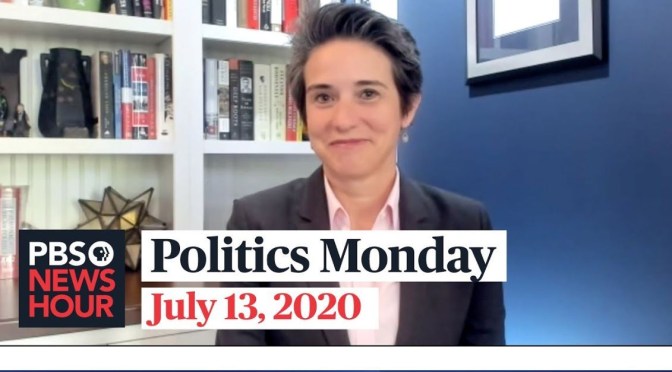

 Intellicurious