

 Chest pain is a common chief complaint. It may be caused by either benign or life-threatening aetiologies and is usually divided into cardiac and non-cardiac causes. James E. Brown, Professor and Chair, Wright State University Boonshoft School of Medicine, Kettering, Ohio, gives us an overview of assessing chest pain in the emergency setting.
Category Archives: Health

Sleeping Better: Positions And Environment Matter (Johns Hopkins Medicine)
From Johns Hopkins Medicine:
 “The sleep environment is something that can easily be fixed,” Salas says. By giving a little thought to positioning your body and bed, you might find your slumber is even sweeter.
For young, healthy people, sleep position is less important, Salas says. “But as you get older and have more medical issues, sleep position can become positive or negative.”
Consider these factors before you switch off the light:
- Back and neck pain: When it comes to alleviating pain, sleeping on your back is a mixed bag, Salas says. For people with neck pain, sleeping face up can sometimes make the pain worse. But many people find back sleep is helpful for alleviating low-back pain. If you have soreness in your spine, experiment with different positions and pillows to find what works for you.
- Snoring and sleep apnea: Obstructive sleep apnea causes the airways to collapse during sleep, leading to pauses in breathing. It often goes hand-in-hand with snoring. Positioning yourself on your side or stomach can help the airways stay open to reduce snoring and alleviate mild apnea, Salas says.
- Reflux and heartburn: If you suffer from heartburn, sleeping on your right side can make symptoms worse, Salas says. That’s true for people who have gastroesophageal reflux disease (GERD) and for people who have heartburn for other reasons, such as pregnant women. Flip to your left side to cool the burn.
- Appearance: If you sleep on your side or stomach, you’ve probably noticed creases on your face when you wake up. “Over time, that can lead to breakouts or cause chronic changes to the skin,” Salas says. “If you’re concerned about wrinkles, it’s another reason to sleep on your back.”
Don’t underestimate the importance of optimizing your bedroom to help you get a good night’s sleep. Salas adds:
- Clean sheets: Wash sheets frequently and vacuum the mattress to rid it of dust and dander that can cause allergies and impair your sleep.
- Close the blinds: Use curtains or blinds to keep the room dim at night. But open the curtains (or head outside) in the morning to reset your internal clock.
- Location matters: Position your bed so you aren’t facing distractions such as a desk stacked with work or a blinking light.

Covid-19 Update Podcast: Researchers Simulate New Outbreaks “Military-Style”
 Researchers have run numerous military-style simulations to predict the consequences of fictitious viral outbreaks. We discuss how these simulations work, what recommendations come out of them and if any of these warnings have been heeded.
24:08 One good thing
Our hosts pick out things that have made them smile in the last week, including audience feedback, the official end of the Ebola outbreak in the northeastern Democratic Republic of the Congo, and an enormous t-shirt collection.
News: World’s second-deadliest Ebola outbreak ends in Democratic Republic of the Congo
28:50 The latest coronavirus research papers
Benjamin Thompson takes a look through some of the key coronavirus papers of the last few weeks.
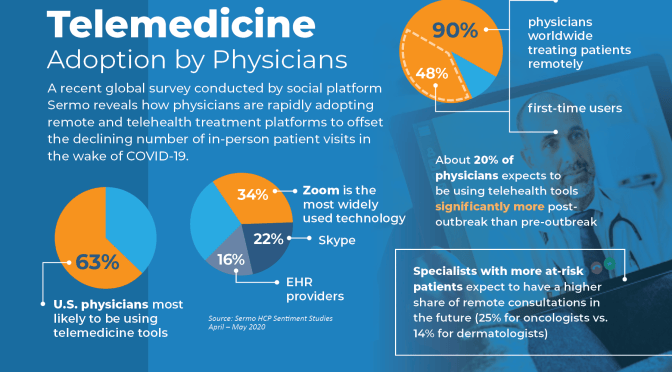
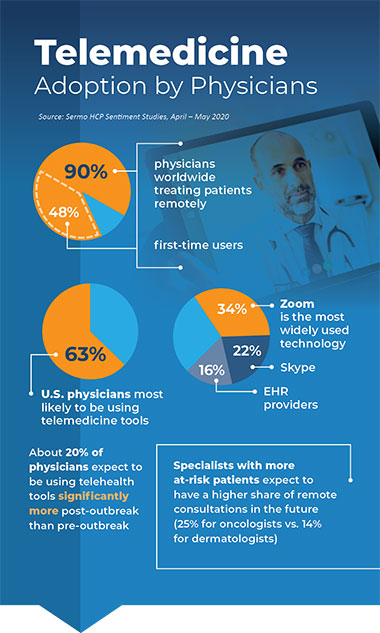
Infographic: “Physicians Adopting Telemedicine”
Diagnostics World (June 30, 2020): The shift from face-to-face patient visits to remote medical appointments is a worldwide phenomenon, but most especially in the U.S., finds a recent global survey conducted by the doctors-only social networking platform Sermo. Unsurprisingly, Zoom tops the list of most-mentioned technologies. About one-fifth of surveyed doctors say they expect to be using telehealth tools “significantly” more post-pandemic than before COVID-19 upended business as usual.
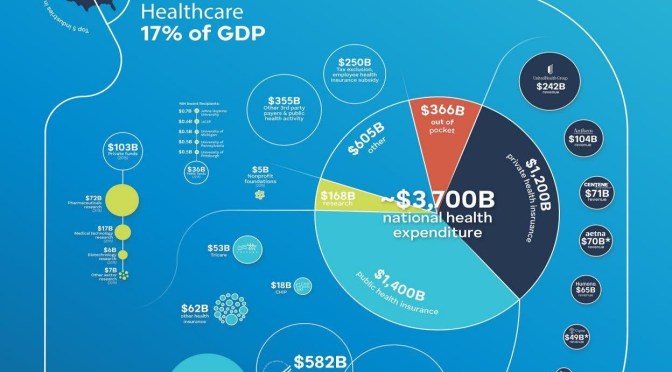
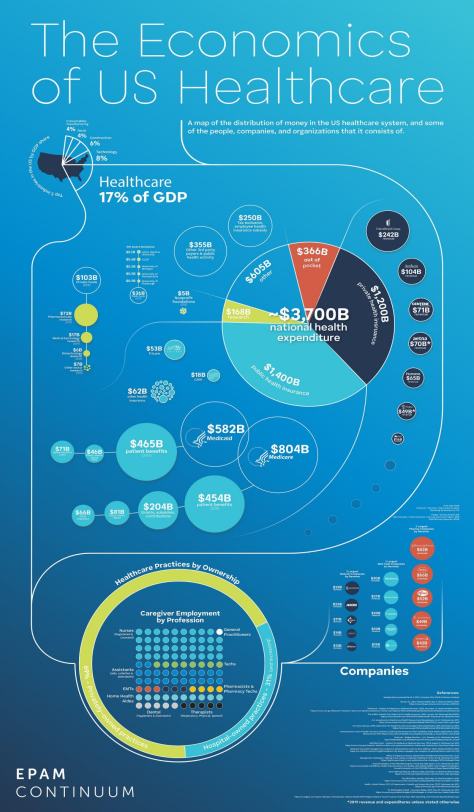
Infographic: “The Economics Of U.S. Healthcare” In 2020
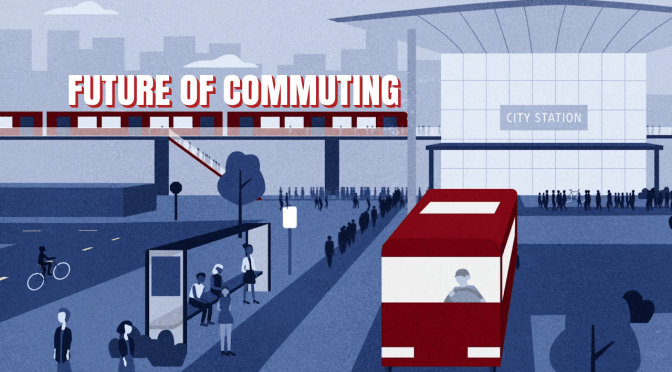
Transportation: “How Covid-19 Is Changing Everyday Commuting”
Traveling on trains and buses means potential exposure to the coronavirus, so cities are racing to make their public transit systems safe. WSJ explores how things like sanitizing robots, working from home and expanded bike lanes are changing our commutes. Video/Illustration: Jaden Urbi and Zoë Soriano.
Coronavirus Update: State Of The Pandemic After Six Months (Nature Podcast)
 We take a look back over the past six months of the pandemic, and discuss how far the world has come. It’s been a period of turmoil and science has faced an unprecedented challenge. What lessons can be learned from the epidemic so far to continue the fight in the months to come?
Also in this episode:
12:55 Unanswered questions
After months of intensive research, much is known about the new coronavirus – but many important questions remain unanswered. We look at the knowledge gaps researchers are trying to fill.
Nature Medicine: Real-time tracking of self-reported symptoms to predict potential COVID-19
20:36 How has lockdown affected fieldwork?
The inability to travel during lockdown has seriously hampered many researchers’ ability to gather fieldwork data. We hear from three whose work has been affected, and what this means for their projects.
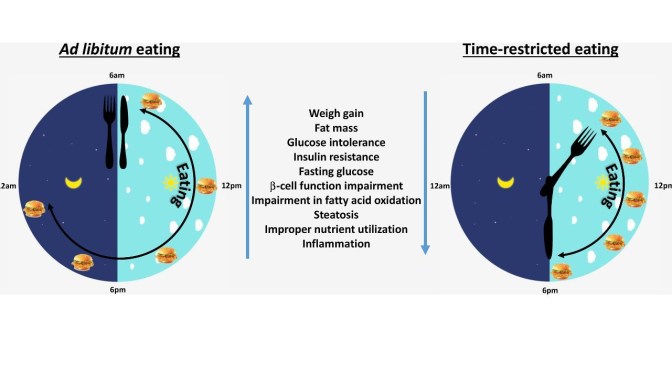
Diet Studies: Benefits Of “Time-Restricted Eating” (TRE) Improve With Greater Time Restriction
From iScience / Cell.com (June 26, 2020):
 …the beneficial effects of TRE are dose dependent, with greater reductions in body weight, fat mass, and improvement in glucose tolerance when a 9-h protocol was implemented versus 12 and 15 h. The optimal TRE time frame to recommend for people has not been tested. Clear improvements have been noted after 6-, 8-, 9-, and 10-h protocols. It is likely that the greater time restriction would result in greater weight losses, which may maximize the metabolic benefits.
Eating out of phase with daily circadian rhythms induces metabolic desynchrony in peripheral metabolic organs and may increase chronic disease risk. Time-restricted eating (TRE) is a dietary approach that consolidates all calorie intake to 6- to 10-h periods during the active phase of the day, without necessarily altering diet quality and quantity.
TRE reduces body weight, improves glucose tolerance, protects from hepatosteatosis, increases metabolic flexibility, reduces atherogenic lipids and blood pressure, and improves gut function and cardiometabolic health in preclinical studies. This review discusses the importance of meal timing on the circadian system, the metabolic health benefits of TRE in preclinical models and humans, the possible mechanisms of action, the challenges we face in implementing TRE in humans, and the possible consequences of delaying initiation of TRE.
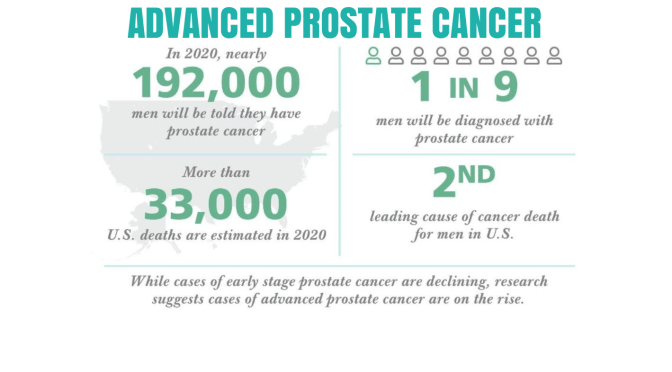
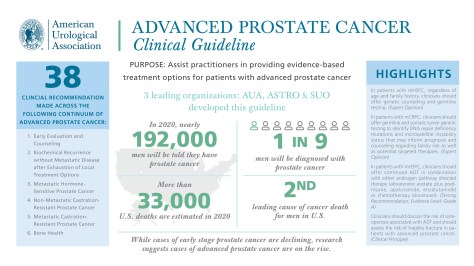
Infographic: “Advanced Prostate Cancer” In The U.S. Is Rising (2020)

Top Daily News Podcast: Economic Recovery, Covid-19 Surge & Virtual Democratic Convention
 The consensus among economists is that the U.S. recovery will most likely be something in between a V and a W — a sharp drop, a relatively small bounce back, and then a long period of slow growth.
- Time to pay attention again: The coronavirus surge is real, and it’s everywhere in the United States.
- And Axios co-founder Mike Allen tells us what to expect at the virtual Democratic National Convention in Milwaukee.
Guests: Axios’ Felix Salmon, Sam Baker, and Mike Allen.
 Intellicurious