Category Archives: Art

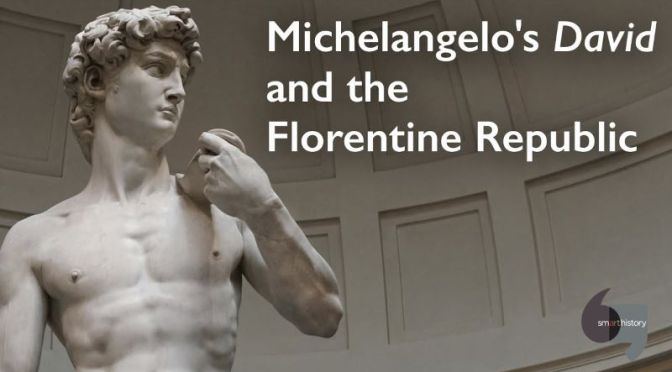
Art: Michelangelo’s Sculpture ‘David’ & The Republic Of Florence

Michelangelo, David, 1501–04, marble, 17 feet high (The Galleria dell’Accademia, Florence), a conversation with Dr. Steven Zucker and Dr. Beth Harris.

This astonishing Renaissance sculpture was created between 1501 and 1504. It is a 14.0 ft marble statue depicting the Biblical hero David, represented as a standing male nude. Originally commissioned by the Opera del Duomo for the Cathedral of Florence, it was meant to be one of a series of large statues to be positioned in the niches of the cathedral’s tribunes, way up at about 80mt from the ground. Michelangelo was asked by the consuls of the Board to complete an unfinished project begun in 1464 by Agostino di Duccio and later carried on by Antonio Rossellino in 1475. Both sculptors had in the end rejected an enormous block of marble due to the presence of too many “taroli”, or imperfections, which may have threatened the stability of such a huge statue. This block of marble of exceptional dimensions remained therefore neglected for 25 years, lying within the courtyard of the Opera del Duomo (Vestry Board).
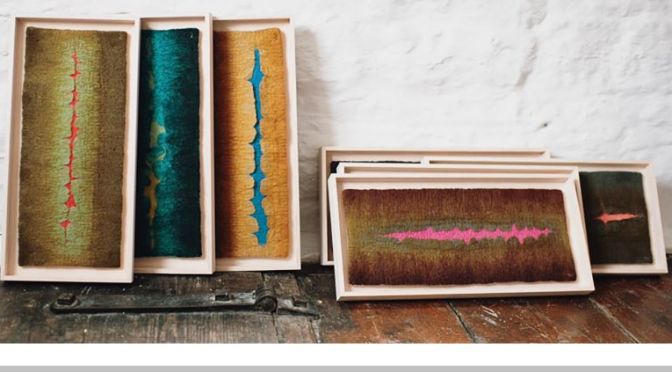
Profile Video: French-English Textile Artist ‘Valerie Wartelle’

My main fascination lies within the manipulation of fibres and textiles as an expressive art form. Taking the rural environment as my inspiration,I explore long-term interests of texture, colour, layering and process to create contemplative and ethereal artworks.

   My primary technique is wet felting; a traditional craft technique using wool tops, hot water, soapsuds and friction to interlock the fibres together. The making is muscular and rhythmic as I lay, pour, roll and squeeze again and again. It seems repetition nudges me into a semi-meditative space – it invites me to trust myself, and let the haptic connections sinuously paint a new space for the viewer to contemplate.

The compositions are built in layers, hinting at what may lie beneath, and use translucency and light to create absorbing moods. These are highly textured felt pieces in which cloth is embedded, prints disguised, and threads unravelled as a painter with her brush. The analogy with painting is significant throughout, making the viewing inquisitive, and challenging people’s perception.

   Brought up in France and French Polynesia, I originally came to the UK to study textile design and am now a widely exhibited artist working and living in West Yorkshire. In 2015, I was awarded the Embroidery Magazine’s Best Emerging Textile Artist at SIT Select Showcase, as well as Best Picture in Show at theGreat North Art Show.

Website

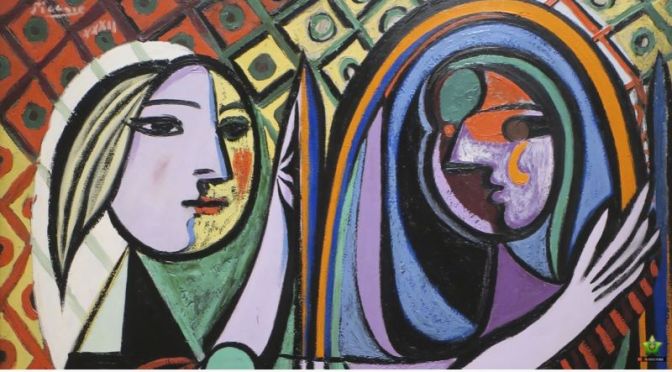
Art: Pablo Picasso’s ‘Girl Before A Mirror’ (Video)

This image of a young woman and her mirror reflection is riotous in color and chockablock with pattern. It is one of the last in a major series of canvases that Picasso created between 1931 and 1932. According to The Museum of Modern Art’s founding director, Alfred H. Barr, Jr., Picasso said he “preferred this painting to any of the others,” which speaks to the painting’s dazzling visual and thematic complexity. Its primary subject is the time-honored artistic theme of a woman before her mirror, reinvented in strikingly modern terms. The girl’s smoothly painted profile, in a delicately blushing pink-lavender, abuts a heavily built-up and garishly colored frontal view in yellow and red. Allusions to youth and old age, sun and moon, light and shadow are compressed into a single multivalent face.

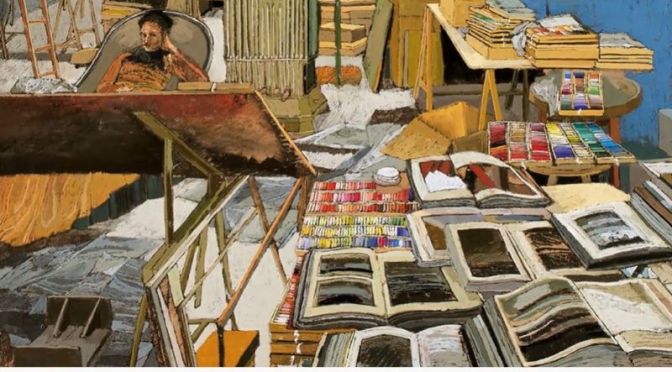
Video Profiles: French Painter Sam Szafran – ‘Dizzying Perspectives’


Contemporary artist Sam Szafran created truly dizzying perspectives in all of his art. In this episode of Expert Voices, discover how his extensive oeuvre often featured the same themes focusing on staircases, his studios and plants. ‘Staircase with a Blue Window’ and ‘Plants with Skylights’ perfectly depict his skill at capturing vertiginous aspects and ‘Atelier de la rue de Crussol’ shows a multitude of hidden details in this captivating work.

Sam Szafran (19 November 1934 – 14 September 2019) was a French artist. He has been buried in the cimetière parisien de Bagneux.

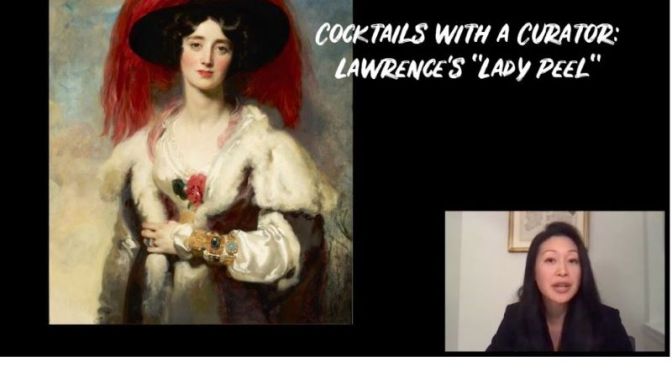
Cocktails With A Curator: Lawrence’s ‘Lady Peel’

In this week’s episode of “Cocktails with a Curator,” Curator Aimee Ng explores the history behind Sir Thomas Lawrence’s celebrated portrait of Julia, Lady Peel. When it was shown at the Royal Academy, in 1827, this painting was hailed as Sir Thomas’s greatest portrait—and one of the great works of modern art at the time.

It’s easy to see why: the sitter projects authority, confidence, and ease despite her flamboyant, over-the-top outfit. Sir Thomas’s depiction of Lady Peel is closely related to Peter Paul Rubens’s famous “Chapeau de Paille,” which had recently entered the collection of her husband, Sir Robert Peel. In recognition of the lavish bracelets and rings worn by the sitter, this week’s complementary cocktail is the Bijou (French for “jewel”).

To view this painting in detail, please visit our website: https://www.frick.org/ladypeel

Art & Jewelry: The Ancient Engraving Of The ‘Cameo’

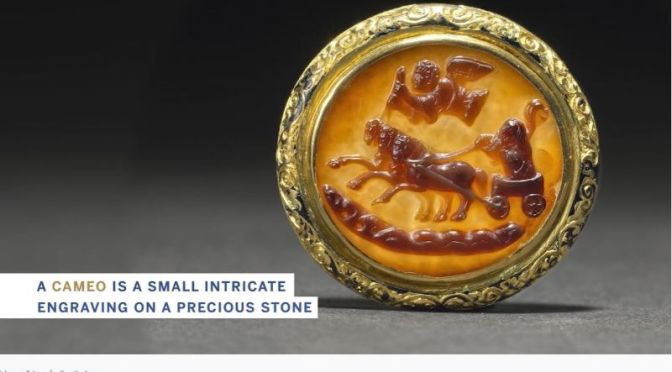
This intricately delicate cameo features a very detailed story of the prophet Elijah ascending to heaven. In this episode of Sotheby’s Stories, discover how this delightful miniature work of art is part of a very small group of rare cameos which feature Hebrew inscriptions. Learn how it was crafted by Jewish artisans in the court of a 13th century Holy Roman Emperor.

Art: ‘Autumn Rhythm’ – Jackson Pollock (Video)

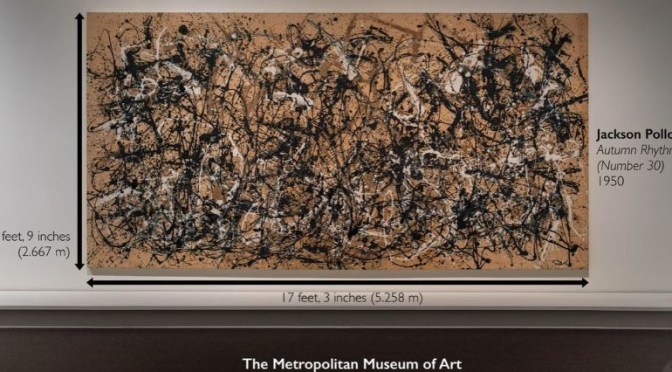
Autumn Rhythm (Number 30) is a 1950 abstract expressionist painting by American artist Jackson Pollock in the collection of the Metropolitan Museum of Art in New York City. The work is a distinguished example of Pollock’s 1947-52 poured-painting style, and is often considered one of his most notable works.

Artworks: ‘The Starry Night’ Viewed Through Van Gogh’s Letters To His Brother Theo (Video)

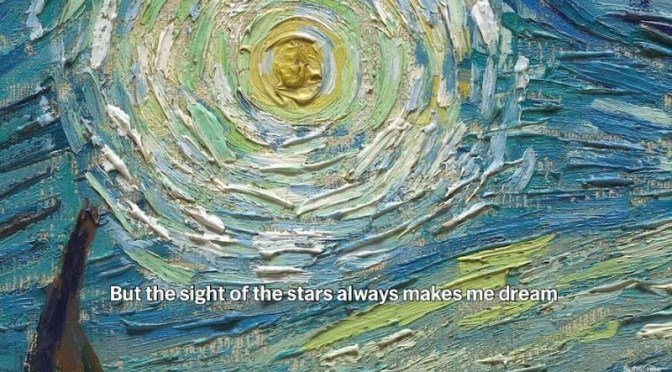
Vincent van Gogh’s “The Starry Night” has been a visitor favorite at MoMA since it first appeared in our Van Gogh retrospective in 1935 and then was acquired in 1939. To become acquainted with the heart and mind of its maker, there is no better source than his letters. Those to his brother Theo, in particular, reveal his deepest aims and convictions, and his pleasures and anxieties, especially during the last year-and-a-half of his life, working in near-isolation from an asylum in St.-Remy.

Learn more at Virtual Views: Vincent van Gogh’s “Starry Night” https://www.moma.org/calendar/exhibit…

Art History: ‘Watercolor In The Renaissance’ (Video)

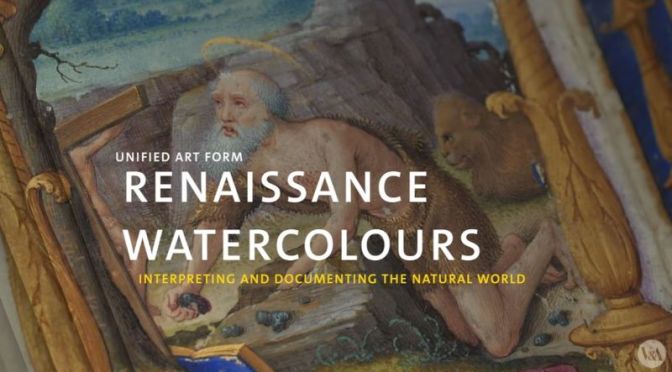
Focussing on the three types of object featured in the V&A display Renaissance Watercolours: illuminated manuscripts, portrait miniatures and coloured drawings, this film showcases the qualities that made watercolour the medium of choice for many artists during the Renaissance.

A modern-day painting of a pomegranate, using traditional watercolour techniques, by artist Lucy Smith, also demonstrates how watercolour painting remains a versatile medium, ideal for capturing life-like details that help us to record our diverse world.

Read more