
Slash, poison, burn. That’s what a leading cancer doctor calls the protocol of  surgery, chemotherapy and radiation. We spend $150 billion each year treating cancer, yet a patient with cancer is as likely to die of it today — with a few exceptions — as one was 50 years ago. Today we spend the hour with renowned cancer doctor, Dr. Azra Raza, author of the new book, “The First Cell: And the Human Costs of Pursuing Cancer to the Last.” She argues that experiments and the funding for eradicating cancer look at the disease when it is in its later stages, when the cancer has grown and spread. Instead, she says, the focus should be on the very first stages — the first cell, as her book is titled. She says this type of treatment would be more effective, cheaper and less toxic.

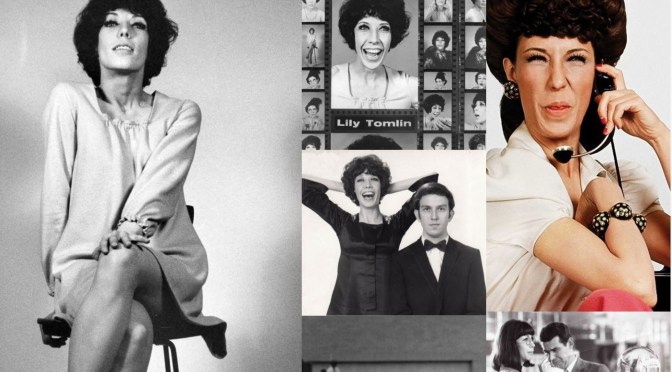
 Has comedy evolved since you started? I think a lot more is allowed. When I was first starting out and was on “Laugh-In,” around ’71, I was trying to keep a low profile when I’d be working on something new.

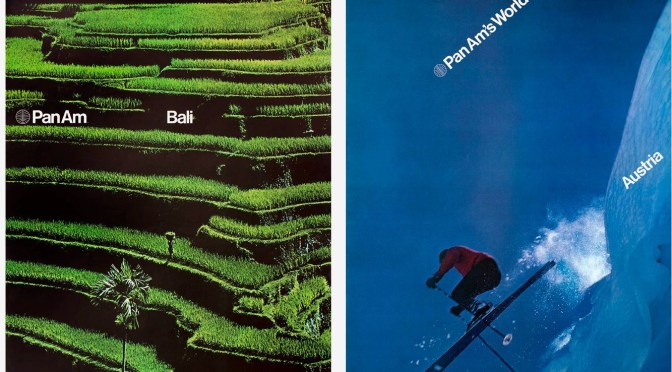
 Moncocle.com spoke with Tom Geismar, founding partner of Chermayeff & Geismar, one of the top graphic design agencies in the world and the man responsible for the marketing of Pan Am in the 1950’s, 60’s and 70’s.
 The most important aspect of the identity design for Pan Am was to suggest that the name of the airline be changed to “Pan Am” from the long and cumbersome “Pan American World Airways.” The Pan Am logotype in capitals and lower-case letters was also adopted with an accompanying world symbol.

 In the house of Helios, god of the sun and mightiest of the Titans, a daughter is born. But Circe is a strange child–not powerful, like her father, nor viciously alluring like her mother. Turning to the world of mortals for companionship, she discovers that she does possess power–the power of witchcraft, which can transform rivals into monsters and menace the gods themselves.
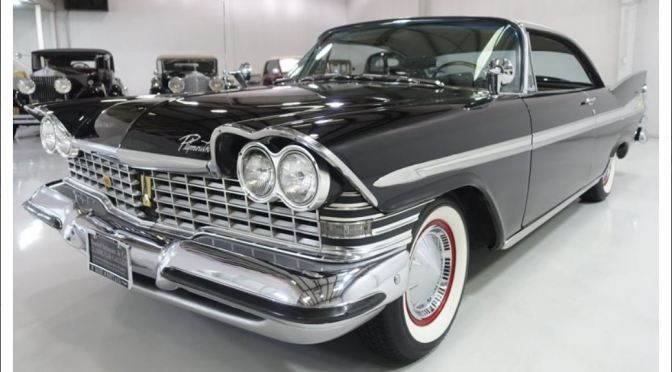
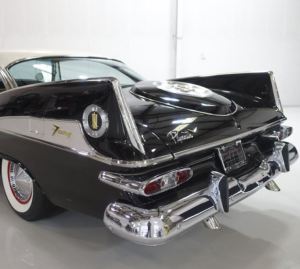 In 1959, Plymouth introduced the Sport Fury as its top model, and the Fury as its second from the top model to replace the Plymouth Belvedere at the top of the Plymouth line-up. The Fury range was now available as a four-door sedan and station wagon, as well as a two-door hardtop and sedan. The Sport Fury series had only a two-door hardtop and convertible. The Sport Fury was dropped at the end of 1959, but was reintroduced in mid-1962 and discontinued in 1971.
 The Plymouth Fury is a model of automobile which was produced by Plymouth from 1955 to 1989. It was introduced for the 1956 model year as a sub-series of the Plymouth Belvedere, becoming a separate series one level above the contemporary Belvedere for 1959. The Fury was a full-size car from 1959 to 1961, then a mid-size car from 1962 to 1964, again a full-size car from 1965 to 1974, and again a mid-size car from 1975 to 1978. From 1975 to 1977 the Fury was sold alongside the full-size Plymouth Gran Fury.