From a London Review of Books online review:
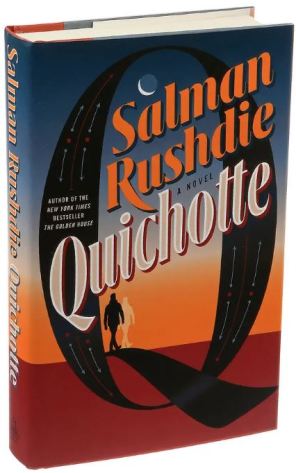 Quichotte opens with a brilliant parody of Cervantes’s first sentence: ‘There once lived, at a series of temporary addresses across the United States of America, a travelling man of Indian origin, advancing years, and retreating mental powers.’ The temporary addresses are a fine revision of Cervantes’s pretending not to remember the name of the place where Quixote lived – literally, he says he doesn’t want to remember. But in spite of this and many other echoes, Quichotte is not all that close to the original Don Quixote in style or mood, and doesn’t seek to be. The leading character chooses his pseudonym because a recording of Massenet’s opera Don Quichotte was his father’s favourite LP, and echoes of the musical Man of La Mancha, with the obligatory ‘impossible dream’, are all over the place.
Cervantes tells us that Don Quixote lost his mind because he read too many romances of chivalry, not all nonsense, as many critics assume, but not models of realism either; yet there are indications, as the novel develops, that Quixote has learned to play at madness, like Hamlet, because it seems to work, because a functioning pretence of knighthood is better than staying at home. Quichotte largely follows the romantic reading of the knight as idealist, whose madness consists of his nobility of spirit and his refusal to believe that the pragmatically possible is an acceptable limit to human behaviour. Rushdie is both mocking and celebrating this posture, and his Quichotte is genuinely ridiculous as well as heroic. He has other sources too, he tells us in his acknowledgments, and both Pinocchio and The Conference of the Birds play a considerable role in the plot. It’s good to see Jiminy Cricket speaking Italian.
To read more: https://www.lrb.co.uk/v41/n17/michael-wood/the-profusion-effect

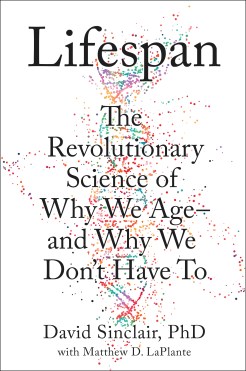 Lifespan, by geneticist David Sinclair and journalist Matthew LaPlante, provides a vision of a not-too-distant future in which living beyond 120 will be commonplace. For Sinclair and LaPlante, the answer lies in understanding and leveraging why we age…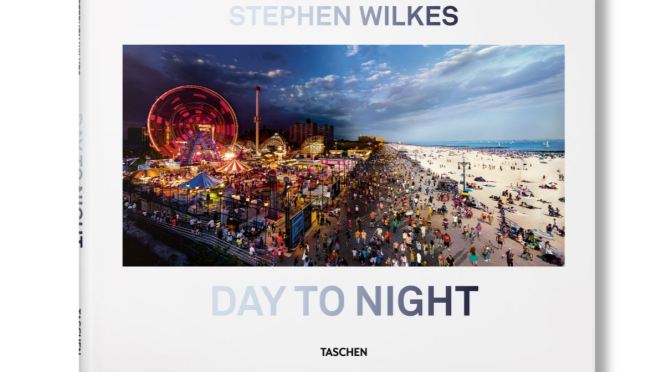
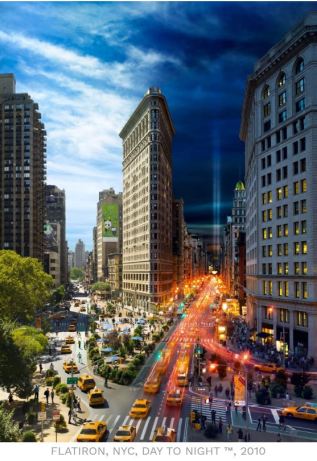 At first glance, Stephen Wilkes’ photographs look like a single moment in time. It is only upon closer inspection that viewers discover that each of his works is actually the result of shooting thousands of photographs from a stationary position over the course of a day and stitching them together digitally to create one cohesive panorama. The painstaking task of editing all of this information and whittling it down into one image can take months to complete, but the results capture a sense of place that can’t be expressed by a single frame alone.
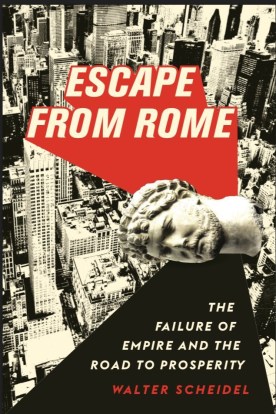 The fall of the Roman Empire has long been considered one of the greatest disasters in history. But in this groundbreaking book, Walter Scheidel argues that Rome’s dramatic collapse was actually the best thing that ever happened, clearing the path for Europe’s economic rise and the creation of the modern age. Ranging across the entire premodern world, Escape from Rome offers new answers to some of the biggest questions in history: Why did the Roman Empire appear? Why did nothing like it ever return to Europe? And, above all, why did Europeans come to dominate the world?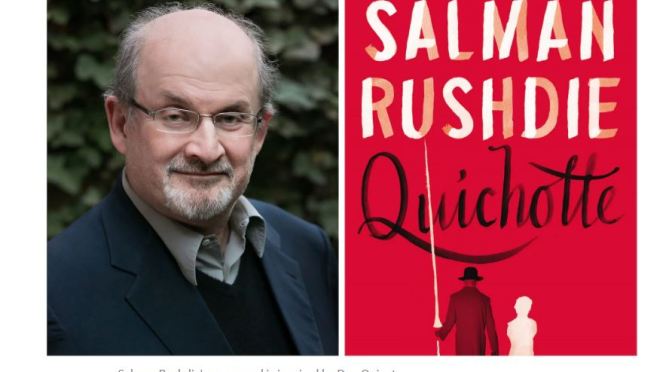
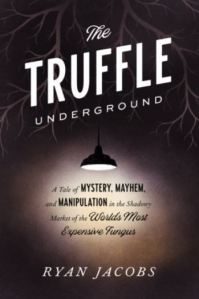 “Asking even seasoned chefs and truffle-industry insiders to describe what the fungus tastes or smells like,” Jacobs writes, “is a bit like asking a priest why he believes in God.” Readers not familiar with the pungent, one-of-a-kind flavor will come away even more intrigued. Those of us whose most frequent encounter with the fabled fungus is through truffle oil will also be disappointed. As Jacobs discovers, nearly all truffle butter and truffle oil sold in America is manufactured using chemicals rather than the real thing.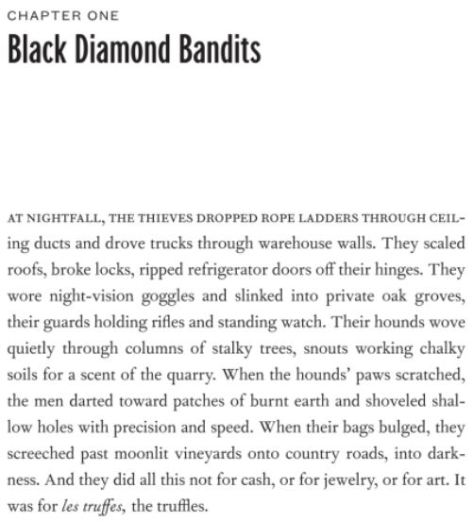
 Intellicurious