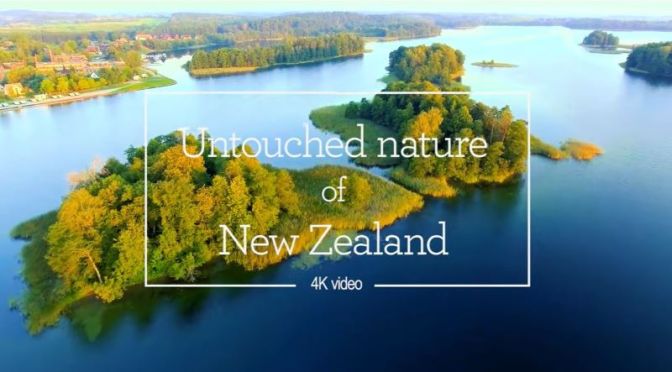
New Zealand is an island country in the southwestern Pacific Ocean. It consists of two main landmasses—the North Island and the South Island —and more than 700 smaller islands, covering a total area of 268,021 square kilometres.
Video timeline: 00:57 – Purakaunui Bay 02:26 – Mount Taranaki 04:21 – Mount Cook 05:41 – Roaring Billy Falls 07:44 – Omarama Clay Cliffs 11:06 – Lake Pukaki 12:26 – Lion Rock and Piha Beach 15:49 – Arthur’s Pass 17:40 – Castlepoint Lighthouse 21:21 – Lake Hawea 23:30 – Skippers Road 26:26 – Glacial valley in Southern Alps 27:52 – Kaikoura Seal Colony 29:04 – Ninety Mile Beach 31:16 – Whakarewarewa geothermal area 36:38 – Queenstown 38:37 – Whangarei Falls
A neuroprosthetic device restores blood-pressure control after spinal-cord injury, and identifying the neurons that help us understand others’ beliefs.
In this episode:
00:47 A neuroprosthetic restores the body’s baroreflex
A common problem for people who have experienced spinal-cord injury is the inability to maintain their blood pressure, which can have serious, long-term health consequences. Now, however, researchers have developed a device that may restore this ability, by stimulating the neural circuits involved in the so-called baroreflex.
Humans are very good at understanding that other people have thoughts, feelings and beliefs that are different to our own. But the neuronal underpinnings of this ability have been hard to unpick. Now, researchers have identified a subset of neurons that they think gives us this ability.
We discuss some highlights from the Nature Briefing. This time, the science of why cats love catnip, and the struggle to identify what the mysterious celestial object StDr 56 actually is.
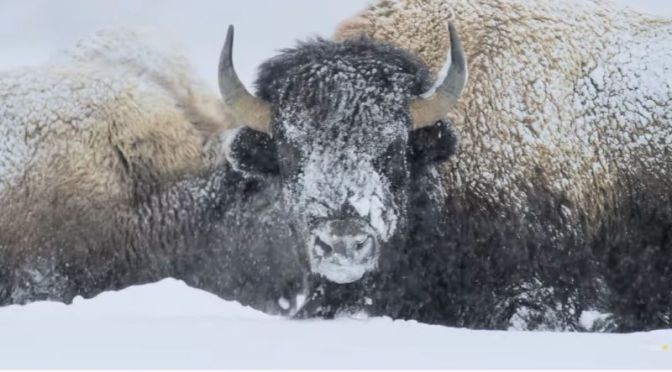
With a dense coat, a powerful mass of muscle and a large head ideally suited for clearing away snow and locating buried grass, bison are built for frigid conditions in Yellowstone. If it wasn’t for a hidden herd in the deepest reaches of this National Park, bison would have been wiped out in the late 1800s. Today, thousands of them thrive.
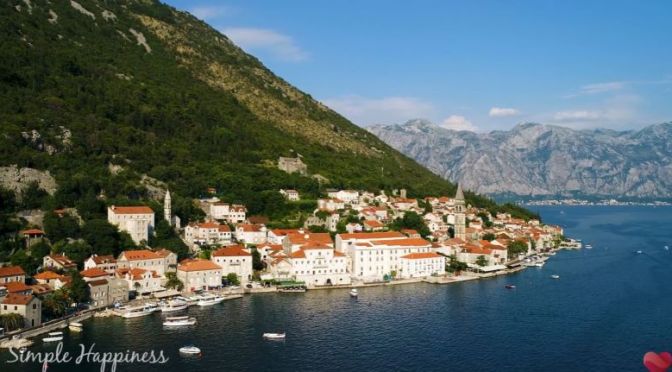
Montenegro is a Balkan country with rugged mountains, medieval villages and a narrow strip of beaches along its Adriatic coastline. The Bay of Kotor, resembling a fjord, is dotted with coastal churches and fortified towns such as Kotor and Herceg Novi. Durmitor National Park, home to bears and wolves, encompasses limestone peaks, glacial lakes and 1,300m-deep Tara River Canyon.
“Draw up your travel plan on a large scale – and let yourself be carried away by the colorful hour in detail. The greatest attraction there is is the world – take a look at it!” Kurt Tucholsky
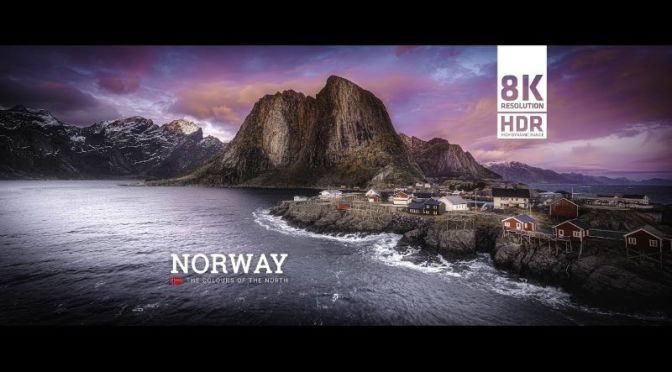
In the months when the hours of sunshine are shortest in the north, shortly before and after the never-ending polar night, Norway shows itself in the most beautiful colors. Whether it’s the sunrises that turn into sunsets or the northern lights that color the sky, it’s far less dreary and gray than we sometimes imagine.
Discover the land of the northern lights with its fjords and mountains in the south, the magical archipelago of Lofoten, the incredibly beautiful Senja and the endless fjords and islands around Tromsø. Recorded with cameras in a resolution of over 8k and finished in HDR (High Dynamic Range / HDR 10). The video looks best on real ultra high definition HDR display.
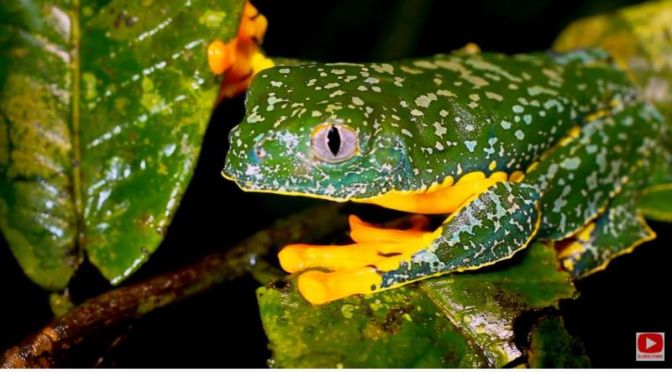
Reptiles are a class of vertebrates made up mostly of snakes, turtles, lizards, and crocodilians. These animals are most easily recognized by their dry, scaly skin. Almost all reptiles are cold-blooded, and most lay eggs—though some, like the boa constrictor, give birth to live young. Instead of possessing gills like fish or amphibians, reptiles have lungs for breathing.
As it has been a long time since our last release, and because big things are on the way, we are starting a new series of short documentaries based on the stunning nature around northern Norway. It is also a way for us to flag the current saddening state of the Arctic and how climate change is affecting it more / faster than any other part or the world.
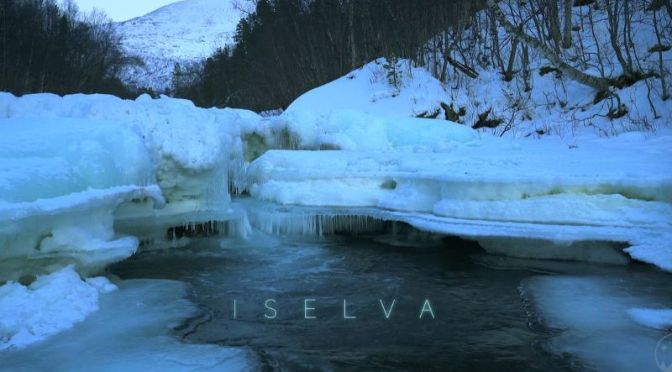
This series of clips were taken in Målselva, Norway on January 10th 2020. Typically at this time of year and around that inland area, temperature are much colder and rivers are dormant, buried under feet of snow. This year, however, is a total different story. For the past years, we’ve been seeing a general trend with much milder, later winters with very little snow until February. This year, Tromsø has had zero centimeters thus far, which is quite alarming. Rivers should barely be running or visible.
The Målselva is a river in Målselv Municipality in Troms og Finnmark county, Norway. The 140-kilometre (87 mi) long river flows through the Målselvdalen valley and then empties into the Målselvfjorden, an arm of the Malangen fjord. The municipality and the valley through which the river runs are both named after the river.
DNA clues point to how dire wolves went extinct, and a round-up of the main impacts of Brexit on science.
In this episode:
00:45 Dire wolf DNA
Dire wolves were huge predators that commonly roamed across North America before disappearing around 13,000 years ago. Despite the existence of a large number of dire wolf fossils, questions remain about why this species went extinct and how they relate to other wolf species. Now, using DNA and protein analysis, researchers are getting a better understanding of what happened to these extinct predators.
In December, a last minute trade-deal between the UK and EU clarified what the future relationship between the two regions would look like, after Brexit. We discuss the implications of this trade-deal for science funding, the movement of researchers, and data sharing.
We discuss some highlights from the Nature Briefing. This time, concerns about contaminating water on the moon, and the spy satellites that spied out environmental change.
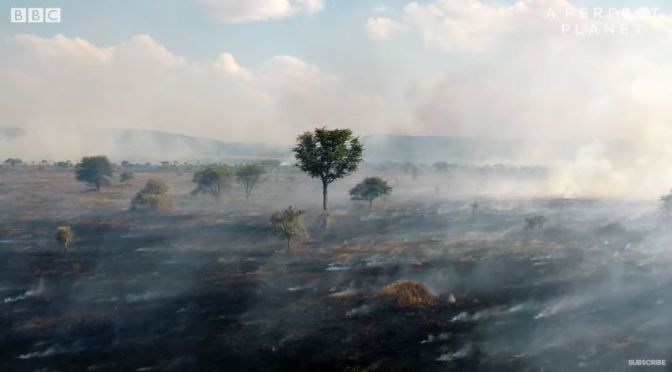
After receiving twelve hours of solar energy every day, the Serengeti grasslands become a tinderbox, just waiting to be lit.
The vast majority of the African fires currently burning seem to be in grasslands, in exactly the places we expect to see fires at this time of year. These fires are usually lit by cattle farmers as part of their traditional management of the savannahs where their animals graze. Some fires are started to stimulate new growth of nutritious grass for their animals, others are used to control the numbers of parasitic ticks or manage the growth of thorny scrub.
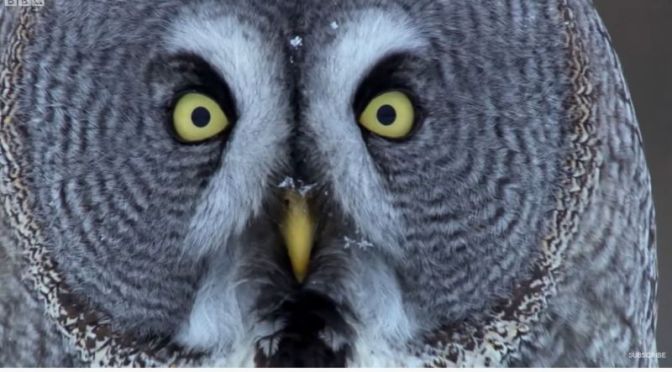
With the ability to fly silently and detect prey with stunning accuracy, owls are master aerial predators. Enjoy this selection of owl moments taken from the BBC Earth library.
News, Views and Reviews For The Intellectually Curious