
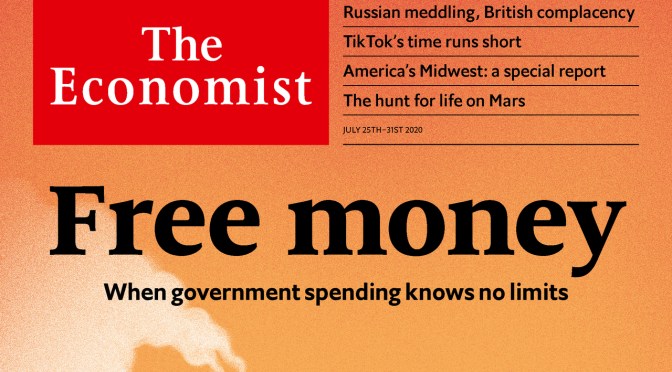
A selection of three essential articles read aloud from the latest issue of The Economist. This week, the new era of macroeconomics; (9:25) the EU after striking a huge deal; (17:00) and the challenges for Mexico as its youth departs.
Tag Archives: Economics
Economics: “How Energy Prices Got So Cheap” (WSJ)
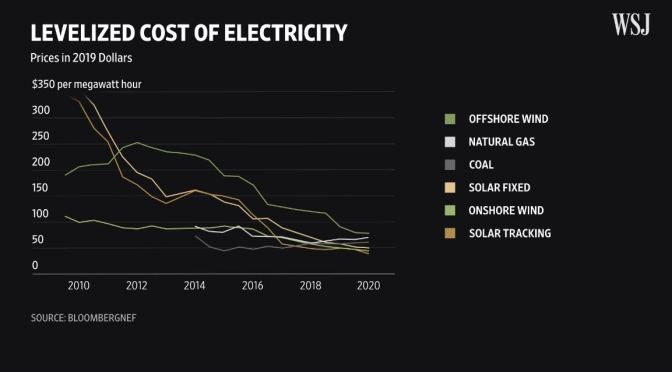
An abundance of fossil fuels combined with advances in technology to harness wind and solar power has sent energy prices crashing around the world. WSJ explains how it all happened at once.
Photo illustration: Carlos Waters/WSJ
Morning News Podcast: Congress Debates Relief Package, Covid-19 In 40 States & Portland Police
 Lawmakers are back on the hill negotiating the next trillion dollar relief package for the struggling economy. Meanwhile, COVID-19 cases surge in 40 states. Finally, an update on the clash between protesters and police in Portland, Oregon.
The Economy: “What Will The Recovery Look Like?”
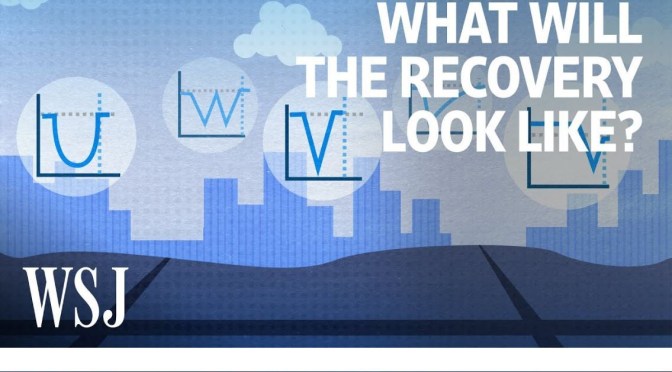
 Economists have long used letters of the alphabet like V and U to describe economic recoveries. But the coronavirus downturn is so different from past recessions that economists are coming up with new shapes to describe the potential recovery. WSJ explains.
Illustration: Jacob Reynolds
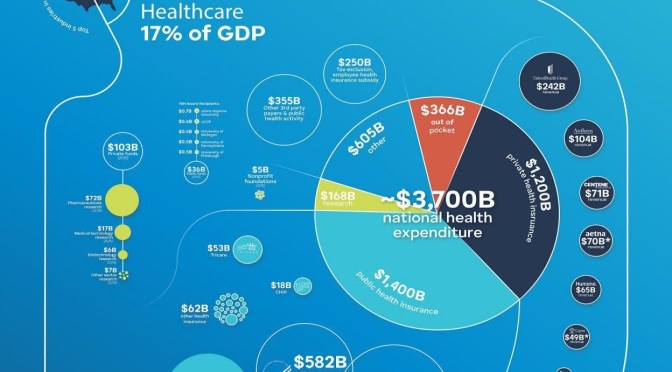
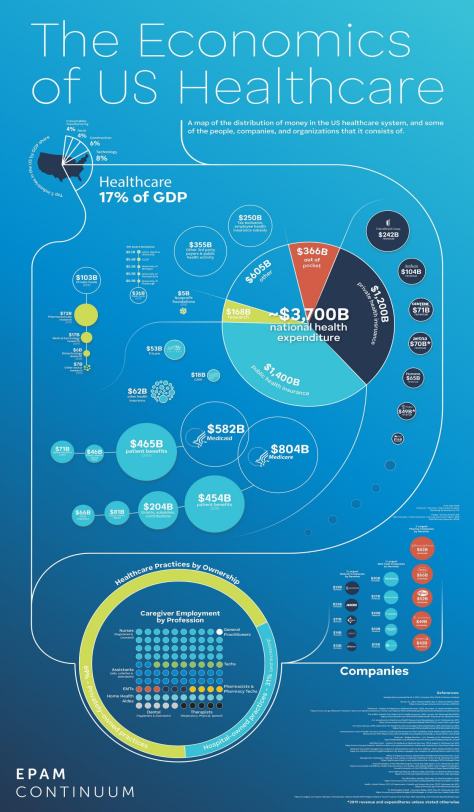
Infographic: “The Economics Of U.S. Healthcare” In 2020
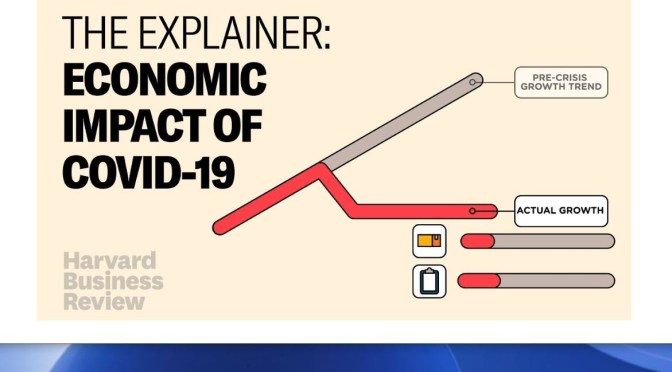
Business: “Understanding The Economic Impact Of Covid-19” (Harvard)
Predicting the path ahead has become nearly impossible, but we can speculate about the size and scale of the economic shock. Economic contagion is now spreading as fast as Covid-19 itself. Social distancing, intended to physically disrupt the spread, has severed the flow of goods and people, stalled economies, and is in the process of delivering a global recession.
Predicting the path ahead has become nearly impossible, as multiple dimensions of the crisis are unprecedented and unknowable. Pressing questions include the path of the shock and recovery, whether economies will be able to return to their pre-shock output levels and growth rates, and whether there will be any structural legacy from the coronavirus crisis.
This Explainer explores several scenarios to model the size and scale of the economic shock and the path ahead.
Based on the HBR article by Philipp Carlsson-Szlezak, Martin Reeves and Paul Swartz
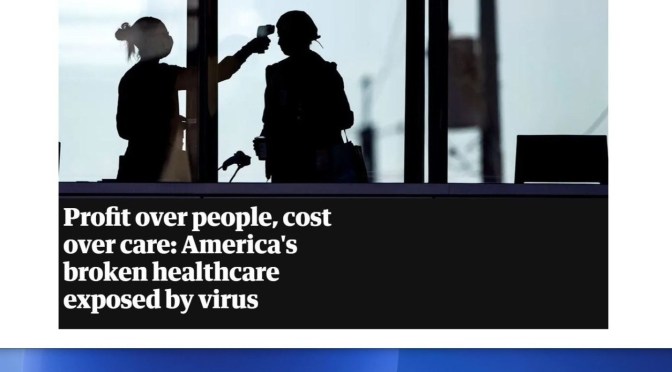
Medical Economics: Virus Exposes America’s “Broken Healthcare System” (2020)
From The Guardian (April 16, 2020):
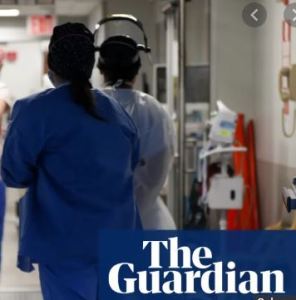 “As this epidemic makes clear, at any moment, any of us could become sick, could become hospitalized, could be on a mechanical ventilator,” said Adam Gaffney, an ICU doctor in Boston. “And that, in the United States, could mean potentially ruinous healthcare costs.”
With over 21,000 people dead and more than a 547,000 infected with the coronavirus in the US the last question on a person’s mind should be how they will pay for life-saving treatment.
There were 27.9 million people without health insurance in 2018, and record-high unemployment will increase that figure by millions
But as the death toll mounted, a patient who was about to be put on a ventilator in one of New York City’s stretched to capacity intensive care units had a final question for his nurse: “Who’s going to pay for it?”
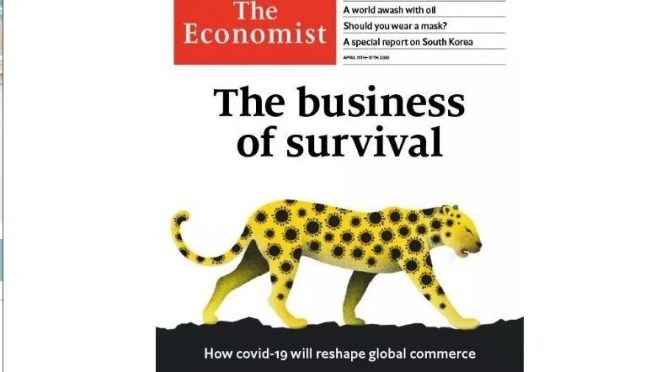
Post-Pandemic: Reopening Companies Into The New Reality (The Economist)
 A selection of three essential articles read aloud from the latest issue of The Economist. This week, the business of survival—those companies that survive the coronavirus crisis will need to master a new environment. Plus, how to reopen factories after covid-19 (9:23) and Venezuela’s navy battles a cruise ship, and loses (17:41).
Podcasts: How Foreign Governments Are Facing Covid-19 (The Economist)
A selection of essential articles read aloud from the latest issue of The Economist. This week, the role of big government in the time of covid-19, (10:20) assessing the havoc the pandemic is causing in emerging countries, (17:45).
In just a few weeks a virus a ten-thousandth of a millimetre in diameter has transformed Western democracies. States have shut down businesses and sealed people indoors. They have promised trillions of dollars to keep the economy on life support. If South Korea and Singapore are a guide, medical and electronic privacy are about to be cast aside. It is the most dramatic extension of state power since the second world war.
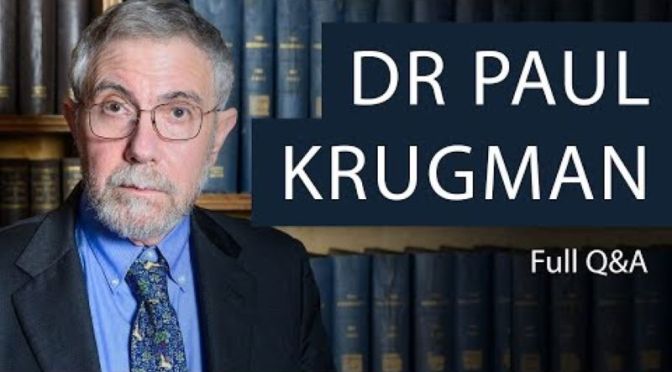
Video Interviews: Nobel Prize Economist Paul Krugman (Oxford Union)
Dr. Paul Krugman is a Nobel Prize-Winning economist, and a regular commentator for the New York Times. Though academically recognised for his contributions to international trade theory, he writes about a wide range of economic issues, and is well known for making economic theory accessible to non-academics through his columns and numerous popular books. A liberal, Dr. Krugman is a fierce opponent of the modern Republican party, though he previously served as an economic advisor in Reagan’s White House.
ABOUT THE OXFORD UNION SOCIETY: The Oxford Union is the world’s most prestigious debating society, with an unparalleled reputation for bringing international guests and speakers to Oxford. Since 1823, the Union has been promoting debate and discussion not just in Oxford University, but across the globe.

