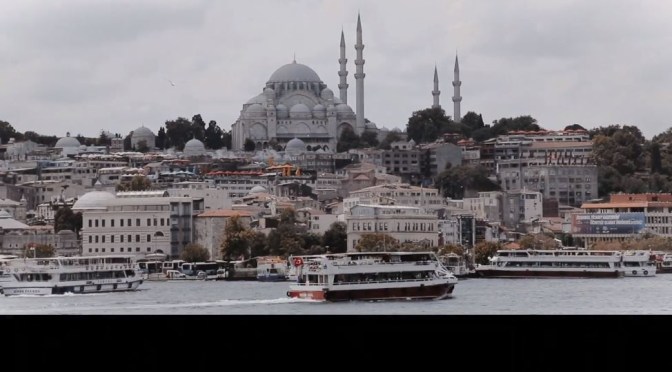
Istanbul, formerly known as Byzantium and Constantinople, is the most populous city in Turkey and the country’s economic, cultural and historic center. Istanbul is a transcontinental city in Eurasia, straddling the Bosporus strait (which separates Europe and Asia) between the Sea of Marmara and the Black Sea. Its commercial and historical center lies on the European side and about a third of its population lives in suburbs on the Asian side of the Bosporus. With a total population of around fifteen million residents in its metropolitan area, Istanbul is one of the world’s largest cities, ranking as the world’s fifth-largest city proper and the largest city in Europe.
For years, Silk Road travelers made the grueling trek past towering mountain ranges and ancient cities now lost to time. Centuries later, one writer attempts to retrace the journey.
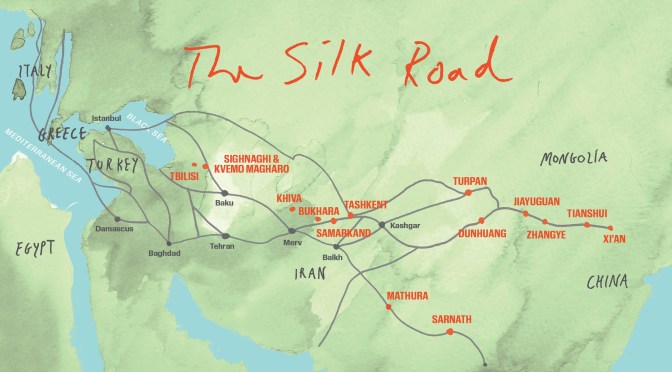
This year, T’s spring Travel issue is devoted to just five stories, each an account of its writer’s journey along a different section of the Silk Road — the ancient network of trade routes that until the 15th or 16th century spanned some 4,000 miles of the globe, from Central Asia across the Middle East to Southern Europe, and formed a vital conduit for both new commodities and new ideas. While venturing to faraway places might seem like a distant possibility now, a year after this issue began to take shape, as we reckon with the global pandemic, these pieces are a powerful reminder of our innate desire to move and explore.
With this video, I want you to explore in ultra-high definition and through the technique of Timelapse, the incredible and variety of landscapes in this almost unknown country in Central Asia.
During the first part of the trip I explored with Visit Karakol and landscape photographers, Albert Dros, the south region around Lenin Peak, Arslanbob and Sary-Chelek, in the second part I hiked few days around Karakol Valley, visiting Ala-Kul an alpine lake at 3.500m and Sary-Jaz Valley close to China’s borders. My goal with this film is to inspire you to visit and explore this beautiful country, so I hope you will enjoy it as much as I enjoyed working on it.
Kyrgyzstan, officially the Kyrgyz Republic and also known as Kirghizia, is a country in Central Asia. Kyrgyzstan is a landlocked country with mountainous terrain. It is bordered by Kazakhstan to the north, Uzbekistan to the west and southwest, Tajikistan to the southwest and China to the east.
Lara Lee, the author of the new cookery book ‘Coconut & Sambal’, shares one of her favourite recipes.
About Coconut & Sambal
Be transported to the bountiful islands of Indonesia by this collection of fragrant, colourful and mouth-watering recipes.
‘An exciting and panoramic selection of dishes and snacks’
– Fuchsia Dunlop, author of The Food of Sichuan
‘Start with Lara’s fragrant chicken soup, do lots of exploring on the way whilst dousing everything with spoonfuls of sambal, and end with her coconut and pandan sponge cake’
– Yotam Ottolenghi, author of SIMPLE
Coconut & Sambal reveals the secrets behind authentic Indonesian cookery. With more than 80 traditional and vibrant recipes that have been passed down through the generations, you will discover dishes such as Nasi goreng, Beef rendang, Chilli prawn satay and Pandan cake, alongside a variety of recipes for sambals: fragrant, spicy relishes that are undoubtedly the heart and soul of every meal.Lara uses simple techniques and easily accessible ingredients throughout Coconut and Sambal, interweaving the recipes with beguiling tales of island life and gorgeous travel photography that shines a light on the magnificent, little-known cuisine of Indonesia.
What are you waiting for? Travel the beautiful islands of Indonesia and taste the different regions through these recipes.
Discover Japan Series 3nd: This is an 8K Timelapse and Hyperlapse video that I shot in Japan for about two years. Japan has experienced many earthquakes, disasters, and wars. And we have overcome the challenges each time. And now I’m being influenced by COVID-19. Japan is moving toward a new era. I expressed this feeling as an 8K image.
Comprised of 21 units of OPod Tube Houses, stack on 2 levels, the project is deployed on an unused urban plot in To Kwa Wan District of Hong Kong. Being a modular and flexible architecture, OPod Housing No.1 is able to be set up in less than 3 months, providing accommodation to 20 sets of residents with shared common kitchen and a co-living courtyard.
OPod Housing No.1 is social housing project providing accommodation to citizens of Hong Kong struggling to afford housing.
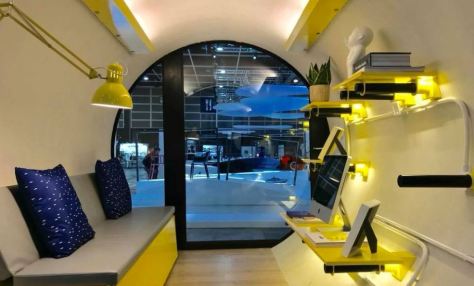
Each OPod Tube House is 140 sq.ft in size with private toilet and shower, food preparation area and living room with sofa bed. To facilitate a modern sustainable lifestyle, the OPod Tube Houses are equiped with wifi and home automation for better management of resources. The project is scheduled to complete construction and open in 2020.
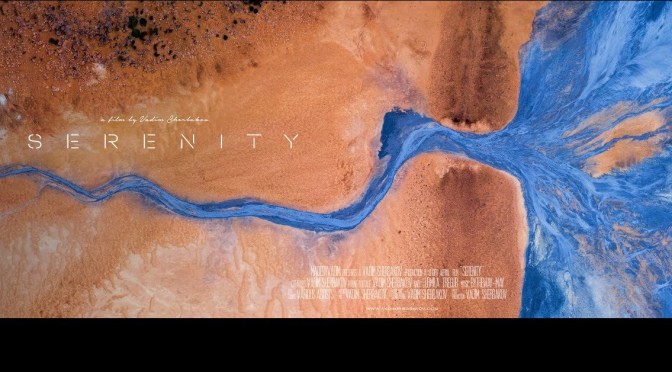
“Serenity” is a non-narrative short drone film, produced with the unique camera angle, facing straight down at -90º at the wonderful texture of earth landscapes. Because of this and the subjects it captures, you can watch this film both horizontally or vertically. Here is a horizontal version, but you can see the vertical one, on my Instagram or IGTV.
The film itself is a 3 minutes blend of total tranquility and calmness that allows you to escape reality for just a short while. Shot in different places on earth such as Iceland, Norway, Spain, Portugal, Belarus and Russia, it shows the unique and gorgeous landscape at an unusual angle. So bring up the volume or put on headphones and immerse in it.
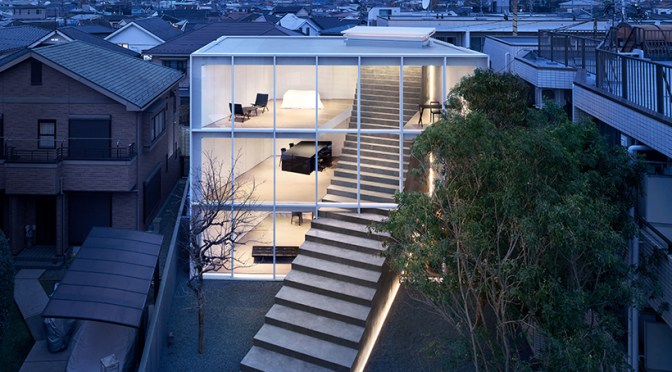
…a stairway and greenery gently connected the upper and lower floors along a diagonal line, creating a space where all three generations could take comfort in each other’s subtle presence. Not only does the stairway connect the interior to the yard, or bond one household to another, this structure aims to expand further out to join the environs and the city —connecting the road that extends southward on the ground level, and out into skylight through the toplight.
A two-family home in a quiet residential area of Tokyo. With other houses and apartment buildings pressing around the site, the architectural volume was pushed to the north to take in daylight, ventilation, and greenery of the yard into the living environment by a large glass front southern façade. The layout plan made it possible to preserve the existing persimmon tree beloved by the previous generations. Considering the potential difficulties of going up and down the stairs, the rooms for the older couple were arranged on the 1st floor. The eight cats living with the older couple roam in and outdoors more freely, and encourages the mother to enjoy her hobby of gardening more freely. The younger couple and their child reside on the 2nd and 3rd floors. To avoid the two households being completely separated at the top and bottom, a “stairway-like” structure was designed in the south yard, continuing upward into the building and penetrating the 1st through 3rd floors. Enclosed inside the “stairway” are functional elements, such as bathrooms and a staircase for actual use, with the upper part taking on the look of a semi-outdoor greenhouse with abundant greenery as well as a sun-soaked perch for the cats to enjoy climbing.
Charmaine Chan, design editor for ‘South China Morning Post’ believes that courtyards offer an excellent urban solution to domestic solitude. She explains how they can be hubs of community and calm.
Courtyards have long played an important function in residential design, regulating light, shade, and the use of space. With thousands of years of tradition as inspiration, contemporary architects are now realizing courtyard living afresh. This lavish survey of twenty-five residences across the Asia-Pacific region features homes from Australia, Taiwan, Malaysia, Indonesia, Thailand, the Philippines, Singapore, India, Vietnam, and Sri Lanka.
Structured by courtyard function, the book’s five chapters—on privacy; multigenerational living; sightlines; light and ventilation; and living with nature—are richly illustrated with photography and architectural illustrations showing courtyard positions within floor plans.
Showcasing the unique lifestyle opportunities afforded by contemporary courtyard design, this is an inspirational resource for anyone interested in indoor-outdoor living.
Charmaine Chan is Design Editor at the South China Morning Post. She began her journalism career in Sydney, pursued it in Tokyo and moved to Hong Kong in 1997 to join the Post. Her writing focuses on design and architecture in Asia.




 Lara Lee, the author of the new cookery book ‘Coconut & Sambal’, shares one of her favourite recipes.
 Be transported to the bountiful islands of Indonesia by this collection of fragrant, colourful and mouth-watering recipes.

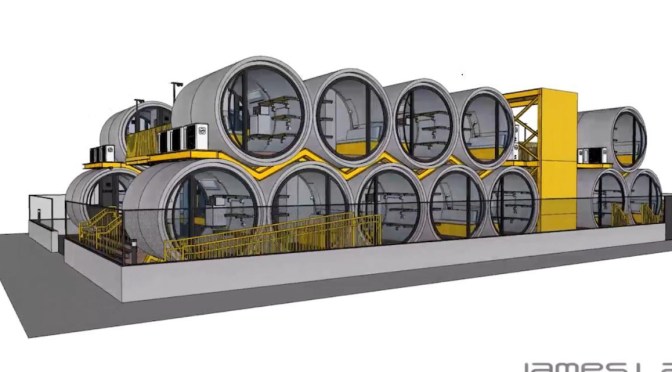
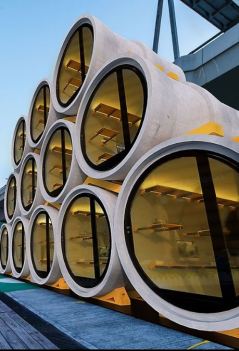 Comprised of 21 units of OPod Tube Houses, stack on 2 levels, the project is deployed on an unused urban plot in To Kwa Wan District of Hong Kong. Being a modular and flexible architecture, OPod Housing No.1 is able to be set up in less than 3 months, providing accommodation to 20 sets of residents with shared common kitchen and a co-living courtyard.
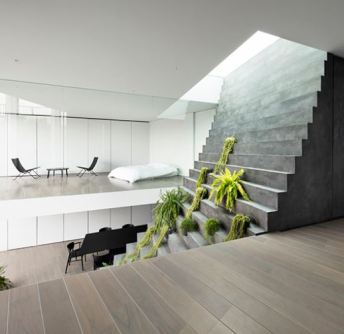 …a stairway and greenery gently connected the upper and lower floors along a diagonal line, creating a space where all three generations could take comfort in each other’s subtle presence. Not only does the stairway connect the interior to the yard, or bond one household to another, this structure aims to expand further out to join the environs and the city —connecting the road that extends southward on the ground level, and out into skylight through the toplight.
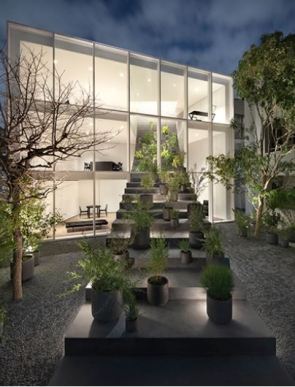 A two-family home in a quiet residential area of Tokyo. With other houses and apartment buildings pressing around the site, the architectural volume was pushed to the north to take in daylight, ventilation, and greenery of the yard into the living environment by a large glass front southern façade. The layout plan made it possible to preserve the existing persimmon tree beloved by the previous generations. Considering the potential difficulties of going up and down the stairs, the rooms for the older couple were arranged on the 1st floor. The eight cats living with the older couple roam in and outdoors more freely, and encourages the mother to enjoy her hobby of gardening more freely. The younger couple and their child reside on the 2nd and 3rd floors. To avoid the two households being completely separated at the top and bottom, a “stairway-like” structure was designed in the south yard, continuing upward into the building and penetrating the 1st through 3rd floors. Enclosed inside the “stairway” are functional elements, such as bathrooms and a staircase for actual use, with the upper part taking on the look of a semi-outdoor greenhouse with abundant greenery as well as a sun-soaked perch for the cats to enjoy climbing.
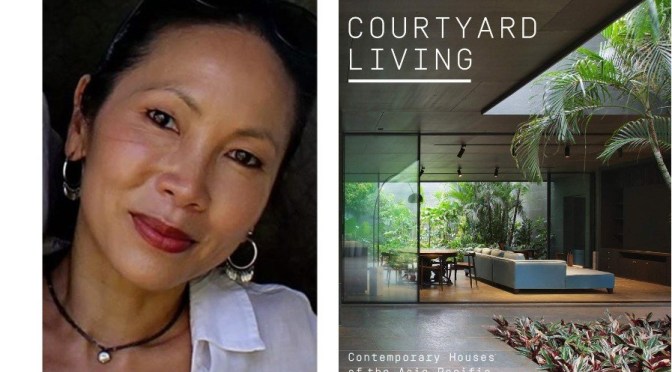
 Charmaine Chan, design editor for ‘South China Morning Post’ believes that courtyards offer an excellent urban solution to domestic solitude. She explains how they can be hubs of community and calm.
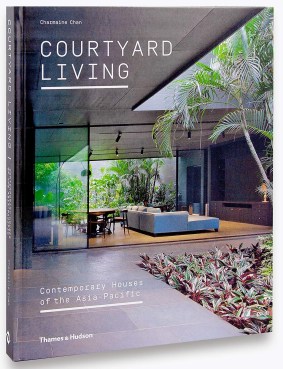 Courtyards have long played an important function in residential design, regulating light, shade, and the use of space. With thousands of years of tradition as inspiration, contemporary architects are now realizing courtyard living afresh. This lavish survey of twenty-five residences across the Asia-Pacific region features homes from Australia, Taiwan, Malaysia, Indonesia, Thailand, the Philippines, Singapore, India, Vietnam, and Sri Lanka.

