
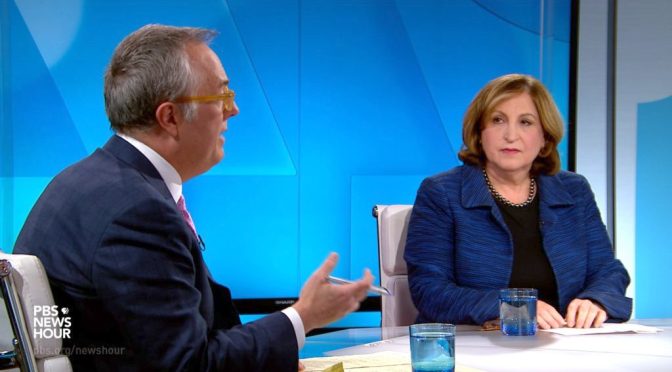
 Washington Post columnist Ruth Marcus and syndicated columnist Michael Gerson join Amna Nawaz to analyze the week’s political news, including details emerging from witness depositions in the impeachment inquiry about President Trump’s dealings with Ukraine, current public opinion on Trump and impeachment and 2020 campaign updates, including the withdrawal of Democrat Beto O’Rourke.

Top Travel Videos: “Nosy Lehibe” In Madagascar By Tom Peyrat (2019)
Filmed, Edited and Directed by: Tom Payrat

Nosy Lehibe means “Big Island” in Malagasy.
This is kind of what I felt during my holidays in Madagascar. This is certainely one of the most exciting thing I saw and I try to resume it in 2 minutes.
I decided to edit in an optimistc way despite what you can hear about this island. I choosed this point of view cause Malagasy people transmitted to me their strenght and their way of life.

Some sounds were recorded directly. For example what you can hear at 1:12 is the yell of the biggest lemur, the Indri Indri. Their yell can be heard from 5 km !

On Aging: A Look At Friendships “Changing” At The End Of Life (Atlantic)
From a The Atlantic online article:
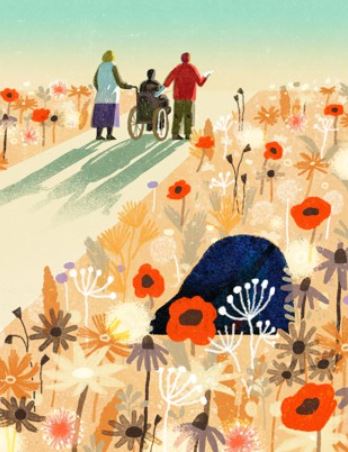 Being with people at the end of life is very intense work. You are regularly seeing a part of life that a lot of people don’t see, or see very rarely. How do you feel that affects your relationships generally and your friendship specifically?
People become frightened at the end of life. Sometimes I see them moving away from friends as they get sicker. Once people get past that fear of what’s going on, they can be friends again.
Every week, The Friendship Files features a conversation between The Atlantic’s Julie Beck and two or more friends, exploring the history and significance of their relationship.
This week, she talks with two women who met through the nontheistic religion of Ethical Culture and have spent a significant amount of time ministering to aging and dying members of their congregation. They discuss how friendship changes at the end of life, and how they work to foster connection and community for members of all ages.
To read more: https://www.theatlantic.com/family/archive/2019/11/how-friendship-changes-end-life/601204/
Book Review Podcasts: Thomas Edison, Celebrity Memoirs And Latest Book Club Reads (NY Times)
 The acclaimed biographer Edmund Morris died earlier this year, at 78, before he could see the publication of his new book, “Edison,” about the brilliant and prolific inventor. David Oshinsky, who reviewed the biography for us, visits the podcast this week to discuss Morris and Edison.
Tina Jordan is on this week’s episode, discussing three new celebrity memoirs, by Demi Moore, Julie Andrews and Carly Simon. “Of the three, the Demi Moore stood out,” Jordan says, “because I’m not used to seeing a book that frank in an era where 99.9 percent of our celebrity memoirs are just vapid.”

Health Care Costs: $250+ Per Visit “Facility Fees” Increasingly Charged By Medical Practices
From a New York Times online article:
 For new patients, whose visits entail more work than those of established patients, facility fees typically range from $131 to $322 per visit; for established patients, they are slightly lower. In surgical centers and free-standing emergency rooms, the facility fee can be thousands of dollars.
A facility fee is an additional charge that some medical practices can add to the cost of each doctor visit. The additional charge usually comes as a surprise because, unlike an exam or a test or treatment, the facility fee is not tied directly to hands-on care.
The purpose of the facility fee is to compensate hospitals for the expense of maintaining the physical premises. Hospital-owned, off-campus medical practices are also allowed to charge the facility fee to cover specific regulatory requirements, such as building codes, disaster preparedness, equipment redundancy and other items that are largely invisible to patients.
To read more: https://www.nytimes.com/2019/11/01/well/live/why-was-my-doctor-visit-suddenly-so-expensive.html
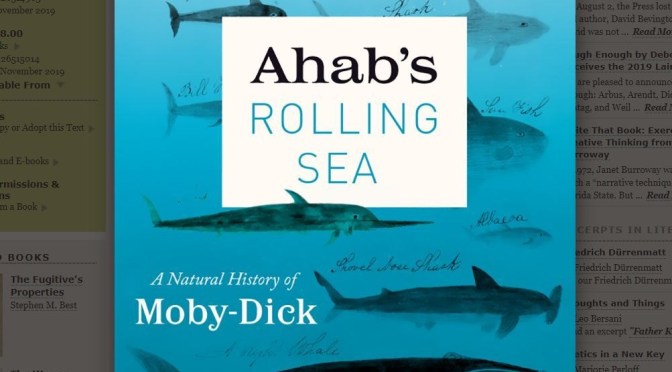
Best New Books: “Ahab’s Rolling Sea – A Natural History Of Moby-Dick” By Richard J. King
From a University of Chicago Press review:
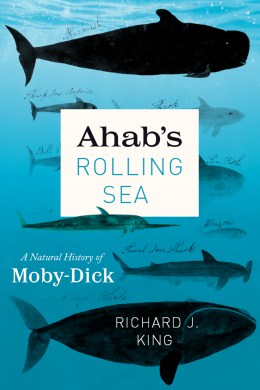 A revelation for Moby-Dick devotees and neophytes alike, Ahab’s Rolling Sea is a chronological journey through the natural history of Melville’s novel. From white whales to whale intelligence, giant squids, barnacles, albatross, and sharks, Richard J. King examines what Melville knew from his own experiences and the sources available to a reader in the mid-1800s, exploring how and why Melville might have twisted what was known to serve his fiction. King then climbs to the crow’s nest, setting Melville in the context of the American perception of the ocean in 1851—at the very start of the Industrial Revolution and just before the publication of On the Origin of Species.
Featuring a coffer of illustrations and an array of interviews with contemporary scientists, fishers, and whale watch operators, Ahab’s Rolling Sea offers new insight not only into a cherished masterwork and its author but also into our evolving relationship with the briny deep—from whale hunters to climate refugees.
Website: https://www.press.uchicago.edu/ucp/books/book/chicago/A/bo27616248.html
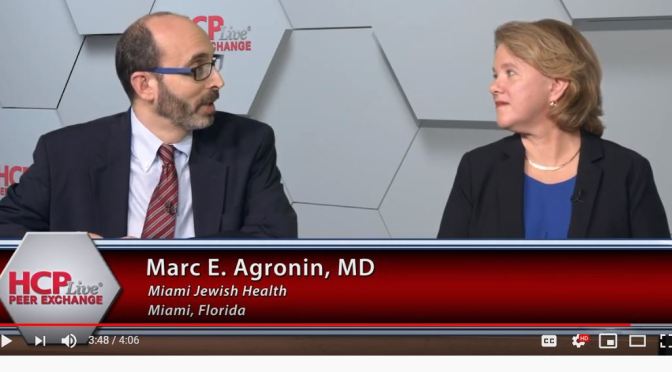
Health Care Videos: “Aging And Alzheimer’s Disease” (MD Magazine)
Factors that can help clinicians distinguish signs of normal aging versus Alzheimer disease.
Website: https://www.mdmag.com/peer-exchange/early-diagnosis-dementia/aging-and-alzheimer-disease
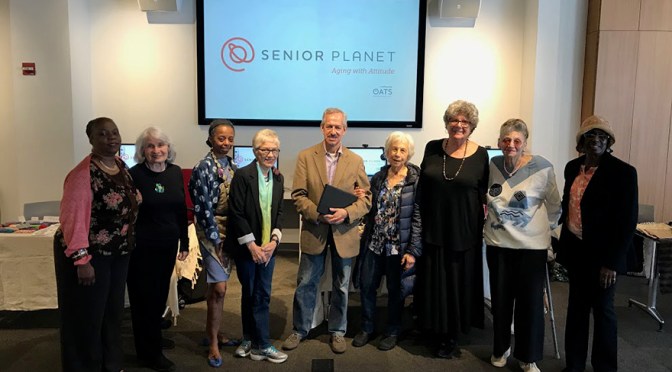
Retirement: Older Adults Upgrade Their Skills To Become Entrepreneurs (PBS Newshour Podcast)
 Entrepreneurs are often imagined as twenty-something recent college dropouts. But in fact, people ages 45 to 64 start businesses at higher rates than do their younger peers — and plenty of seniors are in startup mode, too. Economics correspondent Paul Solman visits a New York City center that helps older adults upgrade their technology skills and realize their entrepreneurial dreams.
Top Science Podcasts: AI Beats Humans At A Video Game, Arthropods In Decline (Nature)
 Hear the latest science news, with Benjamin Thompson and Shamini Bundell. This week, a computer beats the best human players in StarCraft II, and a huge study of insects and other arthropods.
In this episode:
00:51 Learning to play
By studying and experimenting, an AI has reached Grandmaster level at the video game Starcraft II. Research Article: Vinyals et al.; News Article: Google AI beats experienced human players at real-time strategy game StarCraft II
10:08 Research Highlights
A record-breaking lightning bolt, and identifying our grey matter’s favourite tunes. Research Highlight: Here come the lightning ‘megaflashes’; Research Highlight: Why some songs delight the human brain
12:24 Arthropods in decline
Researchers have surveyed how land-use change has affected arthropod diversity. Research article: Seibold et al.
18:30 News Chat
Young Canadians file a lawsuit against their government, an Alzheimer’s drug gets a second chance, and South Korean efforts to curb a viral epidemic in pigs.

Timelapse Travel Videos: “Chicago” By Jay Anne Boza
I spent a couple of days compiling clips of Chicago and put it all together into one minute. This is a combination of Time Lapse, Hyperlapse and Video created using Nikon, Timelapse Plus, Syrp Genies and Osmo Pocket. Locations are The Chicago Cultural Center, The Flamingo at the Federal Building, The Bean, the Chicago Skyline from the Planetarium, the Chicago “L” train, and sunrise from the Sheraton Grand Hotel.

