On this week’s show, Staff Writer Robert Service talks with host Sarah Crespi about a new National Academy of Sciences report that suggests the novel coronavirus can go airborne, the evidence for this idea, and what this means for the mask-wearing debate.
Also this week, Staff Writer Jennifer Couzin-Frankel joins Sarah to talk about a burgeoning understanding of the biological roots of anorexia nervosa—an eating disorder that affects about 1% of people in the United States. From genetic links to brain scans, scientists are finding a lot more biology behind what was once thought of as a culturally driven disorder.
This week, a new enzyme speeds up the breakdown of plastic bottles, and a method to cool molecules to a fraction above absolute zero.
In this episode:
01:18 A PET recycling enzyme
Researchers have engineered an enzyme that effectively breaks down the plastic PET into its constituent monomers. This could allow for more complete recycling of bottles and clothes. Research Article: Tournier et al.
Researchers have used a technique called ‘collision cooling’ to chill molecules to a few millionths of a degree above absolute zero, which could allow observations of difficult-to-study quantum mechanics. Research Article: Son et al.
Rupert Beale talks again to Thomas Jones about his work at the Francis Crick Institute, where he’s helping to set up a testing lab for Covid-19.
He talks about the challenges of creating a scalable process, explains why a successful antibody test could be hard to achieve, and finds some reasons to be hopeful.
You can find a full transcript of this episode HERE.
On this week’s show, Contributing Correspondent Kai Kupferschmidt talks with host Sarah Crespi about modeling coronavirus spread and the role of forecasts in national lockdowns and other pandemic policies. They also talk about the launch of a global trial of promising treatments.
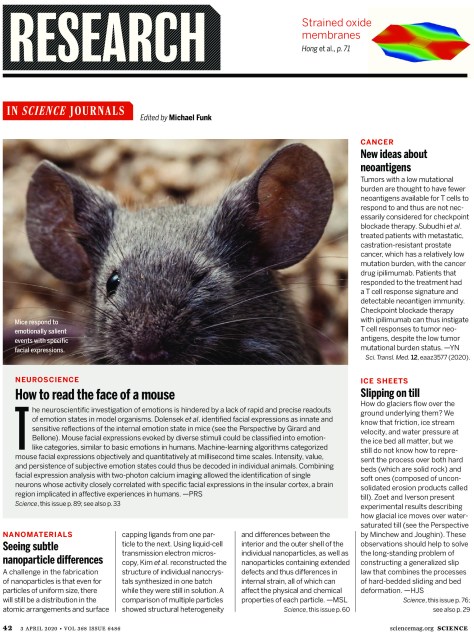
Also this week, Nadine Gogolla, research group leader at the Max Planck Institute of Neurobiology, talks with Sarah about linking the facial expressions of mice to their emotional states using machine learning.
Scientists around the world are racing to develop a vaccine for COVID-19. But experts have said it could take a year to 18 months for one to hit the market. The process for testing and approving a vaccine is long and complicated.
That can be frustrating when the coronavirus is taking more and more lives every day. But cutting corners to push a vaccine through faster can lead to devastating consequences. We know that, because it’s happened before.
This week, reassessing the age of the ‘Broken Hill skull’, and unearthing evidence of an ancient forest near the South Pole.
In this episode:
01:25 A skull’s place in history
After nearly a century scientists believe they’ve finally pinned down an age for the ‘Broken Hill skull’ hominid specimen. Research Article: Grun et al.
Digging deep below the sea-floor, researchers have uncovered evidence of a verdant forest that existed on Antarctica around 90 million years ago. Research Article: Klages et al.
Alexander von Humboldt might not be a name you know, but you can bet you know his ideas. Back when the United States were a wee collection of colonies huddled on the eastern seaboard, colonists found the wilderness surrounding them scary.
It took a zealous Prussian explorer with a thing for barometers to show the colonists what they couldn’t see: a global ecosystem, and their own place in nature. In this episode, we learn how Humboldt—through science and art—inspired a key part of America’s national identity.
More fascinating Humboldt facts:
He strongly opposed slavery in the early 19th century, calling it the “greatest of all the evils which have afflicted mankind.”
He was the first to theorize human caused climate change by changing how water flows through a landscape, on a local level, and warned about deforestation.
He invented isotherms, the lines on a weather map that we still use today. He used them to show which parts of the world were experiencing similar temperatures.
He made the world’s most detailed map of Mexico and the American west.
He nearly summited what was then thought to be the world’s tallest mountain (while wearing 18th century wools, no less.).
Another thing Humboldt and Jefferson bonded over? Mastodons. Humboldt was the first to discover remains of a species now known as Cuvieronius hyodon in Ecuador, which were similar to the “giant elephants” being found in Ohio. The teeth Humboldt found were the clue that these weren’t modern elephants; they looked pretty different. And because these teeth looked sharp, Jefferson and some American scientists thought they were for meat eating! Eventually Georges Cuvier, a French scientist who was friends with Humboldt, proved that these were different from Indian and African elephants, and even woolly mammoths—and the species eventually ended up renamed after him. One of the few eponymous misses for our friend Humboldt!


 On this week’s show, Staff Writer Robert Service talks with host Sarah Crespi about a new National Academy of Sciences report that suggests the novel coronavirus can go airborne, the evidence for this idea, and what this means for the mask-wearing debate.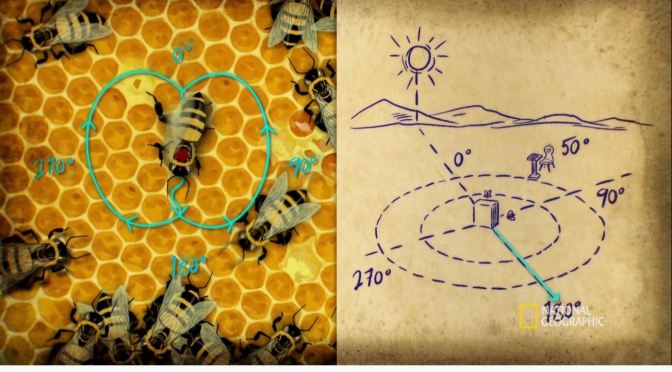
 This week, a new enzyme speeds up the breakdown of plastic bottles, and a method to cool molecules to a fraction above absolute zero.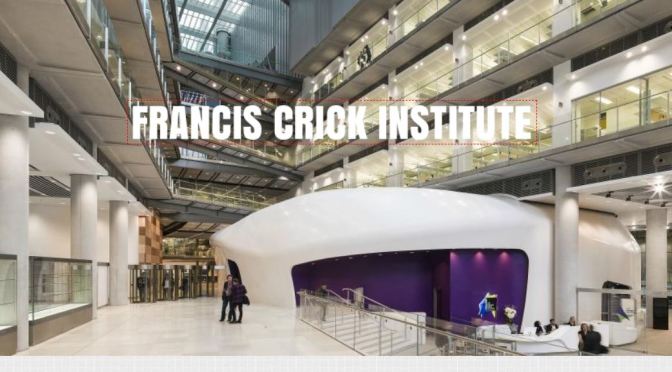
 Rupert Beale talks again to Thomas Jones about his work at the Francis Crick Institute, where he’s helping to set up a testing lab for Covid-19.
 On this week’s show, Contributing Correspondent Kai Kupferschmidt talks with host Sarah Crespi about modeling coronavirus spread and the role of forecasts in national lockdowns and other pandemic policies. They also talk about the launch of a global trial of promising treatments.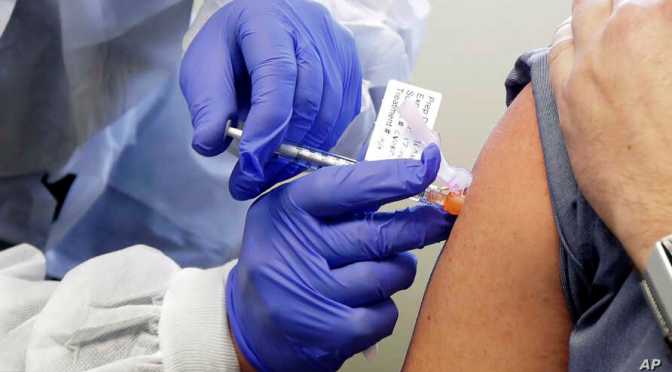
 Scientists around the world are racing to develop a vaccine for COVID-19. But experts have said it could take a year to 18 months for one to hit the market. The process for testing and approving a vaccine is long and complicated.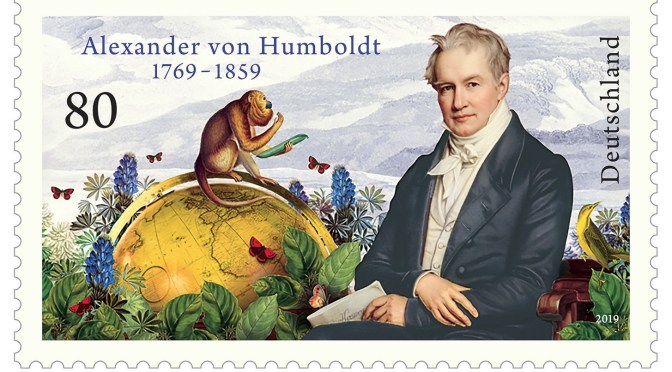
 Alexander von Humboldt might not be a name you know, but you can bet you know his ideas. Back when the United States were a wee collection of colonies huddled on the eastern seaboard, colonists found the wilderness surrounding them scary.
 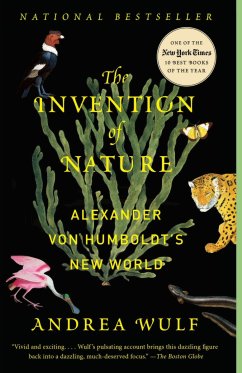 episode, we learn how Humboldt—through science and art—inspired a key part of America’s national identity.
 Intellicurious